
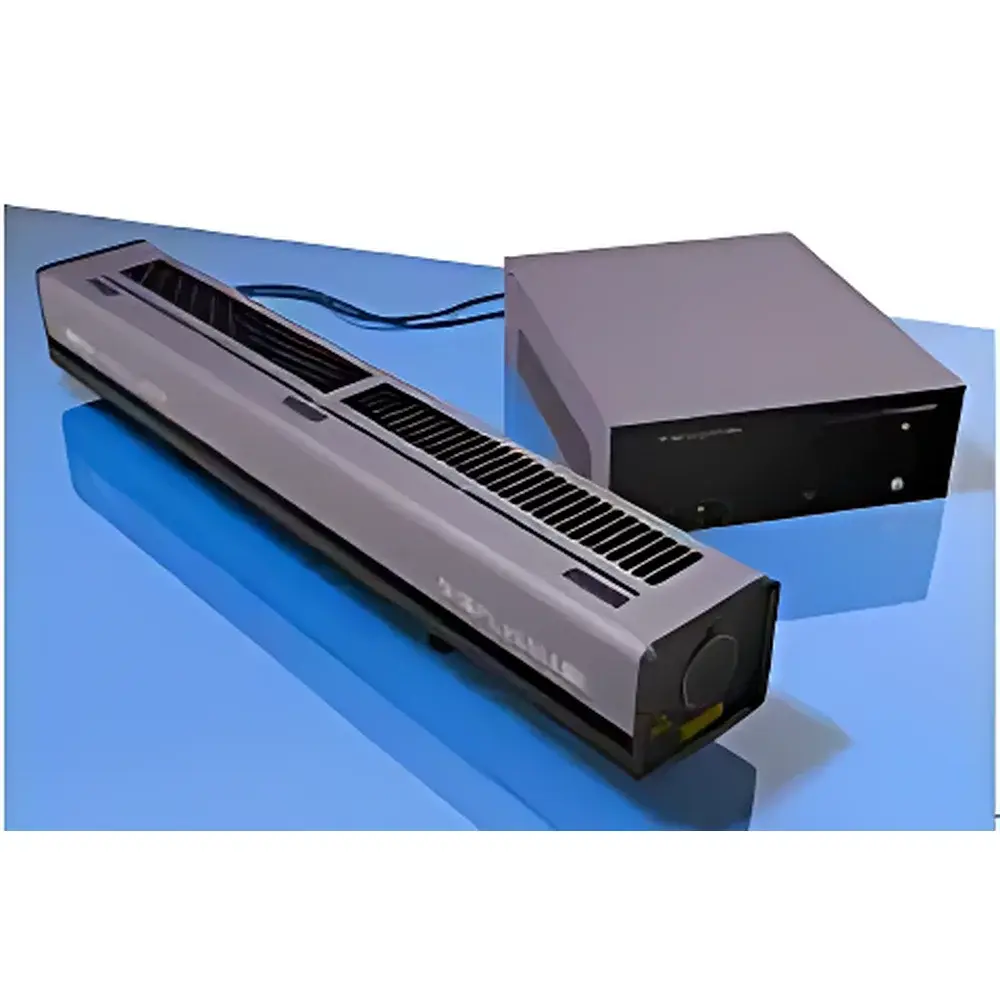
PLASMA 206 Helium-Cadmium (HeCd) Laser
| Origin | Imported |
|---|---|
| Manufacturer Type | Authorized Distributor |
| Country of Origin | Russia |
| Model | 206 |
| Pricing | Available Upon Request |
Overview
The PLASMA 206 Helium-Cadmium (HeCd) Laser is a continuous-wave (CW), gas-discharge laser engineered for stable ultraviolet and visible spectral output. Operating on the well-established He–Cd ion transition, this instrument emits at primary wavelengths of 325 nm (UV) and 441.6 nm (blue), with high spectral purity and narrow linewidth (< 0.003 nm). Designed for laboratory and industrial metrology applications requiring coherent, low-noise, TEM00-mode radiation, the 206 series leverages optimized plasma tube geometry, precision bore alignment, and thermally stabilized cathode/anode architecture to ensure long-term power stability (±1.5% over 8 hours) and operational lifetime exceeding 10,000 hours under recommended cooling and duty-cycle conditions. Its all-metal-ceramic sealed tube construction eliminates organic outgassing, supporting clean-room and vacuum-compatible integration.
Key Features
- Stable dual-wavelength emission: 325 nm (UV, typical output 15–25 mW) and 441.6 nm (blue, typical output 30–50 mW), selectable via internal Brewster-angle prism or external dichroic optics
- Integrated thermoelectric cooler (TEC) with PID-controlled temperature regulation (±0.1°C) for wavelength drift < 0.001 nm/°C
- Low amplitude noise ( 30 cm
- Modular design compliant with standard 30 mm optical rail mounting (M4 threaded holes on baseplate)
- Comprehensive interlock system meeting IEC 60825-1:2014 Class 3B laser safety requirements, including key-switch enable, shutter control, and remote inhibit interface (TTL-compatible)
- Optional analog modulation input (0–5 V, bandwidth up to 100 kHz) for intensity stabilization or external synchronization
Sample Compatibility & Compliance
The PLASMA 206 is designed for use with standard optical components including fused silica lenses, UV-grade calcite polarizers, and broadband dielectric mirrors. It requires no consumables beyond standard line voltage (100–240 VAC, 50/60 Hz) and forced-air cooling (minimum 15 CFM airflow at inlet). The laser complies with international electromagnetic compatibility standards (EN 61326-1:2013 for laboratory equipment) and meets RoHS 2011/65/EU directive requirements. While not certified for medical use, its output characteristics align with ASTM E2697–22 (Standard Practice for Calibration of UV–Vis Spectrophotometers) and ISO/IEC 17025:2017 traceability frameworks when used in accredited calibration labs. Full documentation includes factory test reports with beam profile (M² < 1.1), pointing stability (< 5 µrad/°C), and power vs. time log over 72-hour burn-in.
Software & Data Management
The 206 operates as a standalone instrument but supports digital integration via RS-232 serial interface (ASCII command set) or optional USB-to-serial adapter. Firmware version 2.4 enables remote monitoring of tube current, cathode voltage, TEC status, and internal temperature sensors. All operational logs—including runtime hours, thermal cycles, and error flags—are stored in non-volatile memory and exportable as CSV files for GLP/GMP audit trails. No proprietary software installation is required; configuration and diagnostics are accessible through terminal emulators (e.g., PuTTY) or custom LabVIEW/VB.NET drivers provided under NDA. Data integrity conforms to FDA 21 CFR Part 11 principles where electronic records are implemented, supporting user authentication, audit logging, and electronic signatures when deployed with validated host systems.
Applications
- Fluorescence excitation in confocal microscopy and flow cytometry (particularly for DAPI, Hoechst, and quantum dot labeling)
- Interferometric calibration of displacement transducers and grating-based spectrometers
- Photolithography mask alignment and wafer inspection in semiconductor pilot lines
- Reference source for UV radiometry and spectral irradiance validation (NIST-traceable calibrations available)
- Education and research in atomic physics, particularly Cd+ ion spectroscopy and Zeeman effect studies
- Alignment of synchrotron beamlines and X-ray optics requiring stable UV pilot beams
FAQ
What is the expected warm-up time to achieve full spectral and power stability?
Typical warm-up time is 25–30 minutes from cold start, after which output power variation remains within ±1.0% over subsequent 4-hour operation.
Is the 325 nm output suitable for photochemical applications requiring high photon flux?
Yes—its Gaussian beam profile (1.0–1.2 mm 1/e² diameter), M² < 1.1, and low divergence (< 1.2 mrad) enable efficient coupling into single-mode fibers or focusing to sub-micron spots, supporting photopolymerization and UV curing R&D.
Does the laser support OEM integration into larger analytical platforms?
Yes—mechanical, electrical, and optical interfaces follow SEMI E10 and SECS/GEM conventions; mechanical drawings, pinout schematics, and API documentation are supplied under distributor agreement.
How is tube aging monitored and compensated?
Built-in tube current and cathode voltage telemetry allow predictive maintenance scheduling; output power degradation follows predictable exponential decay—replacement intervals are calculated using manufacturer-provided lifetime models based on cumulative operating hours and average current load.




