
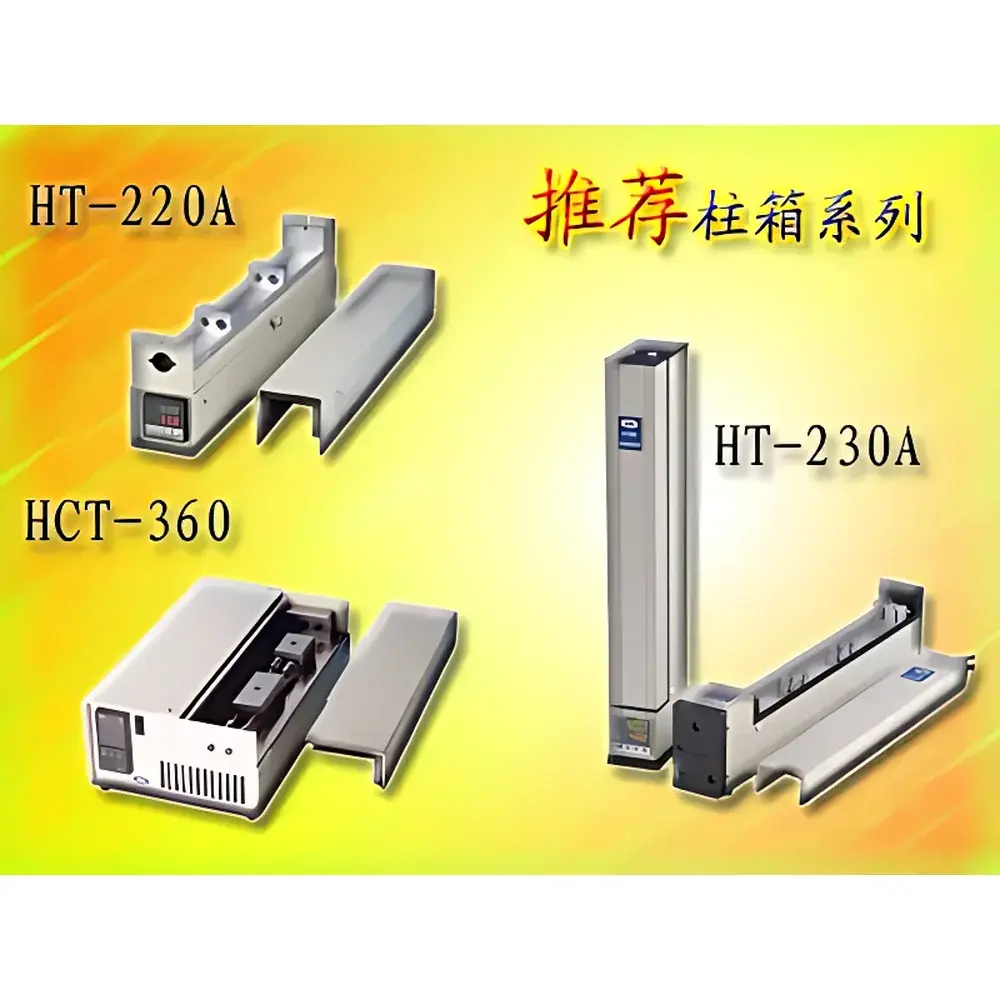
HT-130 Split Horizontal HPLC Column Oven
| Origin | Shanghai, China |
|---|---|
| Manufacturer Type | Authorized Distributor |
| Origin Category | Domestic (China) |
| Model | HT-130 |
| Price | USD 840 (FOB Shanghai) |
| Structure | Split horizontal configuration |
| Column capacity | 2 columns, up to 300 mm length |
| Heating power | 120 W |
| External dimensions (W×D×H) | 210 × 175 × 95 mm |
| Net weight | 3.6 kg |
Overview
The HT-130 Split Horizontal HPLC Column Oven is an engineered thermal management solution designed specifically for high-performance liquid chromatography (HPLC) and UHPLC systems requiring precise, stable column temperature control. Unlike integrated ovens, its split horizontal architecture enables flexible installation—mounting the heating chamber and controller separately—to accommodate space-constrained instrument racks or modular HPLC configurations. The unit maintains column temperature within ±0.1 °C stability over time (typical at 40 °C ambient), leveraging a PID-controlled solid-state temperature regulation system with imported high-accuracy platinum RTD sensors (PT100). Heating is delivered via thin-film polymer (TPC) resistive elements embedded in aluminum alloy thermal plates, ensuring uniform heat distribution across the column bed while minimizing thermal lag and overshoot. This design directly supports retention time reproducibility, peak shape integrity, and method transferability—critical requirements for pharmacopeial compliance (USP , EP 2.2.46) and regulated QC/QA workflows.
Key Features
- Split horizontal layout: Independent heater chamber and digital controller allow optimal placement—e.g., heater under the column tray, controller mounted on rack panel—for minimal footprint and maximum accessibility.
- Dual-column support: Accommodates two standard 300 mm analytical columns (e.g., 4.6 mm ID) with full-length thermal contact; column clamps are adjustable for 2–5 mm OD tubing and include low-diffusion silicone gasket seals.
- PID temperature control: Programmable setpoint range from ambient +5 °C to 80 °C (±0.1 °C typical stability); auto-tuning function optimizes response for varying thermal loads and ambient conditions.
- Integrated safety architecture: Dual-stage overtemperature protection (hardware cutoff at 95 °C + software limit), open-circuit detection for heater failure, and current-limiting circuitry compliant with IEC 61010-1 Class I safety standards.
- Low thermal mass construction: Aluminum housing with optimized fin geometry reduces warm-up time to target temperature (<12 min from 25 °C to 50 °C) and improves energy efficiency (120 W nominal).
Sample Compatibility & Compliance
The HT-130 is compatible with all standard stainless steel, PEEK, and fused-silica HPLC columns (1.0–4.6 mm ID, ≤300 mm length) and supports common mobile phase chemistries including aqueous buffers, acetonitrile, methanol, and THF. Its compact form factor (210 × 175 × 95 mm) permits integration into ISO/IEC 17025-accredited laboratories and GMP environments where spatial constraints preclude larger ovens. The device meets CE marking requirements per EMC Directive 2014/30/EU and Low Voltage Directive 2014/35/EU. While not intrinsically rated for hazardous locations, it is suitable for use in general laboratory areas operating under GLP and FDA 21 CFR Part 11-compliant data systems when paired with validated chromatography data systems (CDS) that log oven setpoints and actual temperatures with audit trail.
Software & Data Management
The HT-130 operates as a standalone analog/digital hybrid instrument: temperature setpoint and real-time reading are displayed on a 3-digit LED screen with push-button interface—no external software required for basic operation. For traceable operation in regulated environments, optional RS-232 or USB-to-serial interface modules (sold separately) enable bidirectional communication with third-party CDS platforms (e.g., Thermo Chromeleon, Waters Empower, Agilent OpenLab). When connected, the oven transmits timestamped temperature logs (setpoint, actual, status flags) at user-defined intervals (1–60 sec), supporting electronic record retention per ALCOA+ principles. Firmware supports configurable alarm thresholds and event logging (e.g., “temp deviation >0.5 °C for >30 s”) for inclusion in system suitability reports.
Applications
- Routine QC analysis of pharmaceutical actives and impurities where column temperature directly impacts resolution of critical pairs (e.g., enantiomers, diastereomers).
- Method development for gradient elution—stabilizing column temperature eliminates baseline drift caused by solvent viscosity changes during temperature fluctuations.
- Long-duration stability-indicating assays (>24 h runs), where thermal drift would otherwise compromise peak area precision and retention time RSD.
- Multi-instrument labs deploying identical HPLC methods across distributed systems—column oven consistency ensures inter-system comparability per ICH Q5C guidelines.
- Academic and contract research labs performing method validation per ICH Q2(R2), where documented thermal performance (accuracy, stability, uniformity) forms part of the equipment qualification (IQ/OQ) package.
FAQ
Does the HT-130 support refrigeration or cooling functionality?
No—the HT-130 is a heating-only column oven. For active cooling, consider the HCT-360 or HCT-460 series, which integrate thermoelectric (Peltier) modules for dual-range operation (5 °C to 80 °C).
Can the HT-130 be used with UHPLC systems operating above 1000 bar?
Yes—its mechanical design imposes no pressure limitations; compatibility depends solely on column hardware and ferrule selection. Thermal performance remains consistent under high-backpressure conditions.
Is calibration certificate included with shipment?
A factory calibration report (traceable to NIST-certified reference standards) is provided. Full IQ/OQ documentation packages—including temperature mapping protocols and uncertainty budgets—are available upon request for regulated users.
What maintenance is required for long-term reliability?
No routine maintenance is needed. Periodic verification of sensor accuracy (annually recommended) using a calibrated reference thermometer (±0.05 °C) is sufficient. TPC heating elements have no moving parts and exhibit >50,000 hours MTBF.
How does the split design affect column connection routing?
The heater chamber features four unobstructed access ports (top, bottom, left, right), enabling direct, low-volume connections to pump, injector, and detector—reducing extra-column band broadening and improving system efficiency (Δσ² < 2 µL²).



