
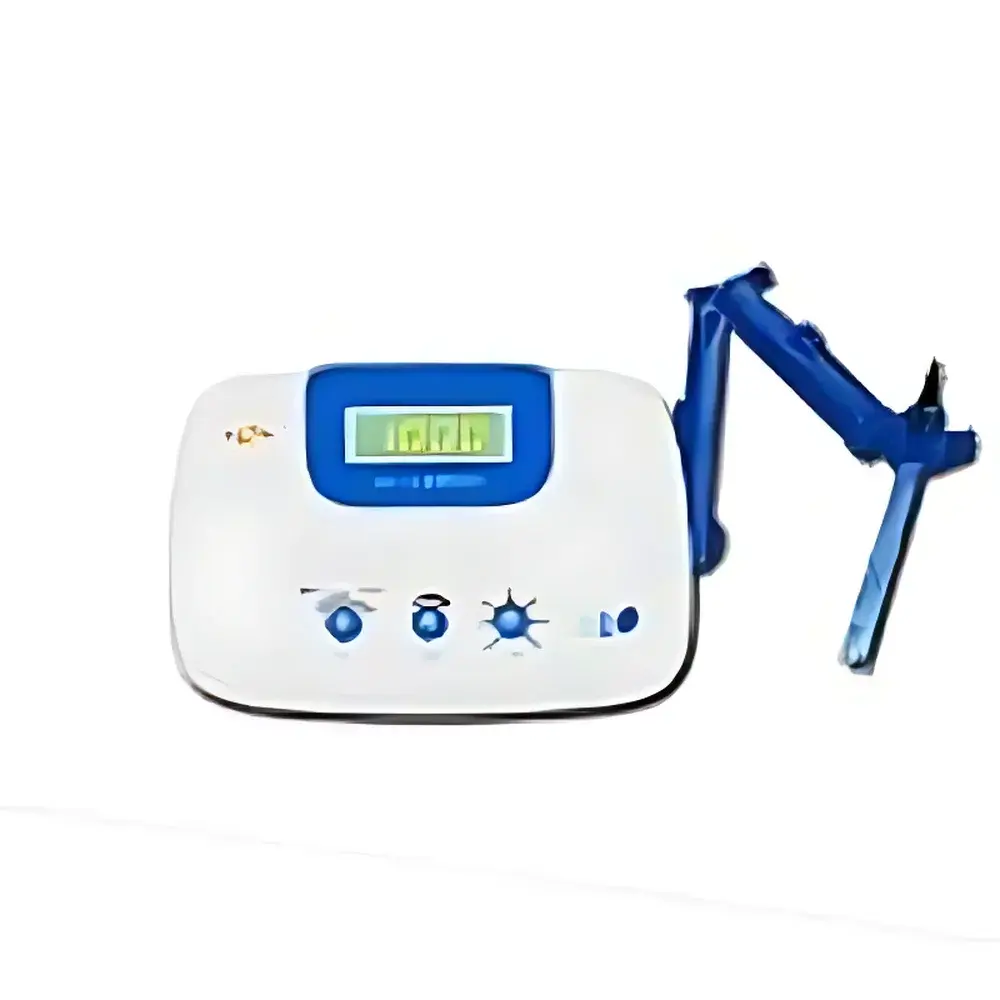
Chu Ding Technology DDS-11A Digital Conductivity Meter
| Brand | Chu Ding Technology |
|---|---|
| Origin | Shanghai, China |
| Model | DDS-11A |
| Accuracy Class | 1.0 |
| Conductivity Range | (0–1.999) μS/cm |
| Temperature Range | −5 to 105 °C |
| Conductivity Accuracy | ±1.0% FS |
| Temperature Accuracy | ±0.5 °C |
| Electronic Stability | ±0.5% FS |
| Temperature Compensation Coefficient | 2.0 %/°C |
| Compensation Range | 0–100 °C |
| Electrode Constant Compatibility | 0.01, 0.1, 1.0, 10.0 cm⁻¹ |
Overview
The Chu Ding Technology DDS-11A Digital Conductivity Meter is a benchtop electrochemical instrument engineered for precision measurement of electrical conductivity, resistivity, and total dissolved solids (TDS) in aqueous solutions. It operates on the principle of two-electrode AC conductivity measurement, applying a low-frequency alternating current to minimize polarization effects and electrode fouling—ensuring stable readings across varying ionic strengths. Designed for routine laboratory use, the DDS-11A meets the performance requirements of ISO 7888 (Water quality — Determination of electrical conductivity) and aligns with ASTM D1125 standards for conductivity testing of water and wastewater. Its modular electrode interface supports interchangeable conductivity cells with cell constants ranging from 0.01 to 10.0 cm⁻¹, enabling accurate characterization of ultrapure water (e.g., in semiconductor rinse processes), process streams in petrochemical refining, and environmental samples from surface or groundwater monitoring networks.
Key Features
- Microprocessor-controlled electronics with large-format LCD display showing simultaneous conductivity, temperature, TDS, and resistivity values
- Automatic range switching across six decades (0.001 μS/cm to 199.9 mS/cm), eliminating manual scale selection errors
- Linear temperature compensation (2.0 %/°C default, adjustable via calibration menu) over 0–100 °C, compliant with standard reference temperature conventions (25 °C)
- Integrated temperature sensor (NTC thermistor) with ±0.5 °C accuracy ensures traceable thermal correction during dynamic measurements
- Auto-calibration protocol supporting single-point or multi-point verification using certified KCl standards (e.g., 1413 μS/cm at 25 °C)
- Rugged ABS housing with IP20-rated enclosure suitable for controlled lab environments; CE-marked for EMC and safety compliance
Sample Compatibility & Compliance
The DDS-11A accommodates a broad spectrum of conductive media—from deionized water (≥18.2 MΩ·cm resistivity) to concentrated brines and industrial effluents. When paired with a 0.01 cm⁻¹ cell, it achieves reliable detection down to 0.001 μS/cm—critical for ultrapure water validation in pharmaceutical water systems (USP ). With a 10.0 cm⁻¹ high-range cell, it maintains linearity up to 199.9 mS/cm, meeting ASTM D5391 requirements for conductivity of battery electrolytes. All measurements adhere to GLP documentation principles: timestamped data output (via optional RS232 interface), operator ID entry, and audit-ready calibration logs. The instrument’s 1.0-class accuracy rating conforms to IEC 60746-3 for industrial conductivity meters used in QC/QA workflows under ISO/IEC 17025-accredited laboratories.
Software & Data Management
While the DDS-11A operates as a standalone meter, its RS232 serial port enables direct integration with LIMS or custom SCADA platforms. ASCII-formatted output includes conductivity (μS/cm or mS/cm), temperature (°C), TDS (ppm), resistivity (kΩ·cm or MΩ·cm), and measurement timestamp. Optional PC software (available upon request) provides real-time graphing, statistical reporting (mean, SD, RSD), and export to CSV or Excel for regulatory submission. Calibration records include date, standard value, measured value, deviation, and technician signature—supporting FDA 21 CFR Part 11 readiness when deployed with electronic signature modules and access-controlled user accounts.
Applications
- Environmental labs: Monitoring conductivity in river, lake, and wastewater samples per EPA Method 120.1
- Pharmaceutical manufacturing: Verification of purified water and water-for-injection (WFI) conductivity per USP and EU Ph. Eur. 2.2.38
- Power generation: Feedwater and condensate purity assessment in thermal and nuclear plants (ASME PTC 19.11)
- Biotechnology: Cell culture media conductivity profiling during upstream processing
- Academic research: Teaching fundamental electrochemistry concepts including Kohlrausch’s law and ion mobility relationships
- Food & beverage QA: Salt concentration estimation in brines, dairy effluents, and brewing wort
FAQ
What electrode constants are supported by the DDS-11A?
The meter accepts conductivity cells with nominal cell constants of 0.01, 0.1, 1.0, and 10.0 cm⁻¹. Each constant must be manually entered prior to calibration to ensure correct unit conversion.
Does the DDS-11A comply with ISO/IEC 17025 requirements?
Yes—the instrument’s documented calibration traceability, stability specifications (±0.5% FS), and error margins (±1.0% FS) meet the technical competence criteria outlined in ISO/IEC 17025:2017 Clause 6.4 for measurement equipment.
Can the temperature compensation coefficient be adjusted?
Yes. While the default linear coefficient is fixed at 2.0 %/°C (standard for NaCl-based solutions), advanced users may modify this value within the service menu to match solution-specific behavior (e.g., 1.9 %/°C for KCl or 2.2 %/°C for CaCl₂).
Is the DDS-11A suitable for field use?
It is designed for benchtop laboratory operation only. For portable applications, consider the DDS-307A variant, which features battery power and ruggedized housing.
How often should calibration be performed?
Daily calibration is recommended for critical applications (e.g., WFI testing); weekly calibration suffices for routine environmental screening—always preceded by electrode cleaning and rinsing with deionized water.




