
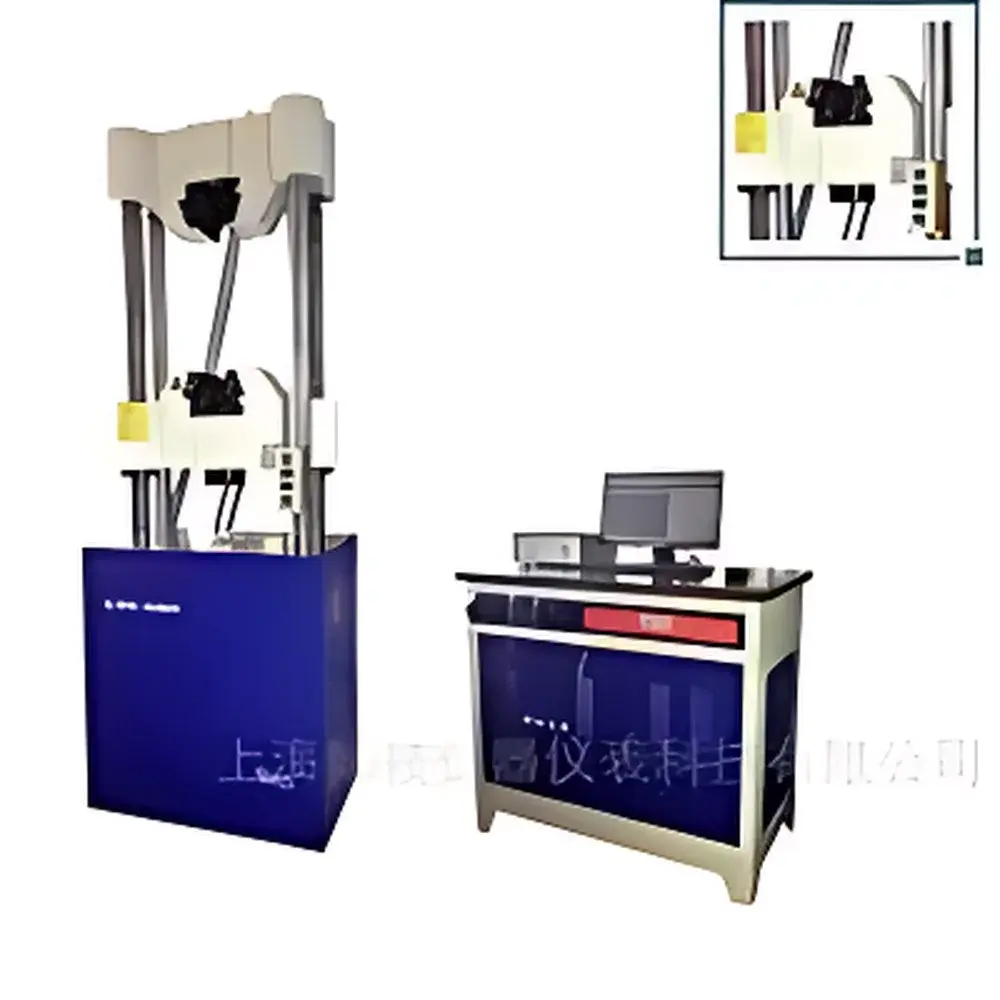
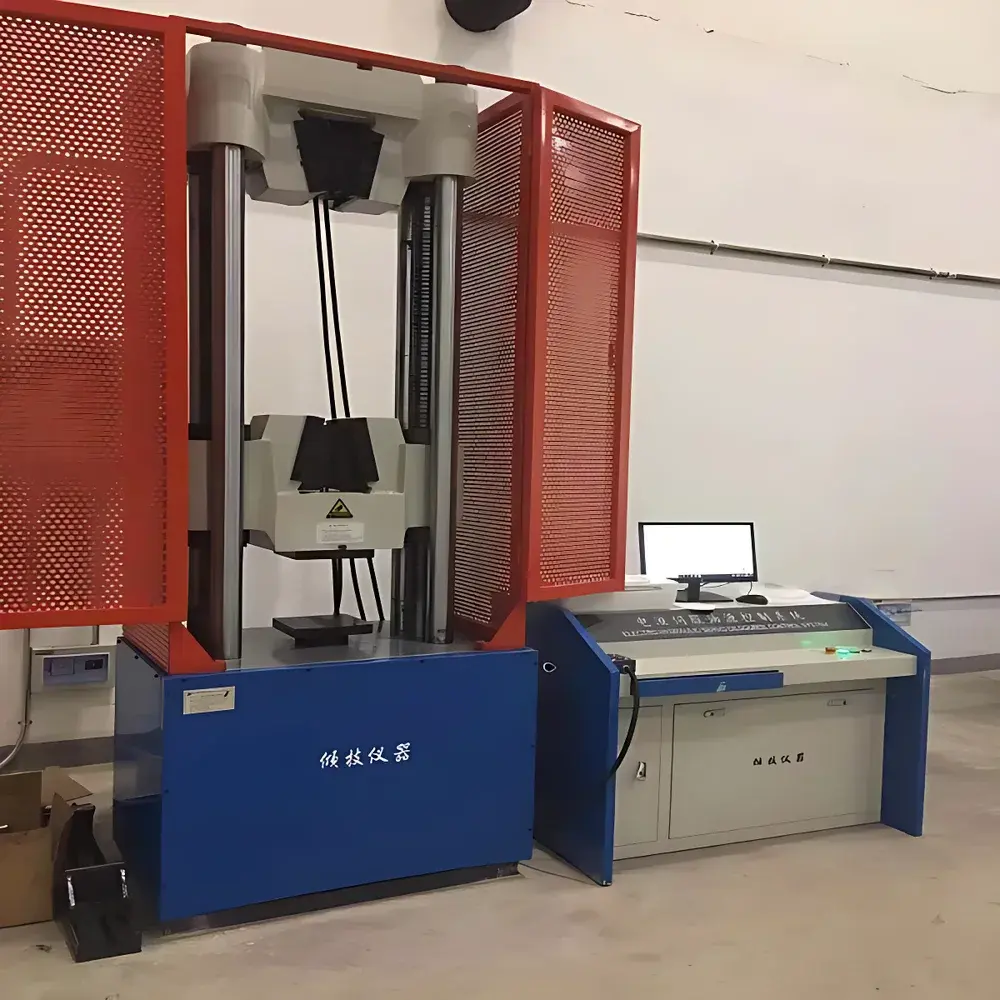
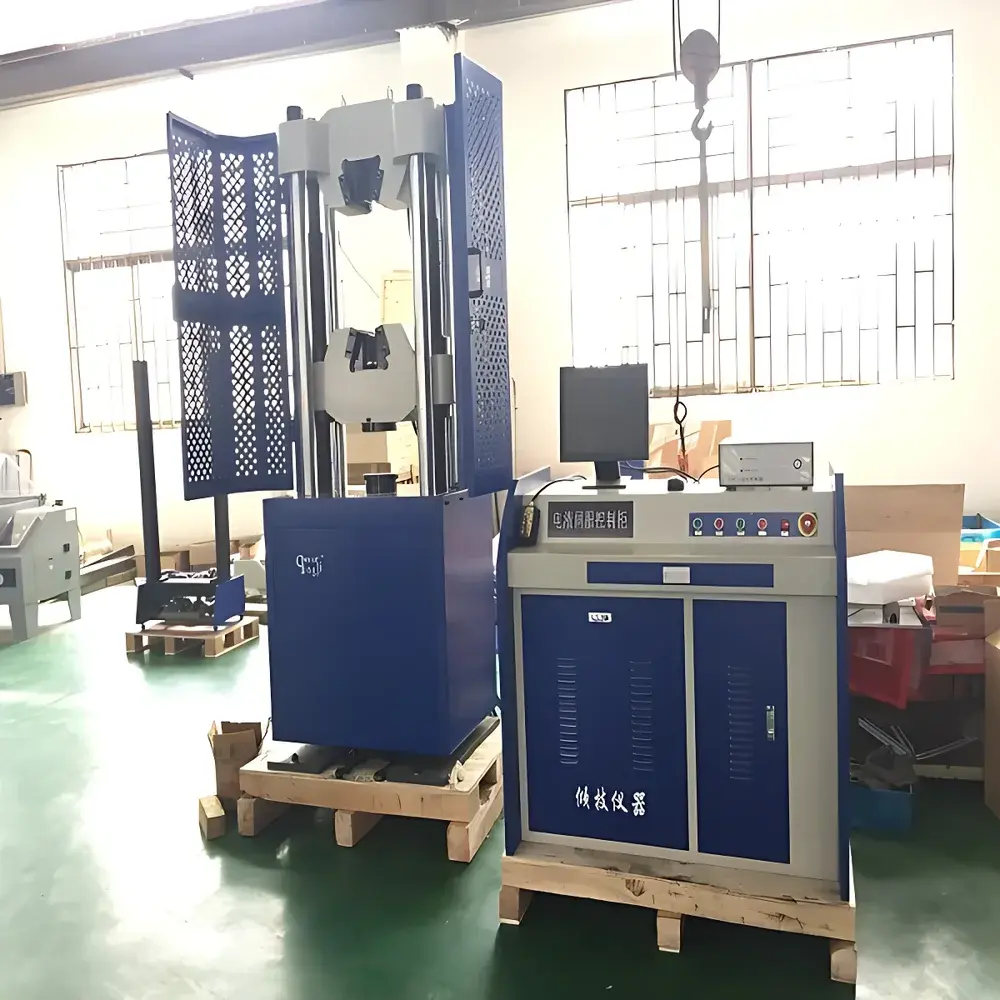
QJWE Hydraulic Universal Testing Machine
| Brand | Qinsun |
|---|---|
| Origin | Shanghai, China |
| Manufacturer Type | Authorized Distributor |
| Country of Origin | China |
| Model | QJWE |
| Price Range | USD 7,000 – 14,000 |
| Instrument Type | Hydraulic Universal Testing Machine |
| Load Accuracy | ±0.5% |
| Relative Resolution | ≤0.5% |
| Compression Space | 480–510 mm |
| Tensile Space | 480–610 mm |
| Round Specimen Grip Range | φ10–70 mm |
| Flat Specimen Grip Thickness | 0–40 mm |
| Piston Stroke | 150–170 mm |
| Maximum Bend Span | 100–500 mm |
| Shear Specimen Diameter | φ10–30 mm |
| Dimensions (W×D×H) | 800×520×1850 to 950×650×2220 mm |
| Motor Power | 1.5 kW or 2.1 kW, 3-phase |
| Machine Weight | 1650–2500 kg |
Overview
The QJWE Hydraulic Universal Testing Machine is a high-capacity, electro-hydraulic servo-controlled system engineered for static mechanical property evaluation of metallic and non-metallic materials under tension, compression, bending, and shear loading conditions. Designed in accordance with fundamental principles of structural mechanics and ISO 7500-1 (Class 1) and ASTM E4 calibration standards, the machine utilizes a bottom-mounted hydraulic actuator with adjustable test zones, enabling flexible specimen configuration across diverse geometries and dimensional requirements. Its closed-loop proportional control architecture ensures precise load regulation and smooth velocity profiling—critical for achieving high reproducibility in standardized tests such as ASTM E8/E9 (tensile/compression of metals), ASTM C39/C469 (concrete strength and modulus), and ISO 6892-1 (metal tensile testing). The system integrates high-stability load cells (imported, temperature-compensated), linear variable differential transformers (LVDTs), and extensometers to simultaneously capture force, displacement, and strain data at sub-millisecond sampling intervals.
Key Features
- Bottom-mounted hydraulic cylinder design with vertically adjustable crosshead for optimized workspace flexibility and operator safety
- Full-digital electro-hydraulic servo control system supporting programmable loading rates—from 0.001 mm/min to 100 mm/min—with real-time feedback compensation
- High-accuracy load measurement using calibrated, imported load cells with ±0.5% accuracy and ≤0.5% relative resolution per ISO 7500-1
- Multi-range hydraulic grip systems accommodating round specimens from φ10 to φ70 mm and flat specimens up to 40 mm thick
- Dual-zone test space configuration: tensile zone (480–610 mm) and compression zone (480–510 mm), configurable via mechanical adjustment
- Integrated piston stroke monitoring (150–170 mm) and bend span adjustment (100–500 mm) to meet ASTM E290 and ISO 7438 requirements
- Three-phase motor drive options (1.5 kW or 2.1 kW) ensuring stable pressure supply and thermal management during extended duty cycles
Sample Compatibility & Compliance
The QJWE series supports standardized mechanical testing of a broad material spectrum—including carbon steels, aluminum alloys, structural composites, unreinforced and fiber-reinforced concrete, cementitious mortars, thermoplastics, and elastomeric compounds. Grip configurations are compliant with ISO 6892-2 (clamping requirements), ASTM E8M (tensile bars), ASTM D695 (rigid plastics compression), and EN 12390-3 (concrete compressive strength). All mechanical components conform to CE machinery directive (2006/42/EC) safety requirements, while load cell calibration certificates traceable to national metrology institutes support GLP/GMP audit readiness. The system is compatible with third-party accreditation bodies’ validation protocols for ISO/IEC 17025-compliant laboratories.
Software & Data Management
Bundled PC-based testing software provides full control over test sequencing, real-time curve visualization (stress–strain, load–displacement, force–time), and automated parameter extraction—including yield strength (Rp0.2), ultimate tensile strength (Rm), Young’s modulus (E), fracture elongation (A%), and compressive modulus. Data export conforms to ASTM E1432 and ISO 10360-5 formats (CSV, XML, PDF). Audit trail functionality records user actions, calibration events, and test modifications in compliance with FDA 21 CFR Part 11 requirements when configured with electronic signature modules. Network connectivity enables centralized data archiving, remote diagnostics, and integration into LIMS environments via OPC UA or TCP/IP interfaces.
Applications
- Mechanical property certification of structural steel grades per ASTM A615/A706 and EN 10025
- Quality assurance testing of precast concrete elements and grouting materials in civil infrastructure projects
- R&D validation of polymer matrix composites under combined axial and flexural loading
- Validation of weld joint integrity in pressure vessel fabrication (ASME BPVC Section IX)
- Calibration reference testing for secondary force standards in metrology labs
- Educational demonstration of Hooke’s law, plastic deformation, necking behavior, and fracture mechanics principles
FAQ
What standards does the QJWE comply with for load accuracy verification?
The system meets ISO 7500-1 Class 1 accuracy requirements, verified through third-party calibration using dead-weight standards traceable to NIM (China) or NIST (USA).
Can the machine perform cyclic or low-cycle fatigue tests?
No—the QJWE is designed exclusively for quasi-static loading; it lacks dynamic actuation capability or waveform generation required for fatigue testing per ASTM E606 or ISO 1099.
Is software validation documentation available for regulated industries?
Yes—IQ/OQ documentation packages, including installation checklists, operational boundary verification, and electronic record integrity reports, are provided upon request for pharmaceutical or aerospace QA departments.
What maintenance intervals are recommended for hydraulic oil and filters?
Hydraulic oil replacement is advised every 2,000 operating hours or biannually, whichever occurs first; filter elements should be inspected quarterly and replaced if pressure differential exceeds 3 bar.
Does the system support automatic specimen identification via barcode or RFID?
Not natively—but optional hardware add-ons (USB barcode scanner interface module and API-enabled SDK) allow integration with external MES or ERP systems for automated test initiation and sample tracking.



