
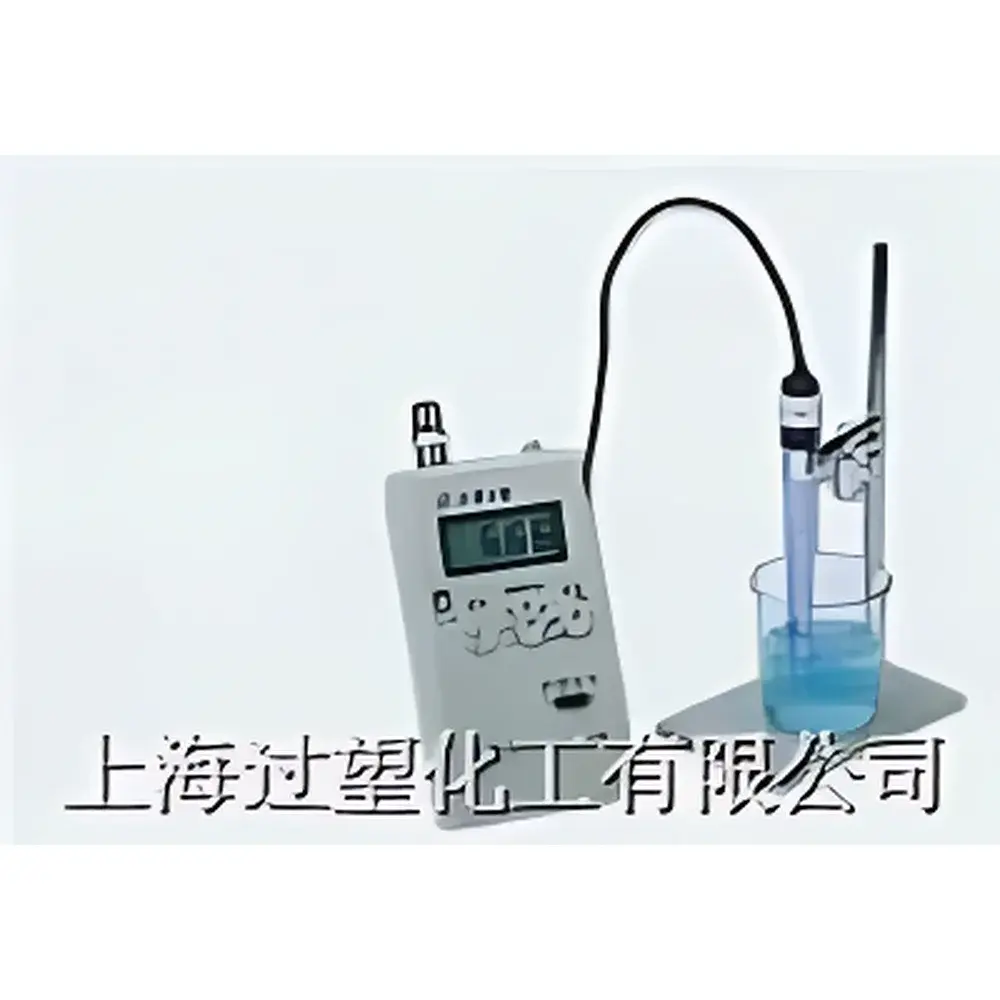
PnaS-50 and PnaP-205 Sodium Ion Analyzers (pNa Meters)
| Origin | Shanghai, China |
|---|---|
| Manufacturer Type | Authorized Distributor |
| Regional Origin | Domestic (China) |
| Models | PnaS-50 (Benchtop), PnaP-205 (Portable) |
| Measurement Range | 0–6.00 pNa |
| Accuracy | ±0.02 pNa |
| Temperature Compensation Range | 0–60 °C |
| pH Range | 0.00–14.00 ±0.01 |
| mV Range | ±1999 mV ±0.1% |
| Output Signal | –1999 to +1999 mV |
| Power Supply | AC 220 V ±10%, 50/60 Hz (PnaS-50) |
| Net Weight | 1.8 kg (PnaS-50), 0.5 kg (PnaP-205) |
| Stability | ±0.01 pNa/24 h |
Overview
The PnaS-50 and PnaP-205 Sodium Ion Analyzers are dedicated electrochemical instruments engineered for precise measurement of sodium ion activity (expressed as pNa) in aqueous solutions. Based on the principle of potentiometric ion-selective electrode (ISE) detection, these analyzers utilize a glass membrane sodium-selective electrode coupled with a reference electrode to generate a Nernstian response proportional to the logarithmic concentration of Na⁺ ions. Designed for high reproducibility in low-sodium environments—such as high-purity boiler feedwater, nuclear reactor coolant streams, semiconductor rinse water, and pharmaceutical process water—the instruments deliver stable, trace-level sodium quantification down to 0.1 ppb (equivalent to pNa 6.00). Both models incorporate automatic temperature compensation (ATC) via integrated Pt1000 or thermistor sensors, ensuring thermodynamic accuracy across 0–60 °C. Unlike general-purpose pH/mV meters, these analyzers feature optimized circuitry, low-drift amplifiers, and dedicated pNa calibration algorithms compliant with ISO 7870-2 and ASTM D4582 standards for ion activity measurement.
Key Features
- Two-point calibration protocol with user-defined standard solutions (e.g., 10⁻¹ M and 10⁻⁴ M NaCl), supporting both bracketing and slope verification per ISE best practices
- Simultaneous dual-parameter measurement: pNa, pH (0.00–14.00 ±0.01), and relative/absolute mV (±1999 mV ±0.1%)—enabling cross-validation and electrode diagnostics
- Benchtop PnaS-50 includes isolated analog output (0–20 mA or 4–20 mA configurable) and RS-232 interface for integration into SCADA or LIMS systems
- Portable PnaP-205 features dual-power architecture: mains operation (220 V AC) and field-deployable 9 V alkaline battery (6F22), with >100 hours continuous runtime at 25 °C
- Integrated temperature sensor with real-time ATC correction applied to both pNa and pH readings, minimizing thermal drift errors
- Robust front-panel navigation with tactile keys, backlit LCD (128 × 64 pixels), and non-volatile memory storing up to 500 data points with timestamps
Sample Compatibility & Compliance
These analyzers are validated for use with low-conductivity samples (≥0.1 µS/cm) and non-complex matrices including deionized water, steam condensate, ultrapure water (UPW), and diluted saline solutions. Interference from K⁺, Li⁺, and H⁺ is mitigated through selective electrode formulation and optional ionic strength adjustment (ISA) protocols. The PnaS-50 meets CE marking requirements for electromagnetic compatibility (EN 61326-1) and electrical safety (EN 61010-1). Both models support GLP-compliant operation: all calibrations, measurements, and configuration changes are timestamped and stored locally; audit trails can be exported via serial interface. While not FDA 21 CFR Part 11–certified out-of-the-box, the firmware architecture supports electronic signature-ready workflows when deployed with validated third-party data management software.
Software & Data Management
No proprietary PC software is bundled; however, ASCII-formatted data export via RS-232 enables seamless ingestion into industry-standard platforms—including LabVIEW, MATLAB, Excel (via terminal emulators), and LIMS middleware (e.g., Thermo Fisher SampleManager, LabWare LIMS). The PnaS-50’s analog output permits direct connection to PLCs or chart recorders for continuous monitoring. All units store measurement history with date/time stamps, electrode ID (if encoded), calibration coefficients, and ambient temperature—facilitating retrospective QA review and ISO/IEC 17025 method validation documentation. Firmware updates are performed via UART bootloader using standard serial tools.
Applications
- Power generation: Monitoring sodium breakthrough in mixed-bed demineralizers and condensate polishing systems (ASTM D4582, EPRI TR-102392)
- Pharmaceutical manufacturing: Verification of sodium residuals in Water for Injection (WFI) and Pure Steam systems per USP
- Semiconductor fab utilities: UPW sodium surveillance at sub-ppb levels to prevent gate oxide contamination
- Research laboratories: Kinetic studies of ion exchange resins, membrane selectivity screening, and corrosion inhibitor efficacy testing
- Environmental labs: Analysis of sodium leaching from soil columns or sediment pore water under controlled ionic strength conditions
FAQ
What is the minimum detectable sodium concentration for the PnaS-50 and PnaP-205?
At pNa 6.00, the theoretical lower limit corresponds to 1 × 10⁻⁶ mol/L (23 ppb Na⁺); practical detection in clean-room or low-interference matrices is typically 0.1–0.5 ppb with optimized electrode conditioning and ISA addition.
Do these analyzers require special sodium electrodes, and are they included?
Yes—each unit ships with a factory-calibrated sodium ISE (glass membrane type) and Ag/AgCl double-junction reference electrode; replacement electrodes follow ISO 15197-compliant geometry and impedance specifications.
Can the PnaP-205 operate in fully battery-powered mode during field sampling?
Yes—battery-only operation supports full functionality (pNa, pH, mV, temperature) without performance degradation; auto-power-off after 15 min idle prevents inadvertent discharge.
Is temperature compensation mandatory, or can it be disabled?
ATC is enabled by default and cannot be disabled; this ensures compliance with Nernst equation validity requirements for quantitative ion activity determination.
How often should calibration be performed for regulatory reporting?
Per ASTM D4582, calibration is required before each analytical batch and after every 8 hours of continuous use; documented calibration checks must include slope (54–59 mV/pNa unit at 25 °C) and asymmetry potential verification.
Related Products







