
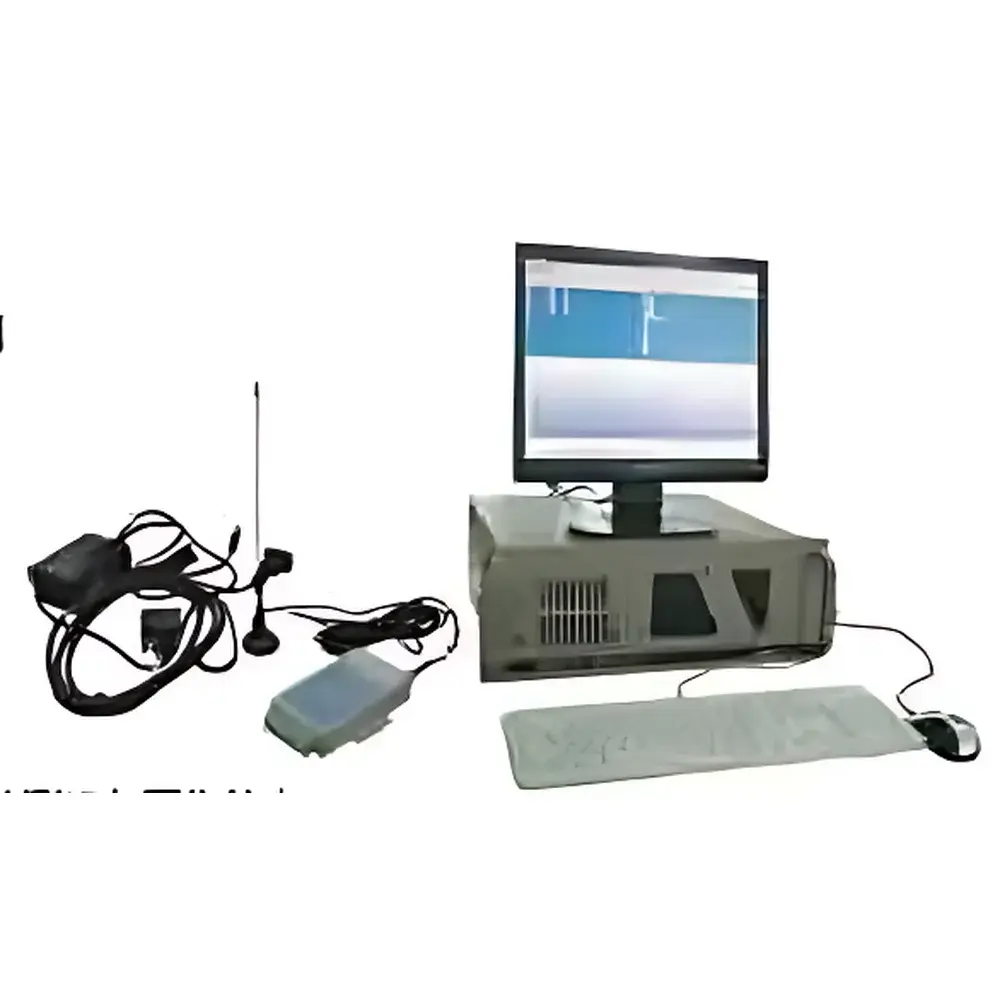
Tianhong TH-2010 Automatic Air Quality Data Acquisition System
| Brand | Tianhong |
|---|---|
| Origin | Hubei, China |
| Model | TH-2010 |
| Data Acquisition Capability | Real-time & Historical Air Quality Parameters (e.g., PM₂.₅, PM₁₀, SO₂, NO₂, CO, O₃, temperature, humidity, wind speed/direction) |
| Communication Protocols | Ethernet, GPRS, 3G |
| Data Output Formats | TXT, Excel (.xlsx), DBF |
| Compliance Support | China’s HJ 653–2013, HJ 654–2013, and Ambient Air Quality Standards (GB 3095–2012) |
| Remote Control Functions | Zero/span calibration initiation, instrument status monitoring, QA/QC command execution |
| Data Storage | Automated archival of raw second/minute-level data and hourly averages to centralized relational database |
Overview
The Tianhong TH-2010 Automatic Air Quality Data Acquisition System is a field-deployable, protocol-compliant central processing unit engineered for continuous, high-integrity acquisition, aggregation, and upstream transmission of multi-parameter ambient air quality data from fixed-site monitoring sub-stations. Designed in accordance with China’s national technical specifications for air quality monitoring networks—including HJ 653–2013 (Technical Requirements for Ambient Air Quality Monitoring Systems) and HJ 654–2013 (Interference Testing Methods for Ambient Air Quality Monitoring Instruments)—the TH-2010 serves as the operational core of tiered environmental monitoring infrastructures. It functions as a deterministic data concentrator, accepting asynchronous analog (4–20 mA, 0–5 V), digital (RS-232/485, Modbus RTU), and pulse inputs from analyzers (e.g., beta attenuation PM monitors, chemiluminescence NOx analyzers, UV photometric O3 sensors), meteorological stations, and auxiliary sensors. Its embedded real-time operating system ensures deterministic sampling synchronization, timestamping accuracy ≤ ±100 ms per IEC 62443-3-3 requirements, and lossless buffering during network outages—critical for regulatory auditability under GB 3095–2012 compliance frameworks.
Key Features
- Configurable station topology support: Adapts to single-analyzer nodes or multi-instrument sub-stations via modular I/O expansion and logical channel mapping.
- Multi-mode communication redundancy: Simultaneous dual-path connectivity—primary Ethernet (TCP/IP) with DHCP/static IP assignment and failover to GPRS or 3G cellular modems with automatic reconnection logic.
- Real-time telemetry dashboard: Web-based interface displaying live concentration trends (μg/m³, ppb), instrument health flags (voltage, flow rate, lamp intensity), and diagnostic codes with color-coded severity indicators.
- Automated data ingestion pipeline: Raw second-level measurements are buffered locally, then transmitted at user-defined intervals (e.g., every 5 minutes) to a central server; hourly averaged values are computed on-device using arithmetic mean algorithms compliant with HJ 653–2013 Annex B.
- Remote instrument management: Secure TLS 1.2-encrypted commands enable zero/span calibration triggers, flow validation sequences, and sensor warm-up control—reducing need for on-site technician dispatch.
- Audit-ready data governance: All operations—including manual overrides, calibration events, and configuration changes—are logged with UTC timestamps, operator IDs, and SHA-256 hashed metadata, satisfying GLP-aligned traceability requirements.
Sample Compatibility & Compliance
The TH-2010 interfaces with certified reference-grade analyzers measuring regulated criteria pollutants (PM2.5, PM10, SO2, NO2, CO, O3) and meteorological parameters (temperature, relative humidity, atmospheric pressure, wind speed/direction, rainfall). It natively supports output protocols mandated by Chinese EPA-approved instruments—including RS-485 Modbus ASCII/RTU, analog current loops per GB/T 13983–2018, and pulse counting for particulate counters. Data formatting and reporting workflows align with Ministry of Ecology and Environment (MEE) directives: API and AQI index calculations follow HJ 633–2012 methodology; statistical exports (daily, weekly, monthly, annual) include mandatory QA/QC flags (e.g., “valid”, “suspect”, “invalid”) per HJ 655–2013. The system architecture permits integration into provincial-level Environmental Information Platforms (EIPs) via standardized web services (SOAP/XML or RESTful JSON endpoints).
Software & Data Management
Data collected by the TH-2010 is ingested into a centralized PostgreSQL database with row-level security policies and time-partitioned tables for efficient historical querying. The optional Tianhong Air Data Processing Suite (v4.2+) provides SQL-based report generation, spatial interpolation (IDW/Kriging), temporal anomaly detection (3σ rule + seasonal decomposition), and automated PDF export of MEE-formatted daily bulletins. All exported files—TXT (ASCII-delimited), Excel (.xlsx with embedded formulas), and DBF (dBase IV)—retain original timestamps, measurement units, and QA flags without loss of precision. Audit logs are retained for ≥18 months and support forensic replay of data lineage from raw acquisition to final index calculation. The system implements role-based access control (RBAC), password complexity enforcement, and session timeout (15 min idle), meeting baseline cybersecurity requirements for Class II environmental information systems per GB/T 22239–2019.
Applications
- Urban ambient air quality monitoring networks operated by municipal EPBs.
- Regional background stations and roadside traffic-oriented sub-stations.
- Industrial park boundary monitoring systems requiring continuous emission correlation analysis.
- Research-grade longitudinal studies requiring long-term, gap-free raw data archives (e.g., source apportionment modeling, trend analysis per Mann-Kendall test).
- Emergency response deployments where rapid sub-station commissioning and remote diagnostics are critical.
FAQ
Does the TH-2010 support remote firmware updates?
Yes—secure over-the-air (OTA) updates are delivered via signed binary packages authenticated using X.509 certificates; rollback capability is built-in.
Can it handle mixed input types from legacy and modern analyzers simultaneously?
Yes—its hybrid I/O architecture supports concurrent analog, RS-485, and pulse inputs with independent scaling and linearization per channel.
Is the system validated for use in GLP or ISO/IEC 17025 laboratories?
While not a laboratory analyzer itself, its data handling workflow satisfies ISO/IEC 17025:2017 Clause 7.5.2 (data integrity) and GLP Principles Section 5.2.5 (audit trail completeness) when deployed within validated monitoring networks.
What is the maximum number of analyzers supported per sub-station?
Up to 16 logical channels—expandable to 32 via optional I/O modules—with configurable polling cycles from 1 second to 10 minutes.
How does it ensure data continuity during extended network downtime?
Local SD card storage (up to 32 GB) retains ≥90 days of raw second-level data and hourly aggregates; transmission resumes automatically upon link restoration without data loss.







