
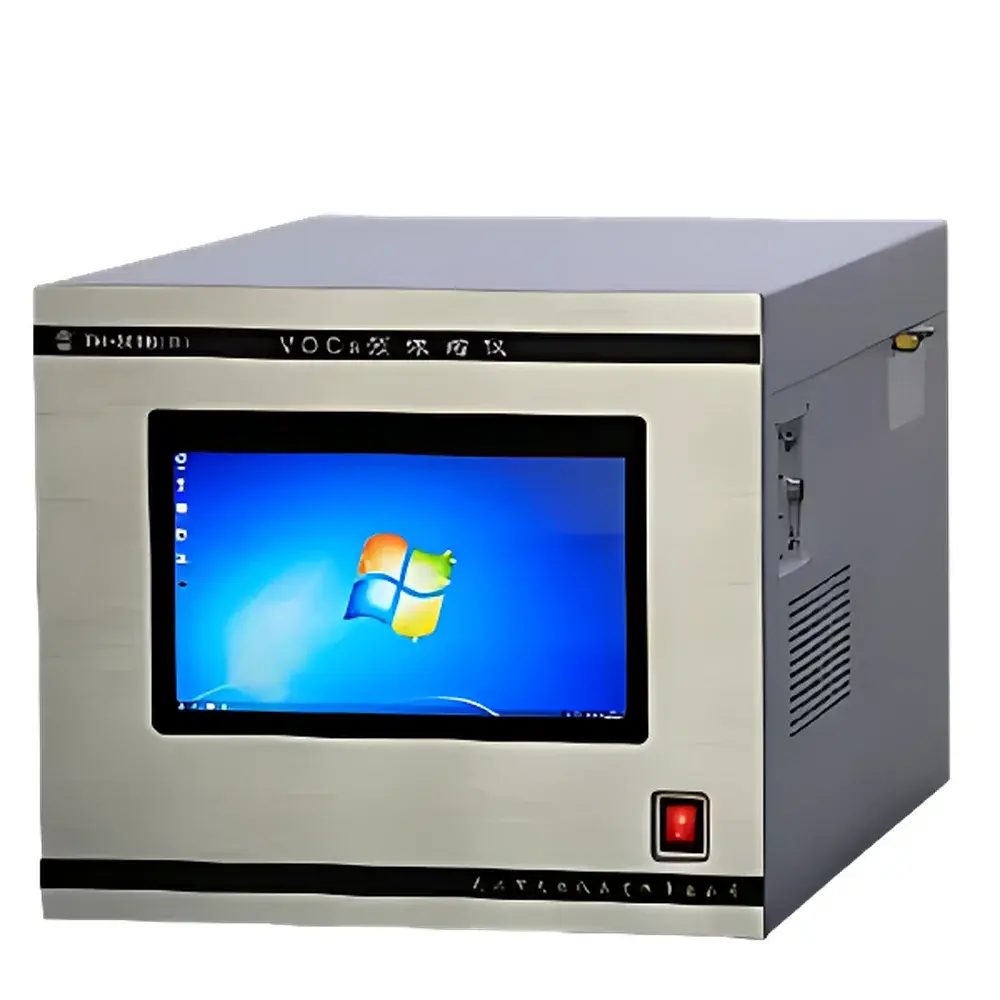
Tianhong TH-300L (I / II / III) VOC Pre-concentrator
| Brand | Tianhong |
|---|---|
| Origin | Hubei, China |
| Model | TH-300L (I / II / III) VOC Pre-concentrator |
| Cooling Temperature Range | -190 °C (adjustable) for trapping |
| Water Removal Temperature | -60 °C (adjustable) |
| Compliance | HJ 1010–2018, HJ 759–2015 |
| Sample Interface | Universal GC/GC-MS compatible |
| Detection Compatibility | FID, FPD, ECD, MS |
Overview
The Tianhong TH-300L (I / II / III) VOC Pre-concentrator is a cryogenically cooled, multi-stage thermal desorption system engineered for high-efficiency pre-concentration of trace-level volatile organic compounds (VOCs) from ambient air samples. It operates on the principle of cryogenic adsorption–desorption, utilizing ultra-low temperature trapping in inert, empty stainless-steel traps to retain analytes across a broad volatility range—from highly volatile C2 hydrocarbons (e.g., ethane, ethylene) to semi-volatile oxygenated species. Unlike sorbent-based concentrators limited by breakthrough and channeling, the TH-300L’s patent-pending empty-tube cryo-trapping architecture eliminates chemical interaction, ensuring quantitative recovery, minimal memory effect, and long-term stability. The system supports both offline canister analysis and direct coupling with gas chromatography (GC), GC–mass spectrometry (GC–MS), or other detector platforms—enabling compliance-driven workflows in environmental monitoring laboratories.
Key Features
- Triple-stage cryogenic pre-concentration architecture with independently adjustable temperature zones: trapping at –190 °C (liquid nitrogen-cooled), water removal at –60 °C, and focused desorption into the analytical column.
- Patented empty-tube trapping technology—no sorbent degradation, no analyte decomposition, and full compatibility with reactive or thermally labile VOCs including alkenes, chlorofluorocarbons (CFCs), and halogenated methanes.
- Modular design supporting three operational configurations (TH-300L I, II, III) to accommodate varying throughput, sensitivity, and regulatory scope—ideal for routine compliance testing or method development.
- Universal interface compatible with GC systems from Agilent, Thermo Fisher, Shimadzu, PerkinElmer, and other major manufacturers; supports standard 1/8″ or 1/4″ transfer lines and split/splitless injectors.
- Integrated temperature calibration and real-time cold trap monitoring via embedded Pt100 sensors and PID-controlled cooling circuits—ensuring reproducibility across >10,000 cycles.
Sample Compatibility & Compliance
The TH-300L series meets the instrumental performance requirements specified in Chinese national standards HJ 1010–2018 (Technical Specifications for Continuous Monitoring Systems of VOCs in Ambient Air) and HJ 759–2015 (Determination of VOCs in Ambient Air by Canister Sampling and GC–MS). It enables detection of regulated compound groups—including PAMS (Photochemical Assessment Monitoring Stations), TO-14/TO-15 target lists, ODS (ozone-depleting substances), and EPA Method 8260/8270 analytes—at sub-pptv (part-per-trillion-by-volume) levels when paired with high-resolution mass spectrometry. The system supports both whole-air canister analysis and active sampling via mass flow controllers, and its water removal stage ensures robust operation under high-humidity conditions (up to 95% RH) without compromising analyte integrity or column lifetime.
Software & Data Management
The TH-300L operates via a dedicated Windows-based control interface supporting method scheduling, temperature profile logging, cycle counter tracking, and audit-ready event timestamps. All instrument parameters—including trap temperatures, desorption ramp rates, valve timing sequences, and cooling gas pressure—are logged in CSV format with ISO/IEC 17025-aligned metadata fields. Optional integration with LIMS platforms is available through OPC UA or ASCII command protocols. For GLP/GMP environments, optional 21 CFR Part 11-compliant user authentication, electronic signatures, and immutable audit trails can be enabled via firmware update.
Applications
- Routine monitoring of ambient VOCs in urban, industrial, and background sites per national air quality networks.
- Method validation and reference material analysis in accredited third-party environmental testing laboratories.
- Source apportionment studies requiring speciated C2–C10 hydrocarbon profiles (e.g., ethane/ethene ratios, aromatic reactivity indices).
- Calibration verification of online GC–FID, GC–FPD, and GC–ECD systems used for benzene/toluene/xylene (BTX), sulfur compounds, or halocarbons.
- Offline analysis of SUMMA canisters, TO-14A/TO-15 canisters, and Tedlar bag samples prior to GC–MS quantification.
FAQ
What detection limits can be achieved with the TH-300L when coupled to GC–MS?
Typical method detection limits (MDLs) range from 0.2–5 pptv for C2–C8 VOCs using 10-L air samples and selected-ion monitoring (SIM) mode—dependent on instrument tuning, column efficiency, and background contamination control.
Is liquid nitrogen the only cryogen supported?
Yes—the TH-300L requires liquid nitrogen for achieving –190 °C trapping temperatures. An optional LN2 auto-fill system is available for unattended multi-day operation.
Can the TH-300L be used for continuous online monitoring?
It is designed primarily for discrete sample introduction (canister, bag, or active sampling), not real-time continuous stream analysis. However, it integrates seamlessly into automated sample carousel systems for high-throughput batch processing.
Does the system support EPA Method TO-15?
Yes—its trapping efficiency, desorption linearity, and humidity tolerance meet all critical performance criteria outlined in TO-15 for ambient air analysis.
What maintenance intervals are recommended?
Valve actuation and cold trap integrity should be verified quarterly; LN2 delivery lines require inspection before each campaign; full system calibration is recommended every six months or after 500 cycles, whichever occurs first.
Related Products







