
TH-830 Tianhong Online VOCs Monitoring System for Sulfur Compounds in Fixed Emission Sources
| Brand | Tianhong |
|---|---|
| Origin | Hubei, China |
| Manufacturer Type | Authorized Distributor |
| Regional Classification | Domestic (China) |
| Model | TH-830 |
| Pricing | Upon Request |
Overview
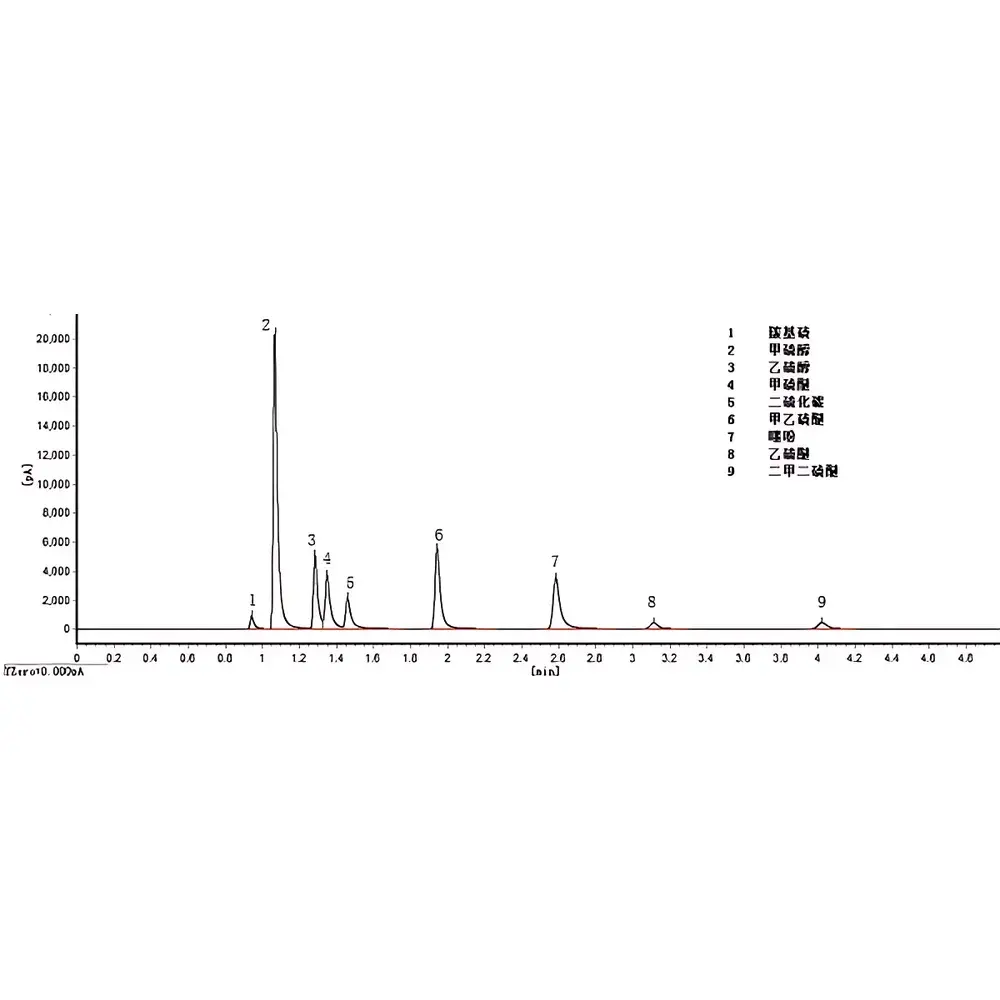
The TH-830 Tianhong Online VOCs Monitoring System for Sulfur Compounds is a fully automated, laboratory-grade gas chromatographic analyzer engineered for continuous, unattended measurement of volatile organic sulfur compounds (e.g., hydrogen sulfide, carbonyl sulfide, methyl mercaptan, dimethyl sulfide, and thiophenes) in fixed emission sources. It employs a two-dimensional gas chromatography (2D-GC) architecture with cryogenic preconcentration, thermal desorption, and selective detection via a flame photometric detector (FPD). The system operates on the principle of quantitative separation of target analytes in complex industrial exhaust matrices—first by trapping volatile sulfur species onto a dual-bed low-temperature cold trap (−40 °C), followed by rapid thermal desorption at 250 °C, sequential chromatographic separation using a dedicated pre-column and analytical column, and selective quantification based on sulfur-specific chemiluminescence in the FPD. Designed for compliance-grade monitoring, it meets the operational requirements of long-term deployment in harsh industrial environments including coke oven gas, pulp & paper mill stacks, tannery exhaust ducts, and synthetic fiber production lines.
Key Features
- Fully integrated online sampling workflow: automated moisture removal, cryogenic enrichment, thermal desorption, GC separation, and FPD detection—all executed without manual intervention.
- Sulfur-passivated fluidic path: all stainless-steel tubing, valves, traps, and connectors undergo rigorous sulfur passivation to eliminate active adsorption sites and ensure quantitative recovery of reactive sulfur species.
- Cryogenic preconcentration at −40 °C: enhances capture efficiency for low-boiling-point sulfur compounds (e.g., H2S, COS) that are otherwise difficult to retain at ambient temperatures.
- High-speed thermal desorption: programmable ramp to 250 °C in <10 seconds ensures sharp, reproducible injection bands and minimizes carryover and peak broadening.
- FPD optimized for sulfur selectivity: achieves sub-part-per-trillion (pptv) detection limits with linear dynamic range spanning five orders of magnitude (0.05–10,000 ppbv).
- Integrated electronic pressure control (EPC): independently regulates carrier gas (N2 or He), hydrogen, and air flows with precision of ±0.01 psi, ensuring retention time stability and method robustness across temperature and pressure fluctuations.
- Comprehensive system diagnostics: built-in self-test at power-on, gas failure detection with automatic shutdown, auto-restart after gas restoration, and configurable audible/visual alarms for critical fault conditions.
Sample Compatibility & Compliance
The TH-830 is validated for direct analysis of hot, humid, particulate-laden flue gases from stationary sources, with optional heated sample line (up to 180 °C) and inline particulate filtration. It complies with core technical requirements of HJ 1012–2018 (China’s Technical Specification for Online Monitoring of VOCs in Fixed Pollution Sources) and aligns with the analytical principles referenced in EPA Method TO-15 and ISO 16017-1 for VOC speciation. While not certified under EU MCERTS or U.S. EPA PS-15, its hardware architecture—including traceable calibration gas interfaces, audit-ready event logging, and full data traceability—supports GLP-compliant operation and facilitates adaptation to regional QA/QC frameworks such as ISO/IEC 17025.
Software & Data Management
The system runs on embedded Linux-based firmware with a web-accessible user interface (HTTPS-enabled, role-based login). Chromatographic data acquisition, peak integration, and calibration curve generation are handled by Tianhong’s proprietary ChromaView™ software, which supports multi-point external standard calibration, internal standard correction, and real-time concentration reporting in µg/m³ or ppbv. All raw chromatograms, method parameters, maintenance logs, and alarm histories are stored locally with optional secure FTP or MODBUS TCP export. Audit trails meet basic ALCOA+ criteria (attributable, legible, contemporaneous, original, accurate), and data files are timestamped and digitally signed to support regulatory review.
Applications
- Continuous emissions monitoring (CEM) of sulfur-containing VOCs from coking plants, coal gasification units, and syngas purification systems.
- Stack testing and process optimization in pulp & paper mills, particularly during kraft pulping and odor control scrubber bypass evaluation.
- Regulatory compliance tracking for tanneries and leather finishing facilities subject to H2S and mercaptan emission limits.
- Research-grade speciation studies of sulfur VOC profiles in municipal wastewater treatment off-gases and biogas upgrading streams.
- Method development and validation support for laboratories accredited under CNAS (China National Accreditation Service) for environmental testing.
FAQ
What sulfur compounds can the TH-830 reliably quantify?
The system is optimized for hydrogen sulfide (H2S), carbonyl sulfide (COS), methyl mercaptan (CH3SH), ethyl mercaptan (C2H5SH), dimethyl sulfide (DMS), and thiophene—subject to method validation per application matrix.
Is the TH-830 compatible with existing CEMS infrastructure?
Yes—it provides 4–20 mA analog outputs, Modbus RTU/TCP digital communication, and optional DCS integration kits for seamless interfacing with plant-level SCADA and environmental data management systems (EDMS).
How often does the system require calibration and maintenance?
A two-point daily calibration is recommended; full multi-point calibration every 7 days. Cold trap refurbishment and FPD jet cleaning are scheduled every 90 days under continuous operation, with preventive maintenance intervals documented in the onboard log.
Can the TH-830 operate in high-humidity or high-dust environments?
With optional heated sample probe (180 °C), particulate filter housing, and Nafion-based permeation dryer, it maintains stable performance in stack gases with relative humidity up to 95% RH and dust loading ≤50 mg/m³.
Does the system support remote diagnostics and firmware updates?
Yes—via secure SSH and HTTPS access, technicians can perform real-time status checks, retrieve diagnostic logs, and deploy verified firmware patches without onsite visits.
Related Products







