
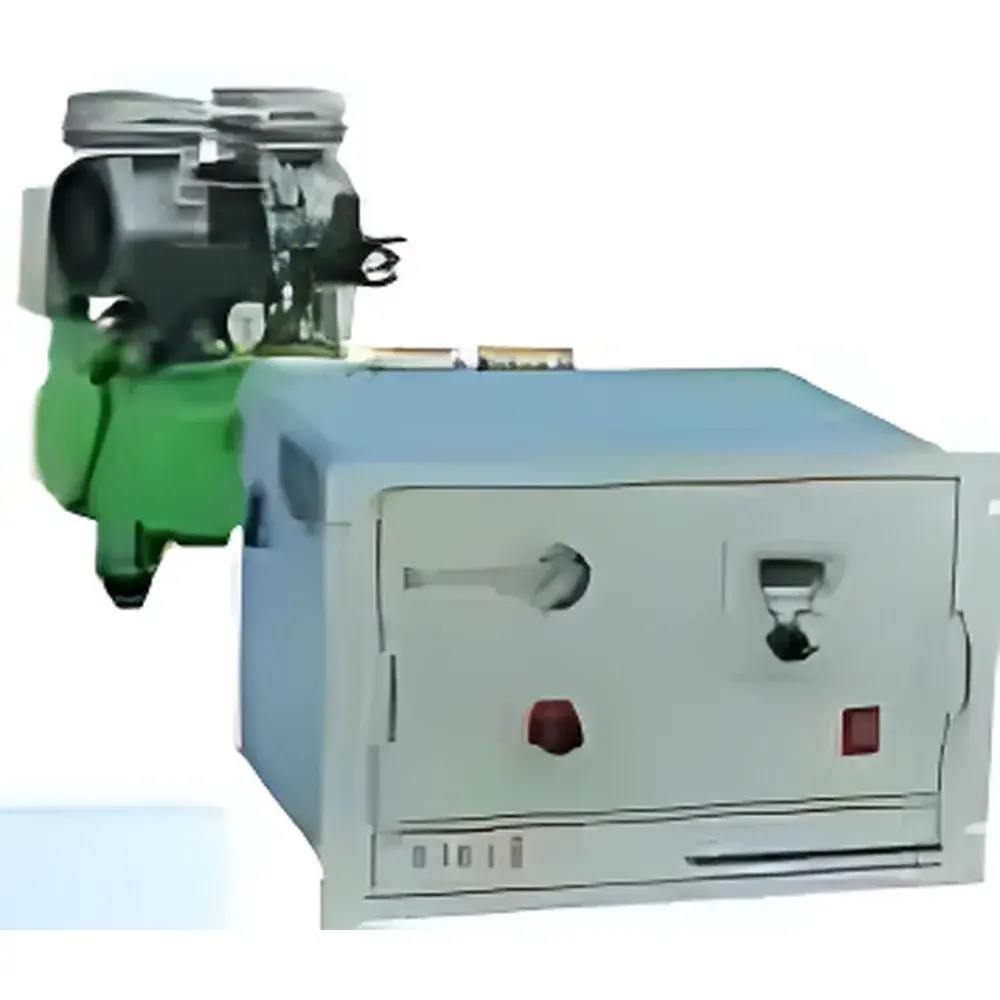
Tianhong TH-2008H Dynamic Multi-Gas Calibrator
| Brand | Tianhong |
|---|---|
| Origin | Hubei, China |
| Model | TH-2008H |
| Display | 7-inch full-touch color LCD |
| Interface | Chinese menu-based UI |
| Programmability | Up to 100 program/sequence segments |
| Compensation | Automatic temperature & pressure compensation |
| Communication | RS232, RS485, USB, Ethernet |
| Remote capability | Remote zero/span command execution & internal parameter diagnostics |
| Alarm | Multi-parameter fault alerting |
| O₃ generation | Onboard ozone generator with 16-point certified calibration |
| Calibration method | Dynamic dilution of certified standard gases with zero air |
| Target analytes | SO₂, NO, NO₂, O₃, CO, NOₓ (via gas-phase titration) |
| Compliance context | Designed for compliance with EPA Protocol Gas Certification requirements, ISO 17025 traceable calibration workflows, and GLP/GMP-aligned instrument qualification (IQ/OQ) |
Overview
The Tianhong TH-2008H Dynamic Multi-Gas Calibrator is an engineered solution for traceable, programmable, and metrologically robust calibration of ambient air monitoring analyzers. It operates on the principle of dynamic gas dilution—precisely blending certified standard gas mixtures with high-purity zero air to generate stable, low-concentration reference gases in real time. Unlike static cylinder-based calibration, this system enables continuous, repeatable, and concentration-variable output across multiple target species—including sulfur dioxide (SO₂), nitric oxide (NO), nitrogen dioxide (NO₂), ozone (O₃), carbon monoxide (CO), and total reactive nitrogen oxides (NOₓ). Its integrated ozone generation module employs UV photolysis and is calibrated across 16 discrete concentration points using NIST-traceable transfer standards, ensuring linearity and stability over its operational range. The instrument supports gas-phase titration (GPT) methodology for quantifying NO₂ conversion efficiency in thermal or catalytic NOₓ analyzers—a critical requirement under U.S. EPA Method 205 and EN 14625.
Key Features
- Two independent mass flow controllers (MFCs) for precise zero air and standard gas blending—enabling dynamic dilution ratios from 1:10 to 1:10,000 with reproducible accuracy.
- Onboard ozone generator with integrated UV absorption detection and 16-point factory calibration certificate; supports both fixed-point and user-defined O₃ concentrations (e.g., 50–500 ppb).
- 7-inch capacitive touch screen with intuitive Chinese-language interface—designed for field technicians and QA/QC personnel without specialized software training.
- Configurable calibration sequences: up to 100 programmable segments per sequence, each defining gas type, concentration, duration, ramp rate, and endpoint validation criteria.
- Real-time temperature and barometric pressure compensation applied to all MFC readings—ensuring volumetric flow accuracy under variable environmental conditions (15–35 °C, 80–106 kPa).
- Comprehensive remote operation capability via Ethernet or serial interfaces: accepts zero/span commands, initiates automated sequences, retrieves diagnostic logs, and exports runtime parameters for audit trails.
- Multi-level alarm system monitors MFC drift, pressure loss, ozone sensor deviation, power anomaly, and communication timeout—with configurable audible/visual alerts and event logging.
Sample Compatibility & Compliance
The TH-2008H is compatible with all major ambient air analyzers utilizing electrochemical, chemiluminescence, UV photometry, NDIR, and fluorescence detection principles. It meets functional requirements outlined in U.S. EPA Performance Specifications (PS-1, PS-2, PS-3, PS-5), EU Directive 2008/50/EC Annex VI, and ISO 12039 for SO₂, NOₓ, and CO analyzer calibration. While not itself a certified reference material producer, the system is designed to integrate with ISO 6141-certified standard gas cylinders and zero air sources meeting ASTM D1941 specifications (hydrocarbon <0.1 ppm, NOₓ <0.5 ppb, O₃ <0.5 ppb). All calibration sequences support electronic record retention aligned with 21 CFR Part 11 principles—including user authentication, audit trail generation, and immutable data export.
Software & Data Management
The embedded firmware supports local storage of ≥10,000 calibration events with timestamps, operator IDs, gas identifiers, target concentrations, actual outputs, and pass/fail status. Data export is available in CSV format via USB or network transfer. Optional PC-based configuration software (Windows-compatible) enables advanced sequence scripting, report templating, and integration with LIMS platforms through OPC UA or MODBUS TCP protocols. Audit trails include full change history for all parameter modifications, with digital signatures applied to completed calibration certificates.
Applications
- Field and laboratory calibration of regulatory-grade ambient air monitoring stations (e.g., EPA SLAMS, EEA AirBase networks).
- Verification of NO₂ converter efficiency in chemiluminescent NOₓ analyzers using gas-phase titration with known NO + O₃ reaction kinetics.
- Multi-point linearity verification for O₃ photometers across tropospheric concentration ranges (10–500 ppb).
- Zero air validation and span gas verification prior to long-term unattended operation of continuous emission monitoring systems (CEMS).
- Supporting ISO/IEC 17025 accredited laboratories in maintaining measurement traceability to national standards via documented dilution protocols.
FAQ
Does the TH-2008H generate zero air internally?
No—it requires connection to an external zero air source meeting ASTM D1941 or ISO 8573-1 Class 1 specifications. The unit controls and meters zero air flow but does not purify or generate it.
Can it calibrate particulate matter (PM) instruments?
No—the TH-2008H is designed exclusively for gaseous analytes. PM calibrations require aerosol generators and size-selective dilution systems.
Is ozone calibration traceable to NIST?
Yes—the onboard ozone generator is calibrated against a NIST-traceable transfer standard (SRM 2681B or equivalent), with full calibration documentation provided per unit.
What communication protocols are supported for SCADA integration?
Modbus RTU (RS485), Modbus TCP (Ethernet), and ASCII command sets over RS232/USB are natively supported; custom API integration is available upon request.
How often does the system require recalibration?
Annual verification of MFC accuracy and ozone generator linearity is recommended per ISO/IEC 17025 clause 5.6; full recalibration is advised after any hardware service or environmental shock event.
Related Products







