
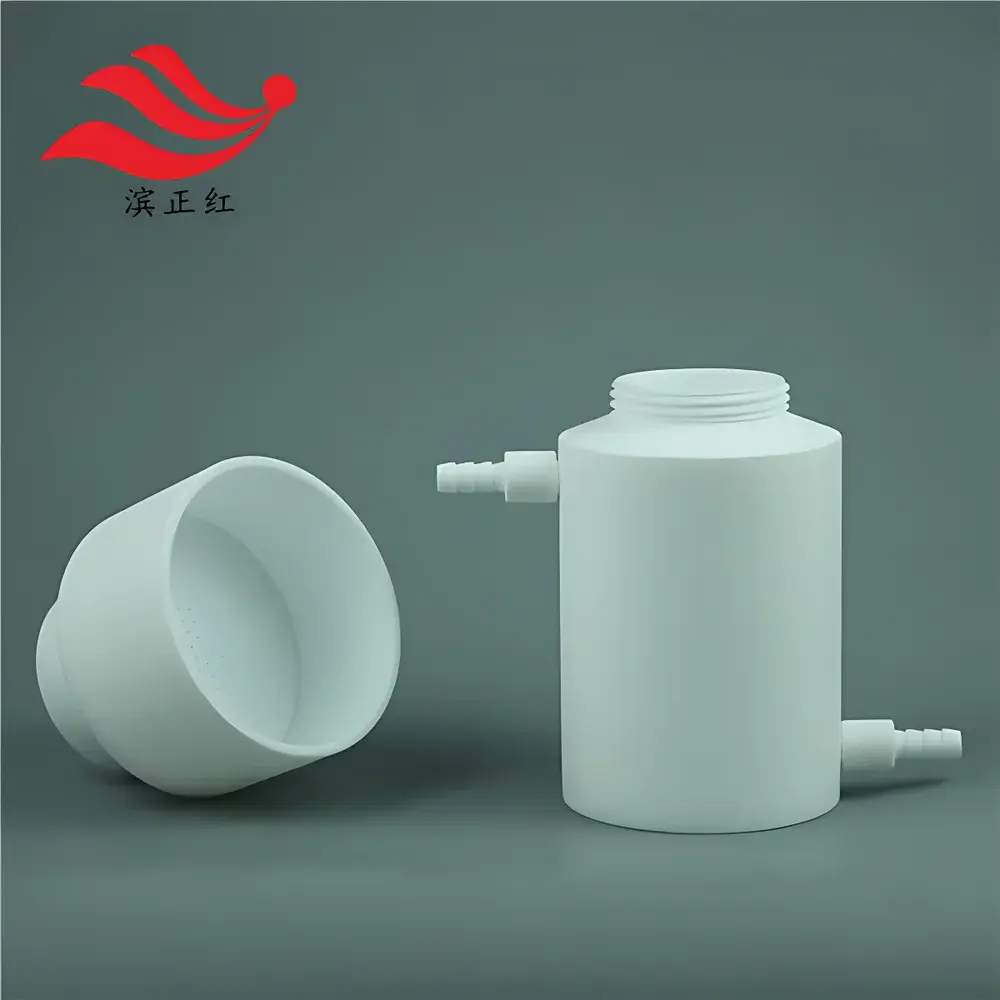
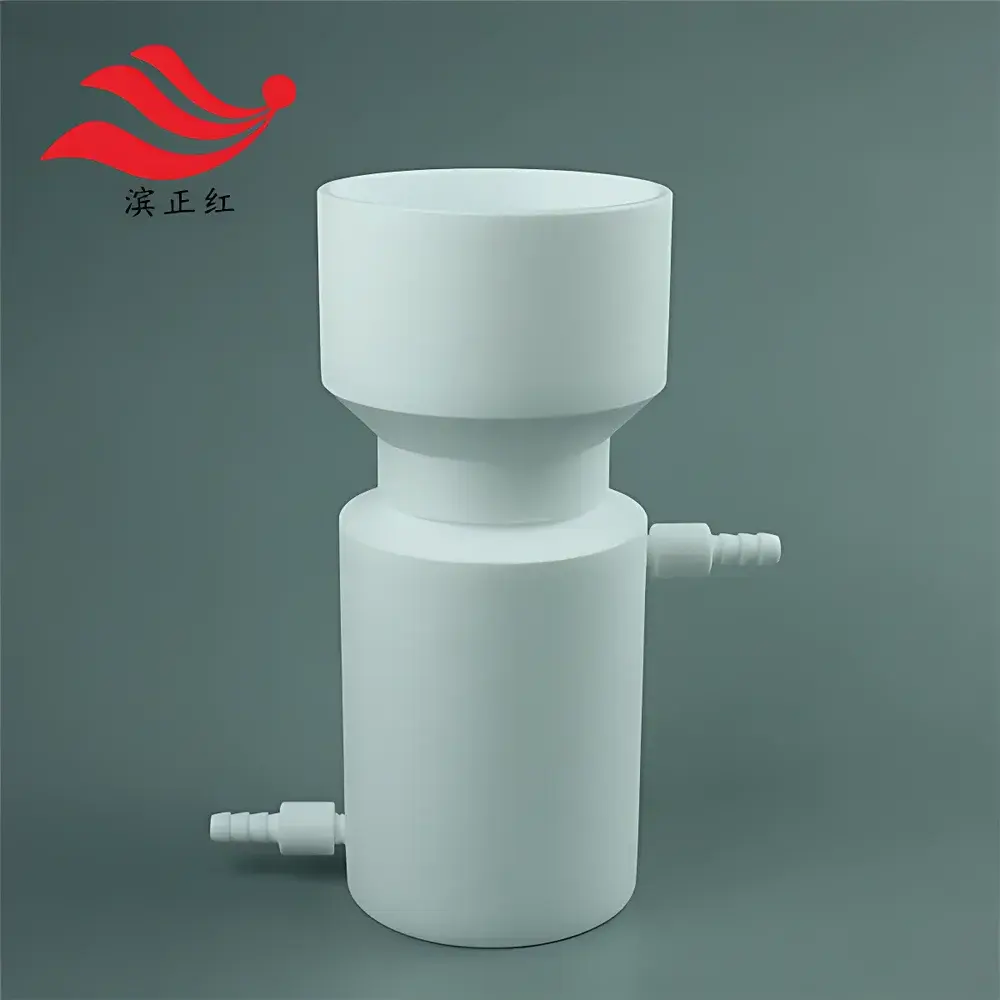
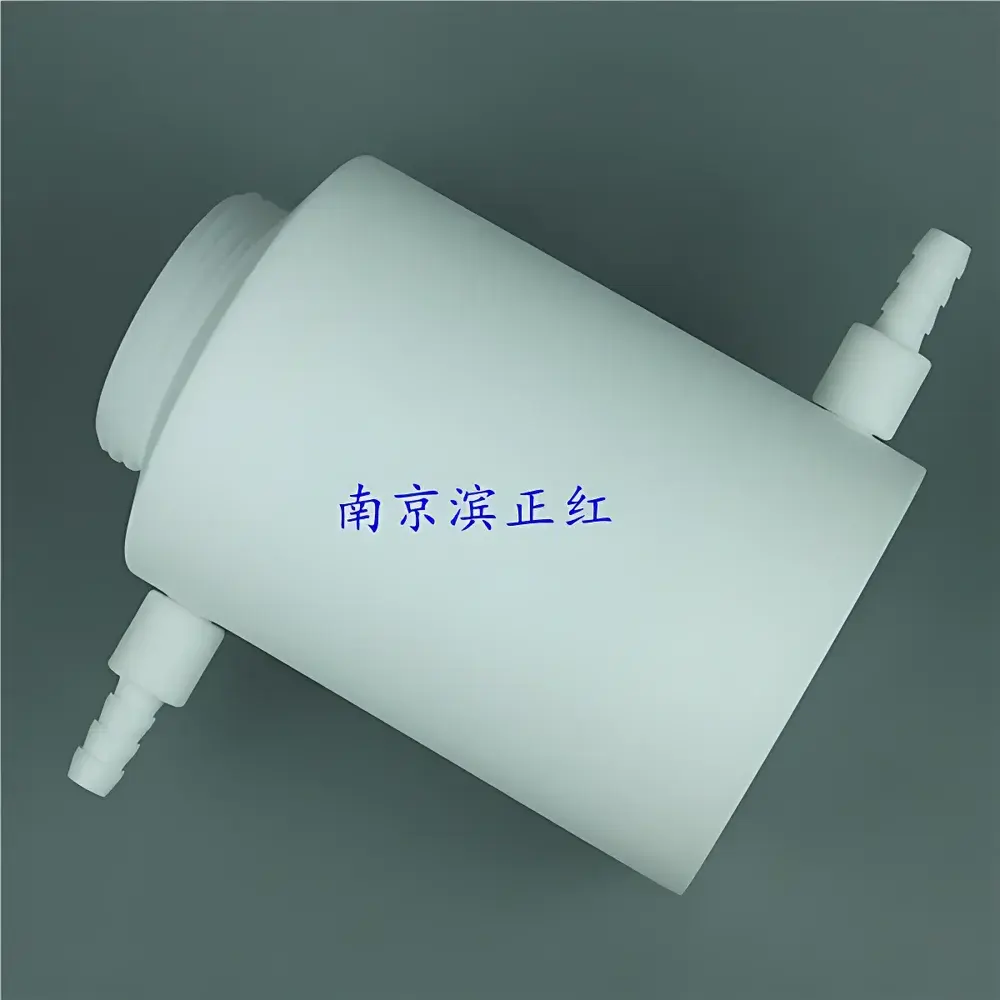
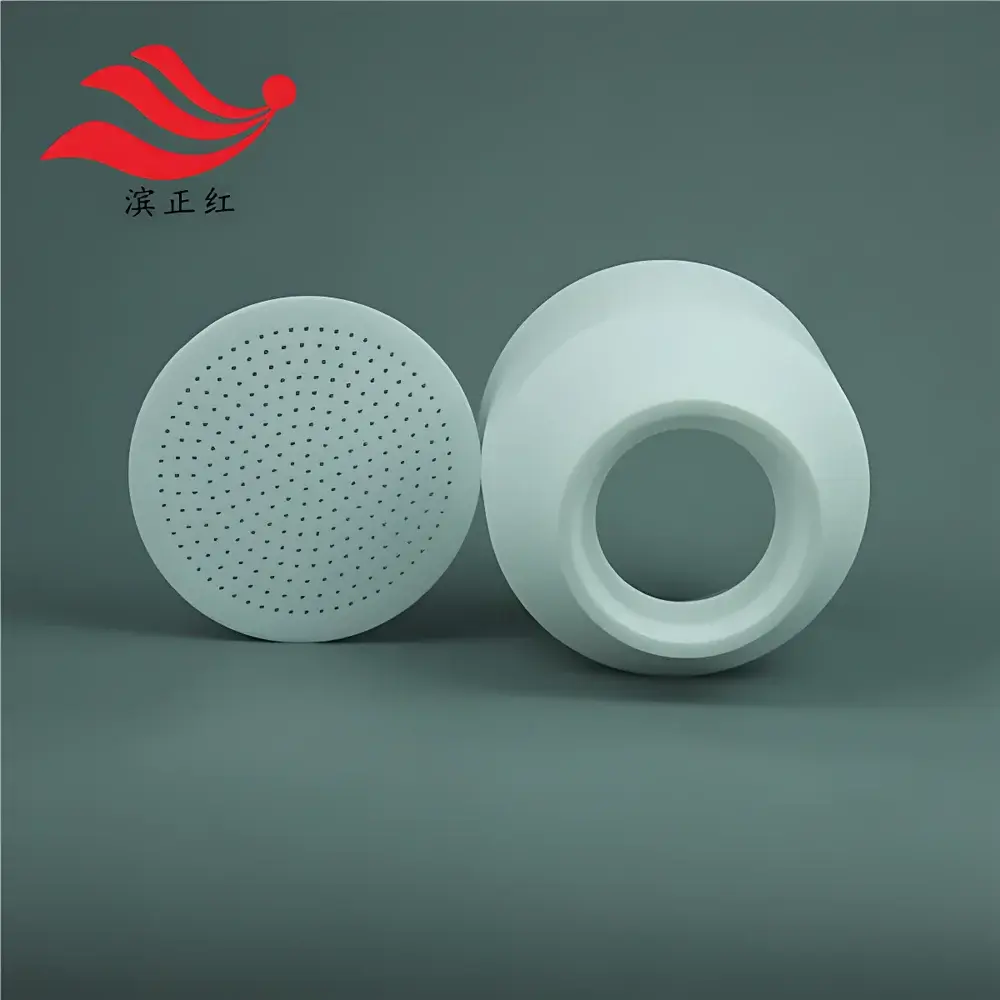
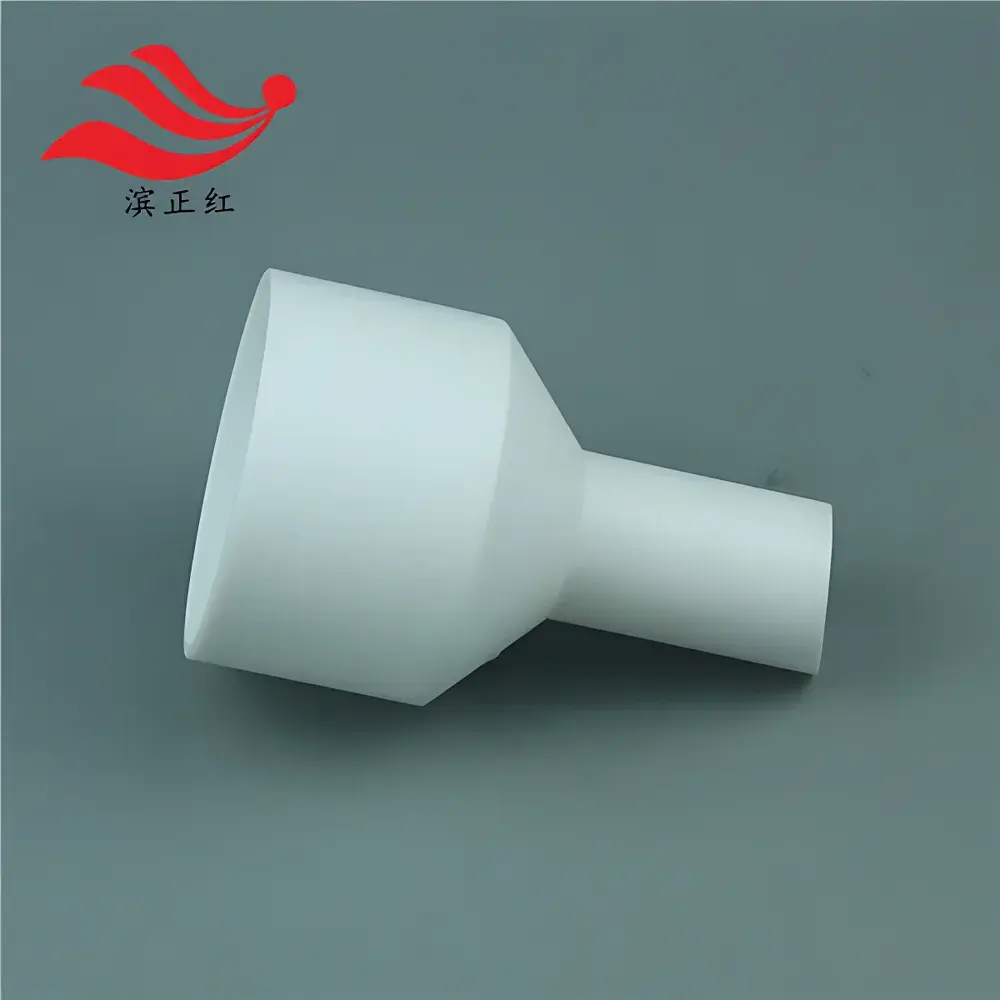
PTFE Buchner Funnel – Chemical-Resistant, Impact-Proof Alternative to Ceramic Funnels with Vacuum Filtration Compatibility
| [Brand | Nanjing Binzhenghong |
|---|---|
| Origin | Jiangsu, China |
| Manufacturer Type | Direct Producer |
| Country of Origin | China |
| Pricing | Upon Request] |
Overview
The PTFE Buchner Funnel is a high-performance, chemically inert filtration device engineered for rigorous laboratory vacuum (negative-pressure) filtration applications. Constructed entirely from virgin polytetrafluoroethylene (PTFE), this funnel operates on the principle of pressure-driven solid–liquid separation under reduced ambient pressure—typically achieved via water aspirators, diaphragm vacuum pumps, or vacuum manifolds connected to an appropriate filter flask (e.g., thick-walled borosilicate glass suction flasks). Unlike traditional ceramic Buchner funnels, which are prone to chipping, cracking, or catastrophic fracture upon mechanical impact or thermal shock, the PTFE variant delivers exceptional structural resilience without compromising chemical fidelity. Its operational temperature range spans −200 °C to +250 °C, enabling safe use in cryogenic crystallization workflows and elevated-temperature hot filtrations—provided thermal gradients are controlled to prevent localized stress. The material’s near-zero extractables and minimal surface adsorption ensure sample integrity, particularly critical in trace-metal analysis, pharmaceutical intermediate isolation, and catalyst recovery protocols.
Key Features
- Full-body construction from virgin, USP Class VI-compliant PTFE—certified for low leachability and non-reactivity across acidic, basic, oxidative, and organic media, including aqua regia, fuming nitric acid, molten alkalis, and chlorinated solvents.
- Impact-resistant design eliminates breakage risk during handling, transport, or accidental drops—reducing lab downtime and consumables waste versus brittle ceramic counterparts.
- Uniform white appearance confirms absence of fillers, pigments, or recycled polymer content—essential for visual clarity during precipitate observation and qualitative assessment.
- Thermal stability verified at −196 °C (liquid nitrogen immersion), retaining ≥5% elongation at break—supporting cryofiltration of metastable intermediates without embrittlement.
- Smooth internal surface finish minimizes particle adhesion and facilitates complete cake removal; compatible with standard rubber or silicone stoppers (e.g., size #6, #7, #8) for secure flask sealing.
Sample Compatibility & Compliance
This funnel is validated for use with coarse-to-medium crystalline solids, hydrated metal oxides, precipitated carbonates, and aggregated organic salts—typical outputs from inorganic synthesis, recrystallization, and gravimetric analysis procedures. It is not intended for sub-micron colloidal suspensions or gelatinous precipitates requiring sintered glass or membrane support. While PTFE itself conforms to ISO 10993-5 (cytotoxicity) and USP (biological reactivity), end-use compliance depends on full system configuration—including flask material (e.g., borosilicate 3.3 per DIN ISO 3585), hose composition (e.g., Viton® or PTFE-lined tubing), and pump oil compatibility. No regulatory certification (e.g., FDA 21 CFR Part 11) applies to passive filtration hardware; however, documented cleaning validation (e.g., residue testing per ICH Q5C) supports GMP-aligned manufacturing environments.
Software & Data Management
As a passive mechanical component, the PTFE Buchner Funnel requires no embedded electronics, firmware, or software interface. Its integration into digitally managed workflows relies solely on external instrumentation: vacuum pressure sensors (e.g., digital manometers with 0.1 kPa resolution), programmable vacuum controllers, or LIMS-linked pump systems logging runtime, pressure setpoints, and cycle counts. Users may assign unique asset IDs and maintenance histories within laboratory inventory modules—ensuring traceability per ISO/IEC 17025:2017 Clause 6.4.1 (equipment management).
Applications
- Reduction of inorganic precipitates (e.g., BaSO₄, CaCO₃, AgCl) in quantitative gravimetric analysis per ASTM E29, ISO 5725, or USP ⟨521⟩.
- Isolation of thermally sensitive organometallic complexes following low-temperature synthesis under inert atmosphere.
- Recovery of heterogeneous catalysts (e.g., Pd/C, Raney Ni) from reaction mixtures containing halogenated solvents or strong acids.
- Preparative-scale filtration of API intermediates where metal contamination must remain below 1 ppb—leveraging PTFE’s ultra-low elemental background.
- Cryofiltration of lithium amide adducts or sodium naphthalenide solutions at −78 °C using dry ice–acetone baths.
FAQ
Can this funnel be autoclaved?
Yes—PTFE withstands repeated steam sterilization at 121 °C for 20 minutes; however, prolonged exposure above 200 °C may induce slight creep deformation. Autoclaving is not required for most chemical applications but may be used for microbiological work.
Is it compatible with hydrofluoric acid (HF)?
Yes—PTFE exhibits full resistance to anhydrous and aqueous HF across all concentrations and temperatures up to 250 °C, making it suitable for semiconductor-grade etch residue removal.
How should it be cleaned between uses?
Rinse thoroughly with high-purity water followed by acetone or isopropanol; air-dry in a laminar flow hood. For stubborn residues, soak in warm 10% NaOH or 30% HNO₃ for ≤2 hours—avoid chromic acid cleaners.
Does diameter customization affect filtration efficiency?
Diameter selection must match flask neck size and expected slurry volume. Larger diameters increase throughput but reduce vacuum uniformity across the frit surface if cake thickness is uneven; consult ASTM F3221 for guidance on area-to-volume ratios.
Can it be used with filter paper instead of fritted discs?
Yes—standard qualitative or quantitative filter papers (e.g., Whatman Grade 4, 541) are fully compatible; ensure paper edges are trimmed flush to prevent bypass leakage.



