
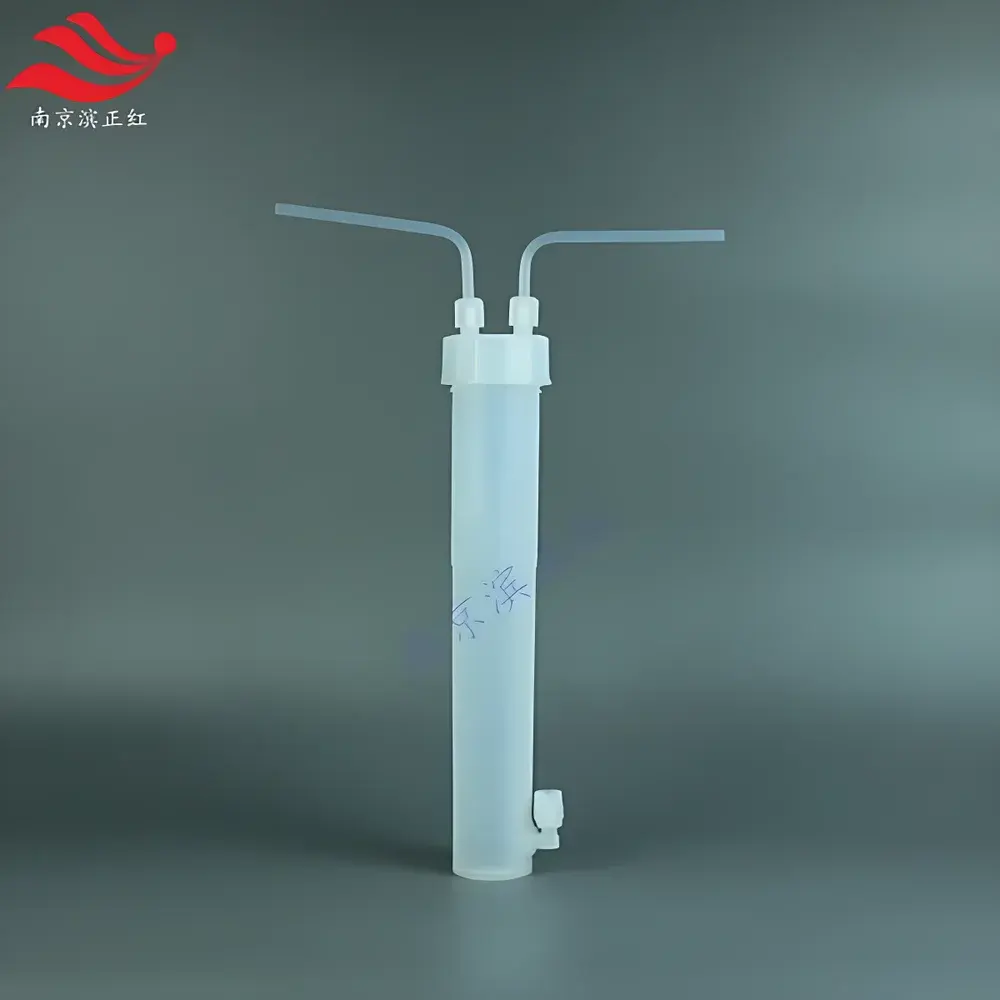
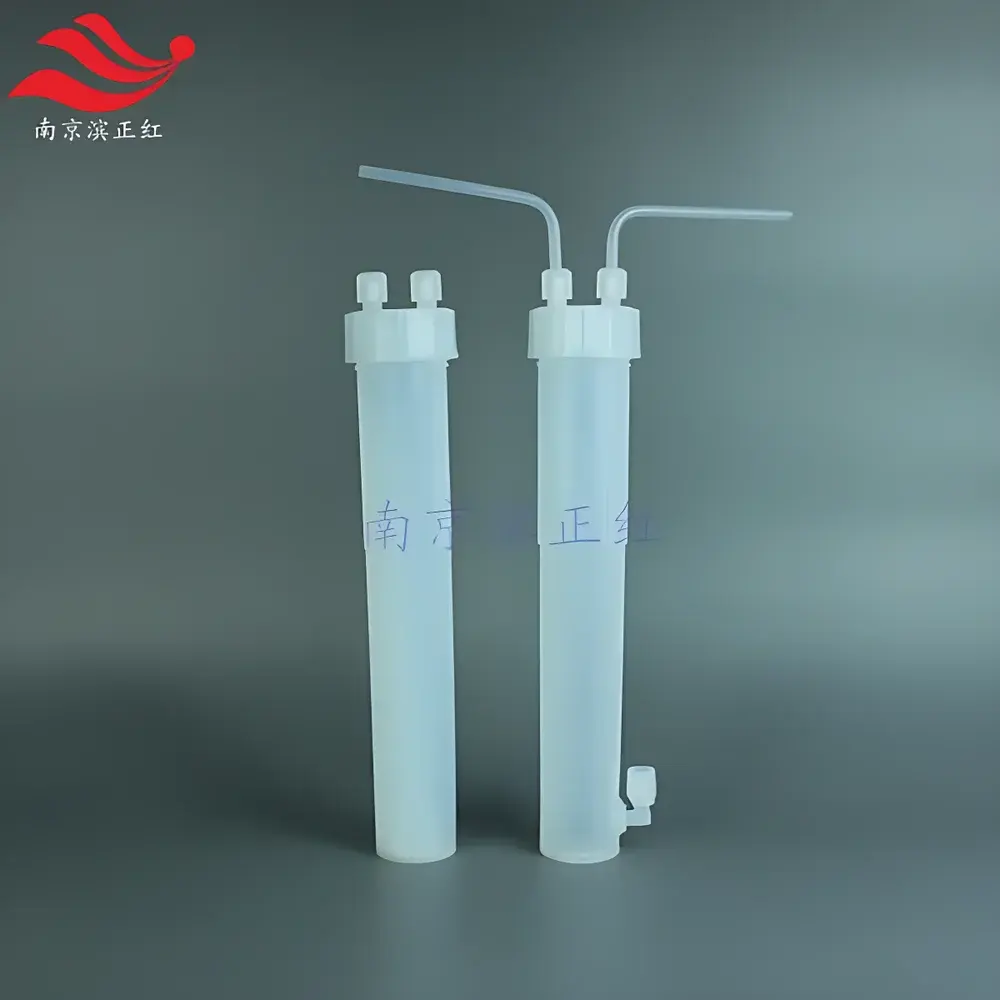
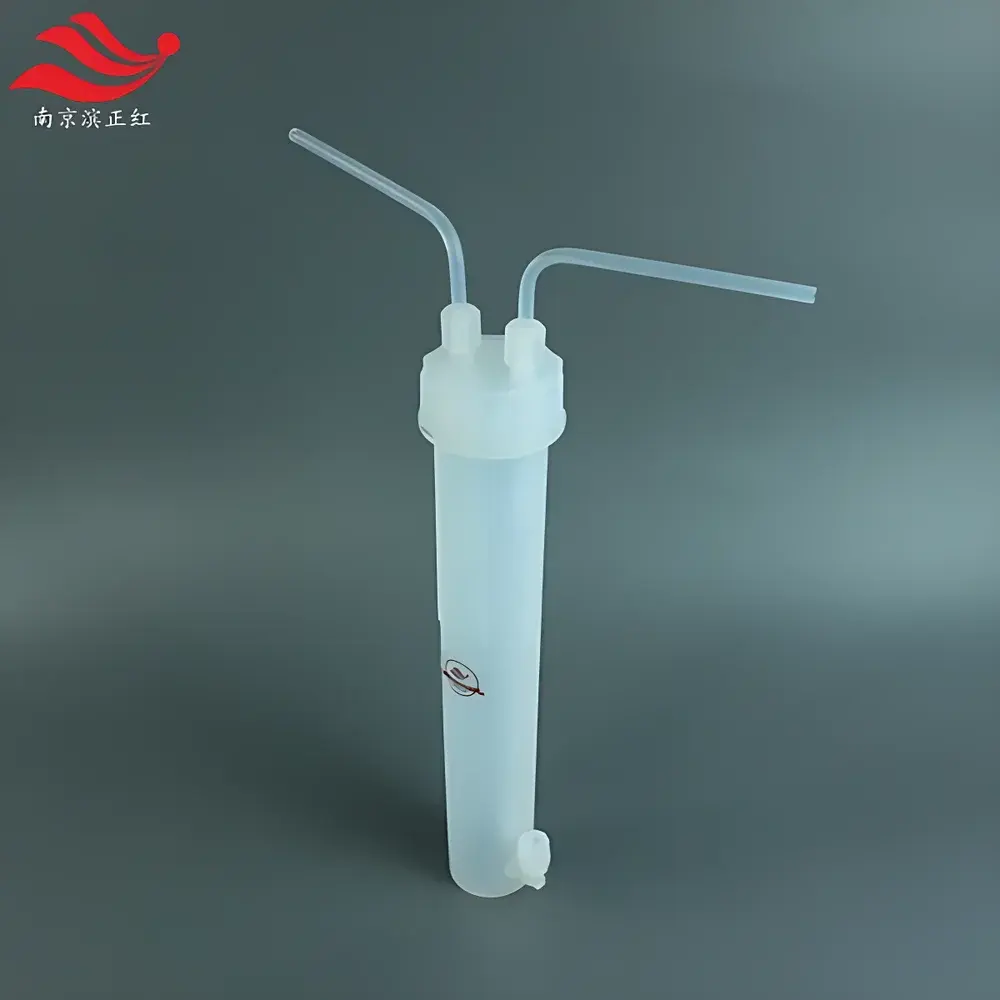
PFA Dual-Neck Reaction Vessel, 375 mL, Fluorinated Ethylene Propylene (FEP) Resin-Lined, Acid- and Alkali-Resistant
| Brand | Binzhenghong |
|---|---|
| Origin | Jiangsu, China |
| Manufacturer Type | Direct Producer |
| Origin Classification | Domestic |
| Model | NJ-PFA-FYP-375 |
| Pricing | Upon Request |
Overview
The PFA Dual-Neck Reaction Vessel (Model NJ-PFA-FYP-375) is a high-purity, chemically inert laboratory vessel engineered for demanding analytical, synthesis, and sample preparation applications where extreme resistance to aggressive reagents is essential. Constructed entirely from perfluoroalkoxy alkane (PFA) resin—a melt-processable fluoropolymer with performance characteristics closely aligned with polytetrafluoroethylene (PTFE)—this 375 mL dual-neck flask offers exceptional thermal stability (continuous use up to 260 °C), near-zero extractables, and outstanding resistance to virtually all strong acids (including aqua regia, hydrofluoric acid <50% at ambient temperature), alkalis, oxidizers, and organic solvents. Its design conforms to standard laboratory glassware geometry while eliminating the fragility and leaching risks associated with borosilicate glass or lower-grade fluoropolymers. The dual-neck configuration (typically standardized 24/40 and 14/23 ground-glass joints) enables simultaneous integration of condensers, thermometers, addition funnels, or inert gas inlets—making it suitable for reflux, distillation, controlled addition reactions, and closed-system digestion protocols under inert atmosphere.
Key Features
- Monolithic PFA construction ensures zero metal ion contamination and negligible background interference in trace elemental analysis (e.g., ICP-MS, ICP-OES) and ultra-trace organic quantification.
- High optical clarity enables real-time visual monitoring of reaction progress without compromising chemical integrity.
- Non-stick surface minimizes sample adhesion and facilitates quantitative recovery—critical for low-volume, high-value samples.
- Thermal shock resistance allows direct transfer between cryogenic storage (–200 °C) and hotplate heating (up to 260 °C) without cracking or deformation.
- Ground-glass joints meet ISO 3803 and DIN 12270 specifications for dimensional accuracy and sealing reliability; compatible with standard PTFE-sleeved stopcocks and adapters.
- Autoclavable and compatible with cleanroom Class 100 (ISO 5) handling protocols when processed per ASTM D297-19 Annex A4 cleaning procedures.
Sample Compatibility & Compliance
This vessel is validated for use with corrosive matrices including but not limited to: concentrated HNO₃, HCl, HF (≤50% w/w), H₂SO₄ (≤98%), H₃PO₄, NaOH (≤50% w/w), KOH, hydrogen peroxide (≤30%), and mixed acid digestants (e.g., HNO₃/HF/HClO₄). It complies with USP for plastic packaging systems and meets the material requirements outlined in EPA Method 3050B, 3051A, and 3052 for microwave-assisted acid digestion. While not certified to ISO/IEC 17025 as a measurement device, its material certification documentation supports GLP and GMP-compliant workflows when used within validated laboratory methods. Batch-specific Certificate of Conformance (CoC) includes FTIR verification of PFA identity and extractables testing per USP .
Software & Data Management
As a passive containment vessel, this PFA reactor does not incorporate embedded electronics or firmware. However, it integrates seamlessly into digitally managed laboratory environments: joint dimensions and neck spacing are CAD-documented (STEP and IGES formats available upon request) for BIM integration in lab facility planning; usage logs can be tracked via LIMS using configurable asset IDs (e.g., NJ-PFA-FYP-375-XXXXX); and its compatibility with automated sample introduction systems (e.g., CETAC ASX-560, PerkinElmer SC-200) supports audit-ready workflow traceability under FDA 21 CFR Part 11 when paired with compliant software platforms.
Applications
- Trace-metal digestion of environmental soils, sediments, and biological tissues prior to ICP-MS analysis.
- Synthesis of air- and moisture-sensitive organometallic compounds under nitrogen or argon glovebox conditions.
- High-temperature hydrothermal reactions involving supercritical water or acidic mineralizing agents.
- Calibration standard preparation for multi-element reference materials where borosilicate leaching would bias results.
- Long-term storage of high-purity standards and stock solutions requiring pH stability and minimal adsorption.
- Pharmaceutical residual solvent analysis (ICH Q3C) where PFA’s low volatility and non-reactivity prevent artifact formation during headspace equilibration.
FAQ
Is this vessel suitable for hydrofluoric acid (HF) digestion?
Yes—PFA exhibits superior resistance to HF compared to FEP or ETFE, enabling safe use with ≤50% (w/w) HF at temperatures up to 120 °C. For higher concentrations or temperatures, consult the manufacturer’s chemical compatibility chart and perform risk assessment per ISO 15190.
Can it be used in microwave digestion systems?
Yes—Model NJ-PFA-FYP-375 is rated for continuous operation in closed-vessel microwave systems operating at frequencies of 2.45 GHz and maximum power outputs up to 1,600 W, provided pressure relief mechanisms are externally integrated.
Does the vessel require special cleaning before first use?
Yes—prior to initial use, rinse three times with high-purity water (≥18.2 MΩ·cm), followed by sequential rinses with methanol and acetone, then dry under laminar-flow nitrogen purge. Avoid ultrasonic cleaning unless verified for PFA-specific frequency settings to prevent microfracture initiation.
Are replacement ground-glass joints available?
No—joints are integrally molded during PFA extrusion and cannot be replaced. Damage to joints necessitates full vessel replacement to maintain chemical integrity and vacuum rating.
What is the maximum recommended operating pressure?
When sealed with PTFE-coated stopcocks and operated below 200 °C, the vessel maintains structural integrity up to 2 bar(g) static pressure; dynamic pressure spikes during exothermic reactions must be mitigated via pressure-relief valves installed upstream.



