
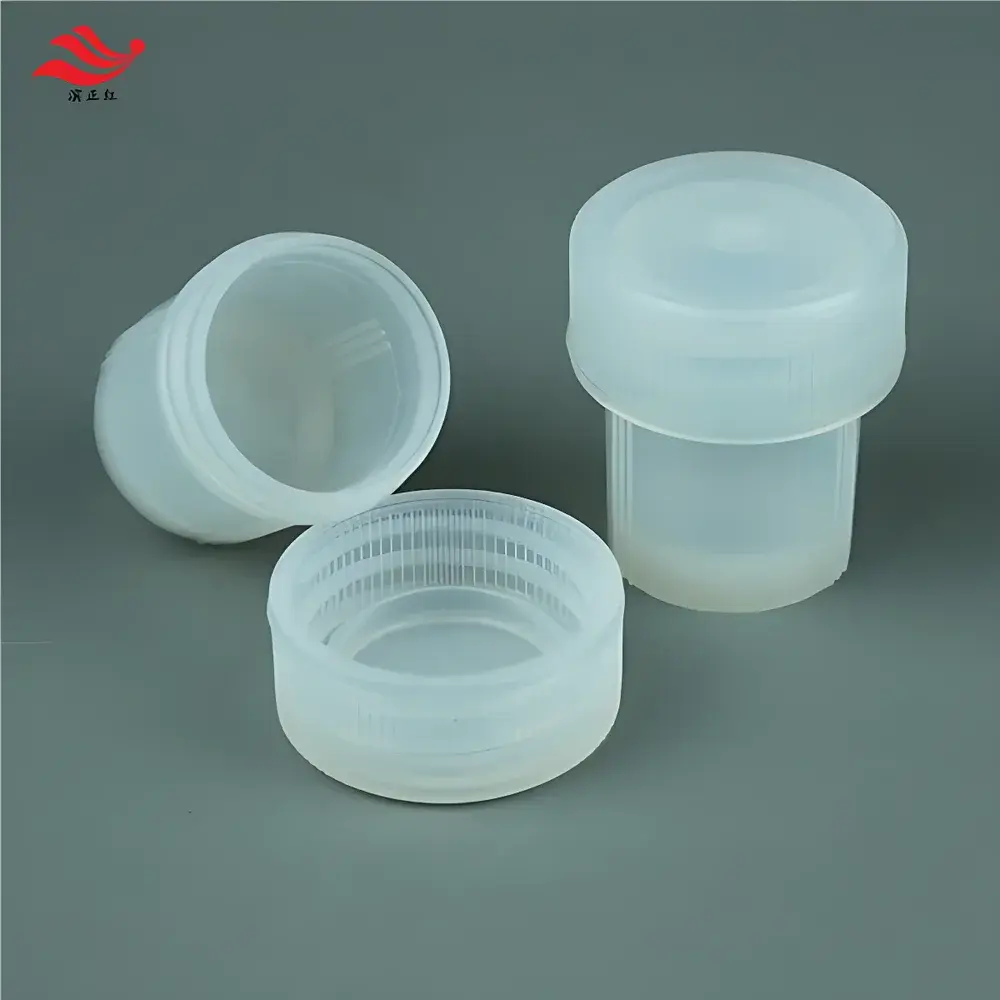
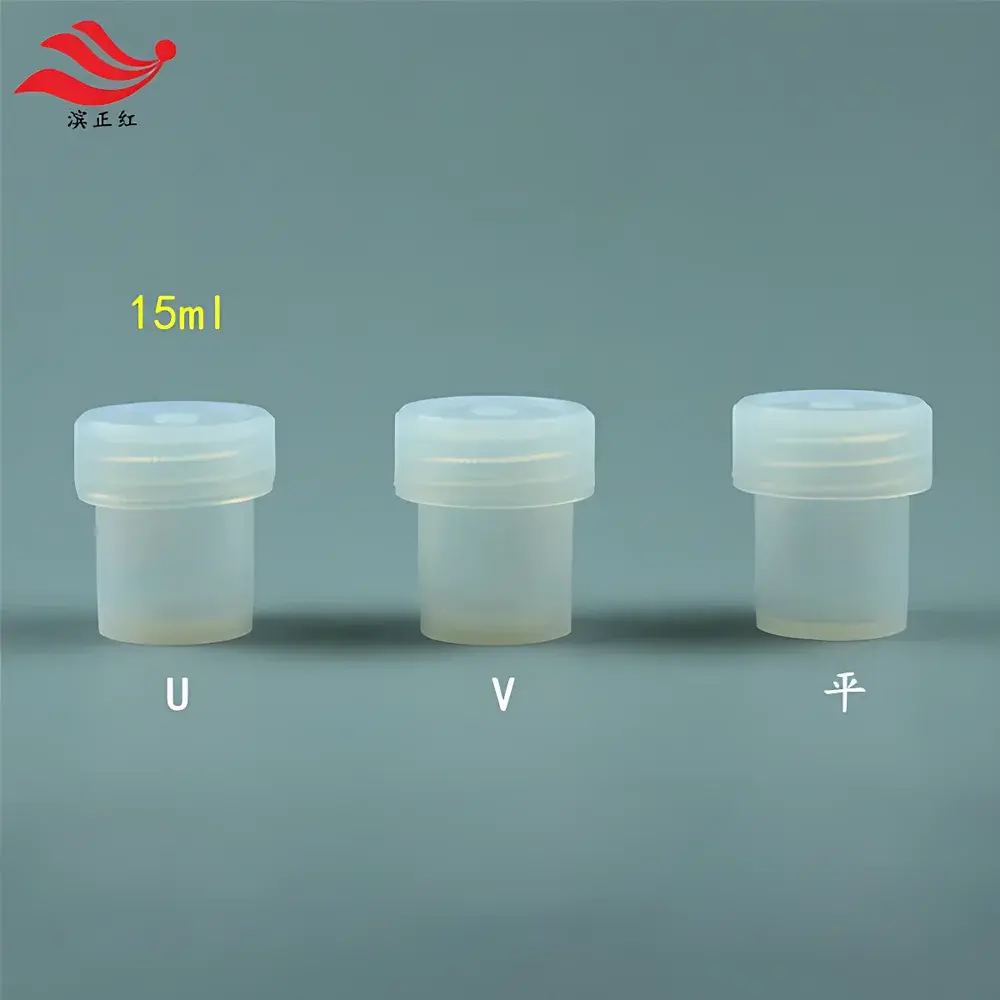
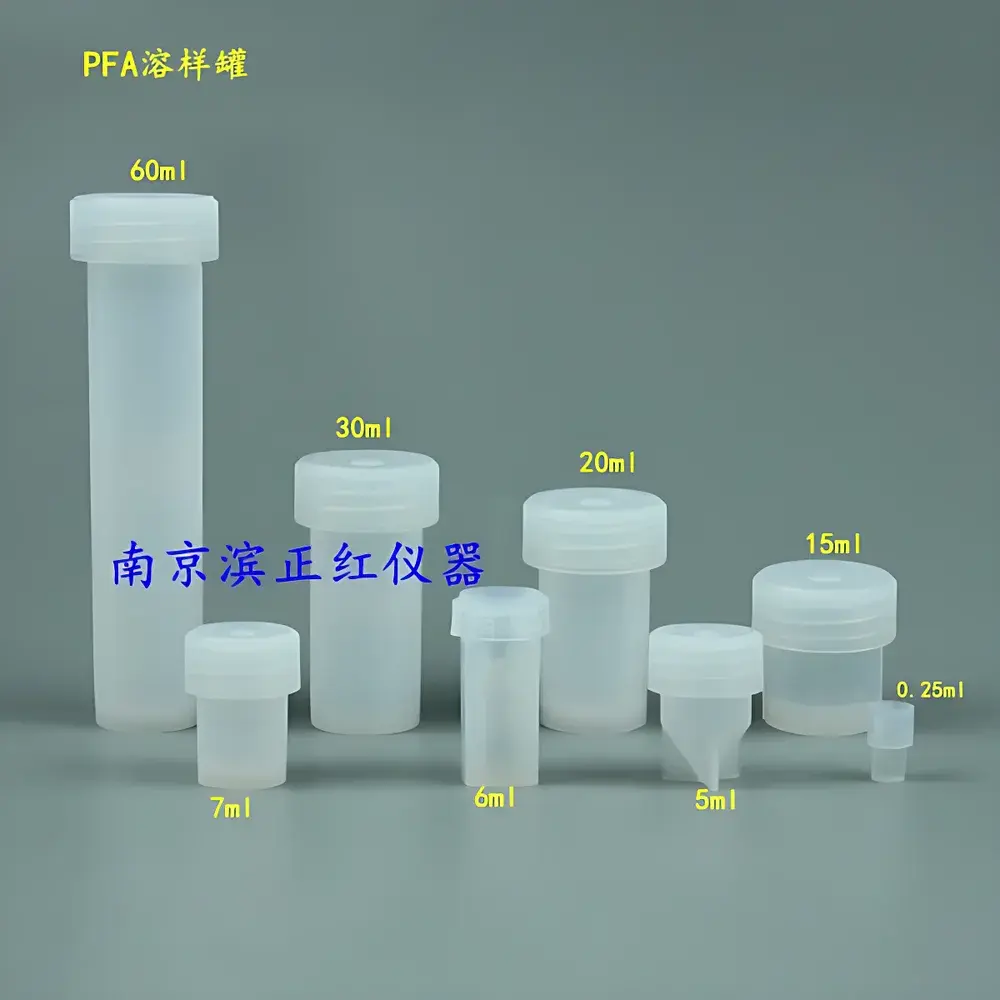
Binzhenghong PFA Digestion Vessel (U-Bottom, 15 mL)
| Brand | Binzhenghong |
|---|---|
| Origin | Jiangsu, China |
| Manufacturer Type | Direct Producer |
| Country of Origin | China |
| Capacity | 15 mL |
| Bottom Shape | U-bottom |
| Material | Perfluoroalkoxy alkane (PFA) |
| Compliance | ASTM D4897-22 (for fluoropolymer labware), USP Class VI certified |
| Packaging | Individually sealed, lot-numbered, traceable |
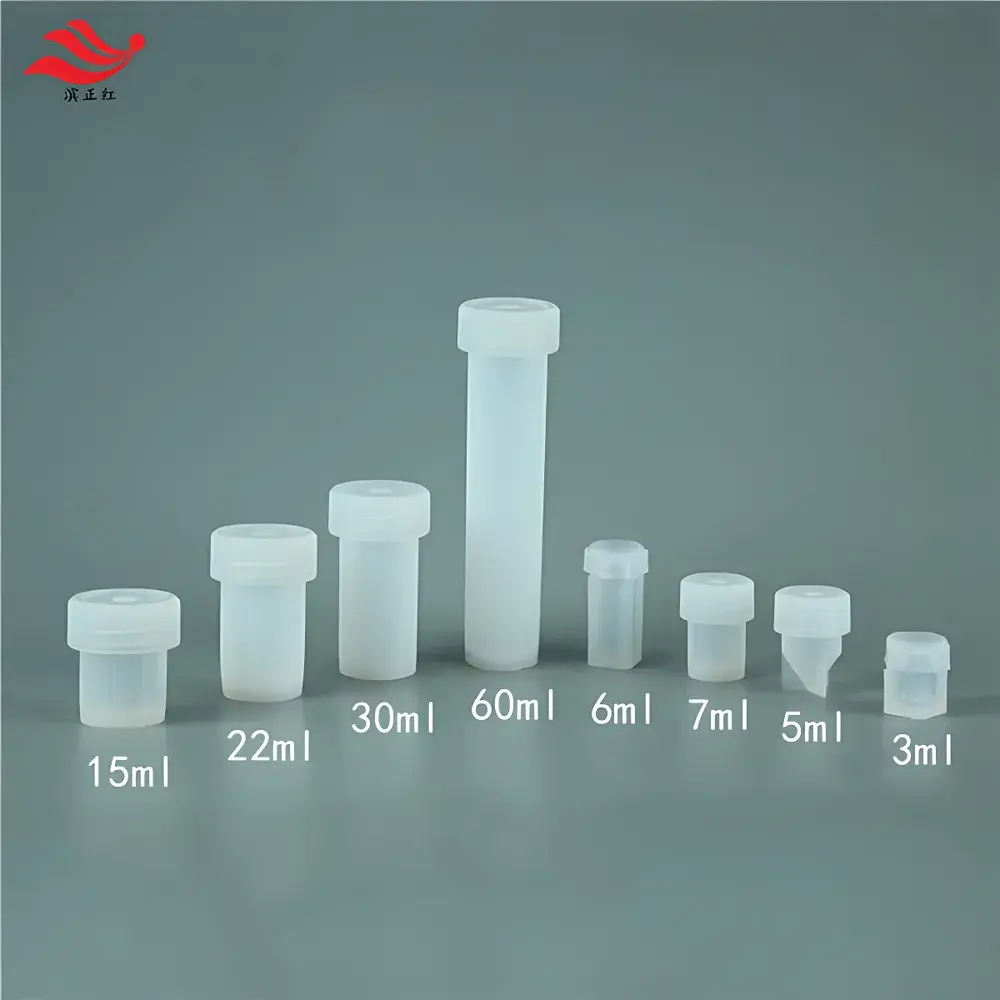
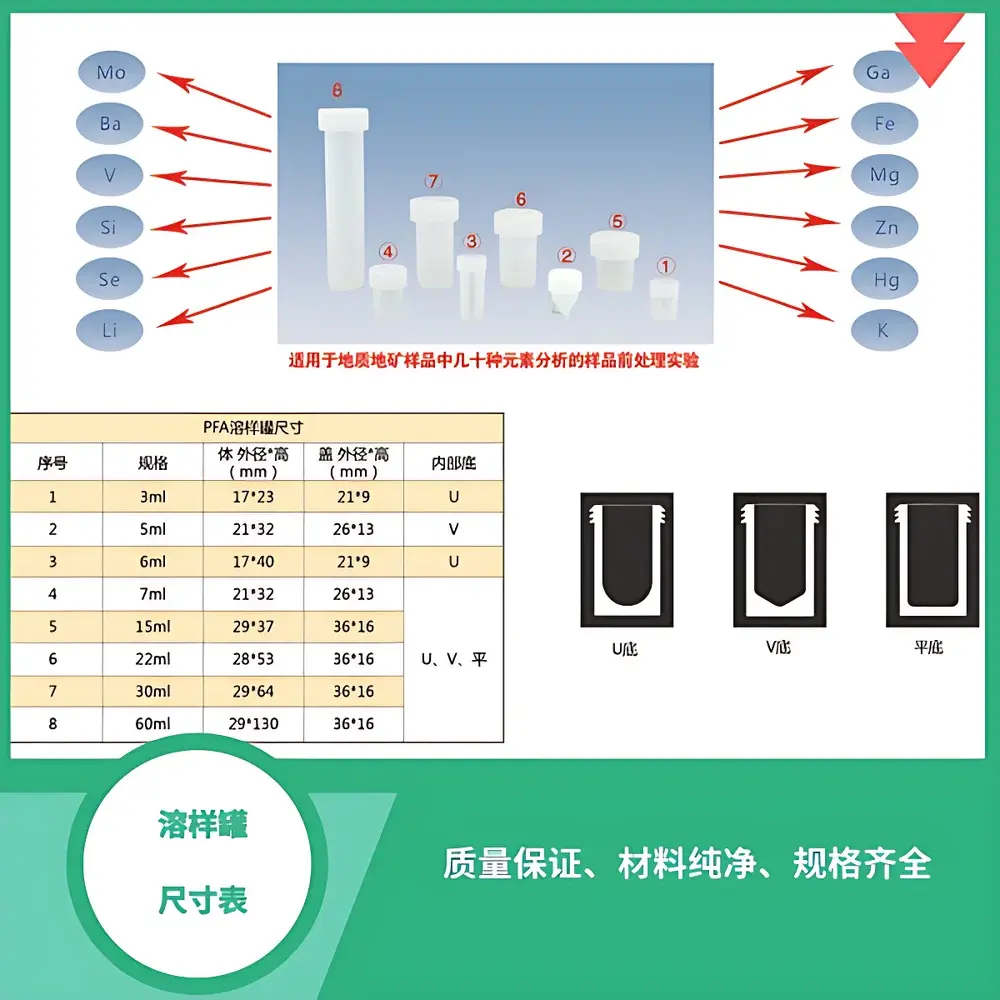
| Available Sizes | 3, 5, 7, 15, 22, 30 mL (U/V/flat bottom) |
Overview
The Binzhenghong PFA Digestion Vessel is a high-purity, chemically inert sample preparation container engineered for trace-level elemental analysis in geochemical, environmental, and metallurgical laboratories. Constructed entirely from perfluoroalkoxy alkane (PFA), this vessel exhibits exceptional resistance to aggressive reagents—including hydrofluoric acid (HF), aqua regia, hot concentrated nitric acid (HNO₃), and hydrogen peroxide (H₂O₂)—commonly employed in microwave-assisted acid digestion protocols. Its U-bottom geometry optimizes sample recovery during centrifugation and pipetting, minimizing analyte loss and enhancing reproducibility in ICP-MS, ICP-OES, and AAS workflows. Unlike glass or quartz alternatives, PFA eliminates risks of metal leaching, silica contamination, or thermal shock failure—critical for accurate quantification of ultra-trace elements such as Mo, Ba, V, Si, Se, Li, Ga, Fe, Mg, Zn, Hg, and K in geological matrices.
Key Features
- Ultra-High Chemical Inertness: PFA polymer demonstrates near-zero extractables and leachables under ISO 10993-12 extraction conditions; validated for use with HF-based digestions up to 220 °C.
- Precision Molded Geometry: U-bottom design ensures >98% quantitative transfer of digested solutions; inner surface roughness (Ra) < 0.2 µm minimizes sample adhesion and facilitates complete rinsing.
- Trace-Metal Clean Manufacturing: Produced in ISO Class 7 cleanroom environment; each batch undergoes blank testing per EPA Method 6020B for 35+ elements (detection limits ≤ 0.1 pg/mL).
- Lot-Traceable Packaging: Every vessel is individually sealed in double-layer polyethylene pouches with unique alphanumeric lot codes and QC certificates compliant with ISO/IEC 17025 requirements.
- Thermal Stability: Rated for continuous use from –200 °C to +260 °C; compatible with microwave digestion systems (CEM MARS 6, Anton Paar Multiwave PRO) and hot-block heaters.
Sample Compatibility & Compliance
This PFA digestion vessel is validated for use with solid and semi-solid samples including soils, sediments, ores, plant tissues, and biological tissues. It meets the material compatibility requirements specified in ASTM D5127-21 (Standard Guide for Selection of Fluoropolymer Labware) and supports method validation under ISO/IEC 17025:2017 clause 7.2.2 (method selection and verification). The vessels are routinely employed in accredited laboratories performing analyses per EPA Methods 3050B, 3051A, and 3052, as well as GB/T 6730.76–2019 (Chinese national standard for iron ore analysis). All units are USP Class VI certified and pass biocompatibility testing per ISO 10993-5 and -10.
Software & Data Management
While the PFA vessel itself is a passive consumable, its integration into digital laboratory workflows is supported through seamless compatibility with LIMS (Laboratory Information Management Systems) and ELN (Electronic Lab Notebook) platforms. Each lot number corresponds to a downloadable QC report containing elemental blank data, dimensional inspection records, and thermal cycling test summaries. Batch documentation conforms to FDA 21 CFR Part 11 requirements for electronic records retention, including audit trails for certificate issuance and release authorization.
Applications
- Preparation of certified reference materials (CRMs) for geological surveys (e.g., GSD series, AGV-2, BCR-2)
- Multi-element determination in exploration geochemistry using ICP-MS with collision/reaction cell technology
- Leachate analysis per TCLP (Toxicity Characteristic Leaching Procedure) and SPLP (Synthetic Precipitation Leaching Procedure)
- High-sensitivity speciation studies requiring sub-picomolar detection limits
- Method development for regulatory compliance with ISO 17294-2, EN 16170, and USGS I-2122 methods
FAQ
Are these vessels suitable for hydrofluoric acid (HF) digestion?
Yes. PFA is one of only two fluoropolymers (alongside PTFE) rated for prolonged exposure to HF at elevated temperatures. This vessel is validated for closed-vessel microwave digestion with 1–5% HF mixtures up to 220 °C.
Do you provide blank test reports for each lot?
Yes. Every production lot includes a Certificate of Analysis (CoA) with trace-metal blank data for ≥35 elements, generated using quadrupole ICP-MS under cleanroom conditions.
Can these vessels be autoclaved?
They are compatible with steam sterilization at 121 °C for 20 minutes; however, repeated autoclaving may accelerate surface aging. For routine analytical use, acid washing followed by Class 100 cleanroom drying is recommended.
Is there a difference between U-bottom and V-bottom configurations for analytical recovery?
U-bottom designs reduce dead volume by ~40% compared to V-bottom equivalents and improve repeatability in low-volume transfers (<100 µL), especially critical for isotopic ratio measurements.
How are lot numbers assigned and traced?
Each vessel is marked with a laser-etched alphanumeric code linked to raw material batch, molding cycle time, and QC release date. Traceability records are retained for ≥10 years per ISO/IEC 17025:2017 clause 8.4.2.



