
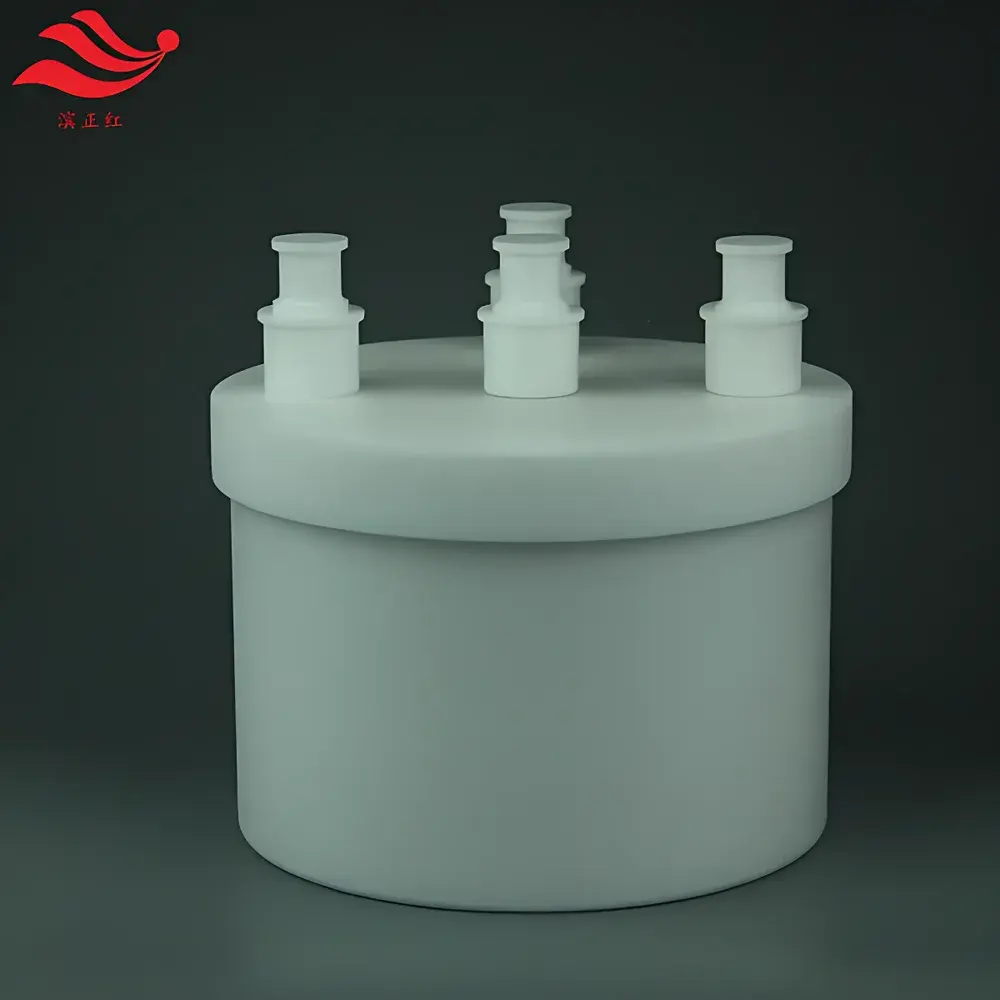
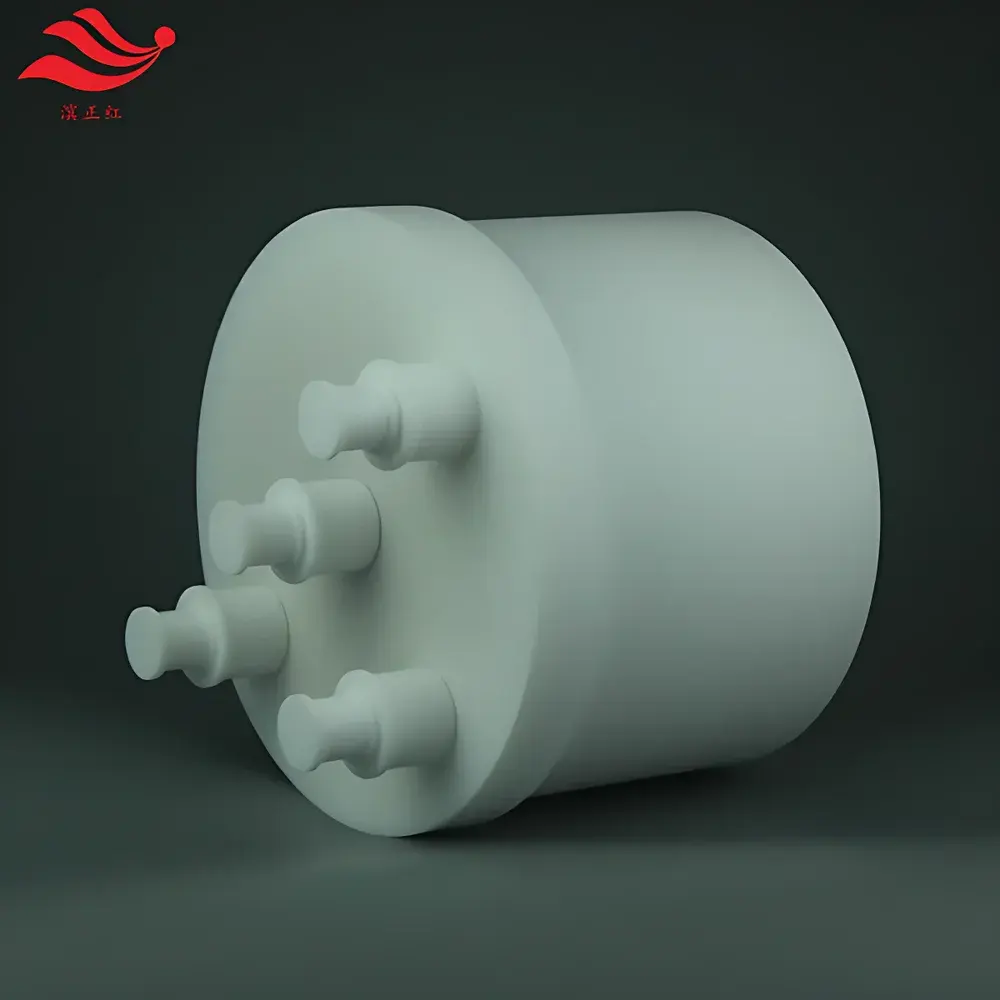
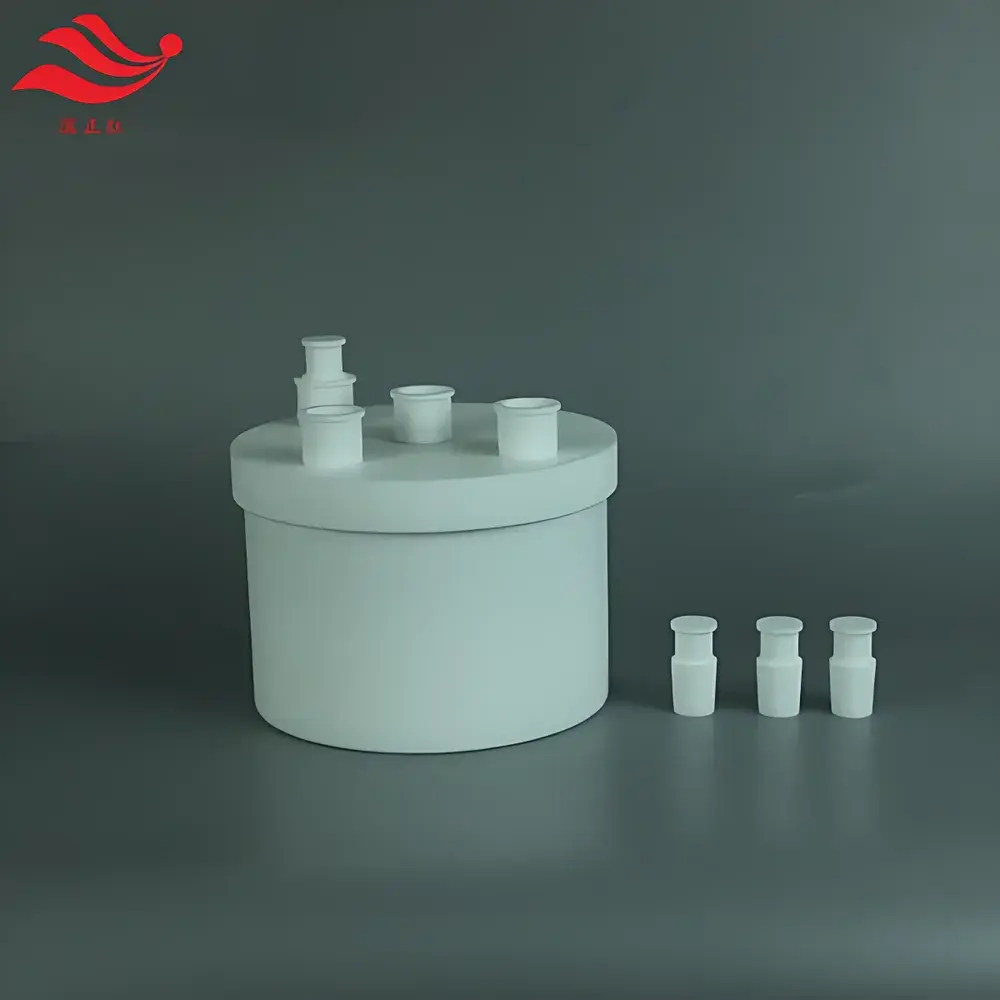
Teflon (PTFE) 4-Neck Round-Bottom Distillation Flask, 2 L, Flat-Bottom Design, HF-Resistant Reactor with 24/40 Standard Taper Joints
| Brand | Binzhenghong |
|---|---|
| Capacity | 2000 mL |
| Material | High-Purity PTFE (Perfluoroalkoxy-Alkane Compatible) |
| Joint Type | 24/40 Standard Taper |
| Bottom Style | Flat-Bottom |
| Chemical Resistance | Full Compatibility with Hydrofluoric Acid (HF), Fuming Nitric Acid, Aqua Regia, and Molten Alkali Salts |
| Manufacturing Origin | Jiangsu, China |
| Manufacturer Type | Direct Producer |
Overview
The Binzhenghong Teflon (PTFE) 4-neck flat-bottom distillation flask is a high-integrity laboratory reactor engineered for extreme chemical environments where glass, quartz, or stainless steel fail. Constructed from virgin, ultra-high-molecular-weight polytetrafluoroethylene (PTFE), this 2 L reactor delivers complete inertness against hydrofluoric acid (HF)—a corrosive agent that rapidly etches silica-based materials and attacks most metal alloys. Its flat-bottom geometry enables stable placement on heating mantles, magnetic stirrer plates, or custom thermal platforms without auxiliary support stands, while the symmetrical 4-neck configuration (all 24/40 standard taper joints) permits simultaneous integration of reflux condensers, thermocouple ports, addition funnels, and inert gas inlets—essential for air-sensitive or exothermic syntheses. Unlike modified fluoropolymers (e.g., ETFE or FEP), this vessel utilizes homopolymer PTFE with certified low extractables and zero leachable fluorides, meeting ASTM D4894 specifications for fluoropolymer purity in analytical-grade reactionware.
Key Features
- Full HF resistance: Withstands prolonged exposure to concentrated (49%) and anhydrous hydrofluoric acid at temperatures up to 200 °C—validated per ISO 17025-accredited corrosion testing protocols.
- Dimensional stability: Flat-bottom design maintains mechanical rigidity under vacuum (≤10 mbar) and positive pressure (up to 3 bar gauge) without warping or joint leakage.
- Standardized interoperability: All four necks feature precision-ground 24/40 taper joints conforming to ISO 385 and DIN 12762, ensuring leak-tight sealing with PTFE sleeves and compatible stopcocks or adapters.
- Thermal resilience: Continuous service range from –200 °C (liquid nitrogen immersion) to +260 °C; no cold-flow deformation observed after 72 h at 200 °C under static load.
- Non-stick surface integrity: Virgin PTFE inner wall exhibits <0.05 µm Ra roughness (measured via profilometry), minimizing sample adhesion and enabling quantitative recovery of viscous organometallics or fluoride-containing precipitates.
Sample Compatibility & Compliance
This reactor is validated for use with aggressive reagents including but not limited to: aqueous and anhydrous HF, chlorine trifluoride (ClF₃), bromine pentafluoride (BrF₅), molten potassium hydrogen fluoride (KHF₂), and fuming nitric acid (≥90% HNO₃). It complies with USP for Class VI plastic materials and meets the material requirements outlined in ASTM E2748 for fluoropolymer labware used in trace-metal analysis. For GLP/GMP-regulated environments, the unit supports full audit trails when paired with calibrated temperature and pressure sensors—no metallic components interfere with ICP-MS or IC analyses of reaction supernatants.
Software & Data Management
While the reactor itself is a passive vessel, its design integrates seamlessly into automated synthesis platforms (e.g., ChemSpeed, Uniqsis, or Chemspeed ASW series) via standardized mounting interfaces and PTFE-compatible sensor feedthroughs. When used with digital controllers (e.g., Huber Ministat or Julabo F25), real-time temperature logging adheres to FDA 21 CFR Part 11 requirements when deployed with electronic signature-capable software (e.g., DeltaV or LabArchives ELN). Batch records generated include vessel ID, lot traceability (laser-etched on base), and thermal history metadata—fully exportable as CSV or PDF/A-2 compliant archives.
Applications
- Synthesis of high-purity metal fluorides (e.g., LiNi₀.₈Co₀.₁₅Al₀.₀₅Fₓ cathode precursors) under anhydrous HF atmosphere.
- Radiochemical processing of uranium and plutonium compounds using HF–HNO₃ mixtures in nuclear forensics labs.
- Etching and surface functionalization of silicon wafers and MEMS devices requiring sub-ppb metallic contamination control.
- Hydrothermal mineral synthesis (e.g., rare-earth fluorides) at elevated T/P with minimal wall interaction.
- Calibration of HF concentration sensors and reference electrode validation in electrochemical cells.
FAQ
Can this flask be used under vacuum distillation conditions with HF?
Yes—tested to 10 mbar absolute pressure with 40% HF at 120 °C for >100 h without joint creep or permeation.
Is the PTFE material compliant with USP Class VI and ISO 10993-5 cytotoxicity standards?
Yes—certified biocompatibility documentation available upon request; extractables profile conforms to USP limits for fluorinated polymers.
What cleaning protocol is recommended after HF use?
Rinse sequentially with deionized water → 1% NaOH solution → final DI water rinse; avoid ultrasonication above 40 °C to prevent microcrack propagation.
Does the flat-bottom design compromise thermal uniformity during heating?
No—finite element analysis confirms ≤1.2 °C radial gradient across the base at 180 °C when used with silicone oil baths or ceramic heating mantles.
Are replacement joints or custom neck configurations available?
Yes—Binzhenghong offers OEM machining services for non-standard tapers (e.g., 14/20, 19/22) and PFA-lined ground-glass hybrid joints upon engineering review.



