
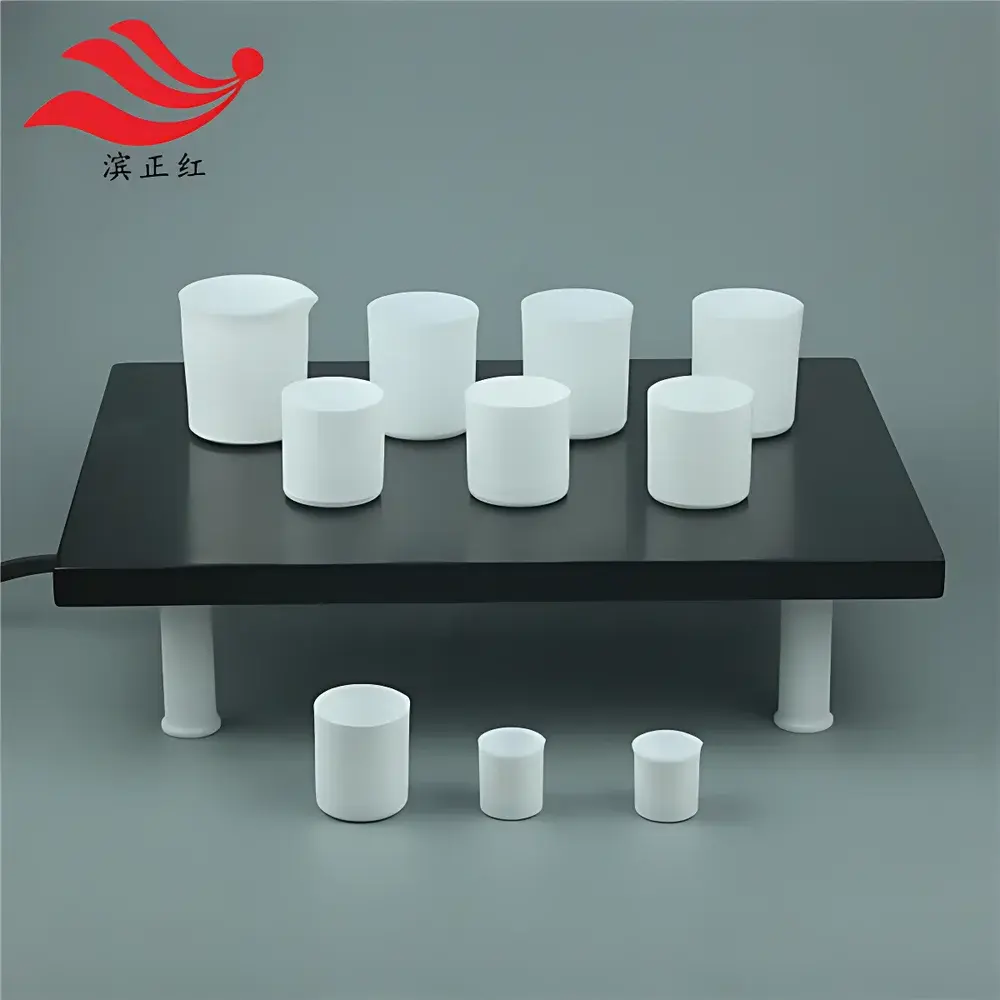
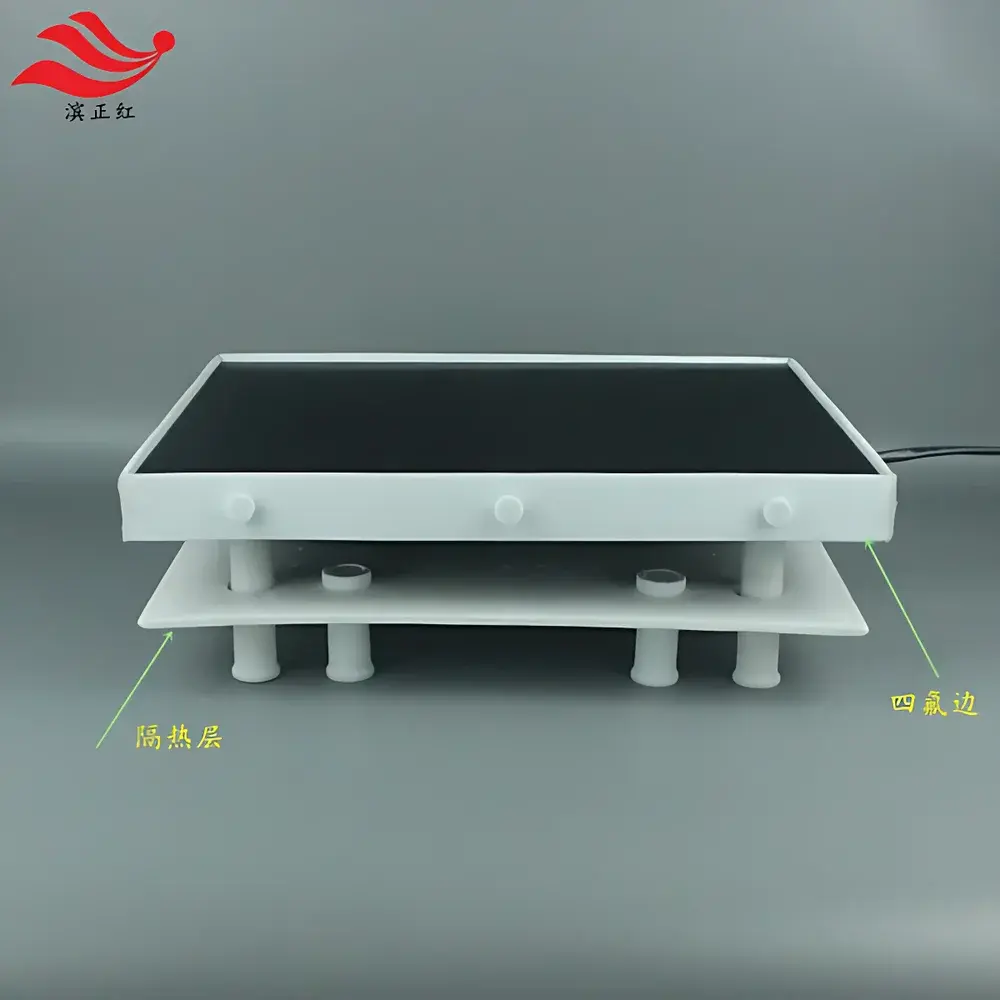
Binzhenghong NJ-DBF Series PID-Controlled Digital Electric Heating Plate
| Brand | Binzhenghong |
|---|---|
| Origin | Jiangsu, China |
| Manufacturer Type | Direct Manufacturer |
| Country of Origin | China |
| Model | NJ-DBF 300×400 mm |
| Heating Power | 2 kW |
| Max. Operating Temperature | 260 °C |
| Temperature Uniformity | ±1 °C |
| Heating Zone Dimensions | Customizable (e.g., 400×300 mm, 450×350 mm, 600×400 mm) |
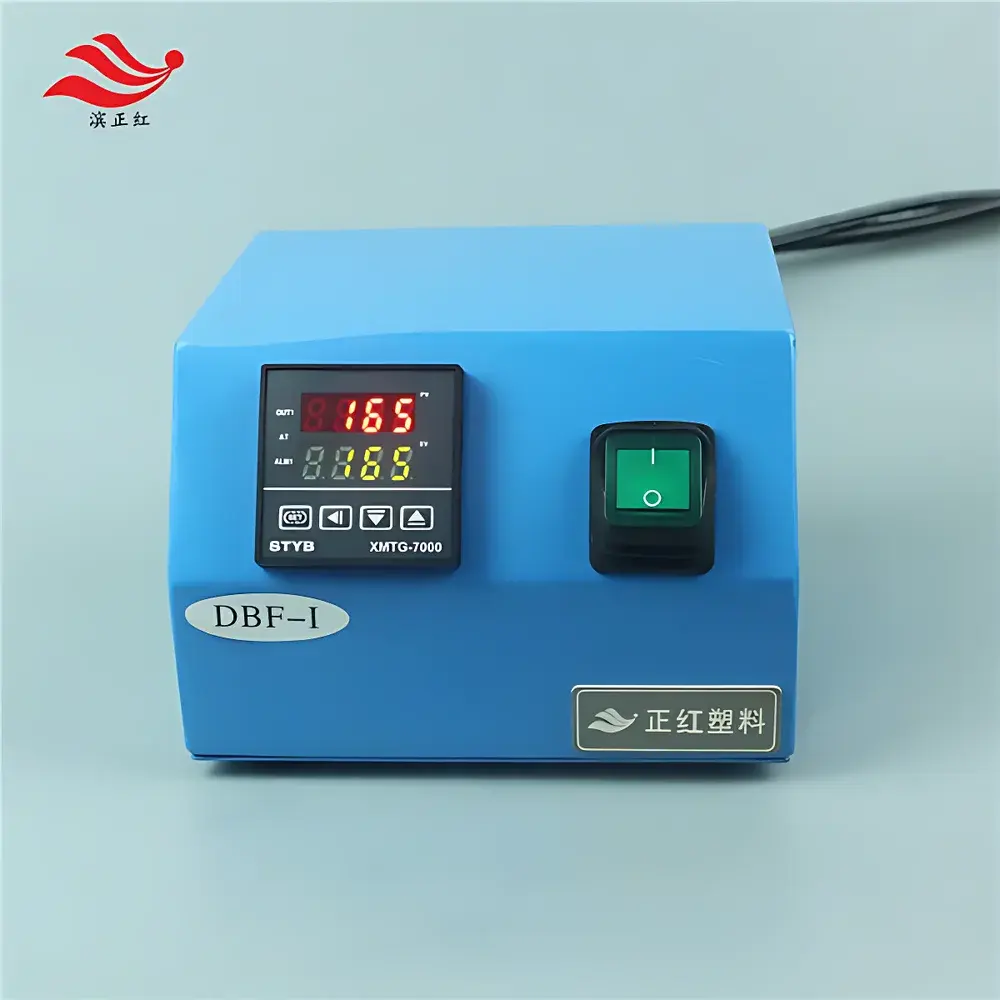
| Display Type | Digital PID Controller |
| Voltage/Frequency | 220 V / 50 Hz |
| Control Accuracy | ±1 °C |
| Continuous Operation Time | Up to 48 h |
| Power Cord & Signal Cable Length | Standard 1.5 m (customizable to 2.5 m or 3 m) |
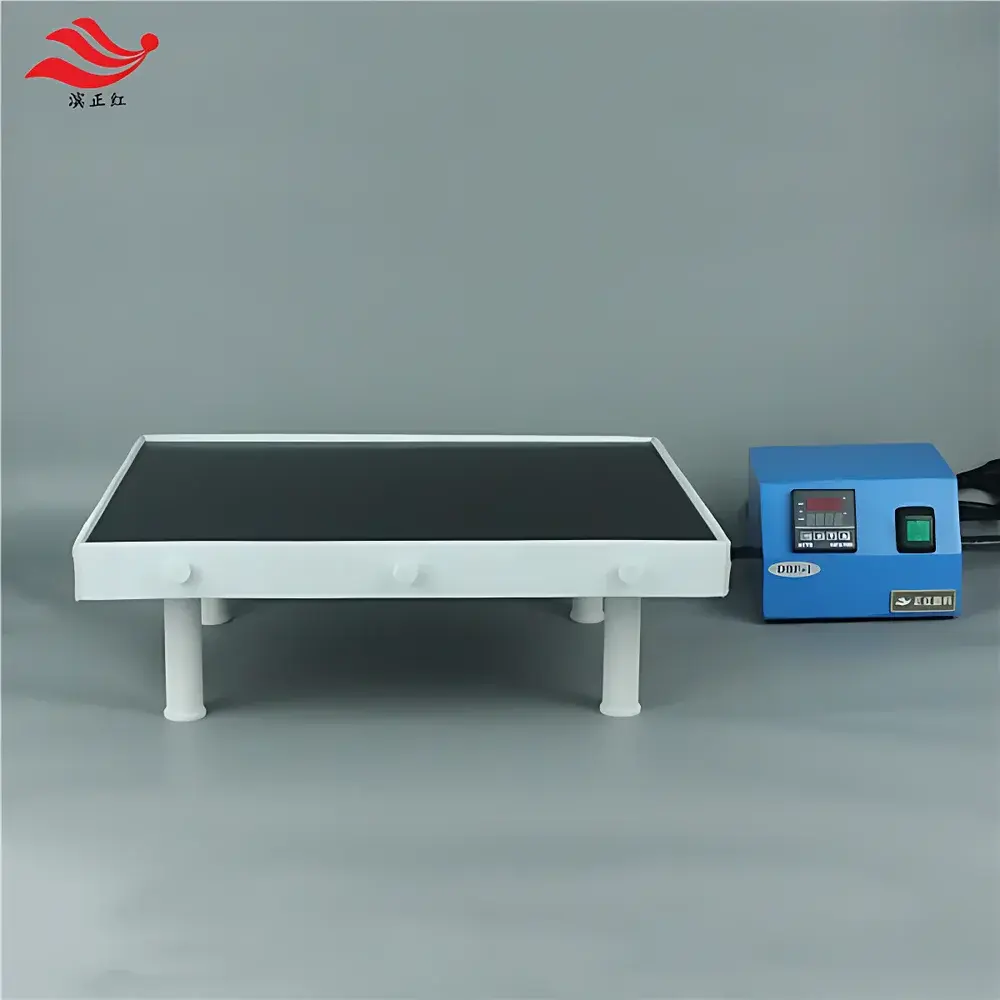
| Construction | Split-body design with PTFE-coated feet, PFA-insulated wiring, and aviation-grade connectors |
| Surface Material Options | Precision-cast aluminum or high-purity graphite with high-temp PTFE coating |
| Corrosion Resistance | Full external surface coated with fluoropolymer |
Overview
The Binzhenghong NJ-DBF Series PID-Controlled Digital Electric Heating Plate is an engineered solution for precise, stable, and corrosion-resistant thermal processing in demanding sample preparation and digestion workflows. Designed around a robust cast-aluminum or high-purity graphite heating block—both fully coated with high-temperature polytetrafluoroethylene (PTFE)—this instrument delivers rapid, uniform heat transfer while eliminating risk of metallic contamination or chemical degradation. Its core operating principle relies on closed-loop proportional-integral-derivative (PID) temperature regulation, enabling dynamic compensation for thermal load variation, ambient fluctuation, and vessel-specific heat absorption characteristics. Unlike basic resistive hotplates, the NJ-DBF integrates real-time feedback from a calibrated PT100 sensor embedded directly within the heating surface, ensuring accurate setpoint tracking across the full 25–260 °C range. The split-body architecture physically isolates the controller unit from the heating module, allowing remote placement outside fume hoods—a critical feature when handling aggressive reagents such as concentrated HNO₃, HF, or aqua regia during EPA Method 3050B/3052 or ISO 11466 compliant digestions.
Key Features
- High-fidelity PID digital temperature control with ±1 °C accuracy and repeatability over extended operation (up to 48 h continuous duty)
- Corrosion-immune construction: All external surfaces—including support feet, housing, and terminal enclosures—coated with thermally stable PTFE; no bare metal exposed to laboratory atmospheres
- Two substrate options: Precision-machined cast aluminum (optimized for rapid thermal response) or ultra-low-particulate graphite (ideal for trace-metal analysis requiring minimal background interference)
- Modular split-body design with PFA-insulated signal and power cables and MIL-spec aviation connectors for reliable, low-noise communication between controller and heater
- Customizable heating zone dimensions (standard options include 300×400 mm, 400×300 mm, 450×350 mm, and 600×400 mm), supporting multi-vessel configurations without cross-contamination
- Integrated safety logic: Over-temperature cutoff, thermal runaway protection, and auto-shutdown upon sensor fault detection
Sample Compatibility & Compliance
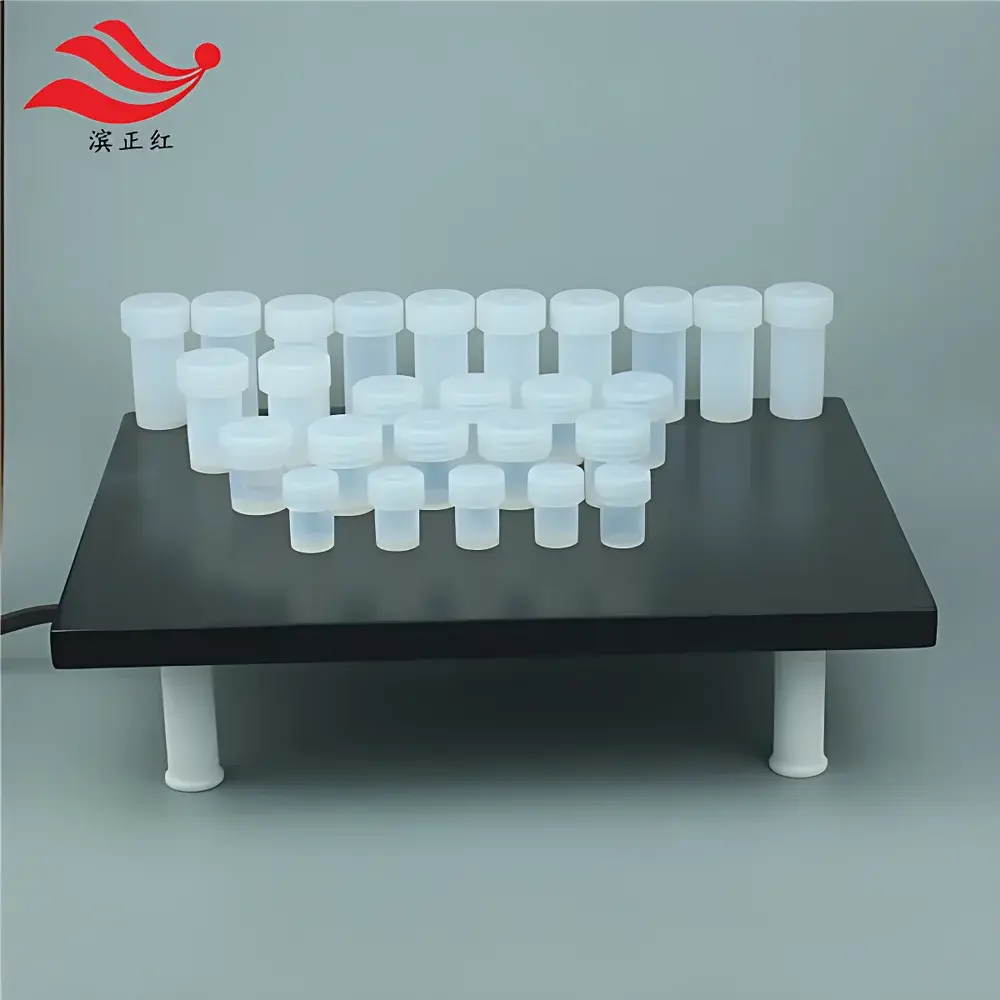
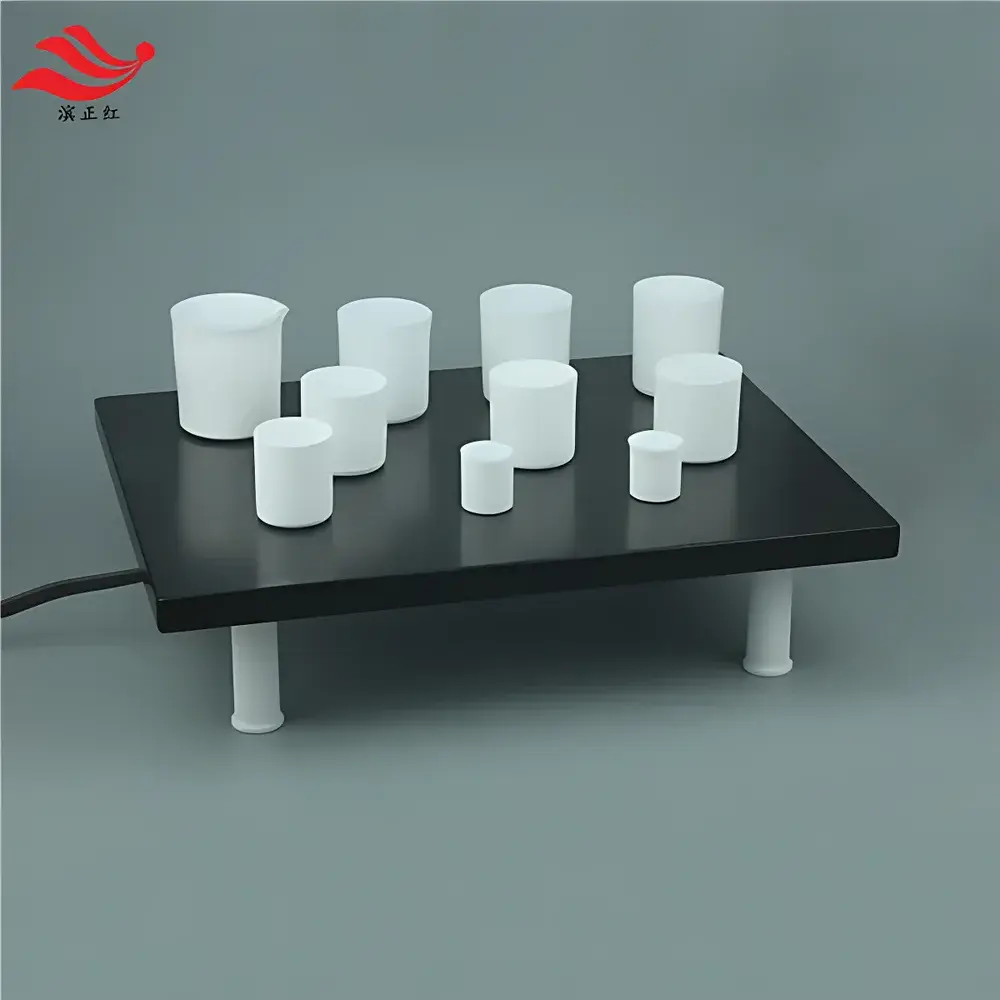
The NJ-DBF series accommodates a wide range of digestion vessels—including borosilicate glass beakers, quartz crucibles, PTFE-lined microwave digestion tubes, and high-density polypropylene containers—without compromising thermal homogeneity or chemical integrity. Its uniform surface temperature distribution (±1 °C across the active zone) ensures consistent reaction kinetics across parallel samples, meeting the spatial uniformity requirements outlined in ASTM D5231 (for soil digestion) and ISO 17294-2 (for water sample acid digestion). The fluoropolymer-coated platform complies with GLP environmental monitoring protocols where reagent purity and equipment-induced contamination must be rigorously controlled. All electrical components conform to IEC 61010-1:2010 safety standards for laboratory equipment, and the controller supports audit-trail-ready operation when integrated with compliant LIMS environments.
Software & Data Management
While the base NJ-DBF operates via standalone front-panel control, optional RS485/Modbus RTU interface enables integration into centralized lab automation systems. When paired with Binzhenghong’s optional LabLink™ software (Windows-based), users gain access to time-stamped temperature logging, programmable ramp-hold profiles, exportable CSV data files, and configurable alarm thresholds. The system records all manual setpoint changes, sensor calibration events, and fault conditions—supporting 21 CFR Part 11-compliant electronic recordkeeping when deployed with user authentication and digital signature modules. Data retention exceeds 30 days at 1-second sampling intervals, facilitating root-cause analysis during method validation or QA/QC investigations.
Applications
- Open-vessel acid digestion of environmental matrices (soils, sediments, sludges) per EPA Methods 3050B and 3052
- Pre-concentration and evaporation steps in trace metal analysis (ICP-MS, ICP-OES) where graphite-derived particulates must be avoided
- Controlled solvent reflux and crystallization studies requiring stable thermal gradients
- Standardization of calibration standards in metrology labs under ISO/IEC 17025-accredited conditions
- Heating baths for viscosity measurements using capillary or rotational viscometers where bath stability <±0.1 °C is required
FAQ
Can the NJ-DBF be used inside a fume hood without controller damage?
Yes—the split-body design allows the controller to remain outside the hood while only the PTFE-coated heating module resides inside, protecting electronics from corrosive vapors.
Is the graphite version suitable for ultra-trace analysis?
Yes—high-purity graphite substrates are processed to minimize ash content (<1 ppm) and undergo vacuum-bake conditioning to eliminate volatile organics prior to PTFE coating.
What maintenance is required for long-term accuracy?
Annual verification using a NIST-traceable dry-block calibrator is recommended; no routine recalibration is needed if operated within specified ambient conditions (15–30 °C, <80% RH).
Does the unit support programmable temperature ramps?
Ramp-hold functionality is available via optional LabLink™ software or third-party SCADA systems using Modbus RTU protocol.
Are custom cable lengths and mounting brackets available?
Yes—cables can be extended to 2.5 m or 3 m, and OEM mounting kits (including vibration-dampened shelf brackets and vertical stand adapters) are offered upon request.



