
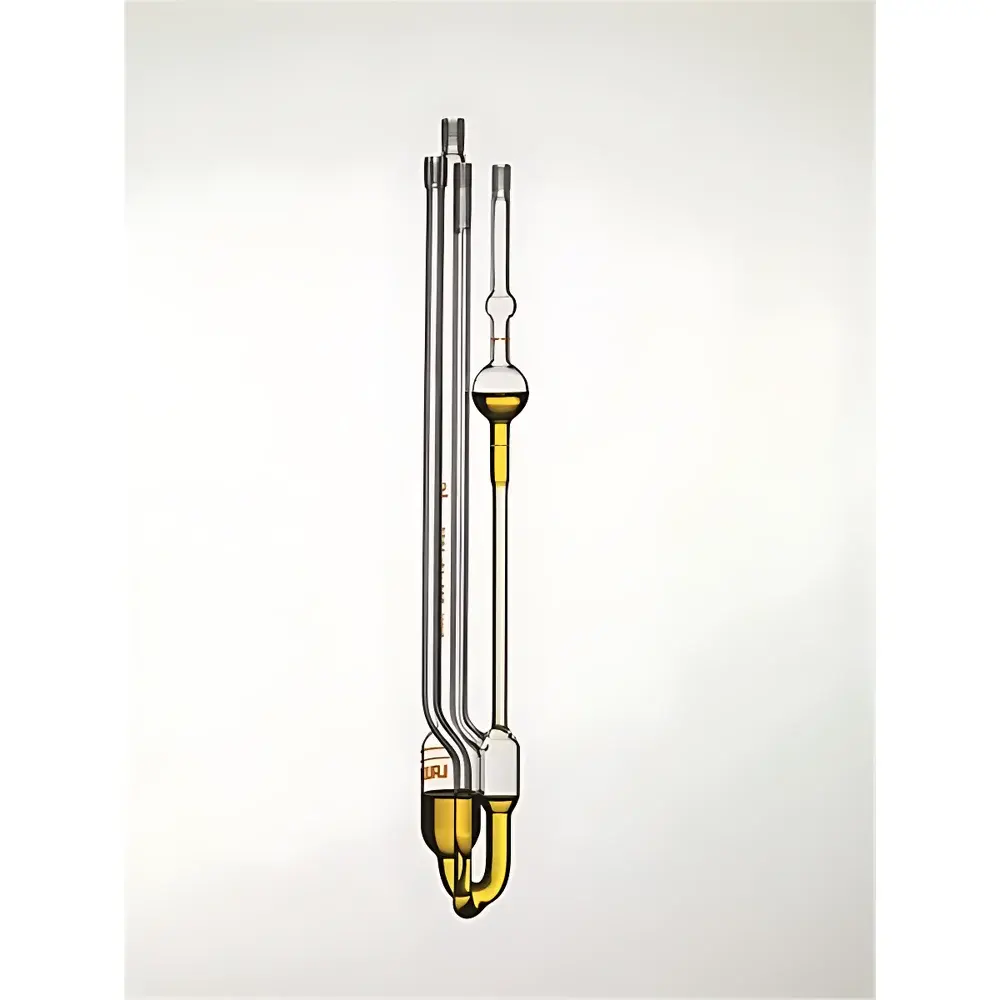
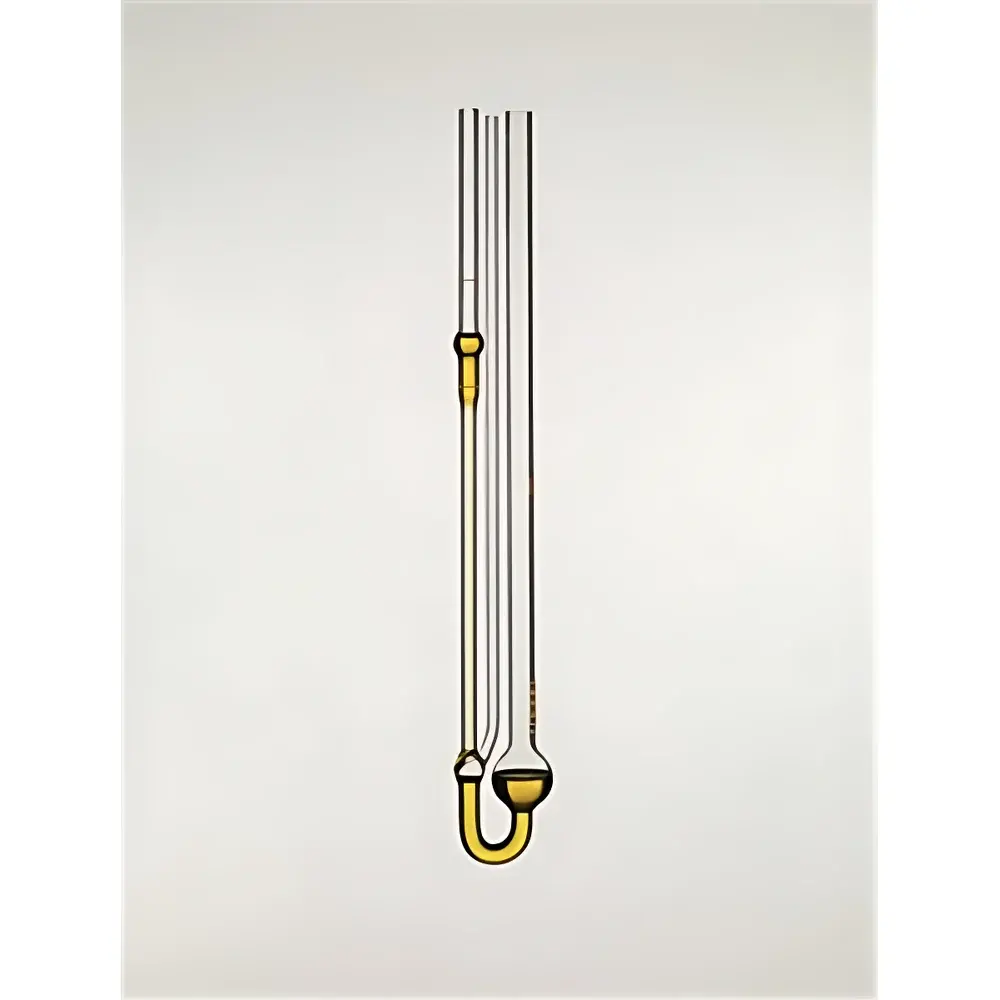
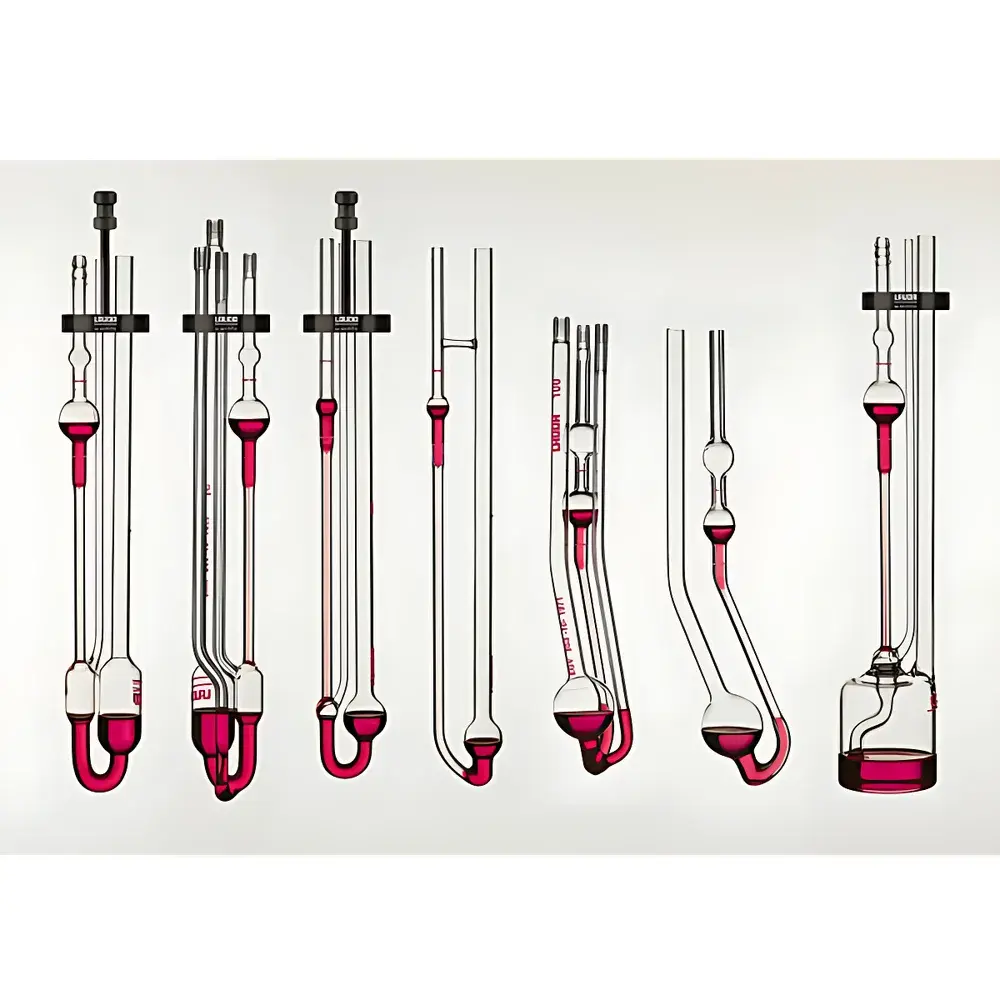
LAUDA Ubbelohde, Cannon-Fenske, and Ostwald Glass Capillary Viscometers
| Brand | LAUDA |
|---|---|
| Origin | Germany |
| Type | Calibrated Capillary Viscometer Set (Ubbelohde Type 1, Dilution Ubbelohde, Micro-Ubbelohde, Cannon-Fenske Routine, Micro-Ostwald) |
| Compliance | ISO 3105, DIN 51562, ASTM D2515, BS 188, NFT 60-100 |
| Capillary Constants | 0.003–30.0 mm²/s per division |
| Viscosity Range | 0.7–7576 mm²/s (cSt) |
| Accuracy | ±0.2% (Ubbelohde & Dilution), ±0.3% (Cannon-Fenske), ±0.5% (Micro variants) |
| Volumes | 2–75 mL |
| Total Lengths | ~245–290 mm |
| Optional Integration | LAUDA VRM Automatic Cleaning Module, LAUDA Transparent Thermostats (e.g., Alpha Series), LAUDA Viscosity Measurement Systems |
Overview
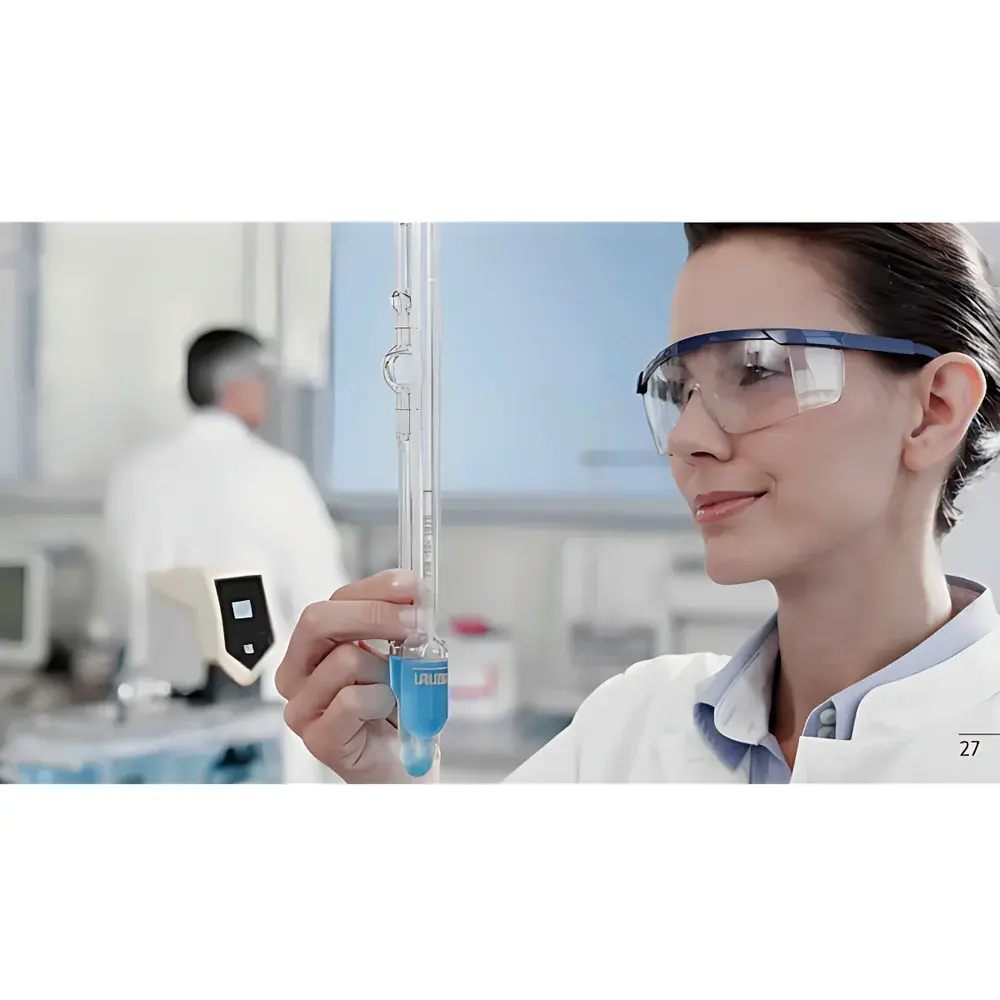
LAUDA glass capillary viscometers are precision-engineered instruments for kinematic viscosity determination based on the principle of Poiseuille flow through a calibrated capillary under gravity-driven laminar conditions. These devices operate in accordance with the Hagen–Poiseuille law, where kinematic viscosity (ν, mm²/s or cSt) is calculated from the efflux time (t, s), capillary constant (k, mm²/s²), and temperature-controlled fluid density. Designed for high reproducibility in laboratory and quality control environments, LAUDA capillaries support both manual stopwatch-based measurements and fully automated workflows when integrated with LAUDA’s VRM cleaning modules and Alpha-series transparent thermostats. The system ensures thermal stability within ±0.01 °C—critical for achieving measurement uncertainty below 0.2% across ISO 3105-compliant protocols.
Key Features
- Full portfolio of standardized capillary geometries: Ubbelohde Type 1 (calibrated), Dilution Ubbelohde, Micro-Ubbelohde, Cannon-Fenske Routine, and Micro-Ostwald—each optimized for specific sample volume, viscosity range, and application constraints.
- Traceable calibration per ISO 3105 and DIN 51562; individual certificates provided for all calibrated units, specifying capillary constant (k), nominal volume, and dimensional tolerances.
- Modular compatibility with LAUDA VRM (Viscometer Rinse Module) for automated solvent rinsing, drying, and conditioning—eliminating operator-induced variability and enabling unattended multi-sample runs.
- Thermostat-integrated design: seamless coupling with LAUDA Alpha series transparent bath circulators (temperature range –20 to +150 °C, stability ±0.01 °C) ensures uniform thermal equilibration of both sample and capillary walls—essential for Newtonian and near-Newtonian fluid characterization.
- Robust borosilicate glass construction (DIN ISO 3585), chemically resistant and thermally stable, with precision-ground joints and etched volume markings compliant with GLP documentation requirements.
- Dual-use configuration: standard versions feature removable bulbs for manual cleaning; VRM-compatible models include threaded mounting ports and dedicated rinse/drain tubing interfaces.
Sample Compatibility & Compliance
LAUDA capillary viscometers accommodate a broad spectrum of liquids—from low-viscosity solvents (e.g., hexane, acetone) to high-molecular-weight polymer solutions (e.g., PET, PVC, polystyrene in chloroform or tetrahydrofuran). The Dilution Ubbelohde variant supports serial dilution protocols required for intrinsic viscosity (IV) determination per ISO 1628-1 and ASTM D4603. Micro-Ubbelohde and Micro-Ostwald designs minimize sample consumption (< 4 mL), making them ideal for expensive, hazardous, or limited-availability materials—including biofluids and pharmaceutical intermediates. All models comply with international regulatory frameworks: ISO 3105 (petroleum products), ASTM D2515 (plastics), DIN 51562 (lubricants), BS 188 (industrial oils), and NFT 60-100 (French standards for synthetic fluids). Calibration traceability is maintained via NIST-traceable viscosity standards (LZO series), each supplied with a certificate of analysis indicating certified ν values at 25 °C, 40 °C, and 100 °C.
Software & Data Management
When paired with LAUDA’s Viscosity Measurement System (VMS) software, these capillaries enable full digital workflow automation—including efflux time acquisition, temperature synchronization, automatic k-factor application, IV calculation (Huggins, Kraemer, Schulz–Blaschke methods), statistical reporting (mean, SD, RSD), and audit-trail generation compliant with FDA 21 CFR Part 11. Raw data files are stored in vendor-neutral CSV/Excel formats; instrument logs record user ID, timestamp, thermostat setpoint, ambient pressure, and cleaning cycle history. The system supports IQ/OQ/PQ documentation packages for GMP and GLP laboratories, and integrates with LIMS via OPC UA or REST API endpoints.
Applications
- Polymer characterization: intrinsic viscosity, molecular weight estimation (Mark–Houwink–Sakurada), and solution rheology screening.
- Pharmaceutical QC: viscosity verification of parenteral formulations, syrups, and ophthalmic solutions per USP .
- Petroleum & lubricant testing: kinematic viscosity grading per ASTM D445 and ISO 3104.
- Chemical manufacturing: batch release testing of resins, monomers, and specialty solvents.
- Academic research: fundamental studies of solvent–polymer interactions, temperature-dependent flow behavior, and non-Newtonian onset detection.
- Food & beverage: consistency profiling of edible oils, sauces, and dairy emulsions under standardized shear conditions.
FAQ
What is the difference between Ubbelohde and Cannon-Fenske viscometers?
Ubbelohde viscometers feature a suspended-level design with a reservoir above the capillary, enabling true constant-head pressure during drainage—ideal for dilution series and high-precision work. Cannon-Fenske types use a direct-fill method with fixed-volume bulbs; they are simpler to handle but require exact volumetric filling per ASTM D2515.
Can I use the same viscometer for both low- and high-viscosity samples?
No. Capillary constant (k) must match the expected viscosity range. LAUDA offers 11 certified viscosity standards (LZO 002-001 to LZO 002-010) spanning 0.7–7576 mm²/s to verify instrument performance across its operational envelope.
Is VRM module compatibility mandatory for automated operation?
Not mandatory—but strongly recommended. Manual cleaning introduces inter-operator variability and risks capillary damage. The VRM ensures repeatable solvent delivery, dwell time, and nitrogen drying—critical for maintaining ±0.2% accuracy over extended use.
How often should I recalibrate my capillary viscometer?
Per ISO 3105, recalibration is required after mechanical shock, exposure to aggressive solvents, or every 12 months—whichever occurs first. LAUDA provides recalibration services with turnaround ≤10 business days and full ISO/IEC 17025 documentation.
Do these viscometers support non-Newtonian fluid analysis?
Capillary viscometers assume Newtonian behavior. For shear-thinning or thixotropic samples, LAUDA recommends pairing with rotational rheometers (e.g., DVNext series) for controlled-shear-rate characterization. However, capillary data remain valid for initial screening and specification compliance where shear rate is standardized.



