
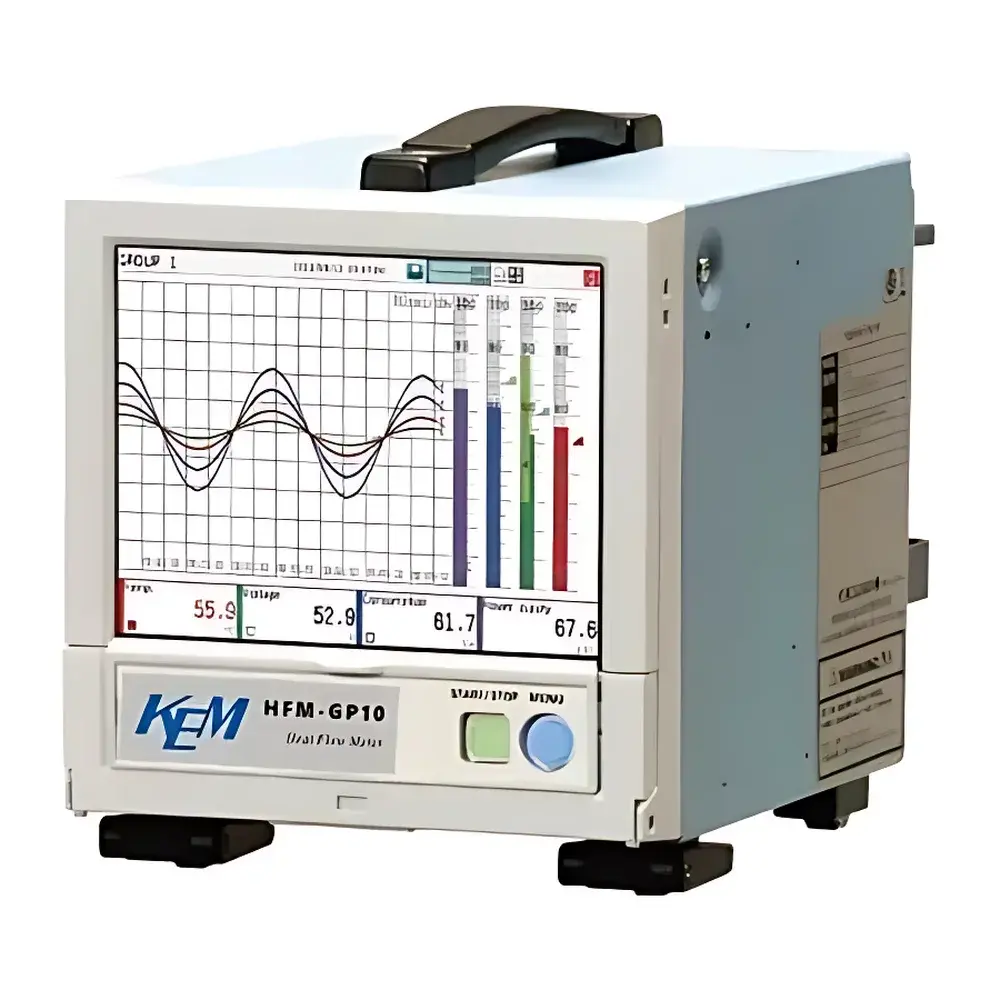
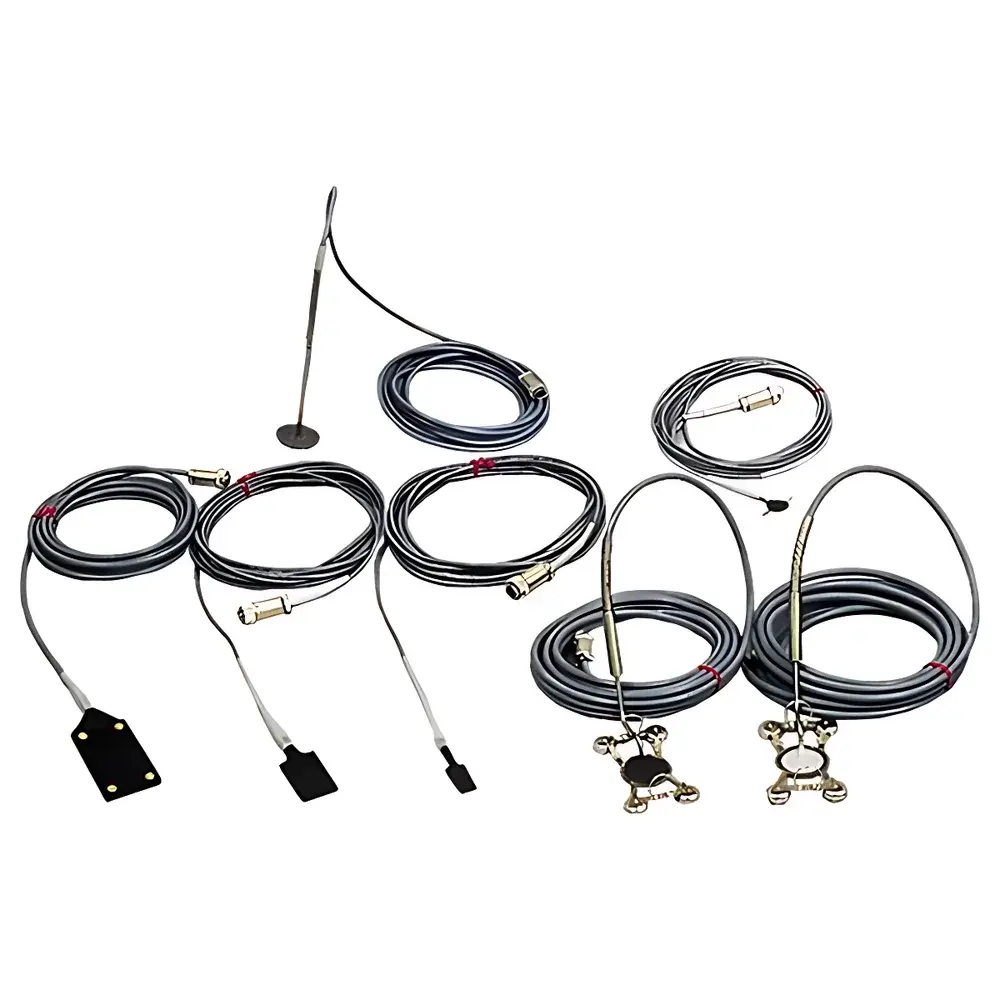
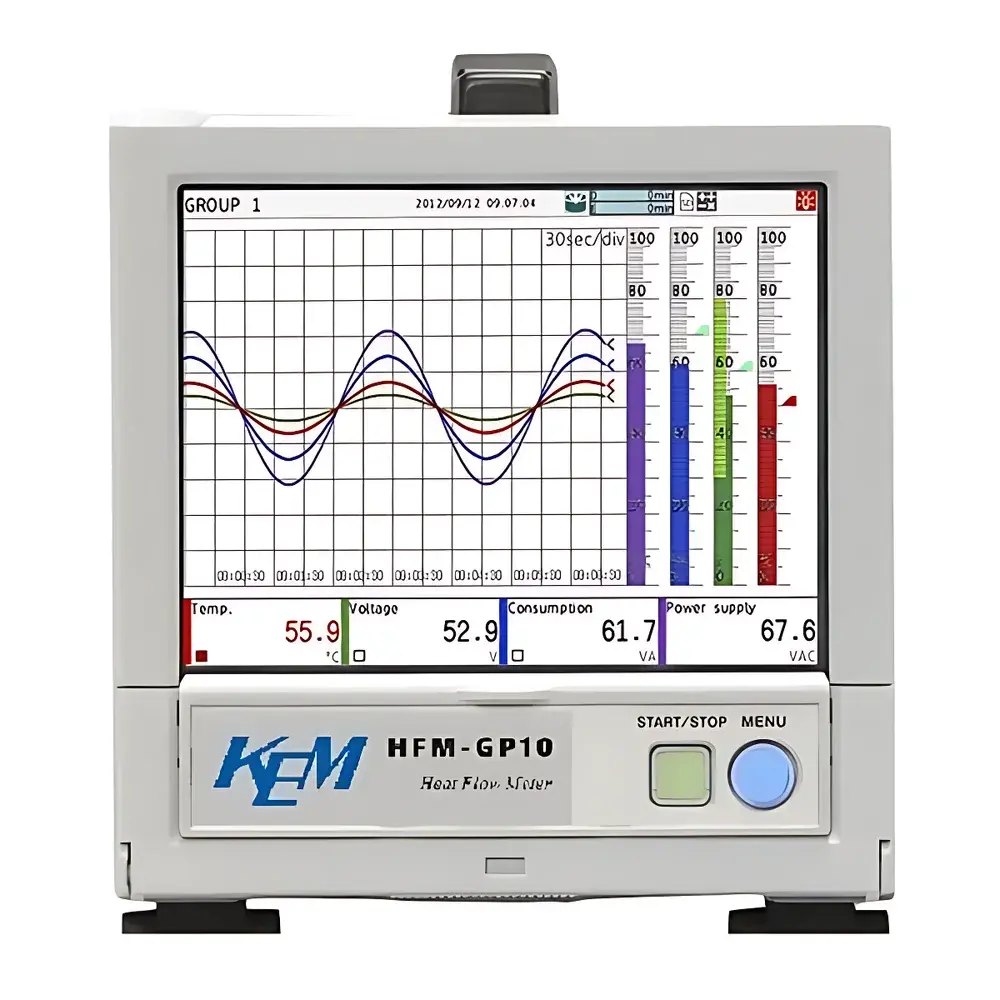
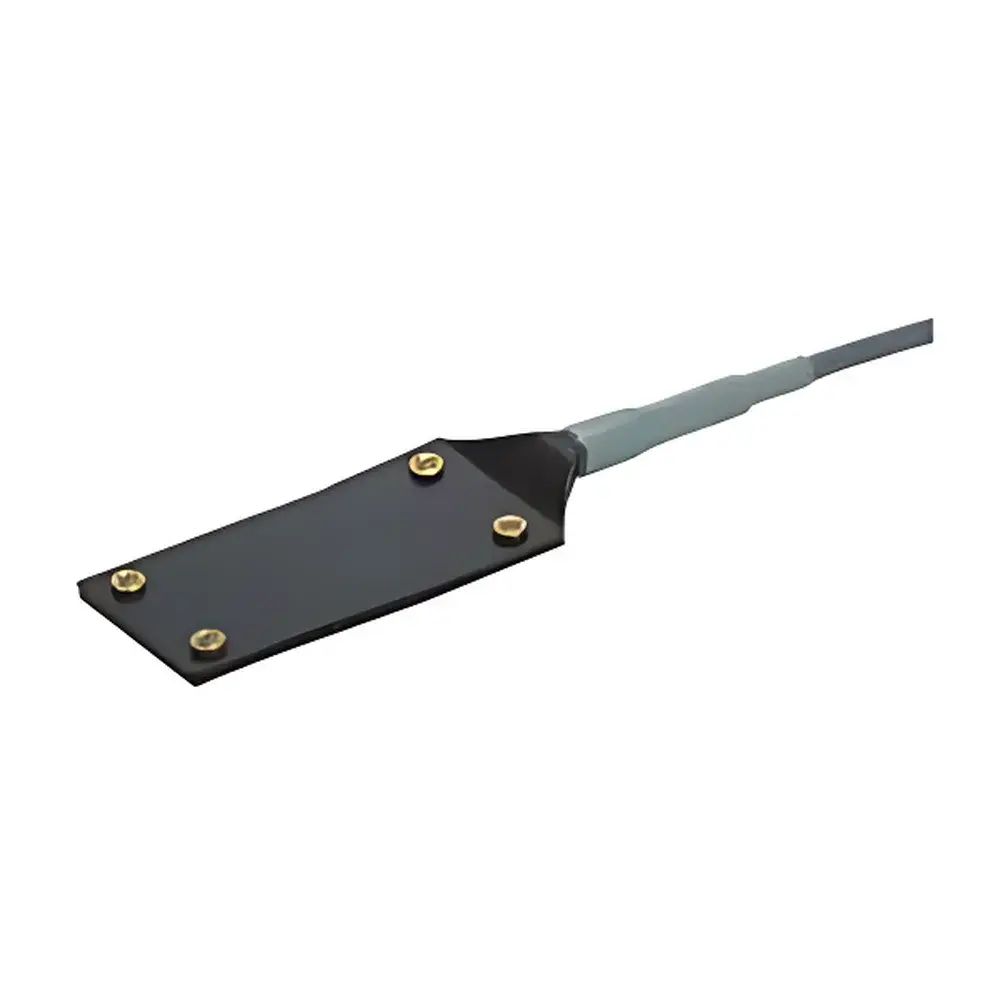

KEM HFM-GP10 Multi-Channel Heat Flow Meter
| Brand | Kyoto Electronics Manufacturing (KEM) |
|---|---|
| Origin | Japan |
| Manufacturer Type | Original Equipment Manufacturer (OEM) |
| Product Origin | Imported |
| Model | HFM-GP10 |
| Price Range | USD 7,000 – 14,000 |
Overview
The KEM HFM-GP10 Multi-Channel Heat Flow Meter is a precision-engineered instrument designed for quantitative, real-time measurement of heat flux density (q, in W/m²) and temperature across multiple points simultaneously. It operates on the fundamental principle of Fourier’s law of conduction, utilizing calibrated heat flux transducers (HFTs) that convert thermal gradients—generated across a known thermal resistance—into proportional thermoelectric voltages (V). The linear relationship q = f × e (where f is the sensor-specific calibration coefficient and e is the measured thermoelectric potential) ensures traceable, physics-based quantification of directional heat transfer. Unlike single-point spot meters, the HFM-GP10 supports distributed thermal profiling in heterogeneous or dynamic systems, making it suitable for steady-state and quasi-transient thermal analysis in industrial, architectural, energy, and biomedical applications. Its architecture complies with core metrological requirements defined in ISO 8301 (thermal insulation — determination of steady-state thermal resistance — heat flow meter method), ASTM C1041 (in-situ measurement of heat flux), and IEC 62685 (functional safety for thermal monitoring systems).
Key Features
- Simultaneous acquisition from up to 30 independent heat flux channels or 15 dual-parameter (heat flux + temperature) channels, enabling spatially resolved thermal mapping.
- 5.7-inch high-resolution TFT color touchscreen interface with intuitive navigation, real-time waveform visualization, and multi-format display (numerical data, line graphs, overlay plots).
- Integrated 500 MB non-volatile memory supporting continuous logging at 1 s sampling interval across all active channels for approximately 30 days.
- Flexible power architecture: compatible with universal AC input (100–240 VAC, 50/60 Hz) or low-voltage DC supply (12 VDC), ideal for field-deployable and battery-operated installations.
- Industrial-grade communication suite including Ethernet (TCP/IP), embedded web server, FTP server/client, SMTP email alerts, SNTP time synchronization, and DHCP auto-configuration.
- Comprehensive data export via SD card or USB mass storage; supports CSV and binary formats for post-processing in MATLAB, Python, or Excel-based thermal modeling tools.
Sample Compatibility & Compliance
The HFM-GP10 interfaces exclusively with KEM-certified heat flux transducers—including surface-mount, embeddable, and high-temperature variants—each individually calibrated per ISO/IEC 17025-accredited procedures. Sensor compatibility covers thermal ranges from −40 °C to +750 °C and heat flux densities from 0 to ±99,999 W/m². The system meets regulatory expectations for thermal performance verification under GB/T 17357–2008 (on-site heat loss measurement), GB/T 10295–2008 (steady-state thermal resistance), JG/T 519–2018 (building heat flux instrumentation), and GB/T 4272–2024 (general insulation technical guidelines). All firmware and data handling routines are designed to support GLP-compliant audit trails when configured with timestamped metadata and user-access logs.
Software & Data Management
The HFM-GP10 includes an embedded Linux-based operating system with a built-in HTTP server, allowing remote access via standard web browsers without proprietary client software. Real-time monitoring, configuration changes, and manual trigger events can be executed over LAN or WAN. Logged datasets include channel ID, UTC timestamp, raw voltage, applied A/B coefficients, derived heat flux, ambient and contact temperatures, and diagnostic flags. Data integrity is preserved through cyclic redundancy checks (CRC32) and optional FTP-based centralized archiving to network-attached storage (NAS) or cloud repositories. For integration into enterprise SCADA or CMMS platforms, Modbus TCP and RESTful API endpoints (via custom firmware add-ons) are available upon request.
Applications
- Industrial energy auditing: Quantifying insulation degradation, furnace wall losses, and steam pipe thermal leakage in petrochemical, power generation, and metallurgical facilities.
- Building envelope characterization: In-situ measurement of U-values, thermal bridging detection, and compliance verification per ISO 9869 and EN 13789.
- Renewable energy systems: Performance evaluation of solar thermal collectors, geothermal heat exchangers, and phase-change material (PCM) thermal storage units.
- Biomedical thermal physiology: Surface heat flux monitoring during skin thermoregulation studies, burn injury assessment, and wearable thermal interface testing.
- R&D validation: Benchmarking CFD simulations, calibrating infrared thermography outputs, and validating transient conduction models in composite materials.
FAQ
What calibration standards does the HFM-GP10 support?
It accepts user-defined A- and B-coefficients per sensor channel, traceable to NIST-traceable KEM calibration certificates issued under ISO/IEC 17025.
Can the device operate unattended for extended periods?
Yes—its internal memory and dual-power capability enable autonomous operation for ≥30 days at 1 Hz sampling; external USB/SD logging extends duration indefinitely.
Is the system compliant with FDA 21 CFR Part 11 or EU Annex 11?
While not pre-certified, its audit-log functionality, electronic signature readiness, and data immutability features allow configuration to meet ALCOA+ principles required for regulated environments.
How are thermal sensors connected and identified?
Sensors connect via standardized 4-pin M8 connectors; each channel supports automatic gain scaling and offset compensation based on stored calibration parameters.
Does the HFM-GP10 support third-party heat flux sensors?
Only KEM-branded transducers with verified electrical and thermal response characteristics are supported to ensure metrological consistency and warranty validity.



