
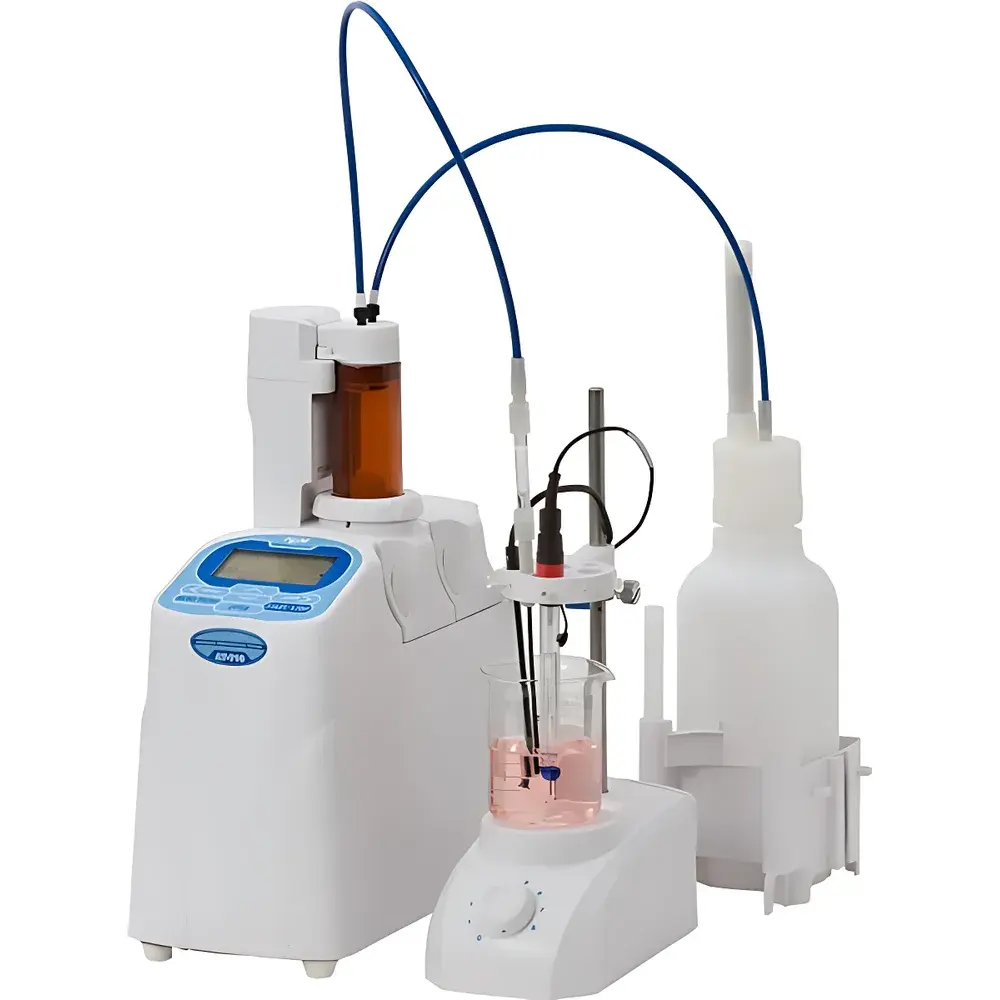
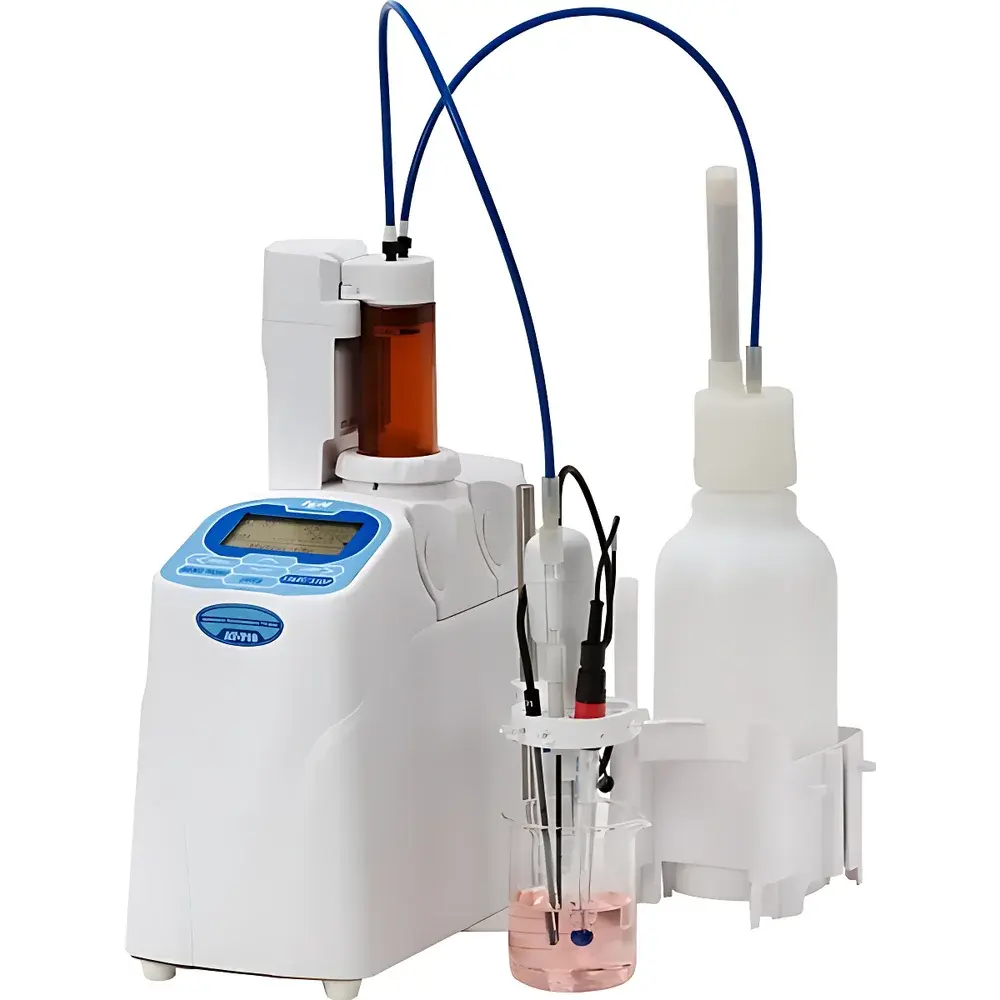
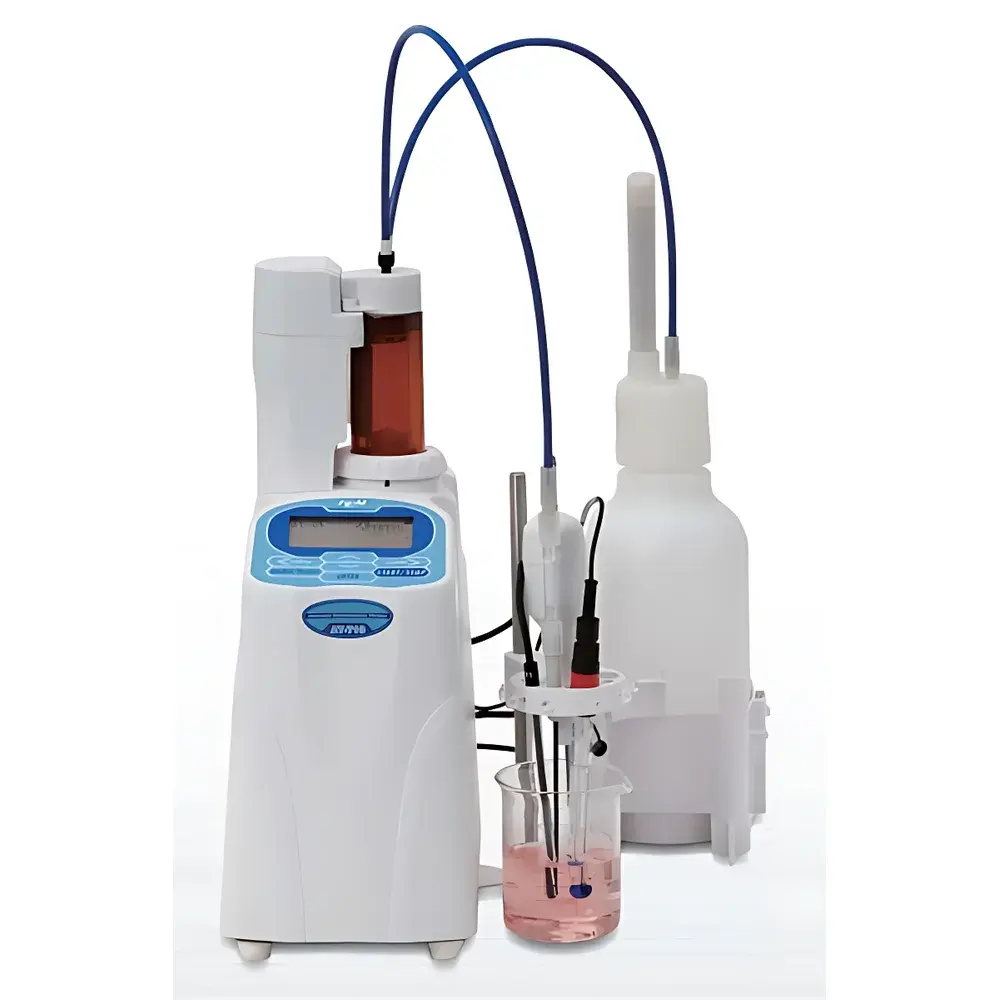
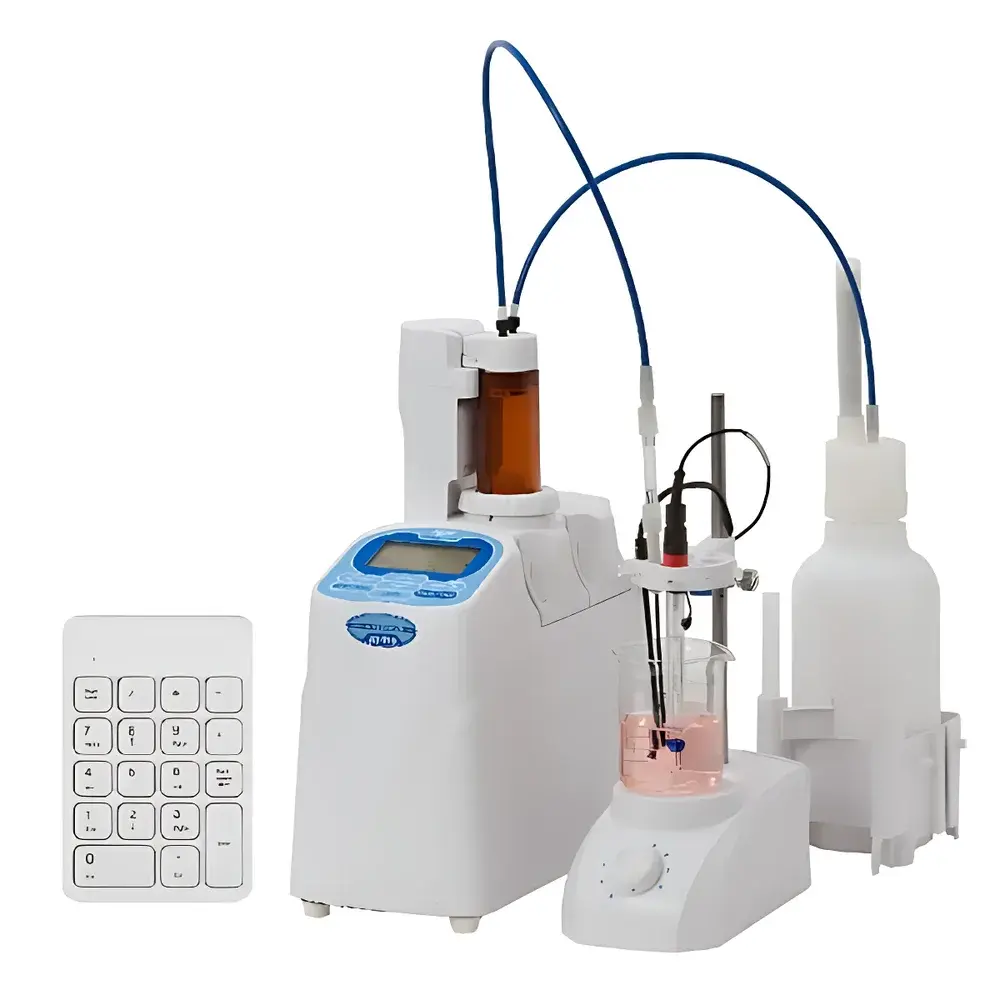
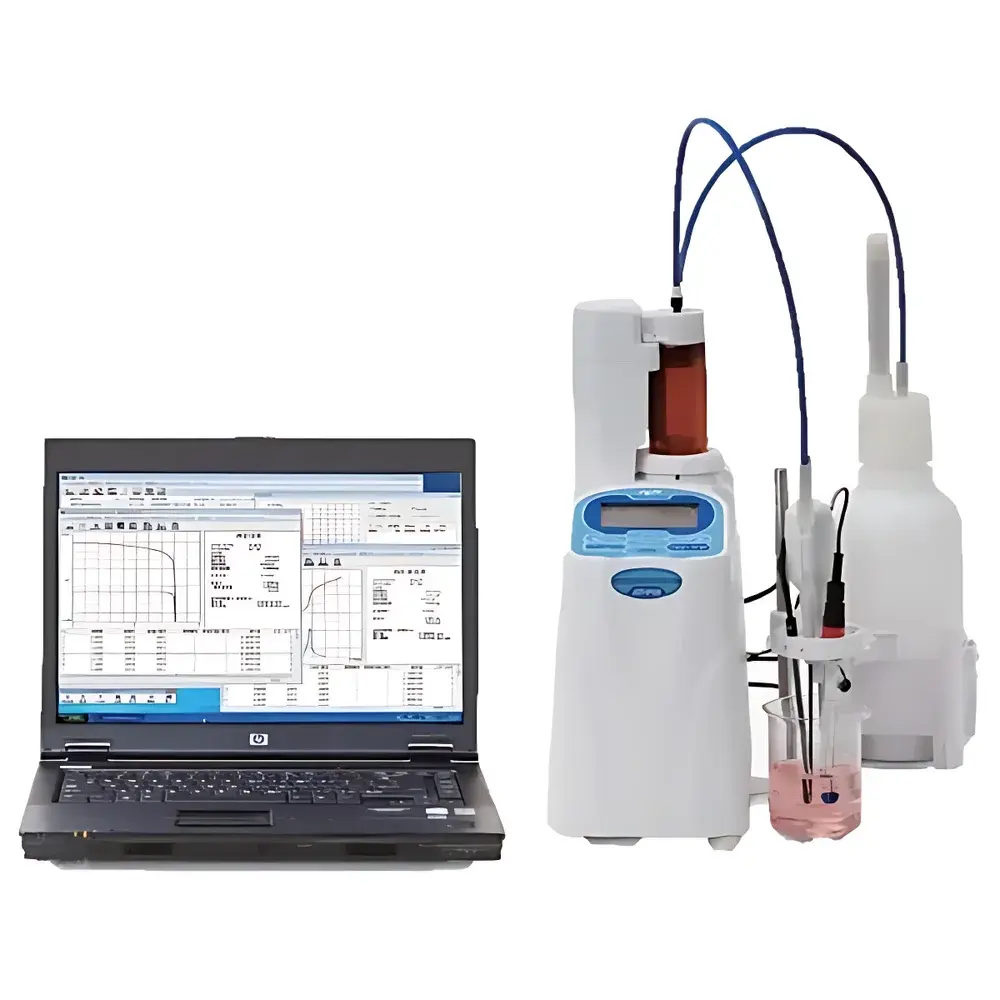
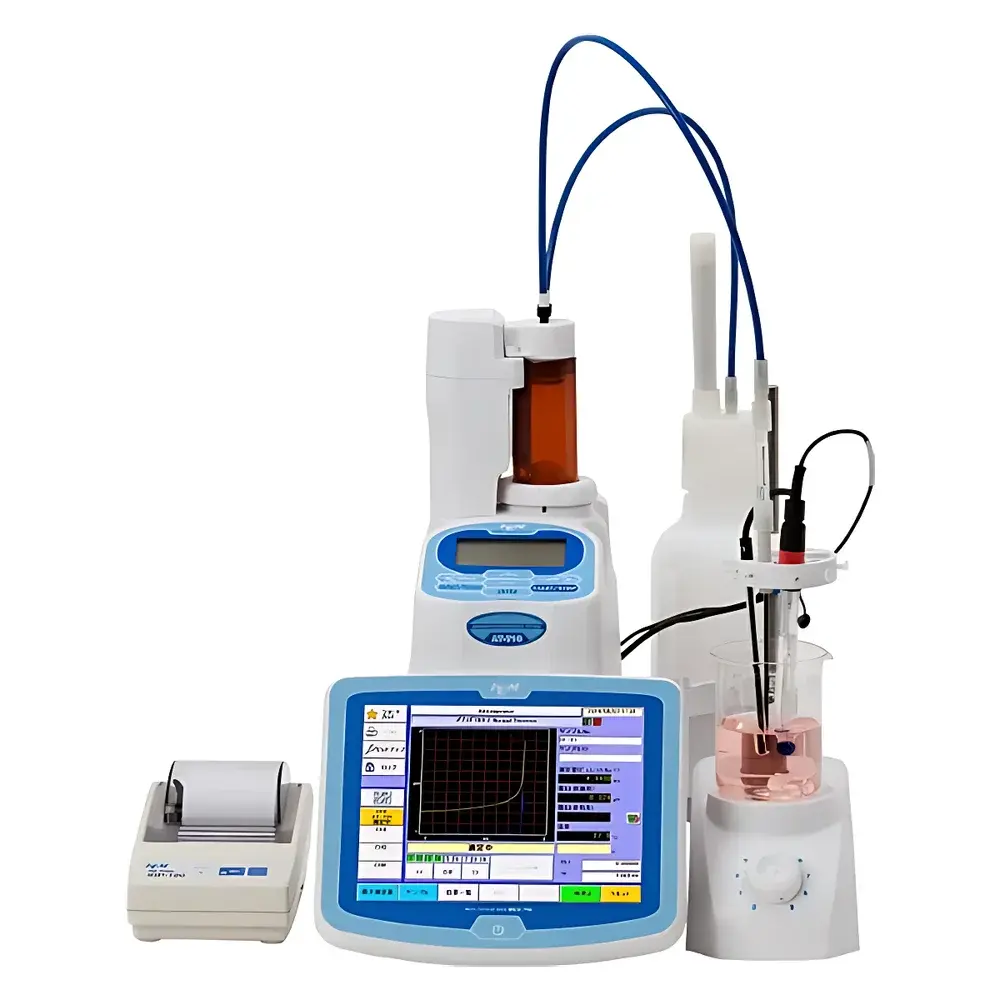
KEM AT-710B Automatic Potentiometric Titrator
| Brand | KEM (Kyoto Electronics Manufacturing) |
|---|---|
| Origin | Japan |
| Manufacturer Type | Original Equipment Manufacturer (OEM) |
| Product Category | Imported Instrument |
| Model | AT-710B |
| Instrument Type | General-purpose Potentiometric Titrator |
| Application Scope | Universal |
| Measurement Range | pH: −20.000 to +20.000 |
| mV | −2000.0 to +2000.0 mV |
| Temperature | 0 to 100 °C |
| Burette Accuracy (20 mL) | ±0.02 mL |
| Burette Resolution (20 mL) | 0.001 mL |
| Burette Precision (20 mL) | ±0.01 mL |
| Burette Resolution Ratio | 1/20,000 |
Overview
The KEM AT-710B Automatic Potentiometric Titrator is an entry-level yet fully functional benchtop titration system engineered for precision, repeatability, and operational simplicity in routine quality control, academic teaching laboratories, and industrial R&D environments. It implements classical potentiometric endpoint detection based on Nernstian electrode response—measuring the potential difference between a reference electrode (e.g., Ag/AgCl or SCE) and an indicator electrode (e.g., glass pH, platinum redox, or silver ion-selective) as titrant is incrementally delivered. The instrument identifies the stoichiometric endpoint via first-derivative analysis of the titration curve (dE/dV), enabling accurate quantification across acid–base, redox, precipitation, complexometric, and non-aqueous titrations. Its compact A4-footprint design reflects KEM’s long-standing expertise in electrochemical instrumentation, balancing robust mechanical architecture with intuitive user interaction—without compromising compliance-critical functionality.
Key Features
- Compact modular design: Titration unit measures only 141 × 296 × 367 mm (W × D × H) and weighs 4.0 kg—optimized for space-constrained lab benches.
- High-resolution 20 mL glass burette with brown light-shielding sleeve and anti-drip tip; achieves 1/20,000 step resolution and minimizes bubble adhesion through optimized internal geometry.
- Dual-channel potentiometric amplifier standard (pH/mV and mV/mV); optional modules support photometric (PTA), polarographic (POT), conductometric (CMT), and thermometric (TET) titration modes.
- Onboard method storage for up to 20 pre-programmed titration protocols, each configurable with multi-step sequences, conditional logic, and endpoint criteria (fixed, automatic, or volumetric).
- USB host interface supports direct export of measurement data and methods to USB flash drives—including auto-generation of PDF reports compliant with internal documentation standards.
- Expandable architecture: Supports up to 10 independent burette drive units and seamless integration with CHA-700 multi-sample autosampler for unattended batch analysis.
- Smart electrode interface (ELE port) enables automatic recognition and logging of electrode type, serial number, calibration history, and service dates—supporting traceability under GLP/GMP frameworks.
Sample Compatibility & Compliance
The AT-710B accommodates aqueous and non-aqueous matrices, including ethanol-, acetonitrile-, and chloroform-based solvents for Karl Fischer coulometric compatibility (when interfaced with MCU-710 moisture analyzer). Its wide pH (−20.000 to +20.000) and mV (−2000.0 to +2000.0) ranges enable determination of weak acids (e.g., carboxylic acids), polyprotic systems, and low-conductivity samples. Temperature compensation (0–100 °C) ensures volumetric accuracy across ambient and heated titration conditions. The system meets ISO 8655-3 (burette accuracy), ASTM E2087 (potentiometric titration practice), and supports audit-ready GLP workflows via operator ID registration, reagent lot tracking, electrode lifecycle logging, and timestamped result archiving.
Software & Data Management
No proprietary PC software is required for basic operation—the AT-710B features a built-in LCD display supporting six languages (English, Chinese, Japanese, Korean, Russian, Spanish) and full keypad navigation. Methods can be authored offline using standard text editors or Excel templates, then transferred via USB. All results—including raw potential vs. volume curves, derivative plots, statistical summaries (mean, SD, RSD), blank correction values, and titer calibration records—are stored internally (50 sample sets) and exportable in CSV/PDF formats. RS-232C and USB interfaces allow connection to LIMS, ERP, or centralized data servers. USB peripheral support includes barcode scanners, foot switches, and external keyboards—facilitating hands-free operation during high-throughput QA/QC testing.
Applications
- Acid–base titrations: Total acidity in food oils (AOAC 965.33), free fatty acid content, alkalinity in wastewater (ISO 9963-1).
- Oxidation–reduction titrations: Iron(II) in pharmaceuticals (USP ), iodine value in fats (AOCS Cd 1d-92), permanganate assays.
- Precipitation titrations: Chloride in drinking water (EPA 300.0), bromide in brines, silver content in alloys.
- pKa determination: Dissociation constants of organic acids and bases via Gran plot or half-neutralization methods.
- Non-aqueous titrations: Weak bases in acetic anhydride (ASTM D974), imidazole derivatives, and nitrogen-containing APIs.
FAQ
What titration modes does the AT-710B support?
It natively supports potentiometric titration (acid–base, redox, precipitation, complexometric), with optional modules enabling photometric, polarographic, conductometric, and thermometric detection.
Can the AT-710B be used for Karl Fischer moisture analysis?
Not standalone—but when connected to KEM’s MCU-710 coulometric moisture analyzer via dedicated interface, it enables simultaneous titration and water content determination in a single workflow.
Is the instrument compliant with FDA 21 CFR Part 11?
While the AT-710B itself lacks electronic signature or audit trail encryption, its GLP features (operator ID, reagent/electrode logs, time-stamped PDF exports) form the foundational data integrity layer compatible with Part 11–compliant LIMS environments.
What is the maximum number of samples that can be processed unattended?
With the CHA-700 autosampler (up to 100 positions) and dual-burette configuration, the system supports fully automated sequential analysis of ≥100 samples per run.
Does the AT-710B require annual recalibration by certified service providers?
KEM recommends biannual verification of burette accuracy (±0.02 mL at 20 mL) and electrode offset/stability using NIST-traceable standards; full recalibration is only necessary after mechanical repair or performance deviation beyond specification limits.





