
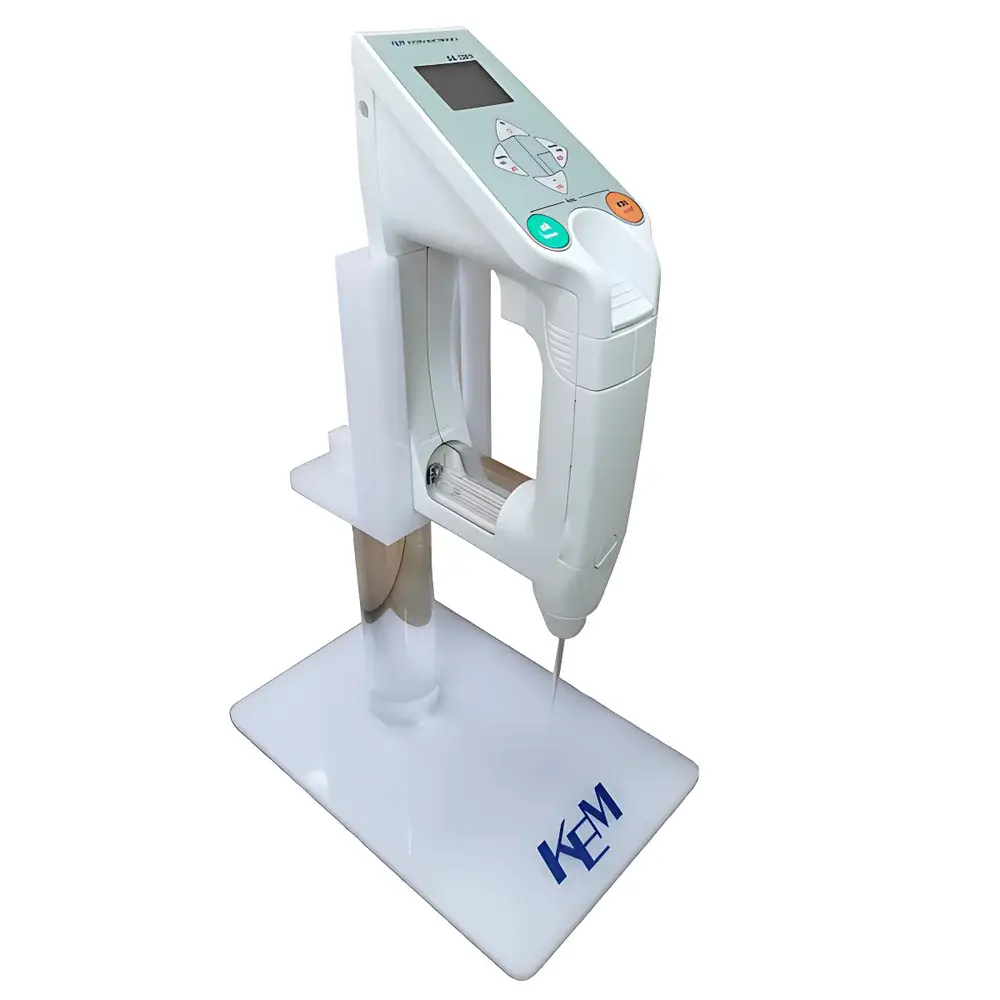
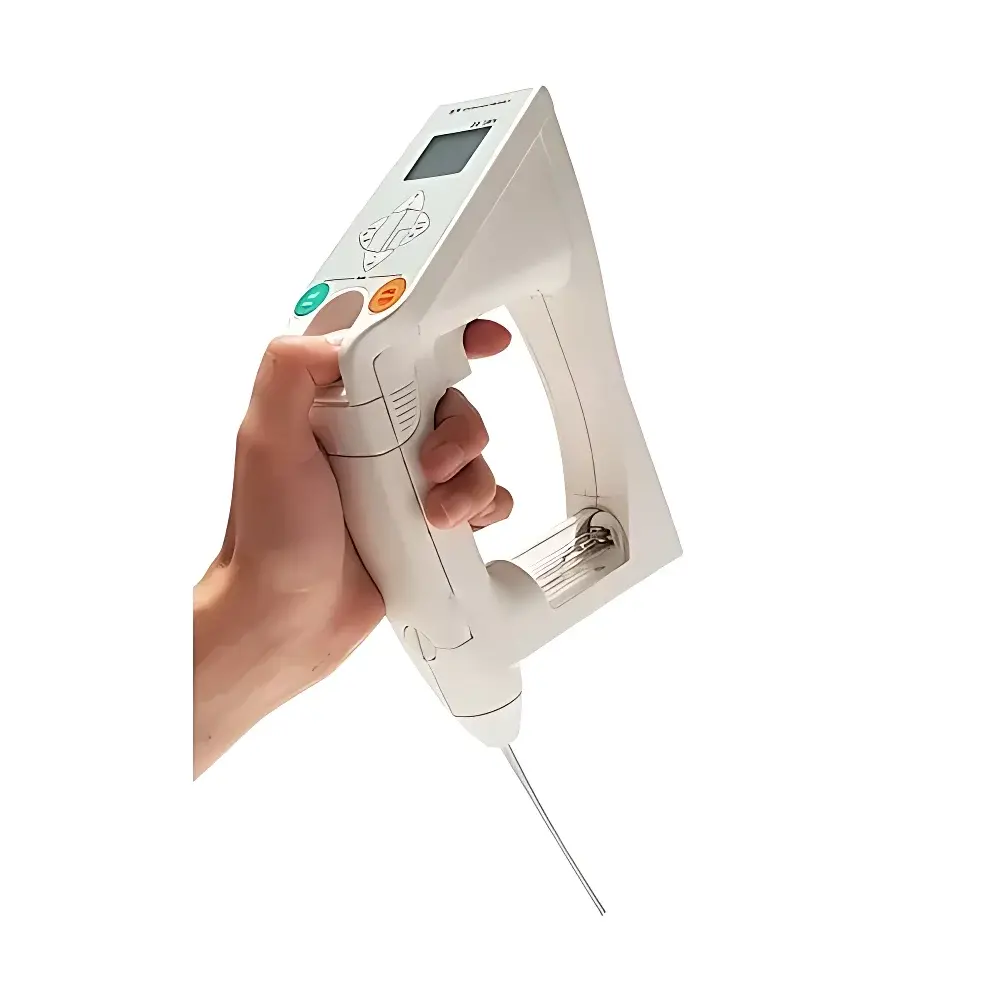
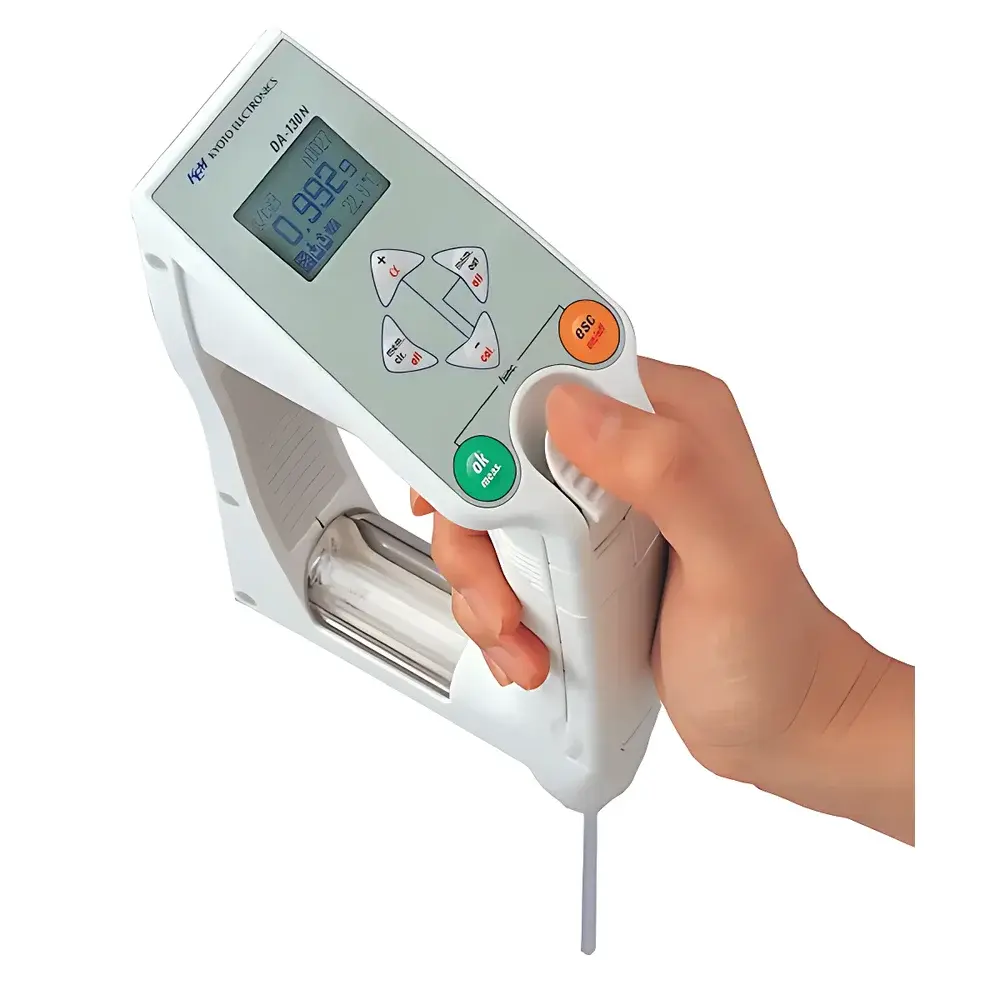
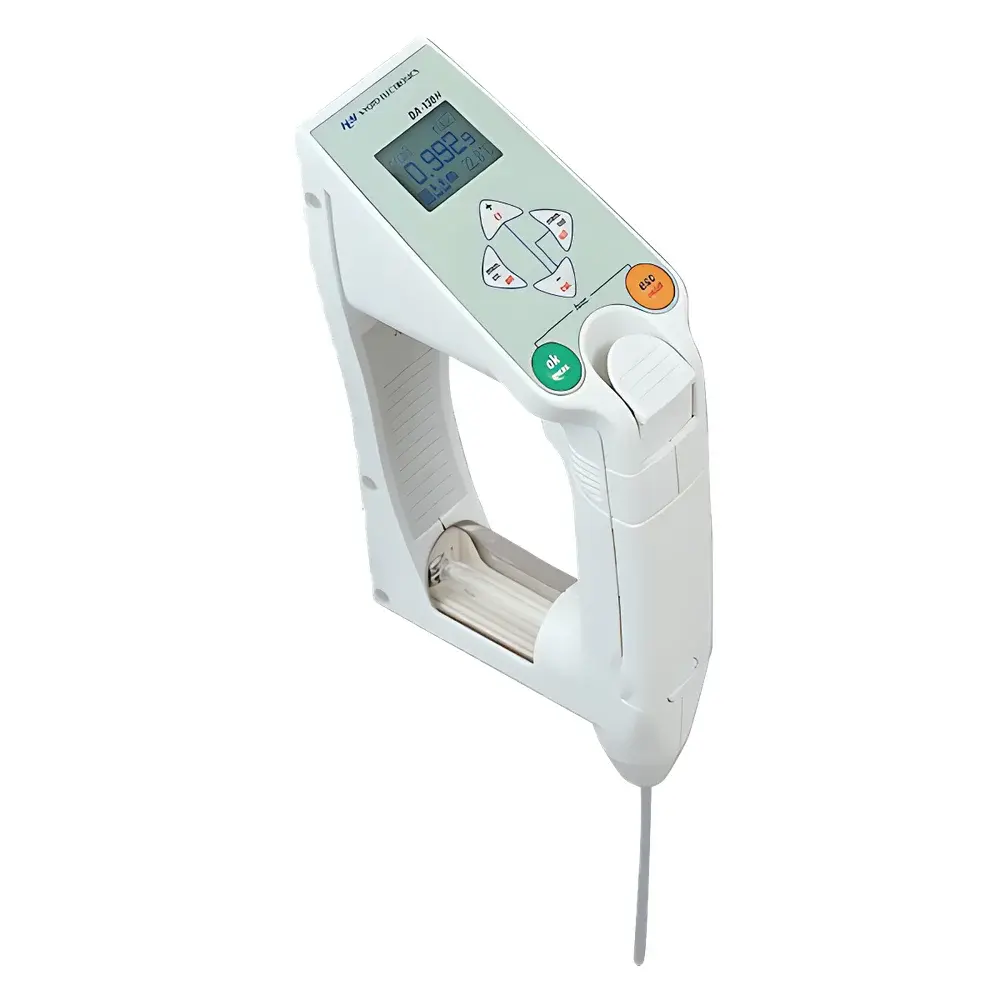
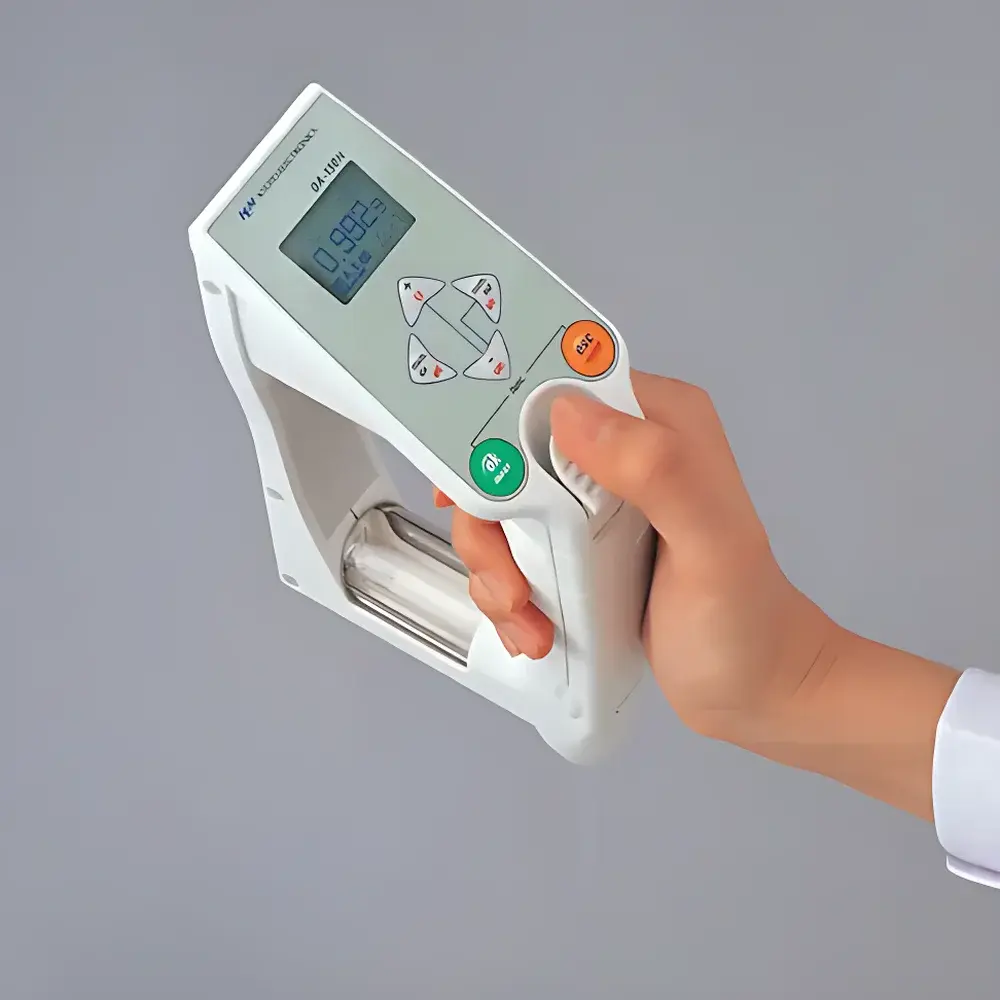
KEM DA-130N Portable Digital Oscillating U-Tube Density Meter with Stand
| Brand | KEM (Kyoto Electronics Manufacturing) |
|---|---|
| Origin | Japan |
| Manufacturer | Yes |
| Import Status | Imported |
| Model | DA-130N |
| Instrument Type | Portable Oscillating U-Tube Densitometer |
| Sample Type | Liquids |
| Density Range | 0.0000–2.0000 g/cm³ |
| Density Accuracy | ±0.001 g/cm³ |
| Density Resolution | 0.0001 g/cm³ |
| Repeatability | ±0.0005 g/cm³ |
| Temperature Range | 0.0–40.0 °C |
| Temperature Resolution | 0.1 °C |
| Minimum Sample Volume | 1–2 mL |
| Viscosity Limit | ≤2000 mPa·s |
| Display | LCD |
| Data Storage | 1100 measurements |
| Interface | Infrared, optional RS-232C |
| Wetted Materials | PTFE inlet tube, borosilicate glass measuring cell, polypropylene syringe |
| Power | 3 V DC (2 × AA alkaline batteries) |
| Weight | ~360 g |
| Compliance | ASTM D7777, IP 559, ISO 12185 |
Overview
The KEM DA-130N Portable Digital Oscillating U-Tube Density Meter is an engineered solution for rapid, field-deployable density and relative density determination of liquid samples. Based on the fundamental principle of oscillating U-tube densimetry—where the resonant frequency of a precisely manufactured borosilicate glass U-shaped tube is inversely correlated to the mass of the sample contained within it—the instrument delivers traceable, high-reproducibility measurements without reliance on gravity-dependent methods such as pycnometry or hydrometry. Its compact, handheld architecture integrates a built-in micro-pump for controlled aspiration of low-to-moderate viscosity liquids (≤2000 mPa·s), eliminating the need for external syringes or pipettes in routine operation. Designed for operational continuity across diverse environments—from refinery field stations and beverage production lines to pharmaceutical QC labs and academic teaching laboratories—the DA-130N operates reliably within ambient temperatures of 0–50 °C and requires no external power source or benchtop infrastructure.
Key Features
- True portable oscillating U-tube technology with integrated PTFE-coated sampling system and ergonomic one-handed operation
- High-resolution LCD display showing real-time density (g/cm³), relative density (t/t), temperature-compensated values, API gravity, Brix%, Plato, Baume, alcohol concentration (v/v% or w/w%), H₂SO₄ wt%, and Proof units
- Automated temperature compensation using up to ten user-defined coefficients for common solvents (e.g., ethanol, methanol, toluene, glycerol, chloroform)
- Internal reference database of pure water density values across 0–40 °C enables fast, single-point calibration; optional standard liquid calibration supported
- Onboard memory stores 1100 measurement records with timestamp, sample ID, and stability assessment flags
- Infrared data transmission interface (standard); optional RS-232C cable enables direct connection to printers or laboratory PCs running KEM’s proprietary data acquisition software
- Chemically inert wetted path: borosilicate glass measuring cell, PTFE inlet tubing, and polypropylene internal syringe ensure compatibility with aggressive organic solvents, acids, bases, and food-grade matrices
Sample Compatibility & Compliance
The DA-130N is validated for use with homogeneous, non-particulate, non-volatile, and low-foaming liquids. It meets the metrological requirements of ASTM D7777 (Standard Test Method for Density of Semi-Volatile and Volatile Liquids by Portable Digital Density Meters) and IP 559 (Determination of Density of Petroleum Products by Digital Density Meter), making it suitable for custody transfer support, refinery QC, and regulatory-compliant testing of petroleum distillates, lubricants, and biofuels. In food and beverage applications, it supports Brix and Plato determinations per AOAC Official Methods and provides traceable alcohol content reporting aligned with OIML R 22 recommendations. For pharmaceutical and cosmetic formulations, its ability to measure relative density per USP and EP 2.2.5 ensures alignment with pharmacopoeial quality control workflows. The device supports GLP-compliant data integrity through time-stamped storage and export-capable audit trails when used with KEM’s certified software suite.
Software & Data Management
KEM’s dedicated DA-130N data acquisition software (Windows-compatible, included) enables secure import, sorting, filtering, and export of measurement histories in CSV or Excel format. Each record contains full metadata: date/time stamp, operator ID (user-definable), sample identifier, raw density, compensated density, measured temperature, stability indicator, and calibration status. The software supports FDA 21 CFR Part 11-compliant electronic signatures and audit trail generation when configured with appropriate IT controls. Exported datasets are structured for direct integration into LIMS platforms or statistical process control (SPC) tools. No cloud connectivity or third-party dependencies are required—data remains under full user control at all times.
Applications
- Petroleum & Energy: Field verification of crude oil API gravity, fuel blending verification, lubricant density consistency checks
- Food & Beverage: Alcohol-by-volume (ABV) validation in spirits and wine, Brix monitoring in fruit juices and syrups, milk solids estimation via relative density
- Chemicals & Electrolytes: Sulfuric acid concentration tracking in lead-acid battery electrolytes, cleaning agent formulation QC, plating bath density control
- Pharmaceuticals & Cosmetics: Excipient density screening, solvent recovery verification, glycerin or propylene glycol assay support
- Academic & Training: Undergraduate physical chemistry labs demonstrating fluid property relationships, density–temperature correlation studies, and method validation exercises
FAQ
What calibration standards are recommended for daily verification?
Distilled water at 20 °C (density = 0.998203 g/cm³) and a secondary standard such as certified n-hexane (0.6548 g/cm³ at 20 °C) are recommended for two-point verification.
Can the DA-130N measure slurries or suspensions?
No. The oscillating U-tube principle requires optically clear, particle-free liquids; particulates may obstruct flow or dampen resonance, compromising accuracy and damaging the glass cell.
Is temperature control of the sample required before measurement?
No. The integrated Peltier-independent temperature sensor measures sample temperature in situ; however, thermal equilibrium between sample and instrument must be achieved prior to reading (typically <30 s for ambient-equilibrated samples).
How is compliance with ISO/IEC 17025 maintained during routine use?
By performing documented periodic verification using traceable standards, maintaining calibration logs, applying temperature compensation coefficients validated per ISO 12185 Annex B, and retaining full digital records with uneditable timestamps.
What maintenance is required for long-term reliability?
Rinsing the U-tube and inlet path with compatible solvents (e.g., isopropanol, deionized water) after each sample series; annual inspection of PTFE tubing elasticity and glass cell integrity; battery replacement every 6–12 months depending on usage frequency.
Related Products



