
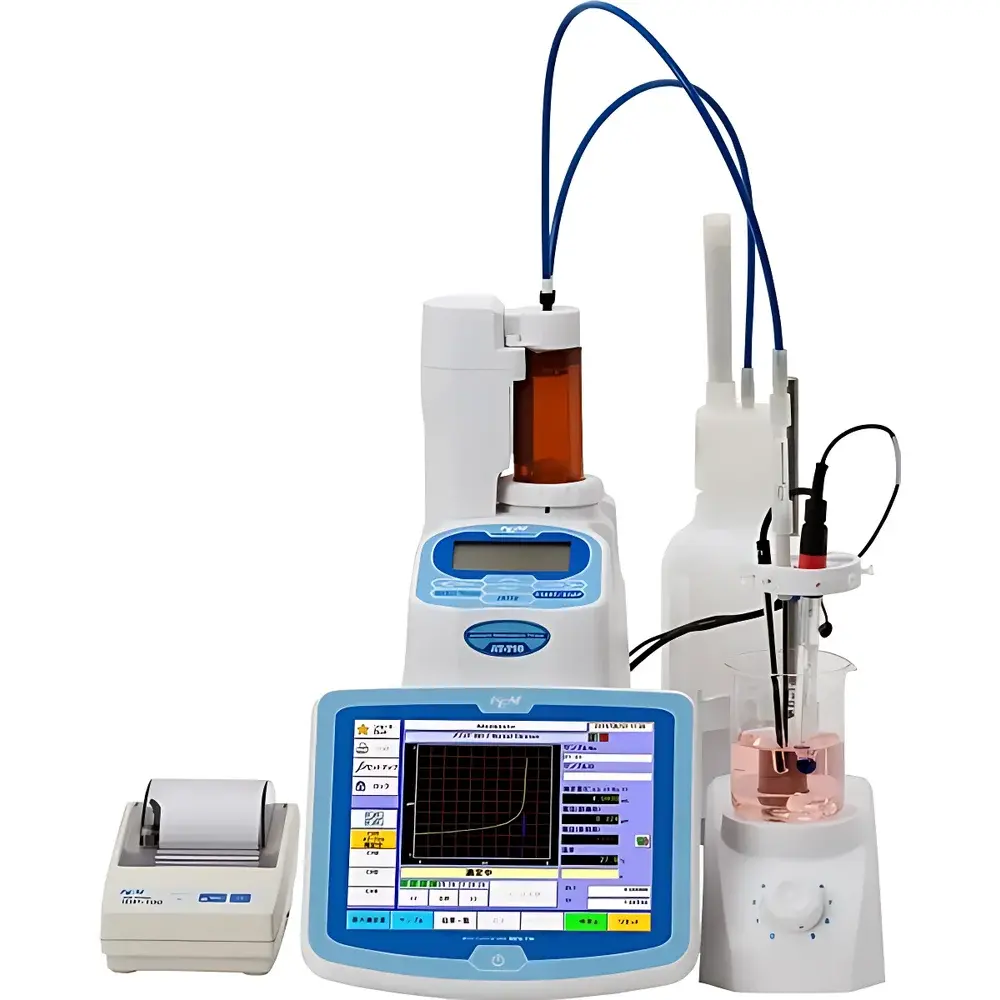
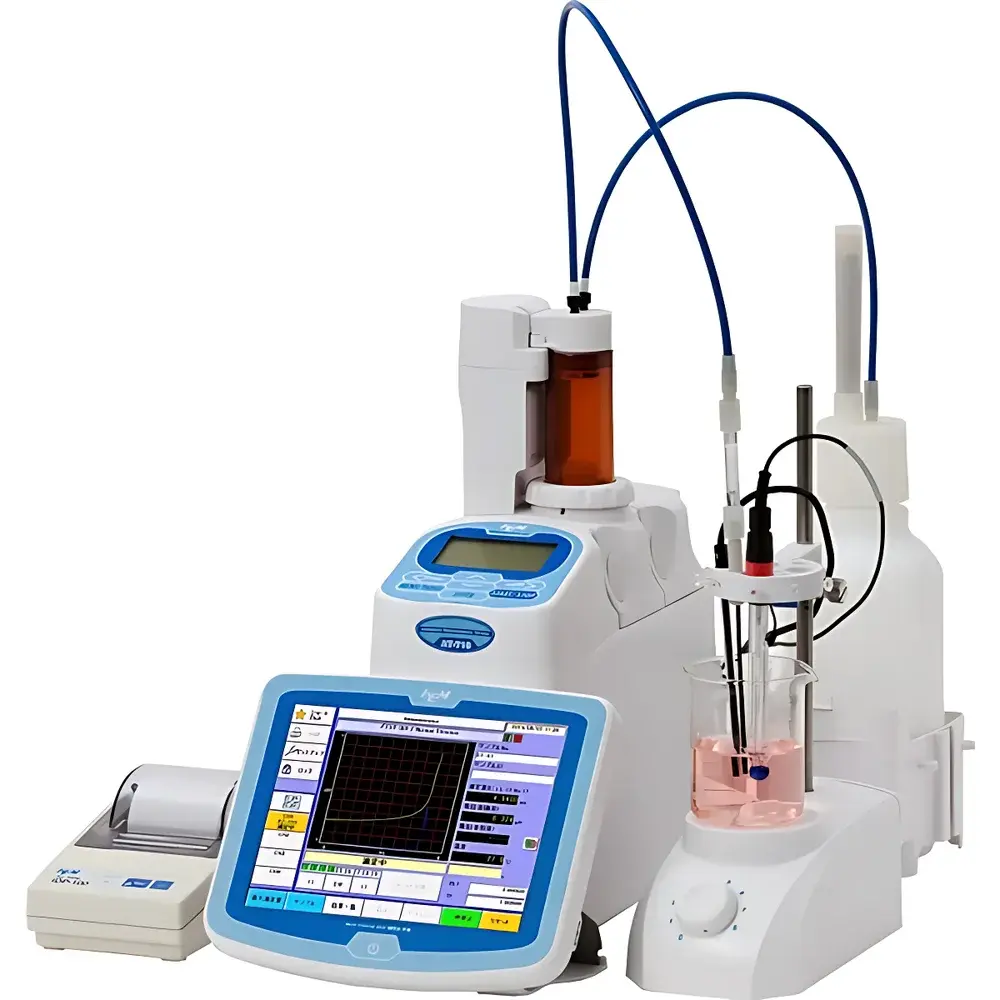
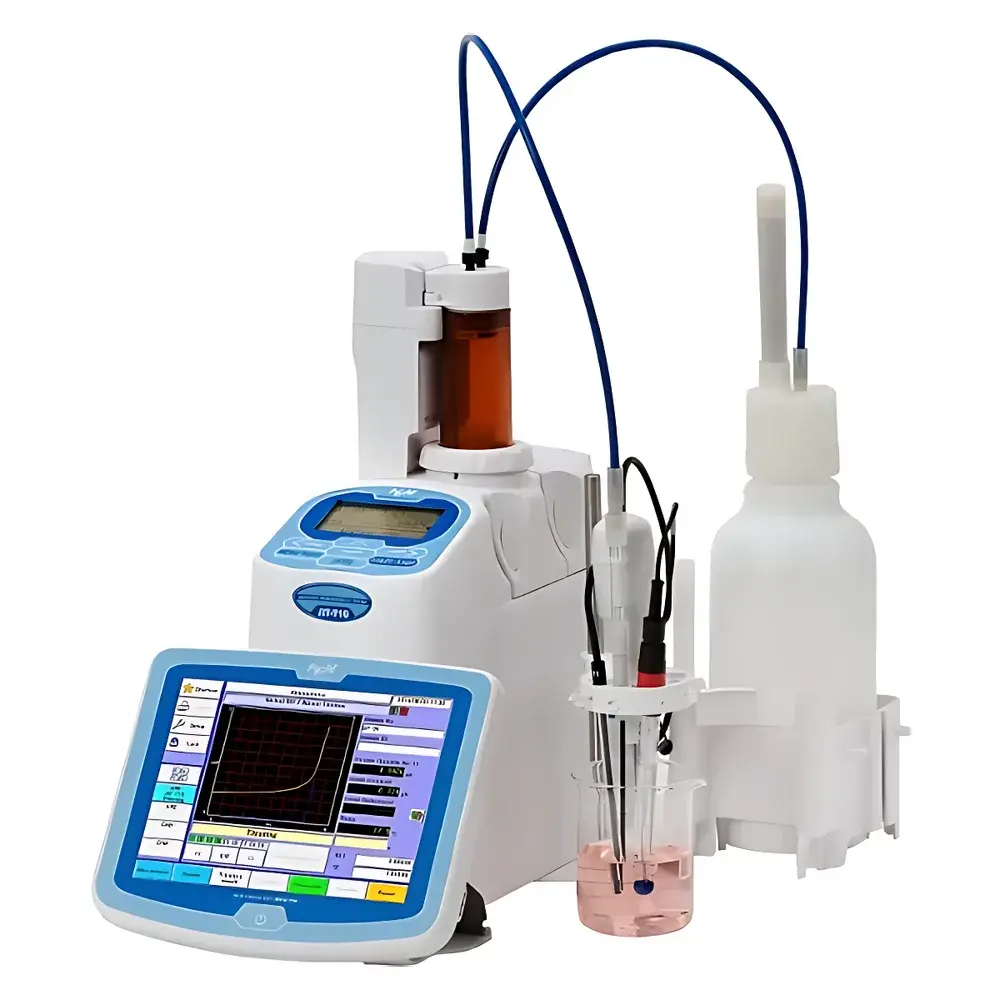
KEM AT-710S Advanced Automatic Potentiometric Titrator
| Brand | KEM (Kyoto Electronics Manufacturing) |
|---|---|
| Origin | Japan |
| Manufacturer Type | Original Equipment Manufacturer (OEM) |
| Product Category | Imported Instrument |
| Model | AT-710S |
| Instrument Type | General-purpose Potentiometric Titrator |
| Application Scope | Universal Analytical Titration |
| Measurement Range | pH: −20.000 to +20.000 |
| mV | −2000.0 to +2000.0 |
| Temperature | 0–100 °C |
| Burette Accuracy (20 mL) | ±0.02 mL |
| Burette Resolution (20 mL) | 0.001 mL |
| Electrode Reading Precision | ±0.01 mL |
| Burette Resolution Ratio | 1/20,000 |
Overview
The KEM AT-710S Advanced Automatic Potentiometric Titrator is a high-precision, modular electrochemical analysis platform engineered for reproducible and traceable potentiometric titrations in regulated laboratory environments. It operates on the fundamental principle of measuring potential difference between a reference electrode and an indicator electrode as titrant is incrementally added—detecting the inflection point (endpoint) where ion activity undergoes a rapid, stoichiometric shift. This method enables quantitative determination across acid-base, redox, precipitation, complexometric, and non-aqueous titrations without reliance on visual indicators. The system integrates a microprocessor-controlled burette drive, real-time dual-channel potential monitoring, and temperature-compensated measurement architecture—ensuring compliance with thermodynamic consistency requirements for accurate equivalence point calculation. Designed for GLP/GMP-aligned workflows, the AT-710S supports audit-ready data integrity through embedded operator authentication, electronic signature support, and full traceability of reagent lot numbers, electrode calibration history, and environmental parameters.
Key Features
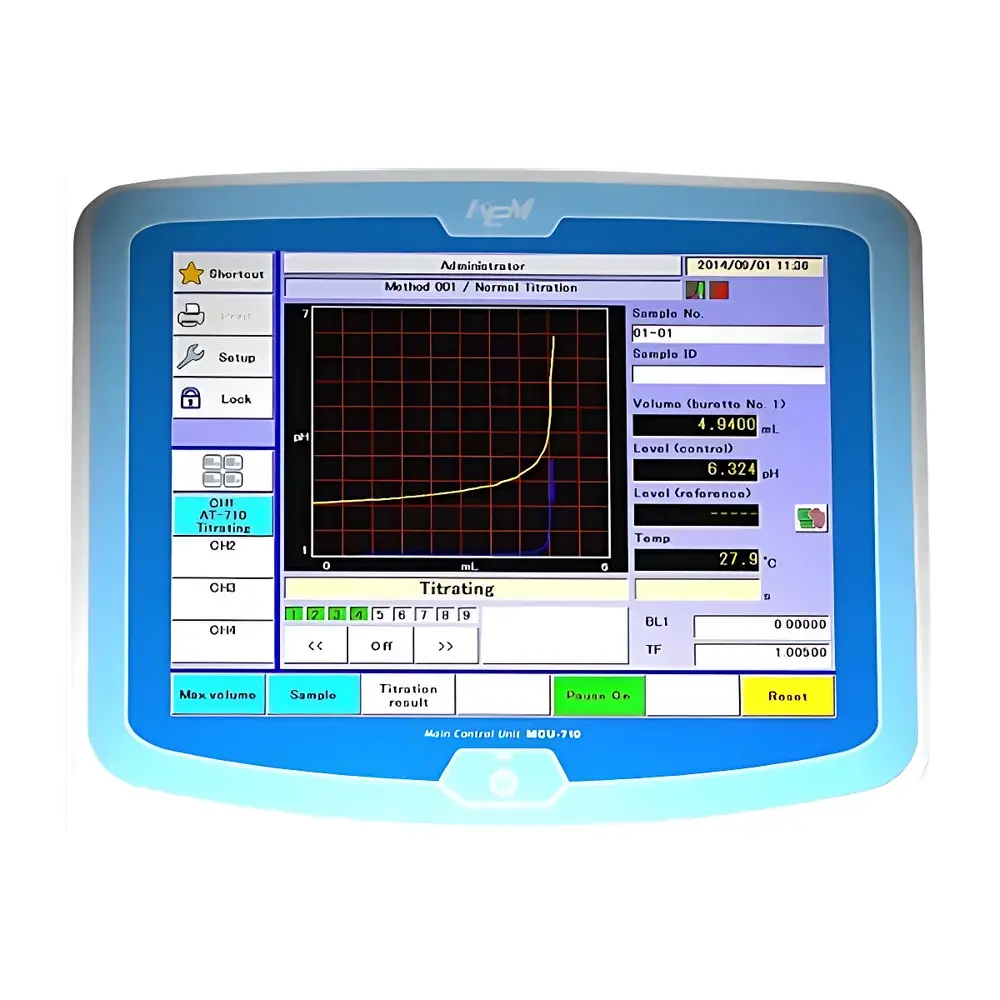
- 8.4-inch full-color capacitive touchscreen interface with multi-language support (English, Japanese, Chinese, Korean, Russian, Spanish, German, French), enabling intuitive method setup and real-time graphical visualization of titration curves.
- Smart burette unit with embedded EEPROM chip storing titrant identity, concentration, expiration date, and handling history—automatically loaded upon installation to prevent manual entry errors.
- Intelligent electrode cable with integrated memory module recording electrode type, serial number, calibration dates, and performance logs—synchronized with instrument software for automatic validation checks.
- Low-dead-volume glass burette (20 mL standard, optional 1–10 mL variants) featuring brown light-shielding sleeve and diffusion-prevention nozzle to minimize reagent degradation and evaporation artifacts.
- Physically separated touchscreen and titration module—reducing electrical coupling risk and enabling safe operation during hazardous or exothermic titrations.
- Role-based user access control with password-protected privilege levels (Administrator, Analyst, Viewer) to enforce SOP adherence and prevent unauthorized configuration changes.
- Dual-channel detection capability supporting simultaneous acquisition from pH/mV electrodes and auxiliary sensors (e.g., photometric, conductometric, or polarographic transducers).
- Automated PDF report generation with embedded metadata—including method ID, sample ID, operator ID, timestamp, raw curve data, statistical summaries, and digital signature fields compliant with FDA 21 CFR Part 11 Annex 11 requirements.
Sample Compatibility & Compliance
The AT-710S accommodates aqueous and non-aqueous matrices across pharmaceutical, petrochemical, food & beverage, and environmental testing applications. Its extended pH range (−20.000 to +20.000) and wide mV window (±2000.0 mV) support low-ionic-strength samples, highly alkaline digestions, and organic solvent-based titrations (e.g., perchloric acid in glacial acetic acid). Temperature monitoring (0–100 °C) ensures kinetic stability during endpoint detection and enables temperature-dependent corrections per ISO 8655-3 and ASTM E2087. The system meets IEC 61010-1 safety standards for laboratory equipment and supports GLP documentation per OECD Principles of Good Laboratory Practice. All stored data—including calibration records, blank corrections, and statistical outputs—are time-stamped, immutable, and exportable in CSV/PDF formats for regulatory submission.
Software & Data Management
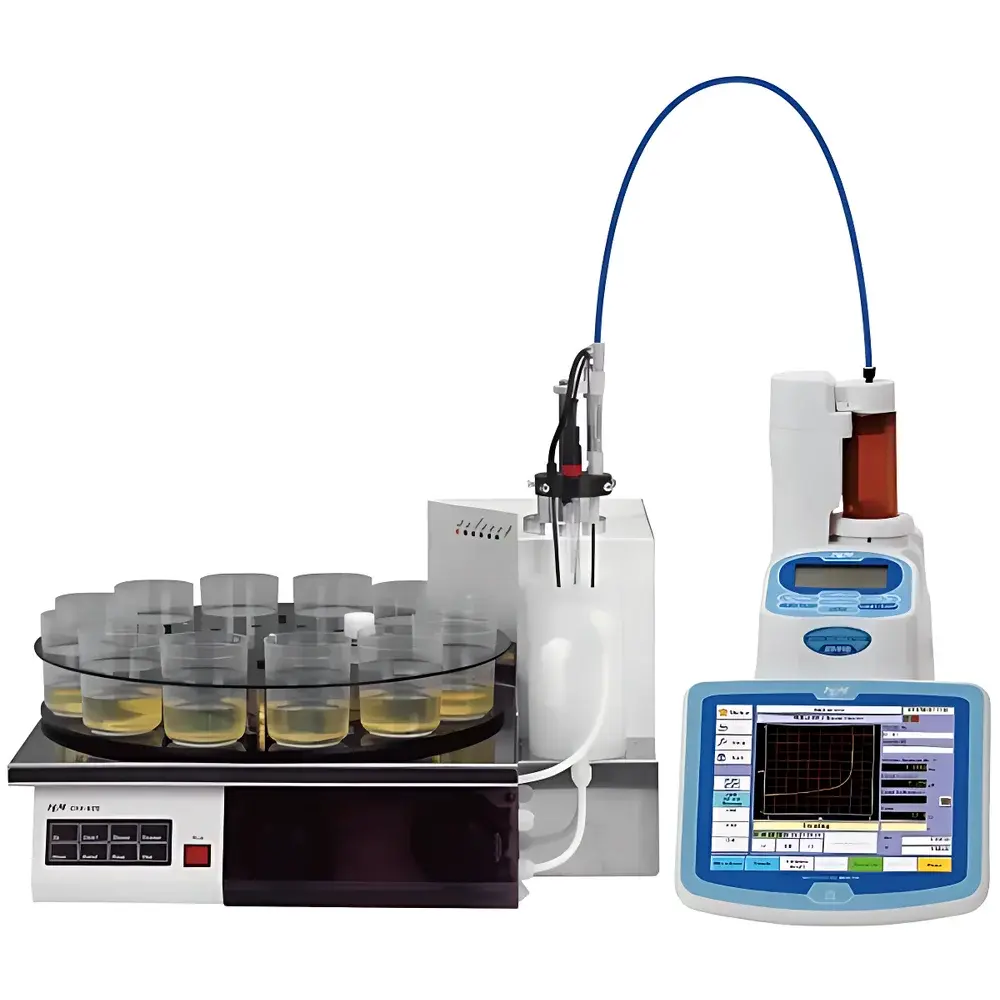
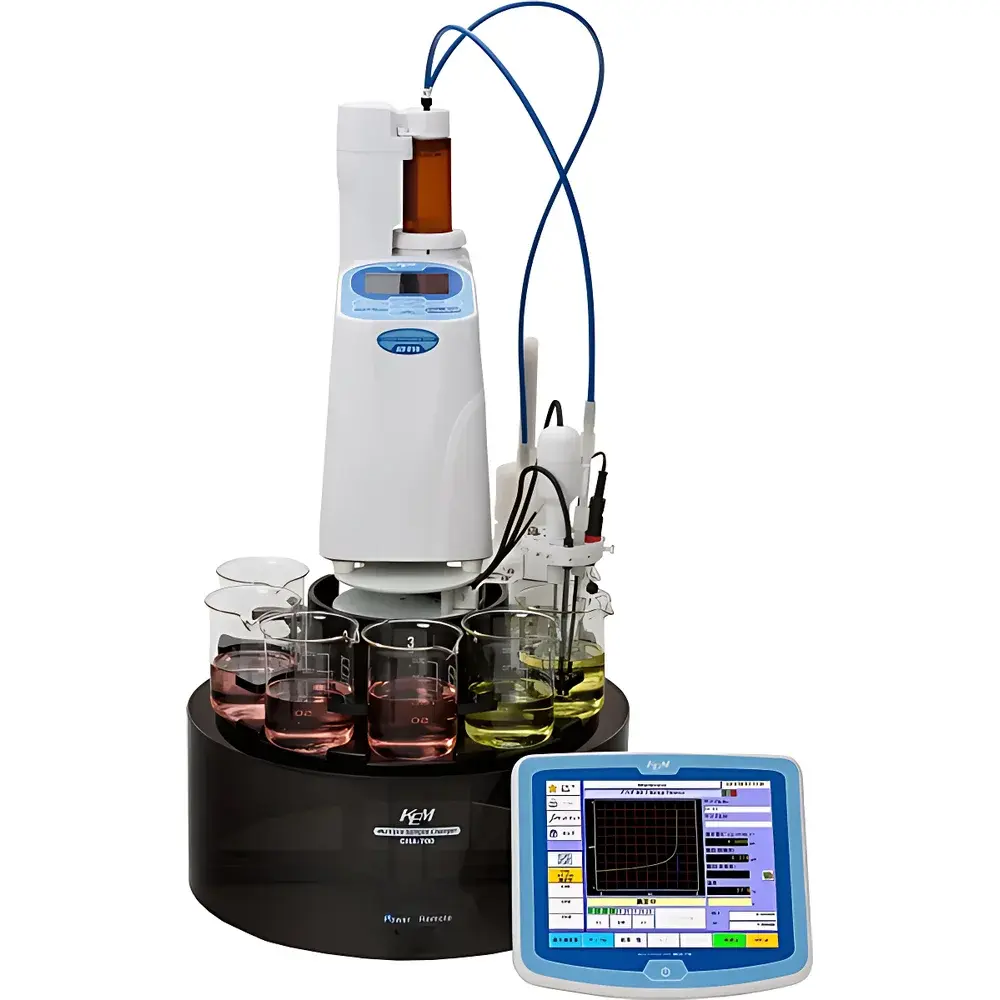
The onboard firmware implements a structured method library supporting up to 120 pre-programmed titration protocols—including standardized methods for acid number (ASTM D974), base number (ASTM D2896), COD (ISO 6060), water content (Karl Fischer coulometric mode via optional module), and pKa determination. Users may combine up to five base methods into composite sequences for multi-step analyses. Data storage includes 500 sample result sets with full audit trail: operator login/logout timestamps, parameter modifications, calibration events, and instrument error logs. USB-host functionality allows direct export to encrypted USB drives; RS-232C and SS-BUS ports enable integration with CHA-600/CHA-700 autosamplers and LIMS systems. Software updates are delivered via signed firmware packages verified against KEM’s public key infrastructure.
Applications
- Pharmaceutical QC: Assay of active ingredients (e.g., amine hydrochlorides), residual catalyst quantification, and excipient acidity profiling per USP and EP 2.2.47.
- Petrochemical Analysis: Total acid number (TAN) and total base number (TBN) in lubricants and crude fractions per ASTM D664/D2896.
- Food & Agriculture: Free fatty acid titration in edible oils, chloride determination in dairy products, and sulfur dioxide quantification in wines.
- Environmental Testing: Alkalinity and hardness measurements in wastewater per APHA 2320B, and cyanide speciation via silver nitrate titration.
- Academic Research: pKa mapping of polyprotic acids, stability constant determination for metal-ligand complexes, and kinetic endpoint modeling using derivative curve analysis.
FAQ
Does the AT-710S support compliance with FDA 21 CFR Part 11?
Yes—the system provides electronic signature capability, audit trail logging, user authentication, and data immutability features required for Part 11 compliance when deployed with validated IT infrastructure.
Can the instrument perform simultaneous pH and photometric detection?
Yes—dual-channel input supports concurrent acquisition from pH/mV electrodes and optional photometric sensors (e.g., for turbidimetric endpoints), with synchronized time-stamping and overlay curve display.
What burette sizes are available, and how is accuracy verified?
Standard 20 mL glass burette (±0.02 mL accuracy, 0.001 mL resolution); optional 1 mL, 5 mL, and 10 mL units. Accuracy is traceable to NIST-certified volumetric standards and verified during factory calibration per ISO/IEC 17025.
Is method transfer possible between different AT-710 series instruments?
Yes—method files (.kem format) are fully portable across AT-710, AT-710M, and AT-710S platforms, ensuring consistent results in multi-instrument laboratories.
How does the system handle temperature compensation during titration?
Integrated Pt100 sensor monitors titrant temperature in real time; compensation algorithms apply correction factors to volume delivery based on thermal expansion coefficients defined in ISO 4787.




