
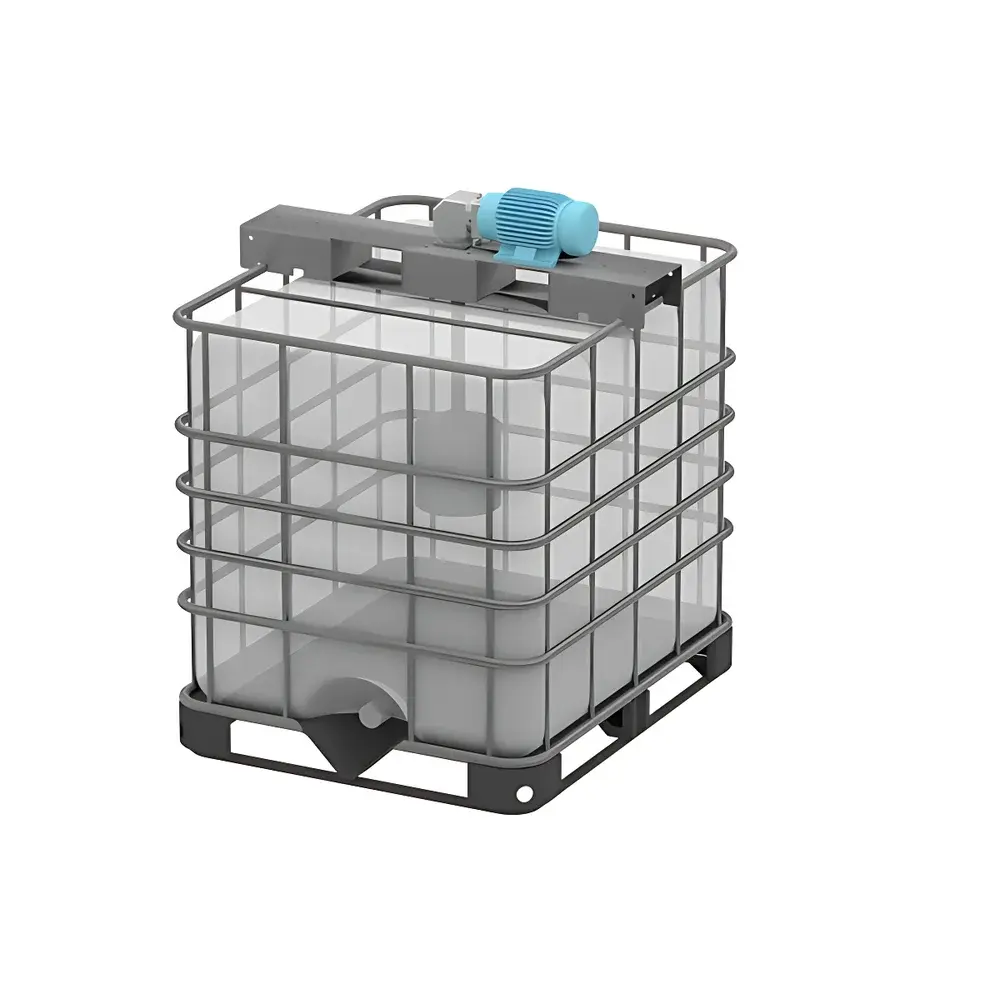
SpinChem ProRBR Mechanical Rotating Bed Reactor
| Brand | SpinChem |
|---|---|
| Origin | Sweden |
| Model | ProRBR |
| Construction Material | 316L Stainless Steel (customizable to Hastelloy C-276) |
| Operating Pressure | 0–10 bar |
| Temperature Range | −20 °C to +80 °C |
| Liquid Hold-up | 15 mL |
| Window Material | Borosilicate glass (>325 nm transmission) or fused quartz (>200 nm) |
| Heat Exchange | External thermal fluid jacket |
| Vessel Capacity | 1 L to several thousand liters |
| Configuration Options | Internal-mounted, External-loop, and IBC-integrated |
Overview
The SpinChem ProRBR Mechanical Rotating Bed Reactor is an engineered solution for scalable enzymatic, catalytic, and ion-exchange reactions under controlled hydrodynamic conditions. Unlike conventional stirred-tank reactors, the ProRBR employs a rotating packed bed (RPB) architecture—where solid-phase catalysts or immobilized enzymes are retained within a cylindrical rotor that spins at defined angular velocities inside or adjacent to the reaction vessel. This design generates high surface-area-to-volume ratios and intensifies mass transfer via centrifugal force-driven liquid film formation across the stationary phase, significantly enhancing reaction kinetics and reducing diffusion limitations. The system operates across batch, semi-batch, and continuous-flow modes, supporting process development from lab-scale screening to pilot and production-scale implementation. Its modular configurations—including internal-mount, external-loop, and IBC-integrated variants—enable seamless integration into existing infrastructure while maintaining strict compliance with ISO 9001-certified manufacturing standards and EU Machinery Directive 2006/42/EC requirements.
Key Features
- Three standardized mounting architectures: internal-mounted (replaces conventional agitators), external-loop (enables inter-vessel circulation and continuous operation), and IBC-integrated (designed for 600–1000 L composite intermediate bulk containers with plug-and-play motor and cabling)
- Rotating bed core constructed from 316L stainless steel as standard; optional Hastelloy C-276 for aggressive chemical environments or elevated chloride exposure
- Thermal management via jacketed heat exchange using external thermal fluid circuits, ensuring precise temperature control across the full operating range (−20 °C to +80 °C)
- Optical access ports fitted with borosilicate or fused quartz windows (UV-transparent down to 200 nm), facilitating real-time in situ monitoring of bed dynamics and phase behavior
- Low liquid hold-up (15 mL) minimizes reagent waste during method development and supports rapid parameter iteration in DoE studies
- CE-marked drive systems with IP65-rated enclosures, compatible with Class I Div 2 hazardous area installations when specified
Sample Compatibility & Compliance
The ProRBR accommodates a broad spectrum of solid-phase biocatalysts and heterogeneous catalysts, including epoxy-, amino-, and alkyl-functionalized acrylic resins, macroporous polystyrene-DVB matrices, and silica-based immobilization supports. Its pressure rating (0–10 bar) and temperature envelope support both ambient and mildly elevated process conditions typical of enzymatic hydrolysis, transesterification, and chiral resolution. All wetted parts comply with FDA 21 CFR Part 11–ready documentation protocols when paired with validated SCADA interfaces. The reactor’s mechanical design adheres to ASME BPVC Section VIII Division 1 for pressure boundary integrity, and its material certifications (EN 10204 3.1) are provided per unit. For GMP-aligned workflows, audit trails, electronic signatures, and user-access controls can be implemented through third-party MES integration.
Software & Data Management
While the ProRBR operates as a hardware-integrated platform without proprietary embedded firmware, it is fully compatible with industry-standard industrial automation ecosystems—including Siemens SIMATIC, Rockwell Allen-Bradley, and Beckhoff TwinCAT. Rotation speed, temperature setpoints, and flow rates (in external-loop mode) are controllable via 4–20 mA analog signals or Modbus TCP/IP. Optional data acquisition modules log timestamped RPM, torque, jacket inlet/outlet temperatures, and pressure differentials at ≤1 Hz resolution. All logged data conform to ASTM E2500-13 guidelines for equipment qualification and may be exported in CSV or HDF5 format for statistical analysis in JMP, MATLAB, or Python-based chemometrics pipelines.
Applications
- High-throughput screening of immobilized enzyme carriers under industrially relevant shear and residence time conditions
- Optimization of kinetic parameters (kcat, KM) for covalently bound lipases, proteases, and glycosidases in non-aqueous media
- Continuous-flow biotransformations—e.g., enantioselective ester hydrolysis or dynamic kinetic resolution—using fixed-bed enzyme cartridges
- Ion-exchange purification of monoclonal antibody harvest streams with regenerable polymeric resins
- Scale-down modeling of commercial RPB units for QbD-based process validation (ICH Q5, Q8, Q9)
- Accelerated stability testing of immobilized biocatalysts under repeated thermal cycling and pH stress
FAQ
Can the ProRBR be used for aerobic biocatalysis requiring oxygen transfer?
Yes—the rotating bed geometry enhances gas–liquid mass transfer coefficients (kLa) by up to 3× compared to baffled stirred tanks, particularly when operated with low-viscosity solvents and moderate rotational speeds (200–600 rpm).
Is custom rotor geometry supported for non-spherical catalyst particles?
Yes—SpinChem offers engineering consultation for rotor slotting, bed depth optimization, and particle retention meshing based on particle size distribution (PSD) and density data.
What validation documentation is supplied with each unit?
Each ProRBR ships with Factory Acceptance Test (FAT) reports, material traceability certificates (EN 10204 3.1), pressure test records, and dimensional inspection reports. IQ/OQ protocols are available upon request.
Does the system support automated cleaning-in-place (CIP)?
The external-loop and IBC-integrated configurations are CIP-compatible using standard caustic/acid rinse cycles; internal-mounted units require disassembly for thorough cleaning.
Are explosion-proof motor options available?
Yes—ATEX-certified motors (II 2G Ex db IIB T4 Gb) and dust-ignition-proof variants (II 2D Ex tb IIIC T135°C Db) are offered for classified environments.



