
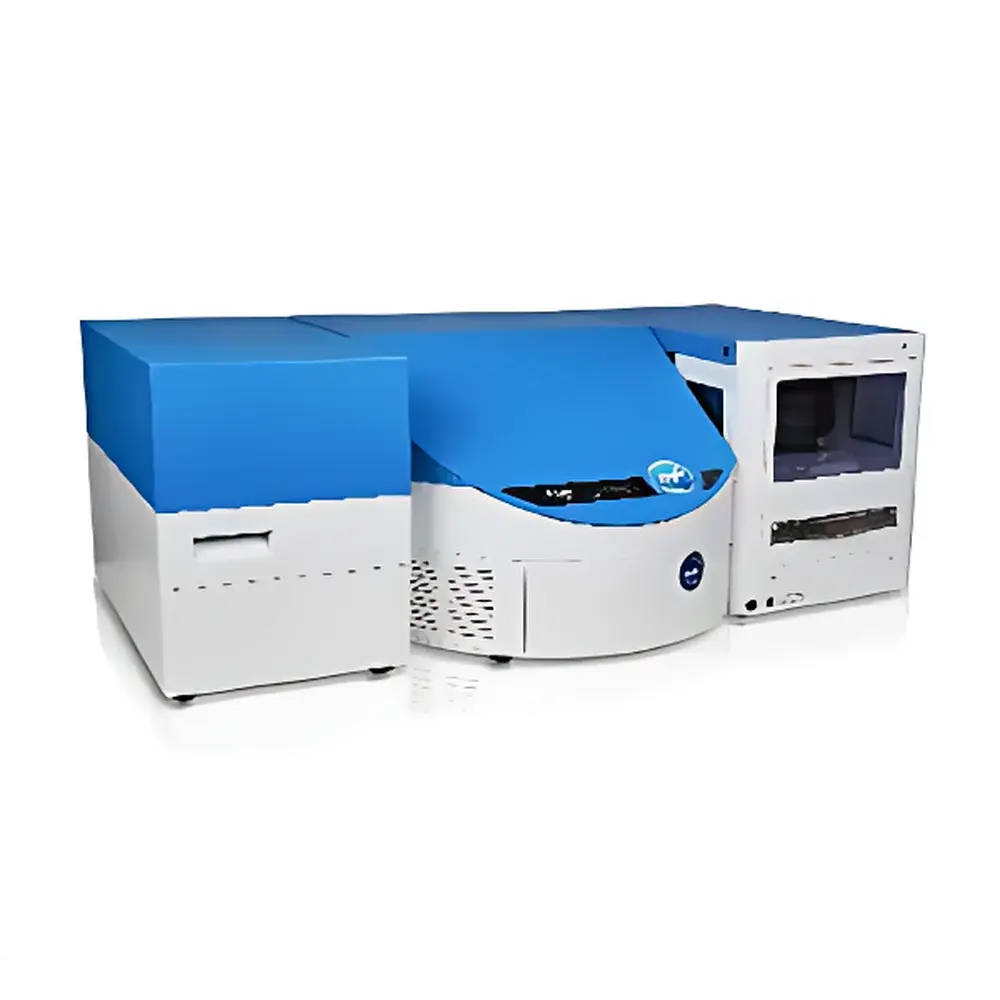
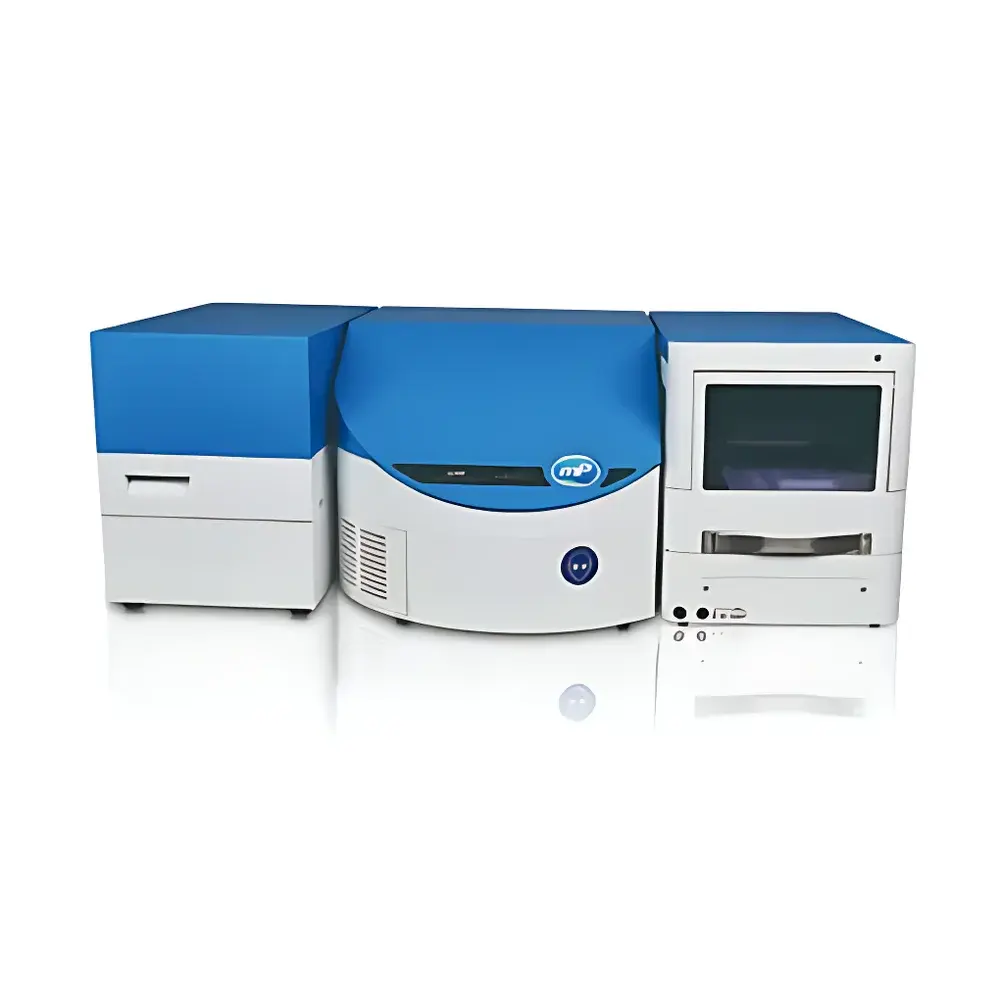
membraPure A388 Fully Automated Amino Acid Analyzer
| Brand | membraPure |
|---|---|
| Origin | Germany |
| Manufacturer Type | Original Equipment Manufacturer (OEM) |
| Product Origin | Imported |
| Model | A388 |
| Instrument Type | Post-Column Derivatization System |
| Pump Flow Rate | 0.000–9.999 mL/min |
| Maximum Pump Pressure | ≥40 MPa |
| Autosampler Injection Modes | Direct Injection / Full-Loop Injection / Partial-Loop Injection |
| Autosampler Temperature Control | Default Operating Temperature <10 °C |
| Post-Column Reactor Temperature Range | Ambient to 150 °C |
| Detection Wavelengths | 570 nm and 440 nm |
| Flow Cell Volume | 8 µL |
Overview
The membraPure A388 Fully Automated Amino Acid Analyzer is a high-precision, column-based analytical platform engineered for quantitative determination of amino acids in complex biological and industrial matrices. It operates on the well-established principle of cation-exchange chromatography coupled with post-column derivatization using ninhydrin reagent, followed by dual-wavelength visible absorbance detection at 570 nm (primary for α-amino acids) and 440 nm (secondary for imino acids such as proline). Designed and manufactured in Germany, the A388 represents the third-generation evolution of membraPure’s A300 series, incorporating UHT (Ultra-High Thermal) unidirectional heat transfer technology for enhanced thermal stability in the reaction coil and third-generation high-intensity LED photometric detection—both contributing to improved derivatization kinetics, reduced reagent consumption (by >66% versus prior systems), and superior signal-to-noise ratios.
Key Features
- Integrated UHT thermal management system ensures precise, uniform heating across the post-column reactor zone (ambient to 150 °C), minimizing thermal gradients and maximizing reproducibility of ninhydrin–amino acid condensation reactions.
- Triple-mode autosampler supports direct injection, full-loop, and partial-loop injection—enabling flexible sample volume optimization from sub-microliter to milliliter ranges without hardware modification.
- Refrigerated autosampler compartment maintains temperature below 10 °C to preserve labile analytes and prevent degradation during extended sequence runs.
- High-pressure binary pump capable of delivering flow rates from 0.000 to 9.999 mL/min at pressures up to ≥40 MPa, compatible with narrow-bore and microbore columns (e.g., 2.0 mm × 100–150 mm) packed with 3–7 µm cation-exchange resins.
- Dual-wavelength photometric detector with 8 µL low-dead-volume flow cell, optimized for simultaneous quantification of primary and secondary amino groups under standardized lithium-, sodium-, or potassium-based elution protocols.
- Modular architecture with inert gas (N₂ or He) purging capability throughout the derivatization and detection zones to suppress oxidative side reactions and extend reagent shelf life.
Sample Compatibility & Compliance
The A388 accommodates diverse sample types including hydrolyzed protein digests, physiological fluids (plasma, serum, urine, CSF), food extracts, fermentation broths, and pharmaceutical intermediates. Its validated lithium-salt method enables sequential quantification of all 21 standard proteinogenic amino acids plus up to 56 free amino acids in biological fluids—without column or buffer switching. The sodium-salt protocol includes norleucine as an internal standard and supports routine QC testing per USP and EP 2.2.46. Potassium-salt methodology is compliant with AOAC 999.12 for biogenic amine analysis. All operational parameters—including gradient profiles, temperature setpoints, and detector integration intervals—are fully traceable and auditable in accordance with FDA 21 CFR Part 11 requirements when paired with optional electronic signature and audit trail modules.
Software & Data Management
The A388 is operated via membraPure’s proprietary AminoSoft™ control and data processing suite, available in both English and Chinese language interfaces. The software acquires and logs over ten real-time instrument status parameters—including pump pressure, column oven temperature, reactor temperature, lamp intensity, baseline absorbance, and autosampler position—at a frequency of ≥10 Hz. Chromatograms are processed using adaptive peak detection, baseline correction, and retention time alignment algorithms. Calibration curves support linear, quadratic, and weighted least-squares regression models. Raw data files (.asd) are stored in vendor-neutral formats compatible with LIMS integration and comply with GLP/GMP documentation standards for long-term archival and regulatory submission.
Applications
- Quality control of therapeutic proteins and peptides in biopharmaceutical manufacturing (ICH Q5E, Q6B)
- Metabolomic profiling of human plasma and urine in clinical research settings
- Amino acid composition analysis of infant formula, dietary supplements, and sports nutrition products per ISO 13903 and AOAC 982.30
- Monitoring amino acid release kinetics during enzymatic hydrolysis or fermentation processes
- Validation of amino acid recovery in sample preparation workflows (e.g., acid hydrolysis, solid-phase extraction)
- Regulatory compliance testing for food labeling (EU Regulation No. 1169/2011) and nutraceutical claims
FAQ
What derivatization chemistry does the A388 employ?
The A388 uses ninhydrin-based post-column derivatization under controlled thermal conditions (up to 150 °C), with detection at 570 nm for primary amino groups and 440 nm for secondary amino groups.
Is method transfer from legacy A300-series instruments supported?
Yes—A388 retains full backward compatibility with A300 method files, column configurations, and buffer recipes; migration requires only minor optimization of reactor temperature and flow rate parameters.
Can the system be integrated into a regulated laboratory environment?
Yes—the A388 supports 21 CFR Part 11-compliant user access control, electronic signatures, and full audit trail generation when deployed with validated AminoSoft™ configuration and networked storage.
What column dimensions and particle sizes are supported?
Standard separation columns include 100 mm, 125 mm, and 150 mm lengths with particle sizes of 3 µm, 4 µm, and 7 µm—optimized for resolution, speed, and pressure tolerance across lithium, sodium, and potassium elution modes.
Does the A388 require external gas supply for operation?
An inert gas source (N₂ or He) is recommended for continuous purging of the derivatization manifold and detector flow cell to ensure long-term reagent stability and baseline consistency.
Related Products





