
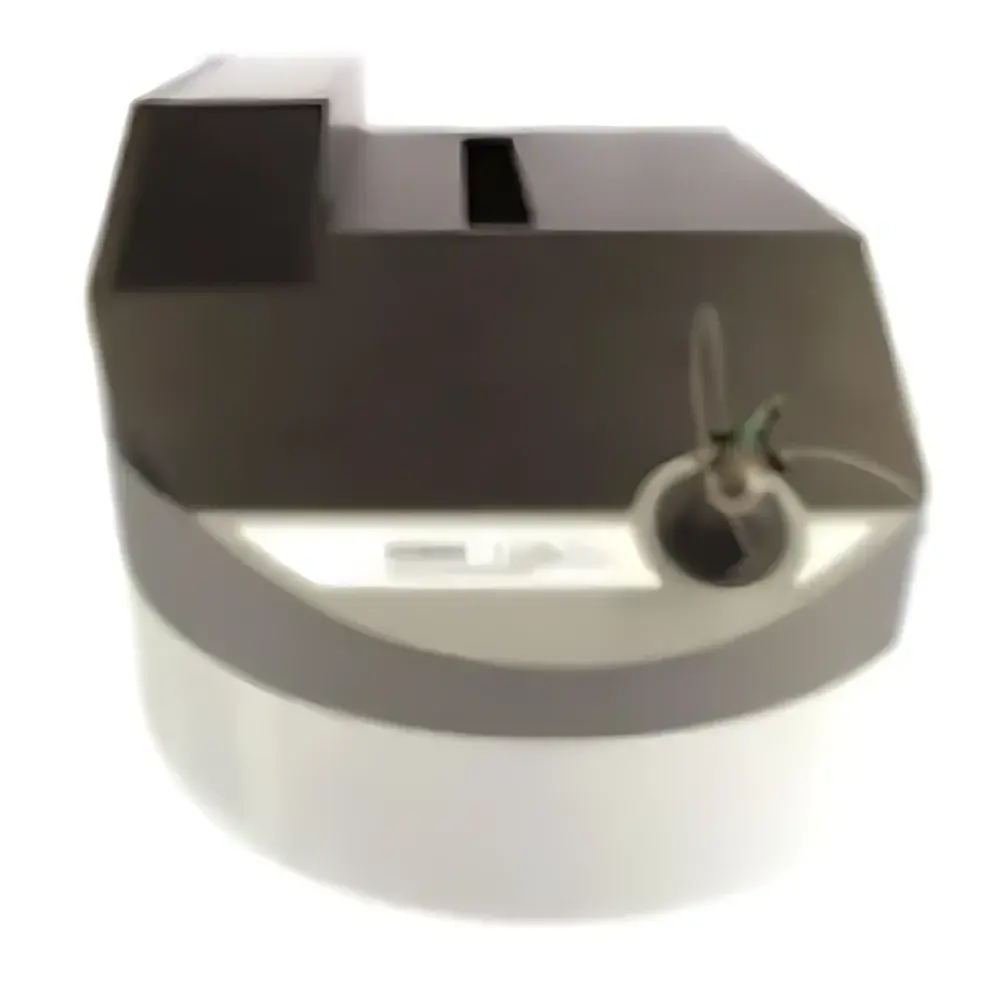
IONUS Ion Chromatograph by membraPure
| Brand | membraPure |
|---|---|
| Origin | Germany |
| Manufacturer Type | Manufacturer |
| Origin Category | Imported |
| Model | IONUS |
| Instrument Type | Laboratory |
| Column Temperature Control | Peltier-based, 20–100 °C (±0.1 °C) |
| Detector | Conductivity, Flow Cell Volume: 0.10 μL |
| Baseline Noise | 0.004 μS/cm |
| Baseline Drift | 0.025 μS/cm |
| Output Range | 0.1–5250 μS/cm FS |
| Gain Steps | 0.1 / 1.0 / 10 μS/cm |
| Range Multipliers | 1–512 (binary scaling) |
| Signal Output | 0–5 V analog |
| Ambient Operating Temp | 10–37 °C |
| Auto-zero Function | Yes |
| Column Materials | Stainless Steel or PEEK |
| Resin Particle Size | 3 μm (anion & cation exchange) |
| Optional Autosampler | COLIBRI with XYZ robotic arm, Peltier-cooled to 8 °C, 2×54-position (1.5 mL) or dual 96-well microplates, Injection Volume: 1–40 μL (1 μL increments, programmable) |
| Data Software | iPeak |
| Interfaces | 2× USB, Analog Conductivity Output |
| Tubing & Fluidic Path | PEEK or FEP |
| Inert Gas Protection | Integrated for carbonate eluent stabilization |
Overview
The IONUS Ion Chromatograph by membraPure is a high-precision, laboratory-grade analytical system engineered for the separation, identification, and quantification of ionic species—including anions (e.g., Cl⁻, NO₃⁻, SO₄²⁻), cations (e.g., Na⁺, NH₄⁺, Ca²⁺), and low-molecular-weight organic acids—in complex aqueous matrices. Built on classical suppressed conductivity detection principles, the system employs high-efficiency ion-exchange chromatography with low-dead-volume flow cells and thermally stabilized separation columns to ensure reproducible retention times and superior signal-to-noise ratios. Its modular architecture integrates seamlessly into regulated laboratory environments—supporting routine QC testing, environmental monitoring, pharmaceutical impurity profiling, and food safety analysis in accordance with ISO 14912, ASTM D4327, and USP . The instrument’s Peltier-driven column oven and detector cell temperature control (±0.1 °C) minimize thermal drift and enhance long-term baseline stability—critical for trace-level quantitation and multi-day method validation studies.
Key Features
- Thermally stabilized separation columns with 3 μm ion-exchange resin particles—available in both anion- and cation-selective configurations—and constructed from chemically inert stainless steel or PEEK housings.
- Peltier-based column and detector temperature control (20–100 °C), enabling precise method optimization for challenging separations such as weakly retained ions or thermally labile analytes.
- Low-volume conductivity flow cell (0.10 μL) with auto-zero functionality, delivering exceptional sensitivity (baseline noise ≤0.004 μS/cm) and minimal peak dispersion.
- Integrated inert gas (N₂ or Ar) purging system to stabilize carbonate/bicarbonate eluents—reducing CO₂ interference and improving reproducibility in suppressed IC applications.
- Dual USB interfaces and analog (0–5 V) conductivity output for flexible integration with LIMS, SCADA systems, or third-party data acquisition hardware.
- Modular design supporting field-upgradable components—including optional COLIBRI autosampler with active cooling (down to 8 °C), XYZ robotic positioning, and programmable injection volumes (1–40 μL, 1 μL increments).
Sample Compatibility & Compliance
The IONUS accommodates a broad range of sample types—including drinking water, wastewater, biological fluids (serum, urine), pharmaceutical excipients, battery electrolytes, and food extracts—following appropriate filtration (0.22 μm) and dilution protocols. Column chemistries are compatible with common eluents (e.g., KOH, methanesulfonic acid, sodium carbonate/bicarbonate) and tolerate moderate levels of particulates and organic co-solvents (≤20% ACN or MeOH). The system meets essential regulatory requirements for analytical instrumentation: its software architecture supports audit-trail-enabled operation per FDA 21 CFR Part 11 when paired with validated iPeak configurations; hardware design complies with IEC 61010-1 for laboratory electrical safety; and all fluidic components conform to USP material compatibility standards. Routine performance verification aligns with ISO/IEC 17025 calibration guidelines and EP/USP system suitability test criteria.
Software & Data Management
iPeak software provides intuitive, workflow-driven control of the IONUS platform—from method development and sequence definition to real-time chromatogram visualization and post-run processing. It supports peak integration using multiple algorithms (e.g., tangent skim, valley-to-valley, Gaussian deconvolution), automatic retention time alignment across batches, and customizable reporting templates compliant with GLP/GMP documentation standards. Raw data files are stored in vendor-neutral formats (e.g., .CDF), ensuring long-term archival integrity and interoperability with third-party chemometric tools. Audit trail logging records user actions, parameter changes, and calibration events with timestamps and operator IDs—enabling full traceability during internal audits or regulatory inspections. Remote monitoring via secure network connection is supported through optional enterprise licensing.
Applications
- Environmental analysis: Quantification of inorganic anions and cations in surface water, groundwater, and industrial effluents per EPA Method 300.0 and ISO 10304-1.
- Pharmaceutical quality control: Detection of counterions (e.g., acetate, chloride) and residual catalysts in APIs; assay of ionic excipients (e.g., sodium lauryl sulfate) in formulations.
- Food & beverage safety: Monitoring nitrate/nitrite in cured meats, sulfite in wines, phosphate additives in dairy products, and ammonium in fermentation broths.
- Battery R&D: Trace-level analysis of Li⁺, PF₆⁻, and HF impurities in lithium-ion electrolyte solutions under inert atmosphere handling.
- Clinical diagnostics: Measurement of electrolytes (Na⁺, K⁺, Cl⁻, HCO₃⁻) and organic acids (lactate, citrate) in serum and urine for metabolic disorder screening.
FAQ
What eluent suppression options are supported?
The IONUS is configured for chemical suppression (e.g., using membrane-based suppressors compatible with KOH or MSA eluents); electrochemical suppression modules can be integrated upon request.
Is the system compatible with gradient elution?
Yes—via optional quaternary solvent delivery module supporting up to four independently controlled eluent streams with precise mixing and degassing.
Can iPeak generate 21 CFR Part 11-compliant reports?
When deployed with role-based access controls, electronic signatures, and enabled audit trail logging, iPeak meets core technical requirements for Part 11 compliance; formal validation documentation is available under NDA.
What maintenance intervals are recommended for the conductivity detector?
Detector cell cleaning is advised every 200 injections or weekly—whichever occurs first—using manufacturer-specified regeneration solutions; annual calibration verification against NIST-traceable standards is recommended.
Does the COLIBRI autosampler support needle wash and carryover reduction protocols?
Yes—the XYZ arm includes dedicated wash ports with programmable solvent selection (water, acetonitrile, or custom rinse solutions) and configurable rinse cycles before and after each injection.






