
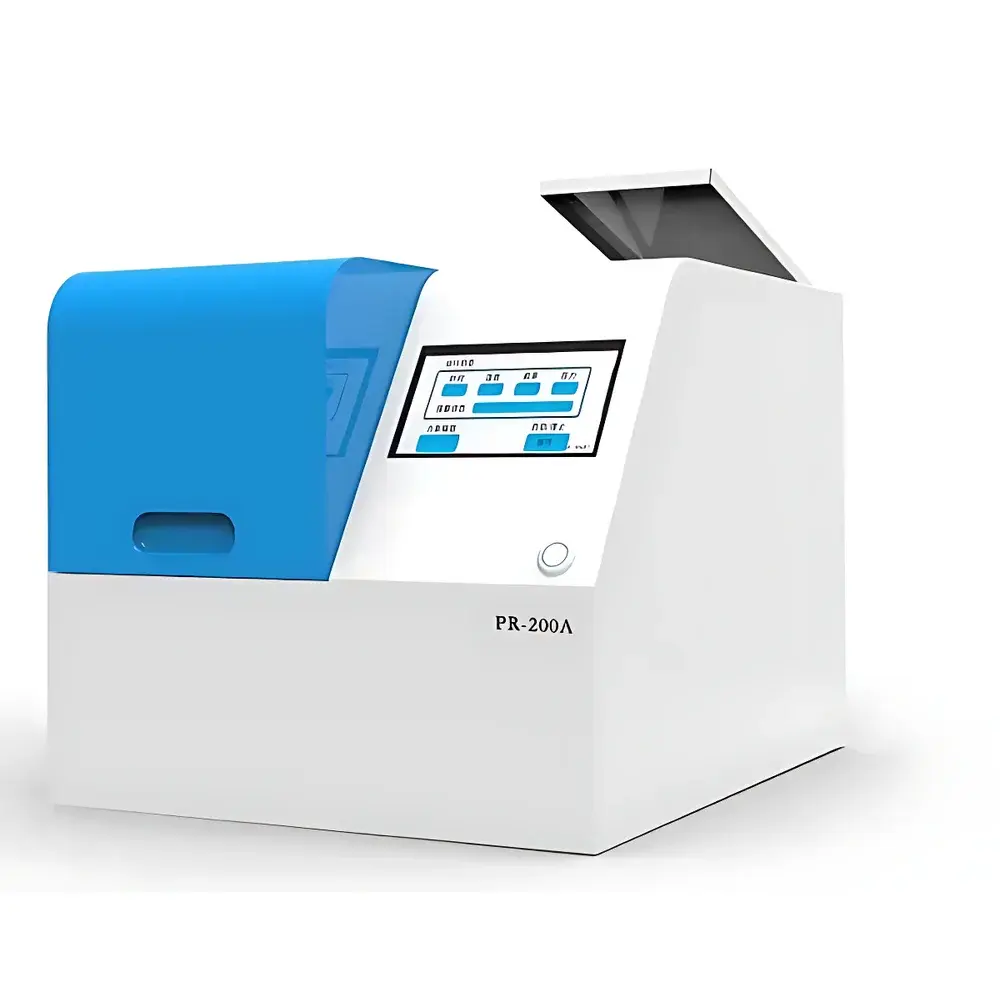
membraPure PR-200A Amino Acid Sample Preparation System
| Brand | membraPure |
|---|---|
| Origin | Beijing, China |
| Manufacturer Type | Direct Manufacturer |
| Instrument Type | Post-Column Derivatization Amino Acid Analyzer |
| Model | PR-200A |
| Pump Flow Rate | 0.001–9.999 mL/min |
| Maximum Pump Pressure | ≥40 MPa |
| Autosampler Injection Modes | Direct Injection / Full-Loop Injection / Partial-Loop Injection |
| Autosampler Temperature Control | ≤10 °C (default operating temperature) |
| Post-Column Reactor Temperature Range | Ambient to 150 °C |
| Detection Wavelengths | 570 nm and 440 nm |
| Flow Cell Volume | <8 µL |
Overview
The membraPure PR-200A Amino Acid Sample Preparation System is an integrated, laboratory-grade platform engineered for reproducible, high-fidelity sample conditioning prior to post-column derivatization amino acid analysis. Unlike conventional benchtop workflows involving discrete evaporation, lyophilization, and reconstitution steps, the PR-200A consolidates vacuum-assisted concentration, controlled heating, and mechanical agitation into a single, programmable unit. Its design targets the critical pre-analytical phase where analyte integrity—particularly for thermolabile or oxidation-prone amino acids such as cysteine, tryptophan, and methionine—is preserved through precise thermal management and inert atmosphere compatibility. The system interfaces seamlessly with standard HPLC-based amino acid analyzers utilizing o-phthalaldehyde (OPA) or ninhydrin derivatization chemistries, ensuring stoichiometric reaction efficiency and minimizing carryover or degradation artifacts.
Key Features
- Integrated multi-modal concentration: Combines vacuum reduction (down to ≤5 mbar), programmable heating (up to 80 °C), and orbital shaking (100–600 rpm) in one chassis to accelerate solvent removal while maintaining peptide bond stability.
- Dedicated low-temperature autosampler module: Maintains samples at ≤10 °C during storage and injection, mitigating racemization and deamidation in sensitive biological matrices (e.g., cell lysates, hydrolysates).
- High-pressure, pulseless binary pump: Delivers flow rates from 0.001 to 9.999 mL/min with pressure capability ≥40 MPa—compatible with sub-2 µm particle-packed analytical columns and UHPLC-compatible derivatization manifolds.
- Thermally stable post-column reactor: Precisely regulated from ambient to 150 °C (±0.3 °C), enabling optimization of OPA or ninhydrin reaction kinetics across diverse amino acid profiles.
- Dual-wavelength UV-Vis detection: Simultaneous monitoring at 570 nm (primary absorbance for OPA derivatives) and 440 nm (secondary reference for proline/hydroxyproline quantification), with a low-dead-volume flow cell (<8 µL) to preserve chromatographic resolution.
Sample Compatibility & Compliance
The PR-200A accommodates aqueous hydrolysates (6 M HCl, 110 °C, 22 h), enzymatic digests (trypsin, chymotrypsin), and native biological fluids (serum, urine, cerebrospinal fluid) without matrix-specific method redevelopment. It supports both direct injection of derivatized samples and offline pre-concentration of underivatized extracts. All wetted components comply with USP Class VI-certified materials, and the system architecture adheres to GLP documentation requirements—including audit-trail-enabled method logging, user access control, and electronic signature support per FDA 21 CFR Part 11 when paired with compliant LIMS integration.
Software & Data Management
Controlled via membraPure’s AminoAcidSuite v3.2 software, the PR-200A enables method-driven automation: users define concentration ramp profiles (vacuum slope, heat gradient, shake duration), autosampler sequence tables, and reactor equilibration protocols. Raw data export conforms to ASTM E1381-compliant ASCII formats; peak integration follows ISO 17025-recommended baseline correction algorithms. Software validation packages—including IQ/OQ documentation templates and performance verification checklists—are provided for regulated environments.
Applications
- Quantitative profiling of free and total amino acids in nutritional supplements, infant formula, and clinical diagnostics panels.
- Stability-indicating assays for biopharmaceuticals: monitoring deamidation, oxidation, and β-elimination in monoclonal antibody therapeutics.
- Metabolomic studies requiring high-sensitivity detection of low-abundance amino acid metabolites (e.g., sarcosine, homocysteine, γ-aminobutyric acid).
- Quality control of fermentation broths in industrial enzyme and amino acid production (e.g., lysine, glutamic acid).
- Validation of hydrolysis completeness in protein characterization per ICH Q5E guidelines.
FAQ
Does the PR-200A support online coupling with HPLC systems?
Yes—it features standardized 1/16″ stainless-steel tubing ports and TTL-triggered synchronization for real-time coordination with external gradient pumps and detectors.
Can it handle acidic hydrolysates without corrosion?
All fluidic pathways contacting hydrochloric or trifluoroacetic acid are constructed from Hastelloy C-276 and PEEK-HF, validated for continuous exposure to 6 M HCl at 110 °C.
Is method transfer possible between PR-200A and legacy amino acid analyzers?
Method parameters (flow rate, reactor temp, detection wavelength) are exportable as CSV templates compatible with Shimadzu, Biochrom, and Jeol instrument control platforms.
What maintenance intervals are recommended for the vacuum pump?
The oil-free diaphragm vacuum pump requires no scheduled lubrication; membrane replacement is advised every 12 months or after 3,000 operational hours, whichever occurs first.
Does the system meet ISO/IEC 17025 calibration traceability requirements?
Yes—factory calibration certificates include NIST-traceable references for temperature sensors (±0.15 °C), flow meters (±0.5% RSD), and photometric detectors (NIST SRM 2034).






