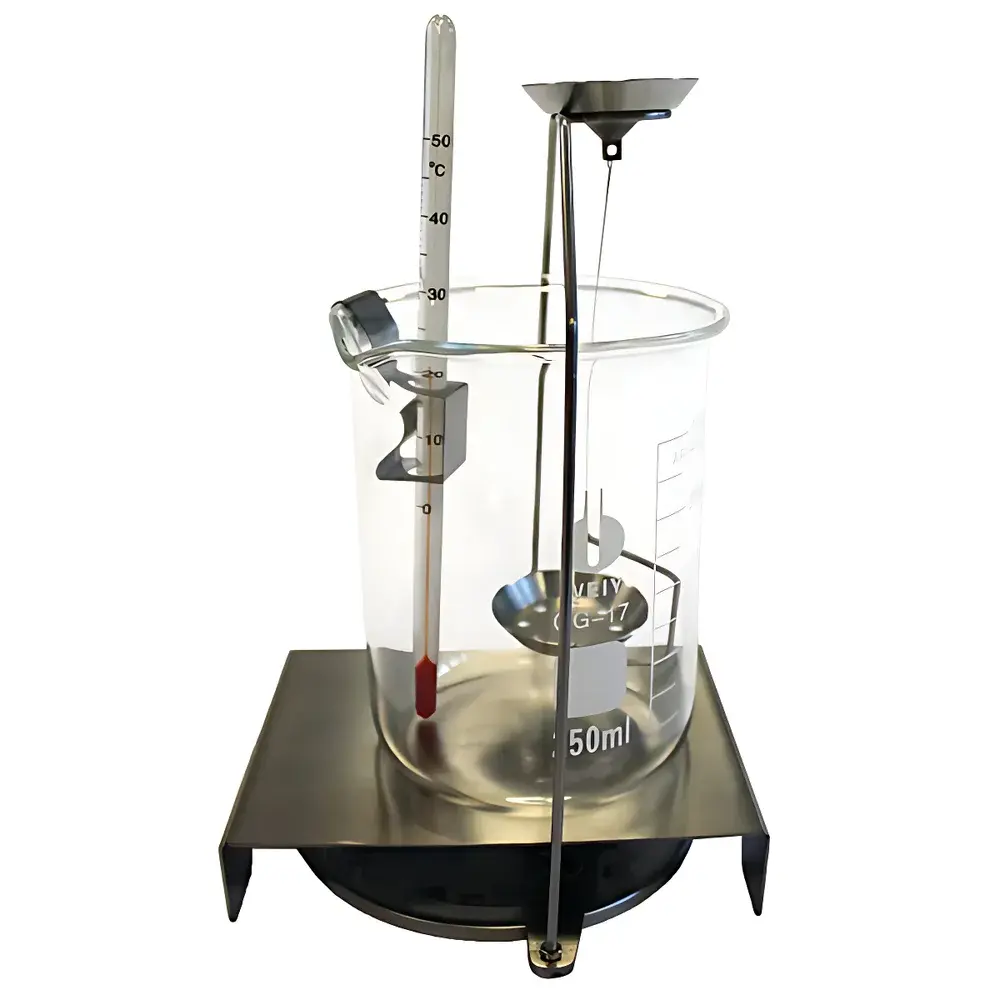
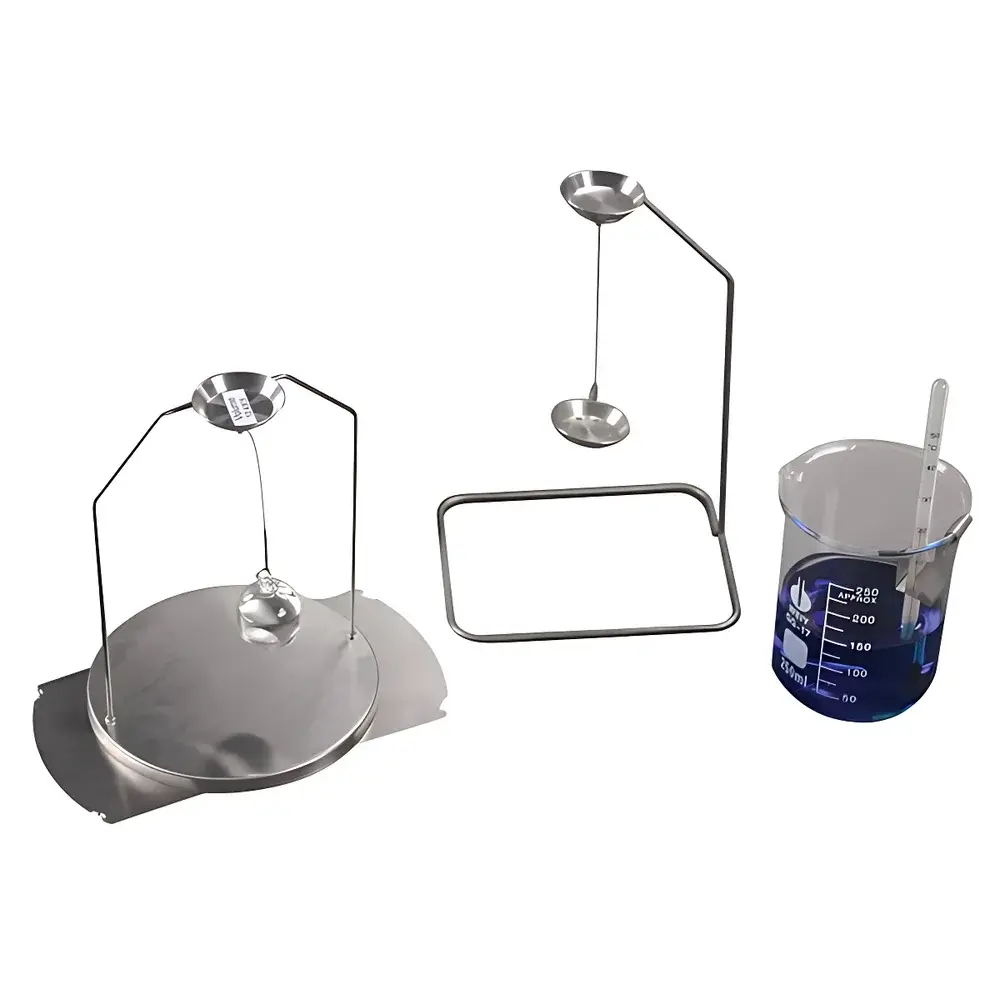
Adam NBL Density Determination Kit – DDK
| Brand | Adam |
|---|---|
| Origin | United Kingdom |
| Manufacturer Type | Original Equipment Manufacturer (OEM) |
| Product Category | Imported Instrument |
| Model | DDK |
| Instrument Type | Analytical Balance-Compatible Density Kit |
| Balance Compatibility | Adam NBL Series Balances Only |
| Maximum Load Capacity (with NBL balance) | 800 g |
| Mass Readability | 0.0001 g (0.1 mg) / 0.001 g (1 mg) |
| Repeatability | ±0.0001 g / ±0.001 g |
| Calibration | Internal Automatic or Manual Calibration Supported |
| Density Measurement Range | Solid & Liquid Samples |
| Measurement Principle | Archimedean Buoyancy Method (ASTM D792, ISO 1183, USP <841>) |
Overview
The Adam NBL Density Determination Kit – DDK is a precision-engineered accessory designed exclusively for integration with the Adam NBL series of analytical balances. It enables rapid, traceable, and operator-independent density determination of both solid and liquid samples using the Archimedean buoyancy principle—fully compliant with internationally recognized standards including ASTM D792 (Standard Test Methods for Density and Specific Gravity of Plastics), ISO 1183 (Plastics — Methods for Determining the Density of Non-cellular Plastics), and USP (Density and Specific Gravity). Unlike traditional hydrometers or pycnometers, the DDK eliminates volumetric glassware errors and manual meniscus reading, delivering reproducible results through direct mass-based calculation: ρ = mair / [(mair − msubmerged) / ρfluid]. The kit requires no external software installation or third-party hardware—it operates natively via the NBL balance’s built-in density application mode, ensuring seamless workflow integration in QC laboratories, polymer testing facilities, and academic research environments.
Key Features
- Single-kit compatibility with all Adam NBL analytical balances (e.g., NBL120, NBL220, NBL320), leveraging their internal calibration and high-stability weighing cells.
- Dual-mode operation: supports both solid density (via suspended immersion in water or ethanol) and liquid density (via calibrated sinker method).
- Pre-assembled stainless-steel density stand with adjustable height, corrosion-resistant sample pan, and precision-machined sinker assembly (certified volume tolerance ≤ ±0.05 cm³).
- No additional power supply or USB interface required—fully powered and controlled via the NBL balance display and keypad.
- Real-time density calculation with automatic temperature compensation input (user-entered or connected to optional PT100 probe).
- GLP/GMP-ready output: printable density report includes date/time stamp, operator ID, balance serial number, ambient temperature, fluid density reference, and raw mass values (mair, msubmerged).
Sample Compatibility & Compliance
The DDK accommodates solid specimens up to 800 g (when used with NBL800 model) and dimensions ≤ Ø60 mm × H100 mm. Porous, irregular, or powder samples are supported using optional wire baskets or mesh containers (not included). For liquids, minimum volume requirement is 15 mL; viscosity limit: ≤ 500 mPa·s to ensure stable buoyancy readings. All measurement procedures adhere to ISO/IEC 17025:2017 requirements for competence of testing and calibration laboratories. Density results generated with the DDK satisfy audit requirements under FDA 21 CFR Part 11 when paired with NBL balances configured with user-access control and electronic signature logging.
Software & Data Management
The DDK operates entirely within the NBL balance firmware—no external PC or proprietary software is needed. Density data is stored internally (up to 200 records) with timestamp, operator code, and full metadata. Optional RS232 or USB-C connectivity allows direct export to LIMS or Excel via ASCII text format. When used with Adam’s optional ADAMConnect software (v3.2+), users can generate PDF reports with embedded calibration certificates, statistical summaries (mean, SD, CV%), and trend charts across batches. Audit trails comply with GLP documentation standards, retaining uneditable logs of all parameter changes and result modifications.
Applications
- Quality control of polymer granules, metal powders, and ceramic preforms in manufacturing settings.
- Density profiling of pharmaceutical excipients and active ingredients per USP monographs.
- Verification of material homogeneity in composite fabrication (e.g., carbon-fiber reinforced polymers).
- Educational labs requiring ISO-aligned density experiments without complex instrumentation.
- Recycling facilities performing rapid identification of plastic resin types (e.g., PP vs. PE) via density sorting.
FAQ
Is the DDK compatible with non-Adam balances?
No—the DDK is mechanically and firmware-integrated only with Adam NBL series balances. It does not support third-party or legacy analytical balances.
Does the kit include calibration weights or fluid standards?
No. Users must provide certified reference fluids (e.g., distilled water at 20 °C, ρ = 0.998203 g/cm³) and maintain traceable mass standards per ISO 9001 requirements.
Can temperature drift affect density accuracy?
Yes—density is temperature-dependent. The DDK requires manual entry of fluid temperature; for highest accuracy, use an external PT100 sensor connected to the NBL balance’s analog input port.
What is the minimum sample mass for reliable solid density measurement?
For repeatability ≤ ±0.0001 g, solid samples should exceed 5 g in air mass. Below this threshold, buoyancy force resolution limits statistical confidence.
Is the sinker material resistant to aggressive solvents?
The standard stainless-steel sinker (AISI 304) is compatible with water, ethanol, and isopropanol. For chlorinated or acidic media, optional titanium or PTFE-coated sinkers are available under part number DDK-Ti and DDK-PTFE respectively.