
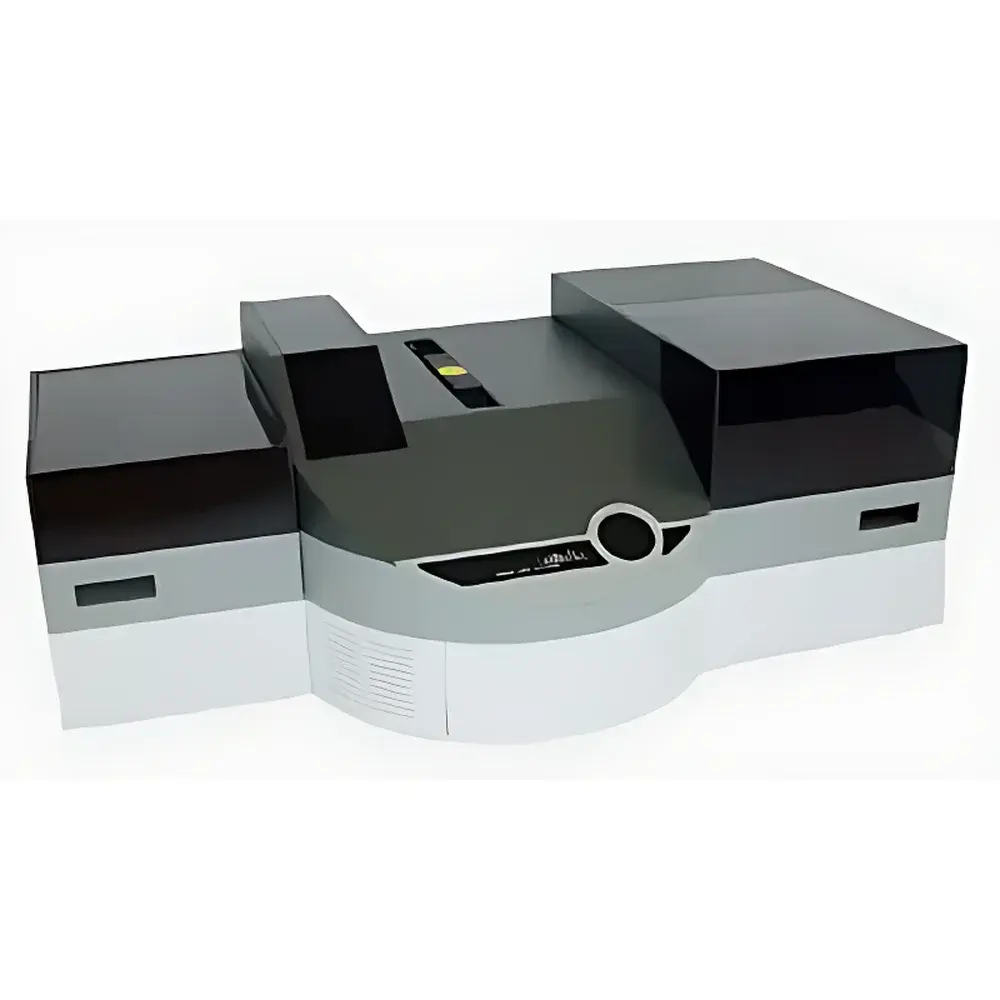
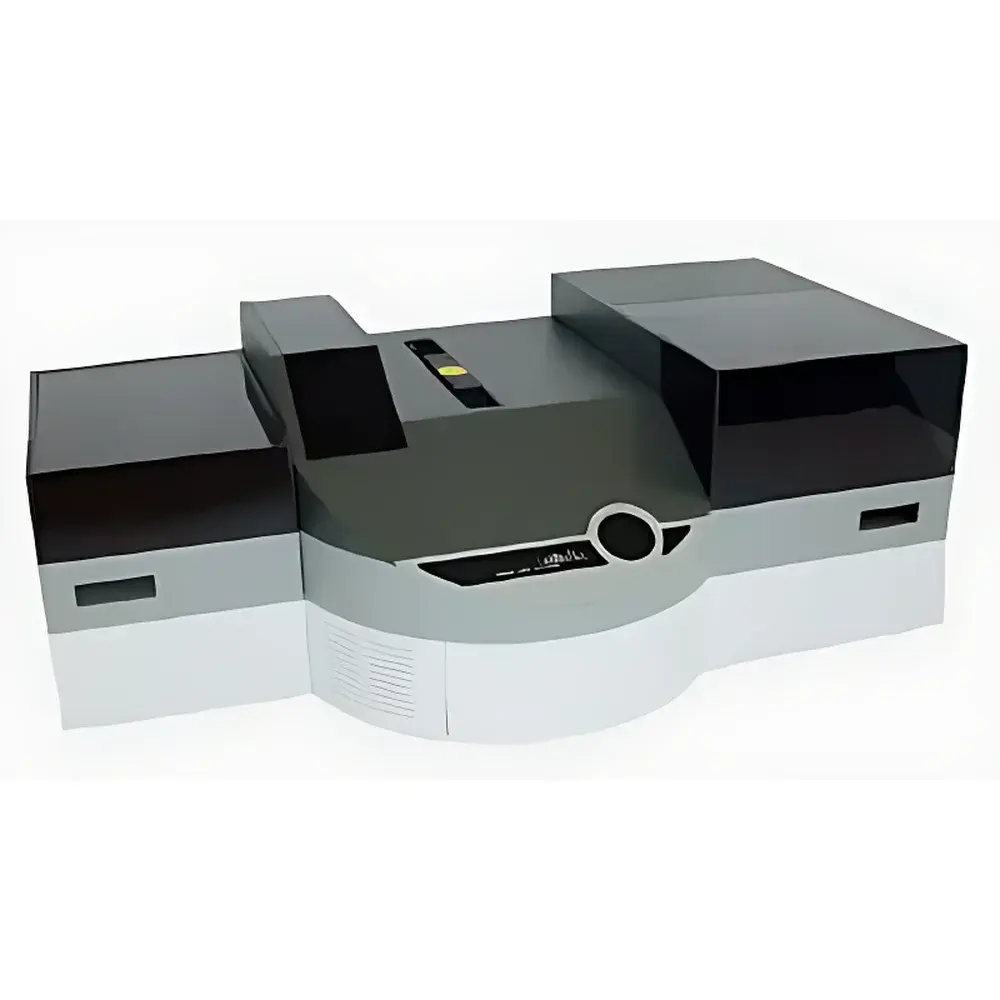
MembraPure A300 Automated Amino Acid Analyzer
| Brand | MembraPure |
|---|---|
| Origin | Germany |
| Manufacturer | Yes |
| Import Status | Imported |
| Model | A300 |
| Instrument Type | Post-Column Derivatization System |
| Pump Flow Rate | 0.000–9.999 mL/min |
| Maximum Pump Pressure | ≥40 MPa |
| Autosampler Injection Modes | Direct Injection / Full-Loop Injection / Partial-Loop Injection |
| Autosampler Temperature Control | ≤10 °C (default operating temperature) |
| Post-Column Reactor Temperature Range | Ambient to 150 °C |
| Detection Wavelengths | 570 nm and 440 nm |
| Flow Cell Volume | 8 µL |
Overview
The MembraPure A300 Automated Amino Acid Analyzer is a high-precision, fully integrated analytical platform engineered for quantitative determination of both hydrolyzed and free amino acids in complex biological, food, pharmaceutical, and clinical matrices. It operates on the well-established principle of cation-exchange chromatography coupled with post-column derivatization using ninhydrin reagent and dual-wavelength visible spectrophotometric detection at 570 nm (primary for α-amino acids) and 440 nm (secondary for proline and hydroxyproline). This configuration ensures high selectivity, robust baseline stability, and reproducible quantification across diverse sample types without column or mobile-phase switching—enabling seamless analysis of up to 21 protein hydrolysate amino acids and 43 free amino acids in a single run.
Key Features
- Integrated cation-exchange separation system with thermally stabilized column oven and precision gradient elution capability
- Post-column reaction module with precise temperature control (ambient to 150 °C), enabling optimized derivatization kinetics for all amino acid species
- High-pressure binary pump delivering flow rates from 0.000 to 9.999 mL/min at ≥40 MPa maximum pressure—supporting narrow-bore columns and low-diffusion flow paths
- Triple-mode autosampler supporting direct injection, full-loop, and partial-loop modes; refrigerated sample compartment maintained at ≤10 °C to preserve labile analytes
- Compact, modular architecture utilizing miniaturized fluidic components and inert gas (N₂ or He) purging to minimize reagent consumption by >66% versus conventional systems
- Dual-wavelength photometric detector with 8 µL low-dead-volume flow cell, optimized for high-sensitivity absorbance measurement under standardized ninhydrin reaction conditions
Sample Compatibility & Compliance
The A300 accommodates a broad range of sample matrices—including tissue homogenates, serum, plasma, urine, milk, hydrolyzed proteins, fermentation broths, and plant extracts—following standardized sample preparation protocols (e.g., acid hydrolysis for bound amino acids, ultrafiltration or deproteinization for free forms). Its operational methodology aligns with established regulatory frameworks including ISO 13903:2005 (food and feed analysis), AOAC Official Method 994.12 (amino acid analysis in foods), and USP (chromatographic separations). The system supports audit-trail-enabled data acquisition and complies with GLP/GMP documentation requirements when configured with optional 21 CFR Part 11-compliant software modules.
Software & Data Management
The proprietary MembraPure Control & Analysis Suite provides real-time instrument supervision, method development tools, and automated peak integration with retention time alignment algorithms. It records over ten critical operational parameters—including pump pressure, column temperature, reactor temperature, detector absorbance, flow rate, and derivatization reagent status—at 1 Hz resolution. Both English and Chinese language interfaces are available. Raw data files conform to ASTM E1327-22 standards for chromatographic data exchange, and export formats include CSV, PDF reports, and vendor-neutral .cdf (NetCDF) for third-party statistical or multivariate analysis platforms.
Applications
- Quantitative profiling of essential and non-essential amino acids in nutritional supplements and infant formula per Codex Alimentarius standards
- Quality control of therapeutic peptides and recombinant proteins during biomanufacturing process development
- Clinical diagnostics of inborn errors of metabolism (e.g., phenylketonuria, maple syrup urine disease) via plasma/urine amino acid screening
- Stability-indicating assays for amino acid-containing APIs under ICH Q5C guidelines
- Research-grade characterization of microbial metabolomes and plant secondary metabolite pathways
FAQ
Does the A300 require separate methods for hydrolyzed and free amino acid analysis?
No—the system uses lithium-based and sodium-based elution protocols within a single method framework, eliminating column or buffer swaps between hydrolysate and physiological fluid analyses.
Can the A300 be integrated into a laboratory information management system (LIMS)?
Yes, via standard OPC UA or HL7 interfaces; raw data and metadata are exportable in compliant formats for LIMS ingestion and electronic record archiving.
What column dimensions and particle sizes are supported?
Standard configurations include 100 mm, 125 mm, and 150 mm column lengths with 3 µm, 5 µm, and 7 µm particle size options—optimized for resolution, speed, and pressure compatibility.
Is helium mandatory for inert gas protection?
No—either nitrogen or helium may be used; system design minimizes oxygen exposure regardless of carrier gas choice, ensuring reagent stability and reduced baseline drift.
How is calibration traceability ensured?
Certified reference materials (CRMs) traceable to NIST SRM 2389a (Amino Acid Calibration Standard) or equivalent are recommended; calibration curves are stored with full metadata including date, operator ID, and instrument state logs.




