
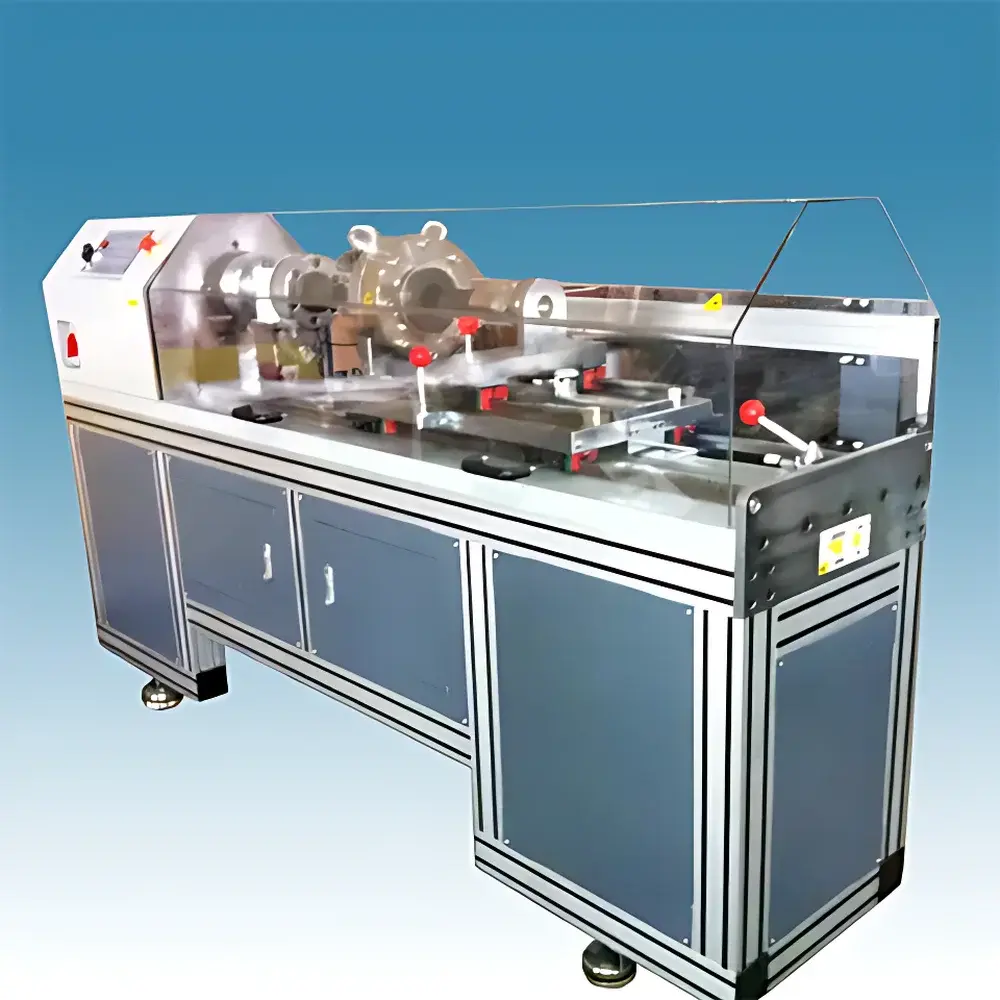
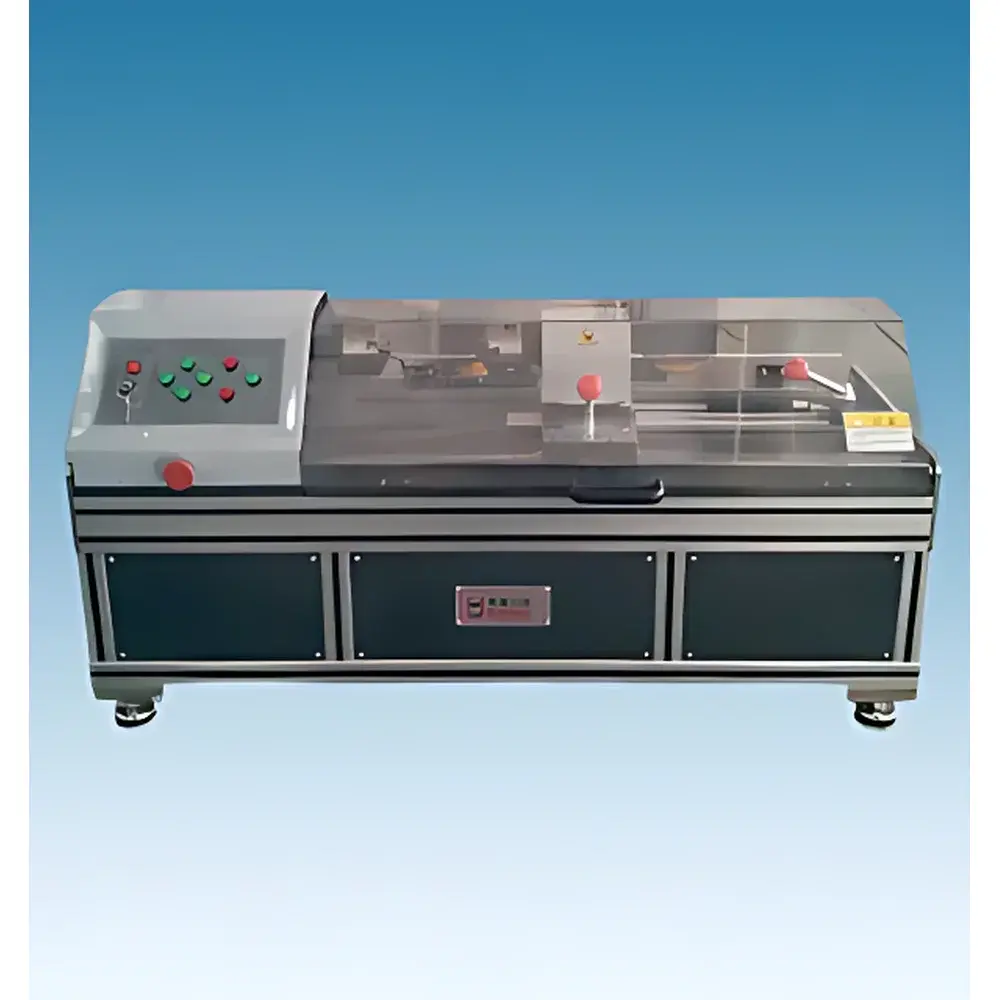
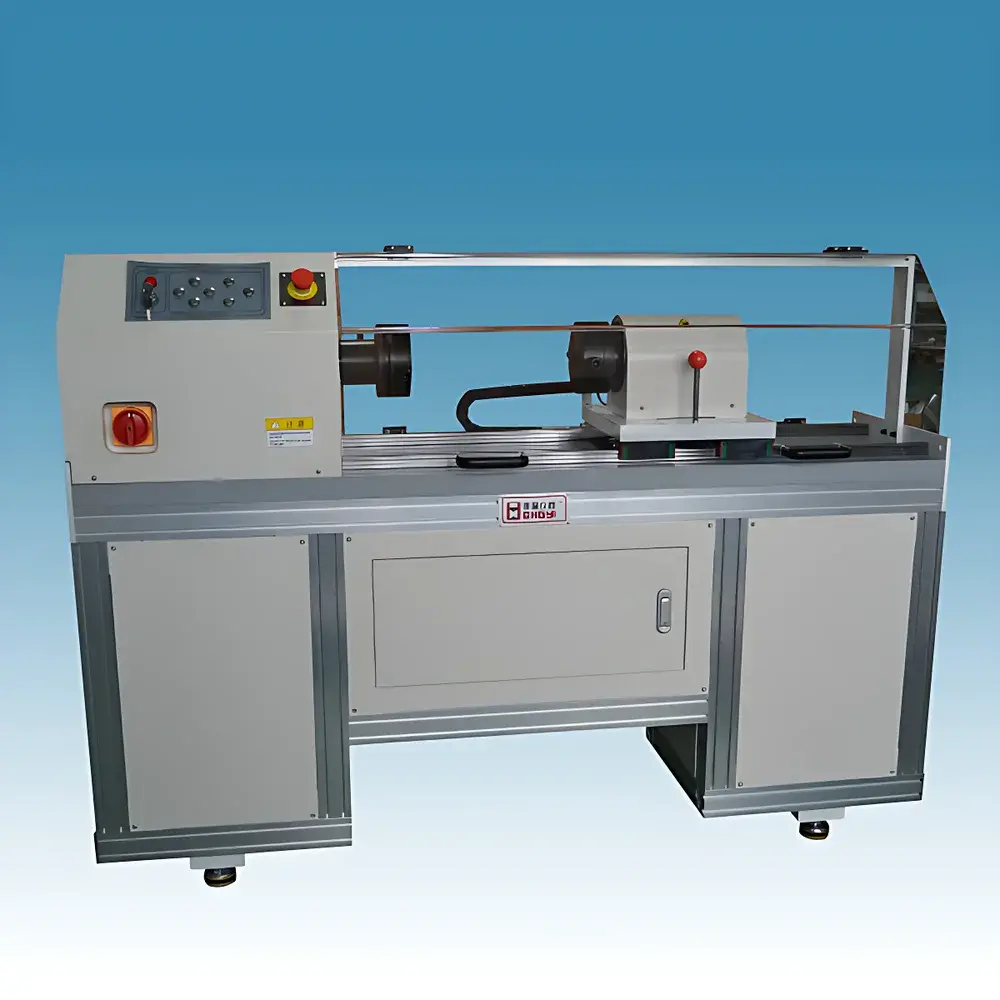
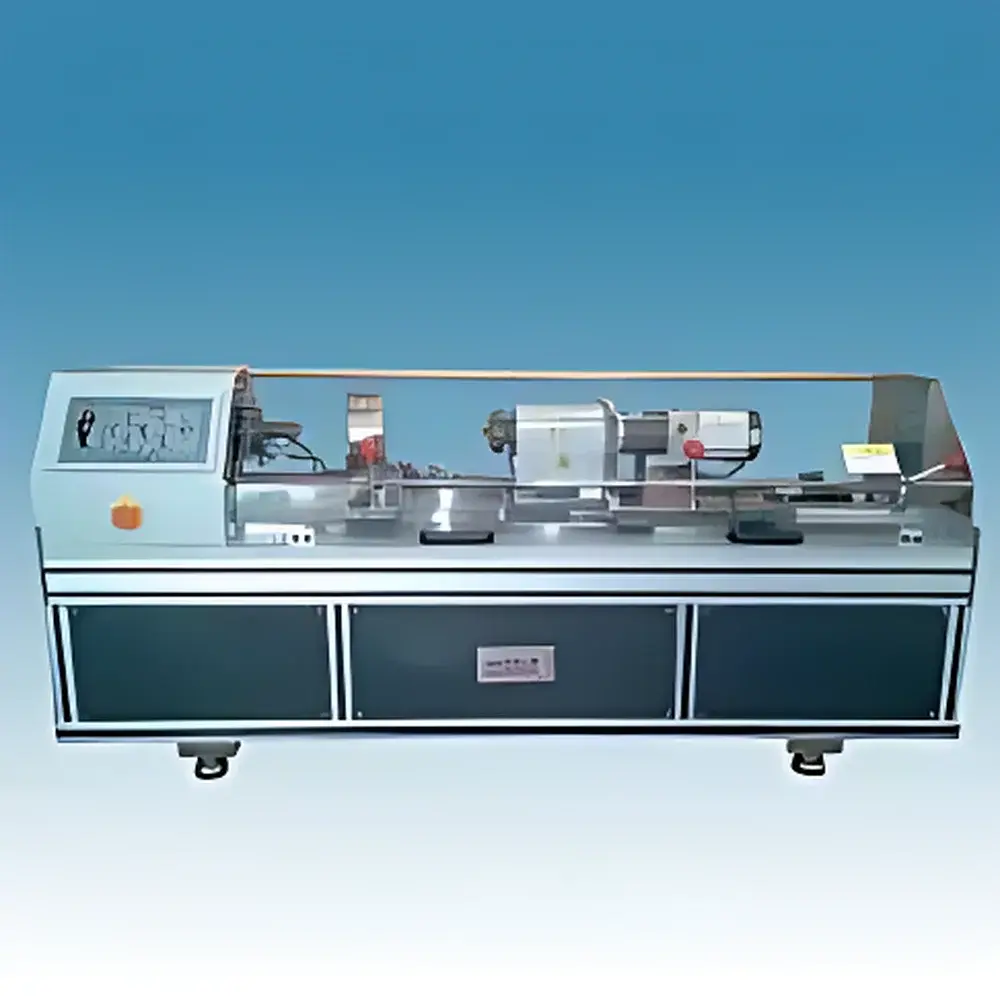
Hengyi HY-2000N·m Hex Bolt Thread Friction Coefficient Testing Machine
| Brand | Hengyi |
|---|---|
| Origin | Shanghai, China |
| Manufacturer Type | Direct Manufacturer |
| Model | HY-2000N·mFGH |
| Max Torque | 2000 N·m |
| Torque Measurement Range | 2–2000 N·m |
| Torque Resolution | 1/500,000 |
| Torsion Angle Range | 0–100,000° |
| Motor Power | 5 kW |
| Axial Force Range | 5–500 kN |
| Torque Accuracy | ±0.5% |
| Angular Position Accuracy | ±0.5% |
| Test Speed | 5–40 rpm (up to 200 rpm) |
| Specimen Clamping Range | M10–M30 |
| Maximum Gauge Length | 1000 mm |
| Dimensions (L×W×H) | ≈2200×540×1250 mm |
| Weight | 1800 kg |
Overview
The Hengyi HY-2000N·m Hex Bolt Thread Friction Coefficient Testing Machine is a high-precision torsion testing system engineered for quantitative mechanical characterization of bolted joints under controlled tightening conditions. It operates on the principle of simultaneous, synchronized measurement of axial clamping force and multiple torque components—total torque, thread torque, and bearing surface torque—enabling calculation of key frictional and mechanical parameters in accordance with internationally recognized fastener standards. Designed specifically for R&D laboratories, quality control departments, and certification bodies in aerospace, automotive, rail, wind energy, and heavy industrial manufacturing, this machine delivers traceable, repeatable data essential for validating bolt preload behavior, verifying lubrication efficacy, and ensuring compliance with assembly specifications.
Key Features
- Integrated dual-sensor architecture: High-stiffness “clamping force–thread torque” composite transducer compliant with ISO 16047 Annex A calibration methodology;
- Independent real-time acquisition of axial force (5–500 kN), total torque (2–2000 N·m), and split torque components (thread torque up to 1000 N·m, bearing surface torque derived by subtraction);
- Ultra-high torque resolution of 1 part in 500,000 full scale, enabling detection of sub-N·m variations critical for low-torque or micro-threaded fastener evaluation;
- Precision angular encoder with 0.001° resolution and ±0.5% linearity across 0–100,000° range, supporting both static torque-angle profiling and dynamic multi-cycle loosening sequences;
- Programmable rotational speed from 5 to 40 rpm (extendable to 200 rpm), with closed-loop velocity control for consistent ramp rates during yield and failure testing;
- Modular jaw system accommodating threaded fasteners from M10 to M30; custom adapters available for non-standard geometries including double-ended studs and flanged bolts;
- Rigid C-frame construction (1800 kg mass) with 1000 mm maximum parallel jaw spacing, minimizing deflection-induced measurement error during high-load testing.
Sample Compatibility & Compliance
This system is validated for testing hex bolts, socket head cap screws, flange bolts, lock nuts, and stud-bolt assemblies per standardized joint configurations. It supports sequential tightening/loosening protocols—including first insertion, first release, fifth release, and fifteenth release cycles—to assess wear-induced friction degradation and galling resistance. All test routines and reporting outputs comply with ISO 16047:2015 (Fasteners — Testing of preloading properties of systems using bolts, screws and nuts), GB/T 3098.9–2010 (Mechanical properties of fasteners — Coefficient of friction of bolt/nut assemblies), GB/T 16823.3–2010 (Mechanical properties of fasteners — Torque/clamp force testing), EN 14399-1:2005 and -3–6:2006 (High-strength structural bolting assemblies), and ISO 898-1:1999 (Mechanical properties of fasteners made of carbon steel and alloy steel). Data integrity meets GLP/GMP documentation requirements, with optional audit trail functionality aligned with FDA 21 CFR Part 11 for regulated environments.
Software & Data Management
Bundled with Hengyi FastenerTest Suite v4.x, the system provides intuitive test method configuration, real-time dual-axis plotting (torque vs. angle, axial force vs. torque), and automated parameter extraction—including K-factor, total coefficient of friction (μtot), thread coefficient (μth), bearing surface coefficient (μb), yield clamping force, ultimate tensile load, and breakaway torque. Raw data exports in CSV and XML formats support third-party statistical analysis (e.g., Minitab, JMP). Calibration certificates are digitally signed and time-stamped; all sensor calibrations follow ISO/IEC 17025 procedures and are traceable to NIM (National Institute of Metrology, China) primary standards.
Applications
- Validation of lubricant performance (e.g., molybdenum disulfide, zinc flake coatings) across temperature and humidity gradients;
- Development and qualification of self-locking fasteners (e.g., nylon-insert, distorted thread, chemical locking compounds);
- Quantification of scatter in torque-tension relationships for statistical process control (SPC) in production lines;
- Hydrogen embrittlement screening via sustained-load torsion tests at elevated temperatures;
- Correlation studies between surface roughness (Ra, Rz), coating thickness, and frictional hysteresis;
- Support for FEA model validation by supplying experimentally derived μth and μb inputs for bolted joint simulation;
- Third-party certification testing for ASME B18.2.1, DIN 933/931, ASTM F568M, and ISO 4014/4017 fastener grades.
FAQ
What standards does this machine directly support?
ISO 16047, GB/T 3098.9–2010, GB/T 16823.3–2010, EN 14399-1 & -3–6, ISO 898-1, and ASTM F2281 (for wedge tension testing when configured with accessory fixtures).
Can it measure friction coefficients separately for thread and bearing surfaces?
Yes—via synchronized axial force and dual-torque sensing, it computes μth and μb independently using the equations defined in ISO 16047 Annex B.
Is the system suitable for high-cycle fatigue testing of bolted joints?
It is not designed for high-frequency dynamic fatigue; however, it supports low-cycle torsional endurance testing (e.g., repeated tightening/loosening up to 100 cycles) with full data logging per cycle.
Does the software generate compliant test reports for ISO/IEC 17025 accredited labs?
Yes—reports include operator ID, calibration dates, environmental conditions (optional external sensor integration), raw curves, calculated parameters with uncertainty budgets, and digital signatures meeting ILAC-MRA requirements.
What maintenance intervals are recommended for long-term accuracy?
Annual verification of torque and force transducers against certified reference standards; biannual inspection of jaw alignment and drive train backlash; lubrication of lead screws and rotary bearings every 500 operational hours.



