
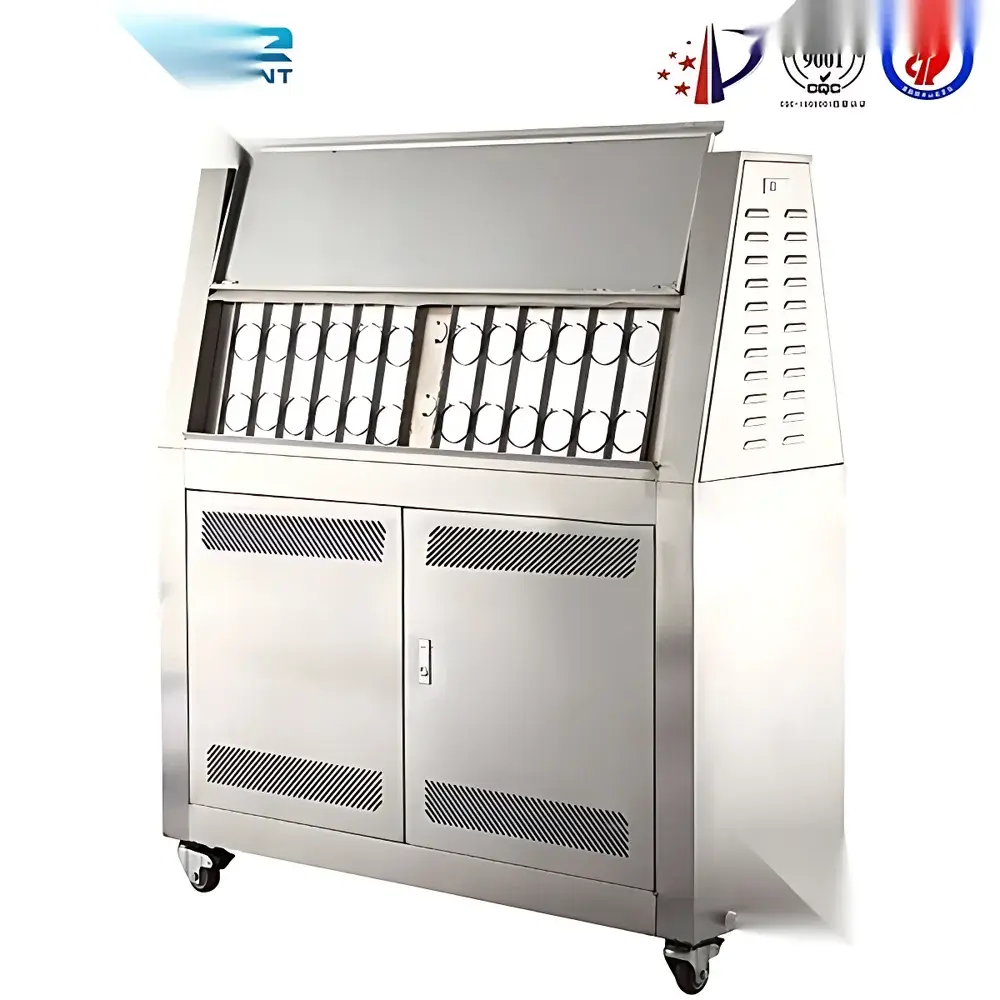
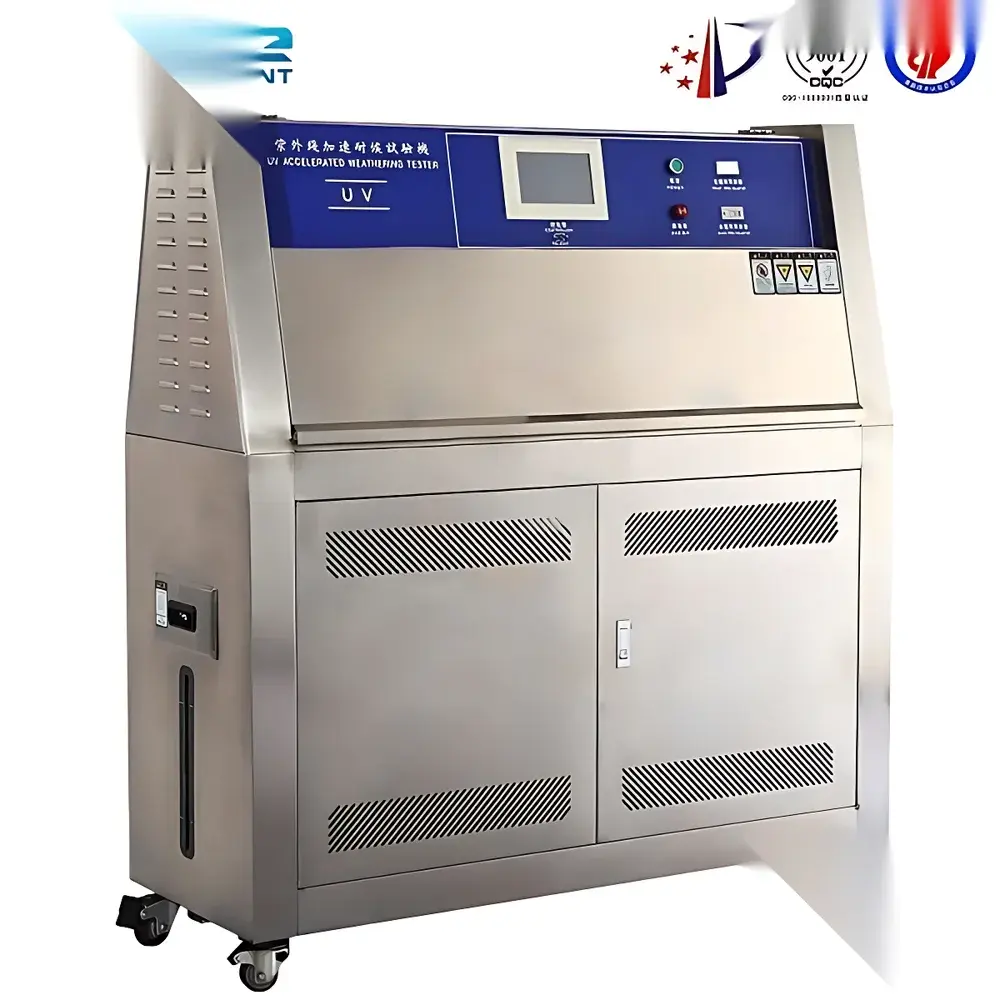
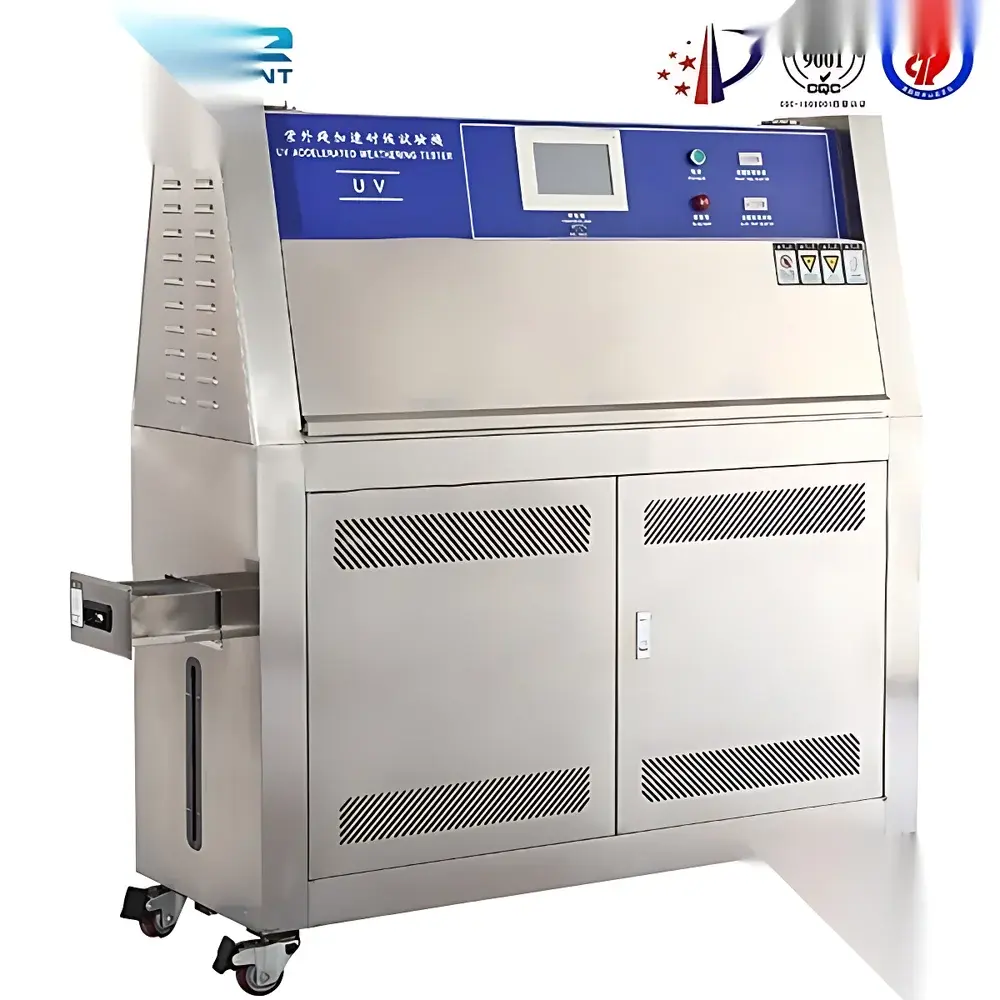
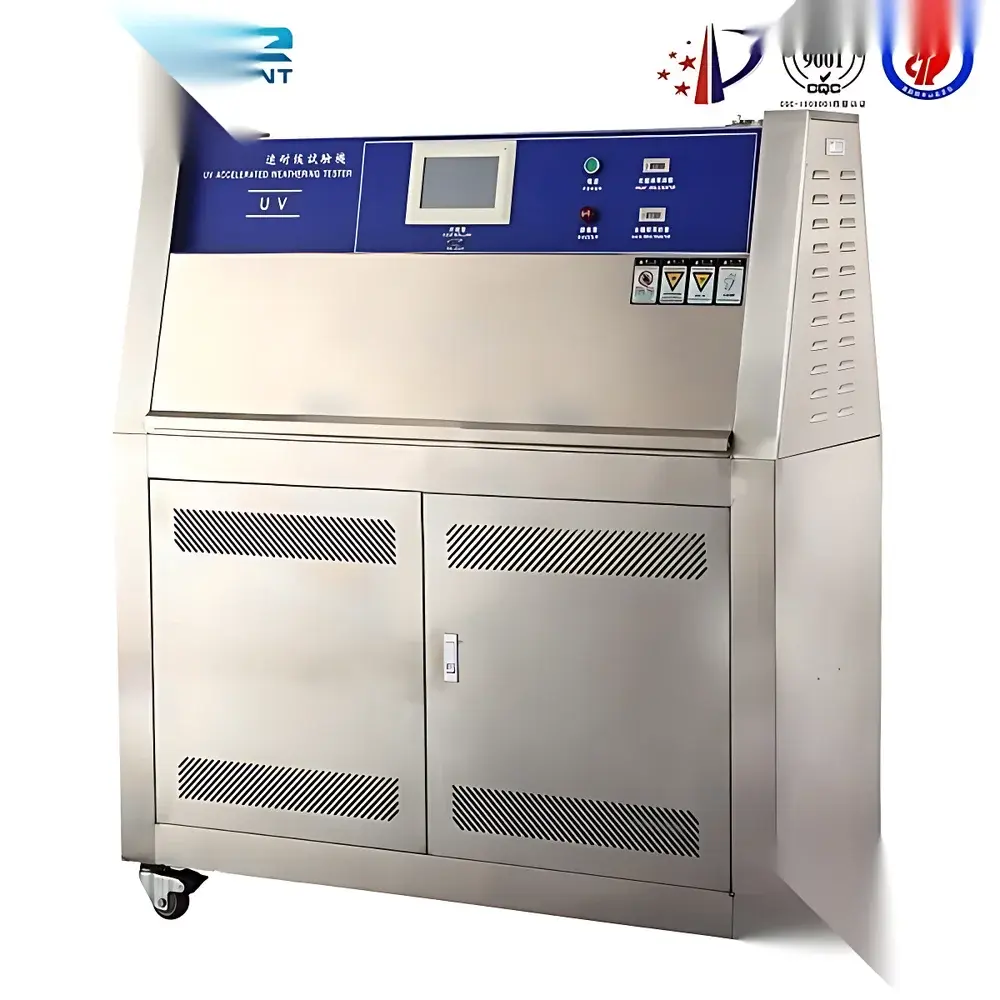
UV Fluorescent Weathering Chamber
| Brand | Other Brands |
|---|---|
| Origin | Imported |
| Manufacturer Type | General Distributor |
| Price | USD 2,650 (Reference Only) |
Overview
The UV Fluorescent Weathering Chamber is an engineered environmental test system designed to accelerate the evaluation of material degradation under simulated solar ultraviolet (UV) radiation and cyclic condensation humidity. Based on the principles of photochemical aging, it employs fluorescent UV lamps—primarily UVA-340 or UVB-313—to replicate the spectral distribution of terrestrial sunlight in the critical 295–365 nm range. Concurrently, a controlled condensation cycle generates dew-like moisture on specimen surfaces via saturated water vapor at elevated temperature, mimicking natural nighttime wetting mechanisms. This dual-stress methodology enables rapid assessment of photodegradation phenomena—including polymer chain scission, chromophore bleaching, surface oxidation, and hydrolytic cleavage—within days or weeks, compressing years of outdoor exposure into laboratory-controlled conditions.
Key Features
- Fluorescent UV lamp array with selectable spectral output (UVA-340 for daylight simulation; UVB-313 for aggressive, accelerated testing)
- Programmable irradiance control (typically 0.35–1.55 W/m² @ 340 nm) with real-time monitoring via calibrated UV sensor
- Condensation cycle generation via heated water reservoir and controlled chamber wall temperature (typically 40–60 °C)
- Integrated spray function for intermittent water exposure, simulating rain-induced thermal shock and surface washing effects
- Stainless steel 316L interior chamber with corrosion-resistant construction and seamless welds for long-term reliability
- Digital touchscreen controller with multi-segment programming (up to 99 cycles), data logging, and password-protected parameter access
- Compliance-ready architecture supporting audit trails, user-level permissions, and calibration traceability per ISO/IEC 17025 requirements
Sample Compatibility & Compliance
The chamber accommodates flat-panel specimens up to 75 mm thick and 150 × 300 mm in footprint, compatible with ASTM G154 (Standard Practice for Operating Fluorescent Ultraviolet (UV) Lamp Apparatus for Exposure of Non-Metallic Materials), ISO 4892-3 (Plastics — Methods of Exposure to Laboratory Light Sources — Part 3: Fluorescent UV Lamps), and JIS D 0205. It supports standardized sample mounting fixtures (e.g., aluminum racks, quartz holders) and is routinely used in automotive OEM validation (e.g., GMW 14124, Ford CETP 00.00-L-467), coatings qualification (AAMA 2604/2605), and photovoltaic encapsulant testing (IEC 61215). All electrical components meet IEC 61000-6-3 (EMC) and IEC 61000-6-4 standards; safety interlocks comply with IEC 61010-1 for laboratory equipment.
Software & Data Management
The embedded controller records time-stamped irradiance, chamber temperature, condensation duration, and spray timing at user-defined intervals (1–60 min resolution). Exportable CSV logs support post-test analysis in MATLAB, JMP, or custom LIMS environments. Optional PC-based software provides remote monitoring, alarm notification via email/SMS, and automated report generation compliant with 21 CFR Part 11 (electronic signatures, audit trail, data integrity controls). Calibration certificates include NIST-traceable UV sensor verification and temperature uniformity mapping per ASTM E2757.
Applications
This system is deployed across R&D and QC laboratories for predictive durability assessment of polymeric composites, automotive interior trim, architectural sealants, textile dyes, optical films, and medical device packaging. It supports failure mode identification—such as chalking onset (measured via gloss loss >30% at 60°), embrittlement (tensile strength reduction ≥25%), or yellowing index shift (ΔYI ≥3.0)—prior to field deployment. In regulatory contexts, data generated herein serves as foundational evidence for ISO 10993 biocompatibility documentation and FDA premarket submissions requiring environmental stability justification.
FAQ
What UV lamp types are supported, and how do they differ?
UVA-340 lamps closely match solar UV below 365 nm and are recommended for realistic weathering simulation. UVB-313 lamps emit shorter, more energetic wavelengths (down to 280 nm) and are used for highly accelerated screening—though results require careful correlation to outdoor exposure.
Is condensation mandatory during every test cycle?
No. The system allows independent scheduling of UV irradiation, condensation, and spray phases to replicate diverse climatic profiles (e.g., desert vs. tropical exposure).
How often must the UV sensors be recalibrated?
Annual recalibration against a NIST-traceable reference sensor is recommended; quarterly verification using the built-in self-check routine is required under GLP-compliant operation.
Can the chamber operate unattended for extended durations?
Yes—provided the water reservoir is filled, drain lines are clear, and ambient room temperature remains between 15–30 °C with ≤80% RH. Remote monitoring is advised for tests exceeding 72 hours.
What personal protective equipment (PPE) is required during operation?
UV-blocking safety goggles (ANSI Z87.1+ rated for 280–400 nm), nitrile gloves, and lab coat are mandatory during lamp access or specimen loading/unloading; direct UV exposure must be limited to <60 seconds per session.



