
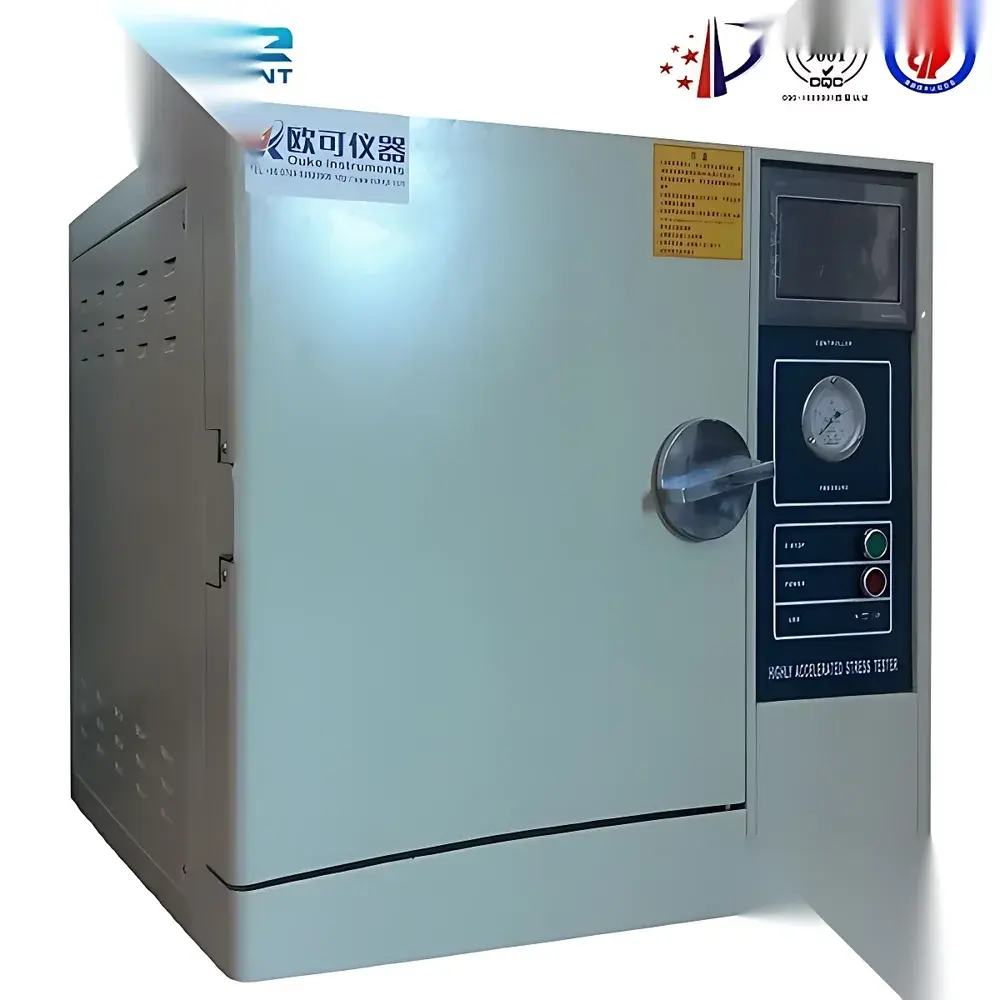
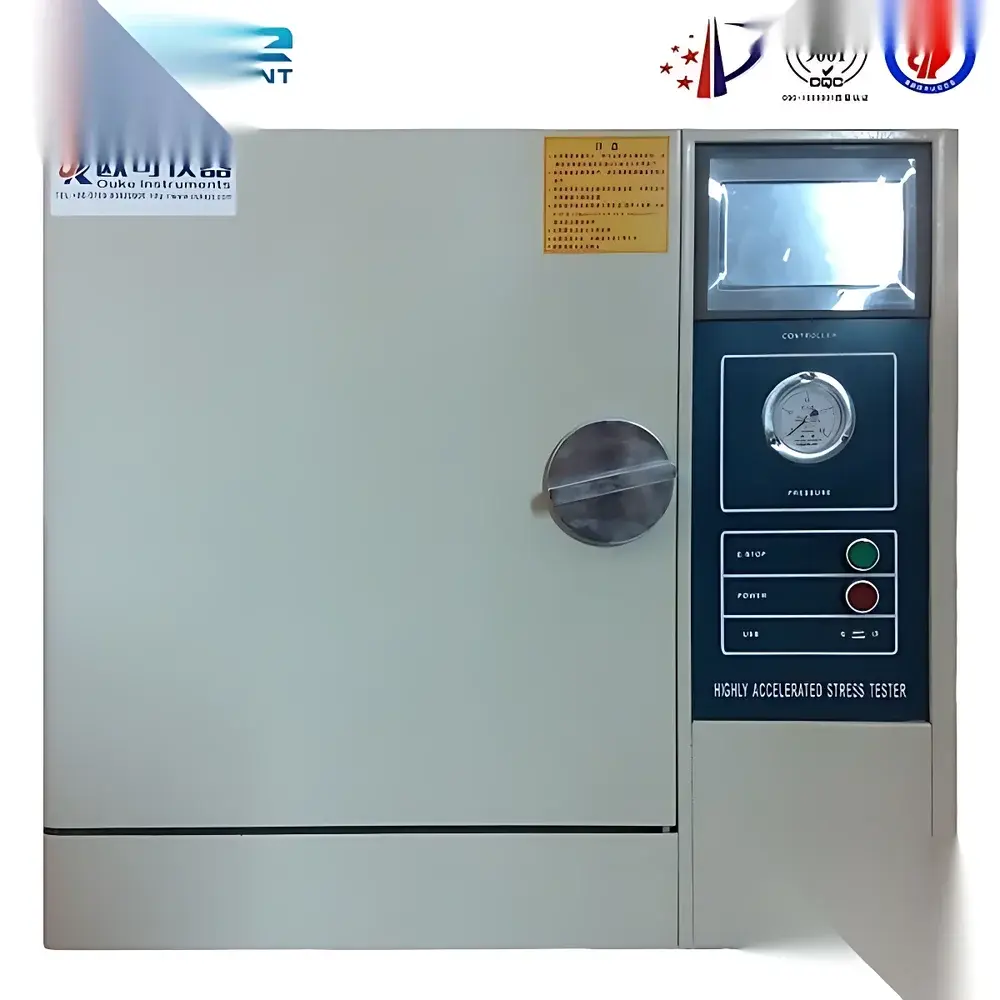
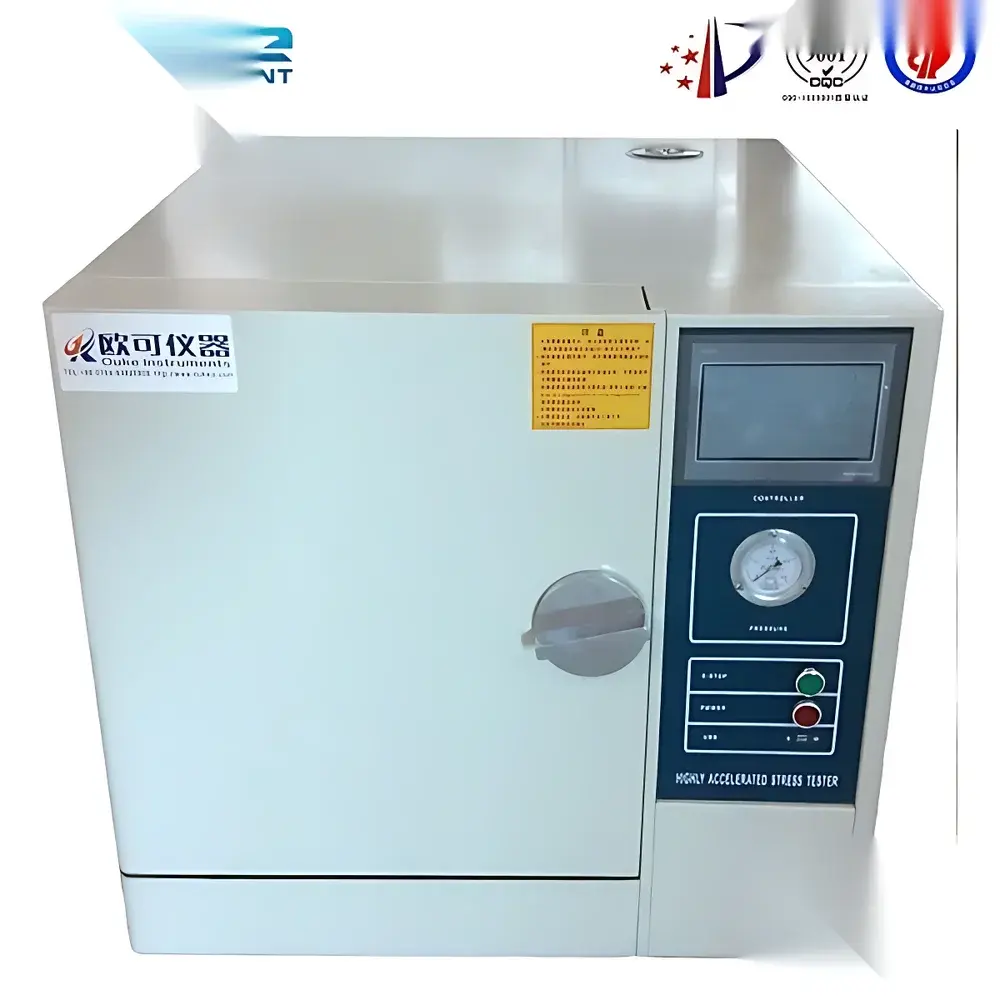
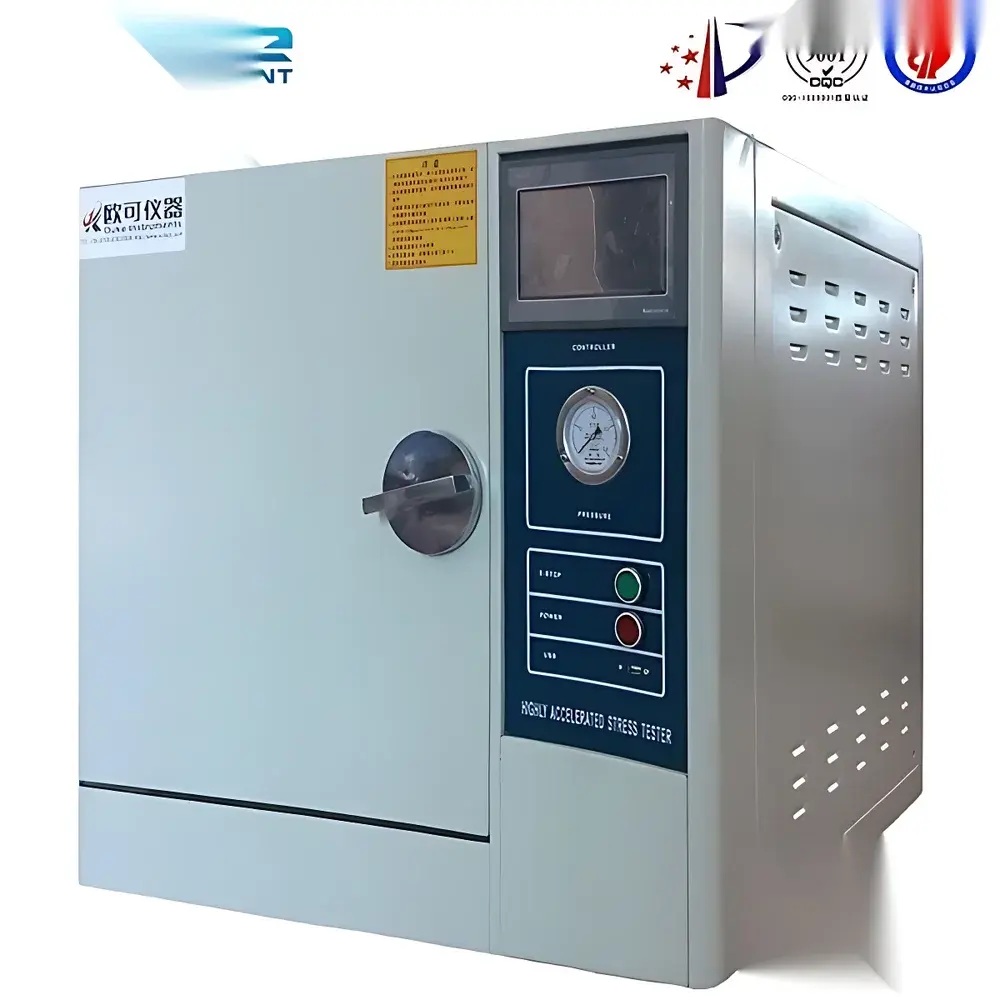
OK-PCT Series Accelerated Aging Test Chamber for Notebook Computers and Electronic Components
| Brand | OK |
|---|---|
| Model | OK-PCT-25 / OK-PCT-30 / OK-PCT-40 / OK-PCT-50 |
| Chamber Dimensions (mm) | Ø250×400 |
| Temperature Range | 100–132 °C |
| Pressure Capability | Up to 300 kPa (approx. 3 kg/cm²) |
| Compliance | Designed for IEC 60068-2-66, JESD22-A102D, MIL-STD-202G Method 108, JEDEC JESD22-A110 |
| Safety Restrictions | Not for flammable, explosive, volatile, corrosive, or high-EMI-emitting samples |
| Power Preheat Time | 30–35 min to target pressure |
| Automatic Pressure Release & Cooling Protocol | ≥20 min post-depressurization before sample retrieval |
| Control Interface | Programmable digital controller with dual-stage cycle logic (Program A: Work → Dry → Exhaust → Zero-Pressure Completion |
| Program B | Work → Completion with residual pressure) |
| Data Logging | Optional real-time temperature/pressure trace recording |
Overview
The OK-PCT Series Accelerated Aging Test Chamber is a precision-engineered pressure-saturated steam environment system designed specifically for reliability validation of notebook computers, printed circuit boards (PCBs), integrated circuits (ICs), solder joints, conformal coatings, and other moisture-sensitive electronic assemblies. It operates on the principle of Pressure Cooker Test (PCT), also known as saturated steam autoclave testing, in accordance with internationally recognized stress acceleration standards including JEDEC JESD22-A102D, IEC 60068-2-66, and MIL-STD-202G Method 108. By simultaneously elevating temperature (100–132 °C), relative humidity (100% RH), and hydrostatic pressure (up to 300 kPa), the chamber dramatically accelerates moisture diffusion into microvoids, intermetallic layers, and dielectric interfaces—thereby exposing latent failure mechanisms such as popcorning, wire bond lift-off, delamination, and corrosion-induced leakage current that would otherwise manifest only after months or years of field operation.
Key Features
- Stainless steel 316L inner chamber with reinforced double-sealed door mechanism ensuring long-term pressure integrity and corrosion resistance
- Dual-mode programmable control logic supporting both full depressurization cycles (Program A) and controlled residual-pressure termination (Program B) for flexible test protocol alignment
- Integrated steam generator with preheat stabilization time of 30–35 minutes to ensure thermodynamic equilibrium prior to test initiation
- 50 mm diameter exhaust port positioned at the top dome to facilitate rapid, directional venting of saturated vapor during depressurization
- Automated safety interlocks including over-temperature cutoff, pressure relief valve activation, and fault-triggered circuit interruption with visual alarm indication
- Post-cycle mandatory cooling delay (≥20 minutes after pressure return to 0 kPa) enforced by controller logic to prevent thermal shock and condensation-related handling damage
- Modular chamber sizing across four standard configurations (OK-PCT-25 to OK-PCT-50) accommodating small PCBs up to full-size notebook chassis
Sample Compatibility & Compliance
The OK-PCT chamber is intended exclusively for non-hazardous, non-corrosive, non-volatile electronic components and subassemblies. It explicitly excludes flammable solvents, battery cells with volatile electrolytes, halogenated polymers, and devices emitting strong electromagnetic fields above Class B limits per CISPR 32. All operational protocols adhere to GLP-aligned documentation practices, supporting audit-ready test record generation when paired with optional data logging modules. The system architecture enables traceability to ISO/IEC 17025 requirements for accredited laboratories performing qualification testing under IPC-J-STD-020, IPC-SM-785, and AEC-Q200 stress validation frameworks.
Software & Data Management
While the base configuration features a standalone digital controller with front-panel parameter entry and cycle status LED indicators, optional RS-485 or Ethernet-enabled communication modules allow integration into centralized lab management systems. Logged parameters—including real-time chamber temperature, absolute pressure, elapsed time, and cycle phase transitions—are timestamped and exportable in CSV format. When deployed in regulated environments (e.g., automotive Tier-1 supplier labs or medical device manufacturing QA), the optional software package supports 21 CFR Part 11-compliant user authentication, electronic signatures, and immutable audit trails for all test setup modifications and execution events.
Applications
- Moisture sensitivity level (MSL) grading per J-STD-020 for surface-mount packages prior to reflow assembly
- Qualification of underfill materials, wafer-level packaging (WLP), and fan-out wafer-level chip-scale packages (FO-WLCSP)
- Evaluation of conformal coating adhesion and barrier performance against moisture ingress under thermal-mechanical stress
- Failure mode analysis of BGA solder joints subjected to hygroscopic swelling and interfacial stress
- Reliability screening of embedded passive components, flex-rigid hybrids, and automotive-grade ECUs exposed to humid tropical climates
- Process validation for vacuum-assisted molding, plasma cleaning, and low-k dielectric curing steps
FAQ
What is the maximum allowable test duration per cycle?
Cycle duration is fully programmable up to 99 hours and 59 minutes; however, JEDEC-standard PCT durations are typically limited to 96 hours for MSL-3 qualification.
Can the chamber maintain 100% RH without pressurization?
No — saturation at 100% RH is intrinsically coupled to elevated pressure in this design; standalone humidity-only operation is not supported.
Is calibration certification included with shipment?
A factory-as-built temperature and pressure verification report is supplied; NIST-traceable calibration certificates require separate scheduling with an accredited third-party metrology provider.
How frequently should the safety relief valve be inspected?
Per ASME BPVC Section VIII guidelines, visual inspection is recommended before each use, and functional testing must occur at least annually or after any overpressure event.
Does the system support remote monitoring via mobile device?
Yes — with the optional IoT gateway module, live status and historical logs can be accessed through secure HTTPS endpoints compatible with modern web browsers and enterprise MDM platforms.



