
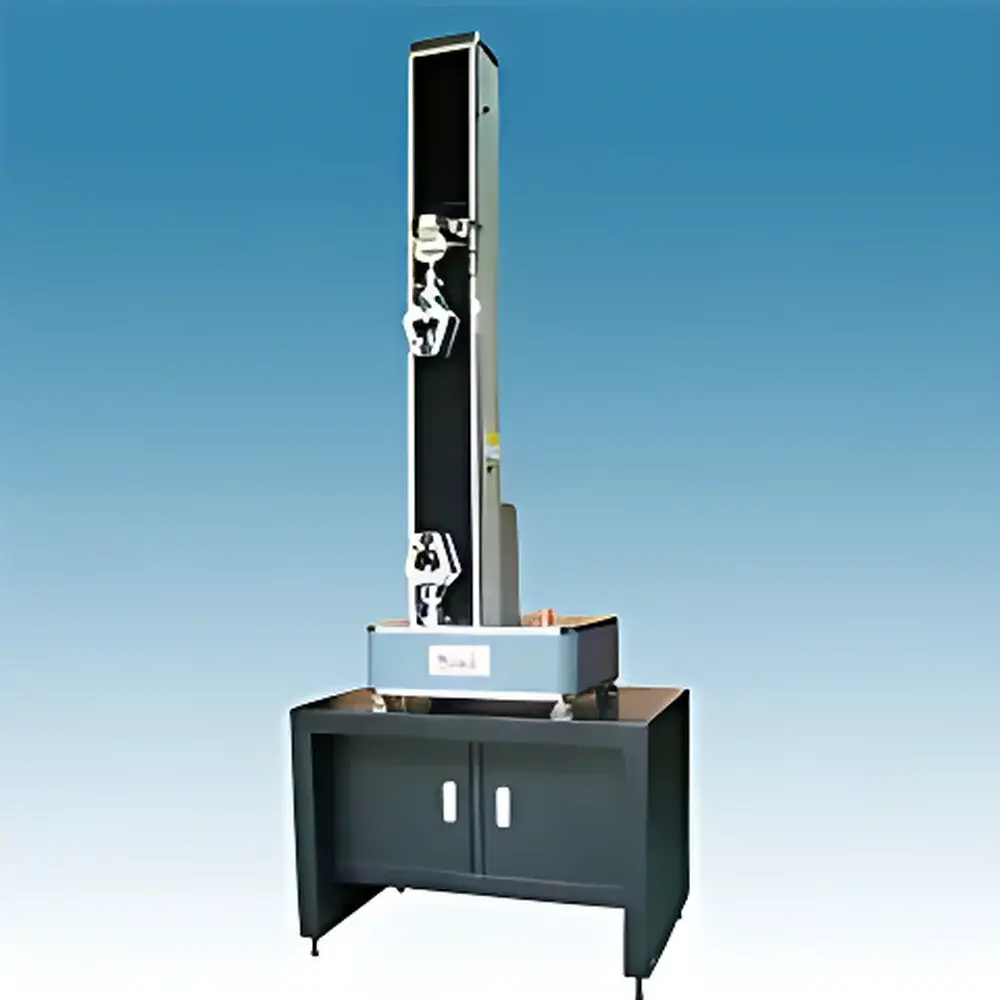
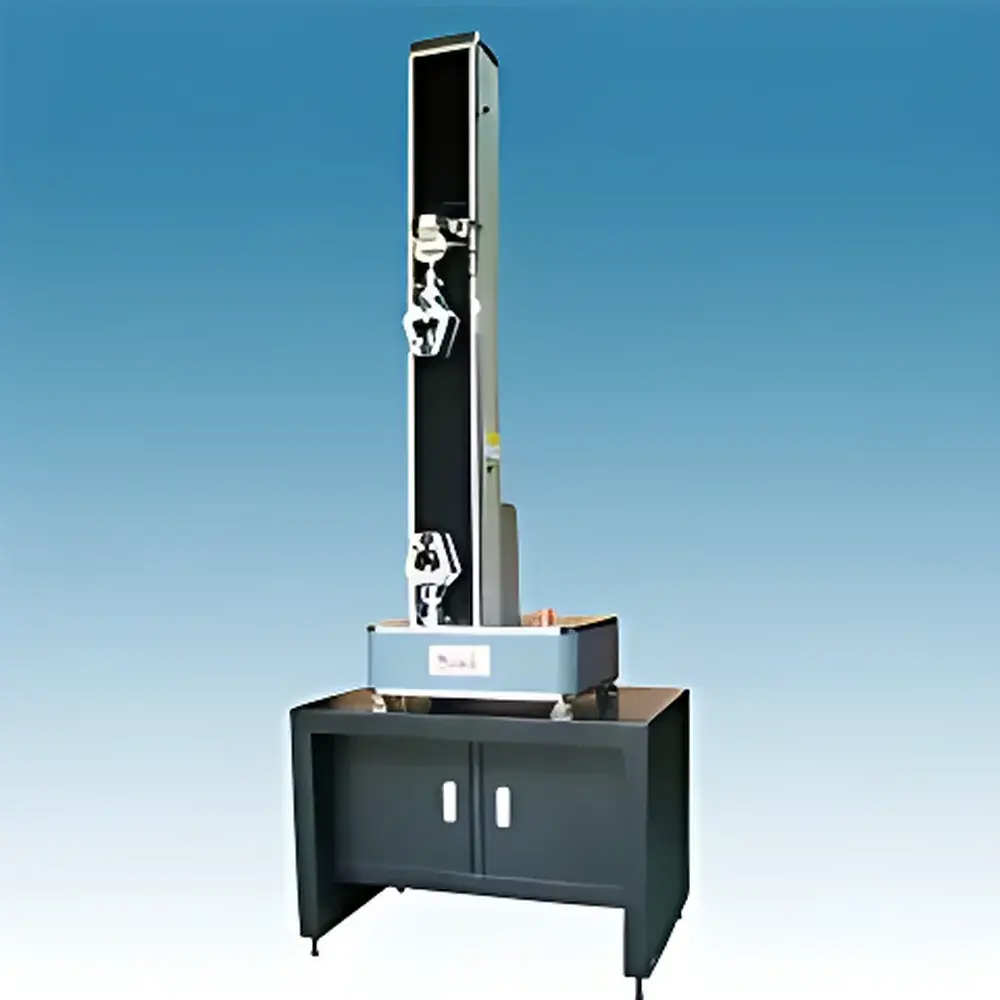
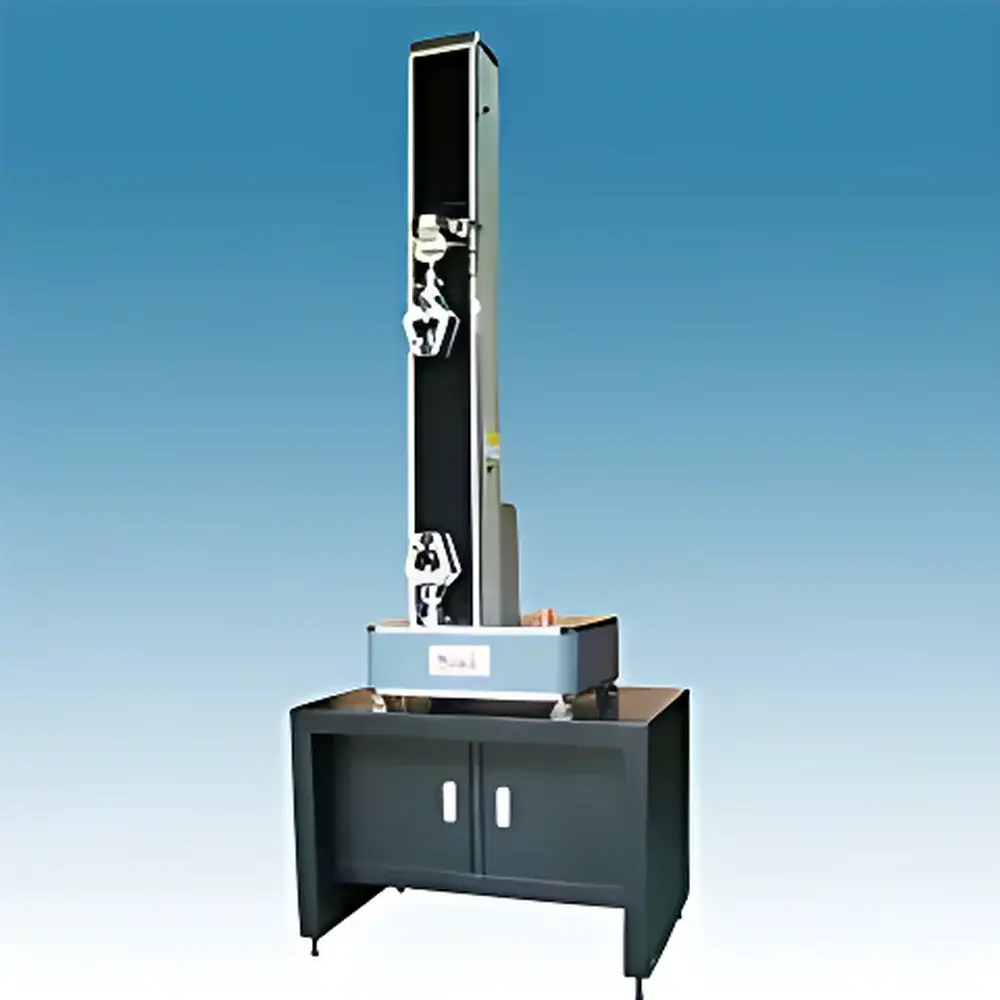
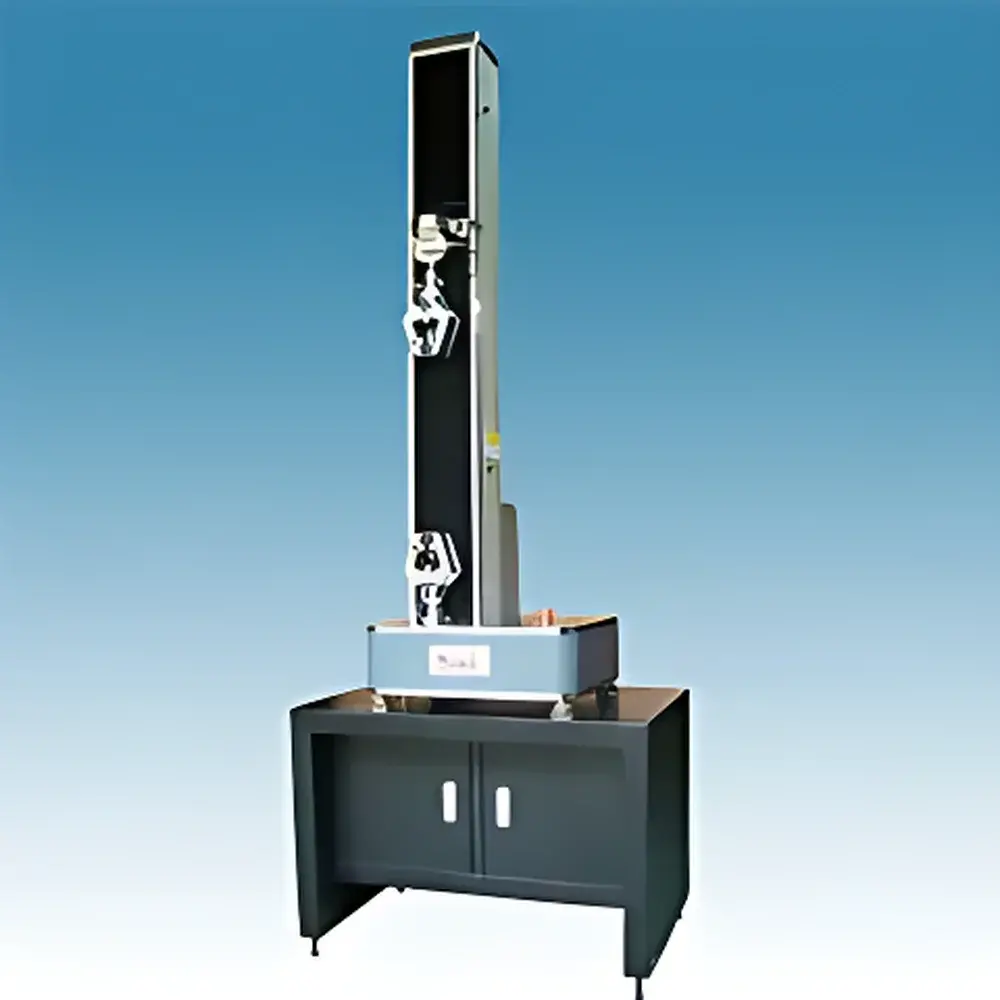
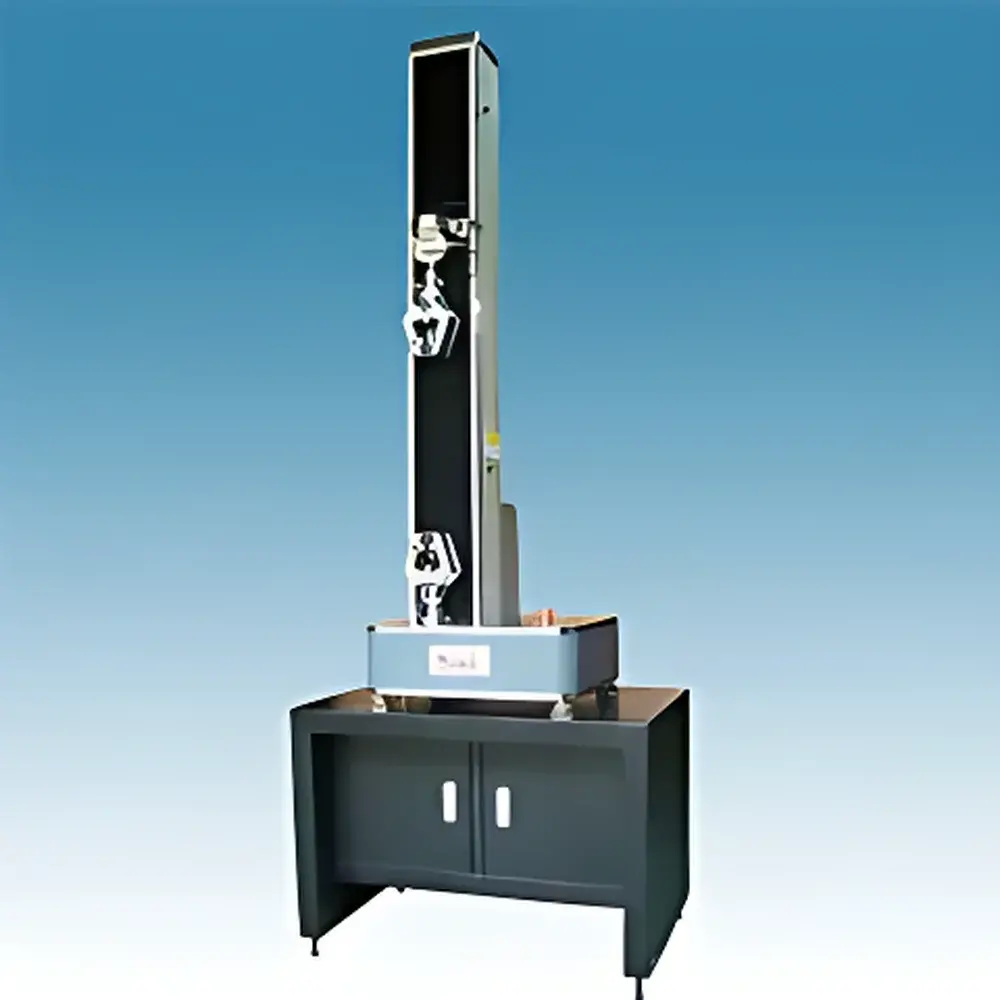
Hengyi HY-0580L Insulating Materials Tensile Testing Machine
| Brand | Hengyi |
|---|---|
| Origin | Shanghai, China |
| Manufacturer Type | Direct Manufacturer |
| Product Category | Domestic |
| Model | HY-0580L |
| Price Range | USD 1,400 – 7,200 |
| Instrument Type | Electromechanical Universal Testing Machine |
| Max Load Capacity | ≤5000 N |
| Load Cell Accuracy | 0.01% FS |
| Measurement Accuracy | <±1% |
| Control Mode | Full PC-Based Control |
| Effective Width | 150 mm |
| Stroke | 800 mm (extendable) |
| Test Speed Range | 0.001–500 mm/min |
| Speed Accuracy | ±0.5% |
| Displacement Accuracy | ±0.5% |
| Safety Features | Electronic Limit Switches, Emergency Stop Button, Overload Protection |
| Unit Weight | ~85 kg |
| Power Supply | 220 V AC |
| Dimensions (W×D×H) | 590 × 355 × 1640 mm |
Overview
The Hengyi HY-0580L Insulating Materials Tensile Testing Machine is an electromechanical universal testing system engineered for high-fidelity mechanical characterization of non-metallic insulating materials—including polymer films, elastomeric composites, laminated dielectrics, fiber-reinforced plastics, and ceramic substrates—under controlled uniaxial tension, compression, bending, peel, and puncture loading conditions. It operates on a closed-loop servo-controlled principle: a high-precision DC motor drives a planetary gear reducer coupled to a preloaded ball screw assembly, translating rotational motion into linear displacement of the crosshead with sub-micron repeatability. Force is measured via a calibrated S-type load cell; displacement is tracked using an optical encoder integrated into the screw drive train. The system complies with fundamental mechanical test methodology frameworks defined in ASTM D638, ISO 527-1, IEC 60455-2, and GB/T 1040.1, supporting standardized evaluation of tensile strength, elongation at break, Young’s modulus (E), yield point, compressive strength, and stress–strain linearity across low-to-medium force ranges (up to 5 kN).
Key Features
- High-performance DSP-based control platform delivering real-time data acquisition at ≥1 kHz sampling rate, enabling precise dynamic response during transient loading events.
- USB 2.0–compatible interface (backward-compatible with USB 1.1 full-speed mode) supporting hot-plug operation, configurable I/O mapping, and deterministic bulk data transfer at up to 12 Mbps.
- Four-layer PCB architecture with optimized ground plane partitioning and differential signal routing to suppress EMI/RFI—critical for stable operation in shared laboratory environments with RF-emitting instrumentation.
- Modular hardware design featuring standardized USB peripheral interfaces for extensibility (e.g., digital extensometers, environmental chambers, video extensometry modules).
- Comprehensive safety architecture including dual-channel electronic limit switches, hardware-triggered emergency stop circuitry, and software-enforced overload cutoff with automatic actuator halt and load release.
- PC-driven control interface supporting multi-user permission levels, audit trail logging, and configurable test method templates compliant with GLP and internal QA protocols.
Sample Compatibility & Compliance
The HY-0580L accommodates specimens conforming to standard geometries per ASTM D882 (thin films), ASTM D3039 (composites), IEC 60851-5 (insulated wires), and ISO 178 (flexural testing). Grip configurations include pneumatic wedge grips, roller grips, and custom-designed insulated jaw sets to prevent arcing or surface damage during high-voltage insulation testing prep. All firmware and software components meet electromagnetic compatibility requirements per EN 61326-1 and functional safety guidelines under IEC 61508 SIL 2 for laboratory equipment. Calibration traceability follows ISO/IEC 17025 principles, with optional NIST-traceable load cell certification available upon request.
Software & Data Management
The bundled HengyiTestSuite v4.x software provides ISO 17025-aligned test execution, analysis, and reporting capabilities. It supports 21 CFR Part 11–compliant user authentication, electronic signatures, and immutable audit trails for all test parameter changes, result modifications, and calibration events. Real-time plotting includes auto-scaling stress–strain, load–displacement, and time-series curves with programmable trigger points (e.g., yield detection, fracture onset). Post-test analysis tools enable calculation of tangent/ secant modulus, Poisson’s ratio estimation (with biaxial strain input), and statistical batch reporting per ISO 5725. Export formats include CSV, XML, PDF/A-2, and native .htd binary archives for long-term archival integrity.
Applications
This system serves quality assurance laboratories in cable manufacturing (evaluation of XLPE, EPR, and silicone rubber insulation integrity), aerospace composites R&D (dielectric matrix mechanical stability under thermal cycling), medical device packaging validation (peel strength of sterile barrier systems), photovoltaic module encapsulant testing (EVA adhesion and creep resistance), and academic research on novel polymer electrolytes for solid-state batteries. Its versatility extends to qualification testing per UL 746C (polymeric materials), MIL-STD-810G (mechanical shock preconditioning), and CENELEC HD 60364-5-52 (electrical installation mechanical robustness).
FAQ
What standards does the HY-0580L support for insulating material testing?
It natively supports test methods referenced in IEC 60455-2, ASTM D149 (dielectric strength prep), ISO 6892-1 (tensile), and GB/T 1408.1—configurable via method templates.
Can the system integrate with external environmental chambers?
Yes—via TTL-level trigger I/O and Modbus RTU over USB-to-RS485 adapter; chamber temperature and humidity metadata are synchronized into test records.
Is firmware update capability available remotely?
Firmware updates require local USB stick deployment with SHA-256 signature verification; no cloud connectivity or remote access functionality is implemented for security compliance.
Does the load cell meet ISO 376 Class 0.5 accuracy requirements?
Standard configuration uses a 0.01% FS load cell meeting ISO 376 Class 0.2 equivalency; Class 0.5 certified variants are available as optional upgrades.
What maintenance intervals are recommended for optimal accuracy retention?
Biannual mechanical inspection (ball screw lubrication, grip alignment verification) and annual load cell recalibration against traceable deadweight standards are advised per ISO 7500-1.



