
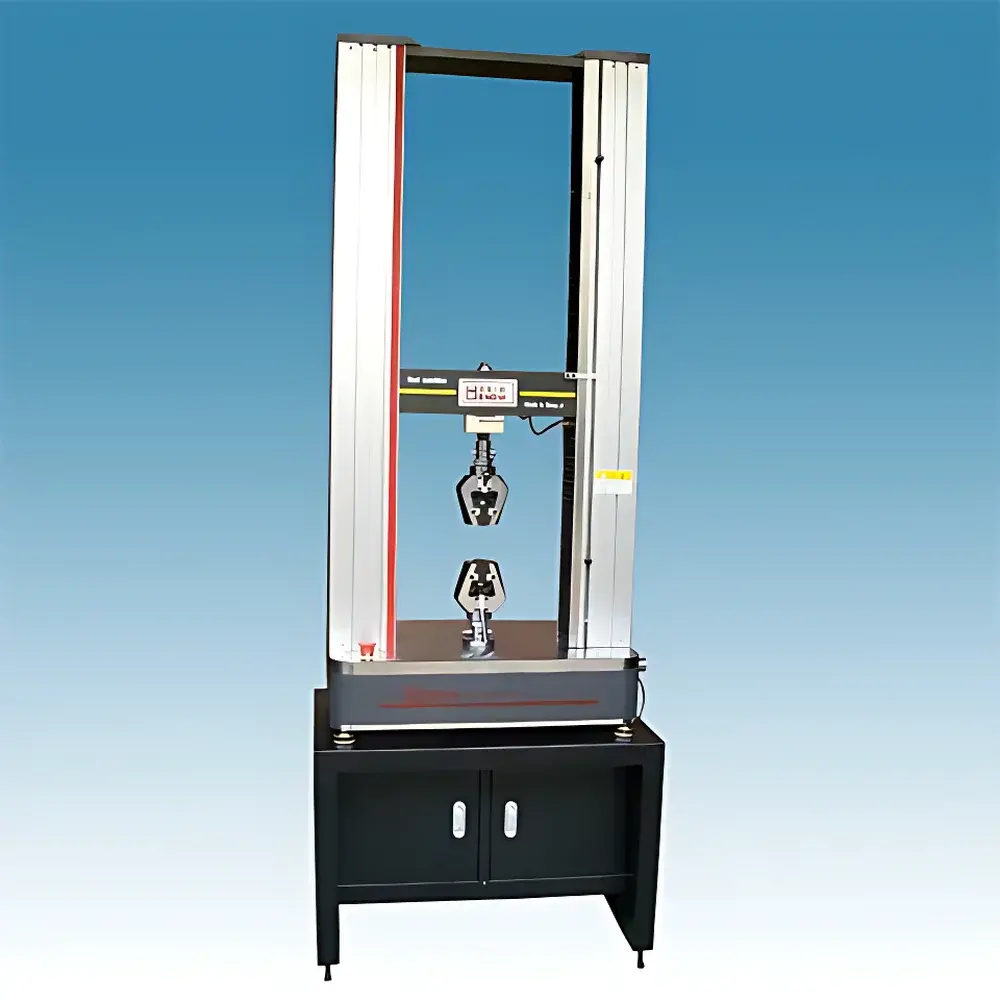
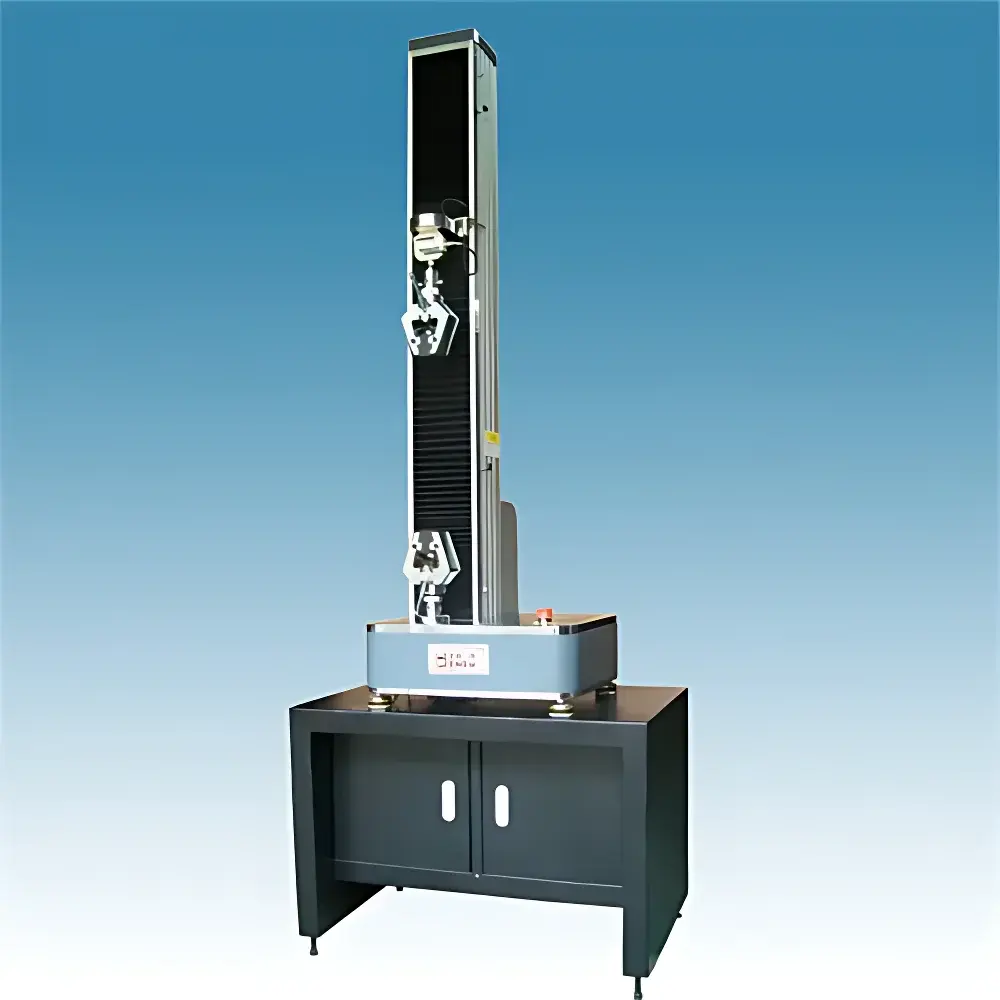
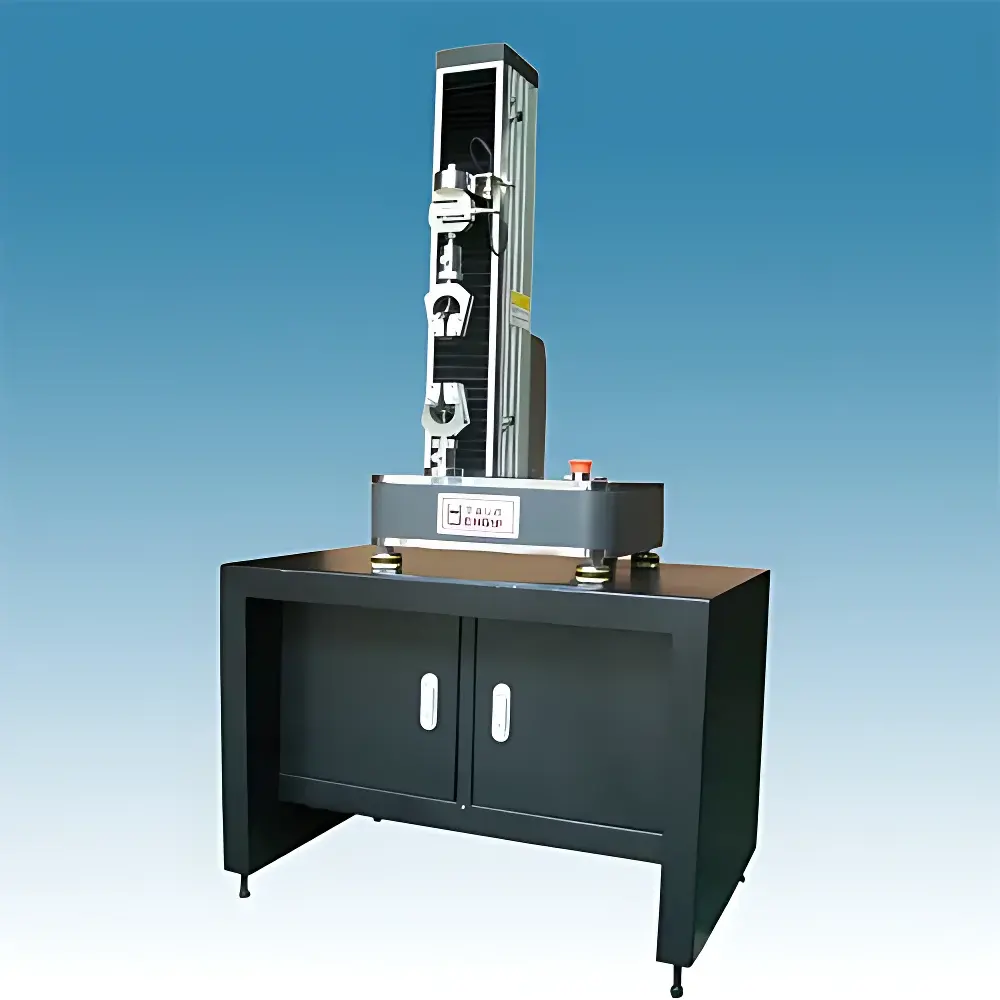
Hengyi HY-0580TYBHB High-Precision Biomechanical Materials Testing Machine
| Brand | Hengyi / Hengyitest |
|---|---|
| Origin | Shanghai, China |
| Manufacturer Type | Direct Manufacturer |
| Product Category | Domestic |
| Model | HY-0580TYBHB |
| Instrument Type | Electromechanical Tensile Testing Machine |
| Maximum Test Load | 5000 N |
| Force Measurement Range | 5–5000 N (Full Scale) |
| Force Accuracy | ±0.5% of reading |
| Test Stroke | 800 mm |
| Displacement Resolution | 0.001 mm |
| Test Speed Range | 0.001–500 mm/min |
| Speed Accuracy | ±0.5% of set value |
| Position Accuracy | ±0.5% of reading |
| Strain Control Range | 0.002–6% FS/s |
| Stress Control Range | 0.005–6% FS/s |
| Load Cell Options | Multiple interchangeable transducers (1 N to 5000 N) |
| Effective Test Width | 120 mm |
| Power Supply | 220 V AC, 750 W |
| Dimensions (W×D×H) | 470 × 400 × 1510 mm |
| Weight | 95 kg |
Overview
The Hengyi HY-0580TYBHB High-Precision Biomechanical Materials Testing Machine is an electromechanical universal testing system engineered for static mechanical characterization of biomaterials, soft polymers, thin metallic foils, and compliant composites under controlled tensile, compression, bending, shear, peel, tear, relaxation, and cyclic loading conditions. Based on a precision ball-screw-driven crosshead architecture with closed-loop servo control, the system delivers high reproducibility in force and displacement measurement across a broad dynamic range — from sub-newton forces required for hydrogel or suture testing to 5 kN loads suitable for structural adhesives or photovoltaic interconnect ribbons. Its design complies with fundamental metrological principles outlined in ISO 7500-1 (static calibration of force-proving instruments) and ASTM E4 (verification of force-measuring systems), ensuring traceable performance for R&D labs, QC departments, and regulatory-compliant manufacturing environments.
Key Features
- Modular load cell configuration supporting interchangeable transducers (1 N to 5000 N), enabling seamless transition between micro-scale biomaterial testing and macro-scale mechanical validation without recalibration.
- High-resolution displacement sensing with 0.001 mm resolution and ±0.5% accuracy over full stroke (800 mm), critical for quantifying small-strain behavior in hydrogels and elastomeric medical devices.
- Programmable test speed ranging from 0.001 to 500 mm/min with ±0.5% speed fidelity — essential for simulating physiological strain rates (e.g., 0.01–1 mm/min for tissue mechanics) or accelerated aging protocols.
- Dual-mode control architecture supporting stress-controlled, strain-controlled, and displacement-controlled test profiles per ISO 6892-1 and ASTM D638/D790 standards.
- Integrated electronic limit switches and real-time overload protection (triggered at 110% of full-scale load), preventing damage during unexpected specimen failure or operator error.
- Motorized crosshead with independent fast/slow speed modes and jog functionality for precise specimen alignment and pre-load application.
Sample Compatibility & Compliance
The HY-0580TYBHB accommodates diverse specimen geometries via optional manual or pneumatic grips — including flat-face clamps for films and foils (e.g., PVDF, PET, aluminum/copper foil), capstan-style fixtures for fibers and sutures, and custom-designed holders for biomedical components such as vascular grafts, surgical staples, and hydrogel scaffolds. It supports standardized test methods aligned with ISO 527 (plastics), ISO 37 (rubber), ASTM D882 (thin plastics), ASTM D3039 (composites), USP (elasticity of pharmaceutical packaging), and GB/T 228.1 (metallic materials). All force, displacement, and time data are timestamped and logged with audit-trail-capable metadata, satisfying basic GLP documentation requirements and facilitating internal 21 CFR Part 11 readiness when deployed with validated software configurations.
Software & Data Management
HYtest v5.x software provides multi-axis real-time plotting (load–displacement, stress–strain, stress–time, strain–time), with up to eight curves overlayable in distinct colors within a single coordinate system. The interface supports automatic calculation of key mechanical parameters including ReH (upper yield strength), ReL (lower yield strength), Rp0.2 (0.2% offset yield), Fm (maximum force), Rm (tensile strength), E (Young’s modulus), and relaxation/creep compliance coefficients. Users may manually or automatically annotate inflection points, yield transitions, fracture events, and plateau regions directly on plotted curves. Raw data export is available in CSV and Excel-compatible formats; all test configurations, calibration logs, and user actions are stored in encrypted local databases with configurable retention policies.
Applications
- Mechanical profiling of hydrogels used in wound dressings, drug delivery matrices, and tissue engineering scaffolds — quantifying compressive modulus, swelling-induced stress relaxation, and cyclic fatigue resistance.
- Adhesion strength evaluation of silicone sealants, acrylic pressure-sensitive adhesives (PSAs), and biocompatible cyanoacrylates per ASTM D1002 and ISO 4587.
- Quality assurance of medical tubing (IV sets, catheters), sutures, stent crimping bands, and orthopedic fixation devices under ISO 10993-12 and ASTM F2193.
- Characterization of photovoltaic interconnect ribbons, flexible printed circuits, and battery tab materials under thermal-mechanical cycling conditions.
- Structural validation of paper-based packaging, corrugated board, and wood-derived composites per TAPPI and ISO 1924 standards.
FAQ
What standards does the HY-0580TYBHB support for biomechanical testing?
It natively supports parameter extraction and reporting per ISO 527, ASTM D638, ASTM D790, ISO 37, and GB/T 228.1. Custom test templates can be configured for USP , ISO 10993-12, and EN ISO 13485-aligned workflows.
Can the system perform cyclic or fatigue testing?
Yes — the controller supports programmable sinusoidal, triangular, and trapezoidal waveforms with variable amplitude, frequency, and dwell time, enabling low-cycle fatigue studies up to 10⁵ cycles when paired with appropriate environmental enclosures.
Is the software compliant with FDA 21 CFR Part 11?
The base HYtest software includes user authentication, electronic signatures, and audit trail logging. Full Part 11 compliance requires documented validation protocols, role-based access control configuration, and integration with enterprise-level LIMS or ELN systems.
What grip options are available for soft biological tissues?
Customizable pneumatic grips with serrated or coated jaws, cryo-clamping adapters for frozen specimens, and low-force spring-loaded fixtures for fragile samples (e.g., decellularized tissue sheets) are available upon request.
How is calibration traceability maintained?
Each load cell is supplied with a factory calibration certificate traceable to NIM (China National Institute of Metrology). Periodic verification follows ISO 7500-1 using certified deadweight standards or reference load cells calibrated by accredited third-party laboratories.



