
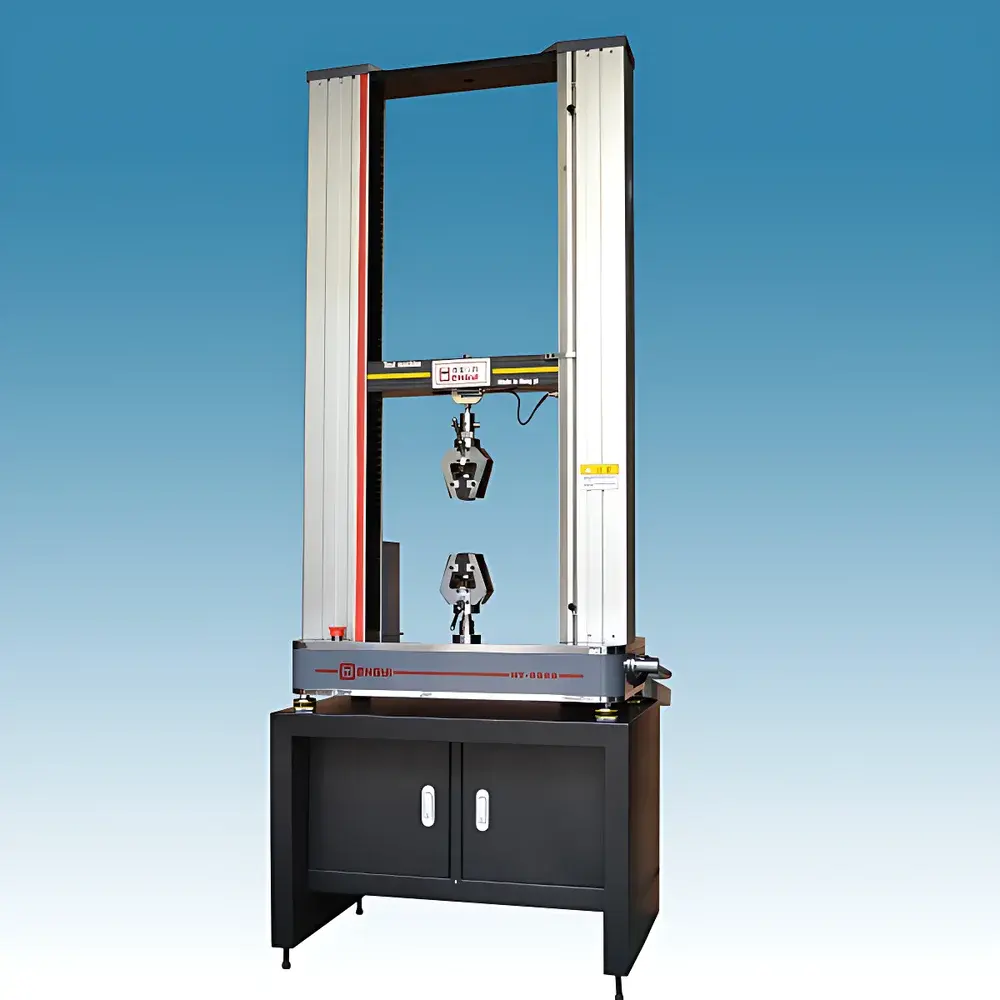
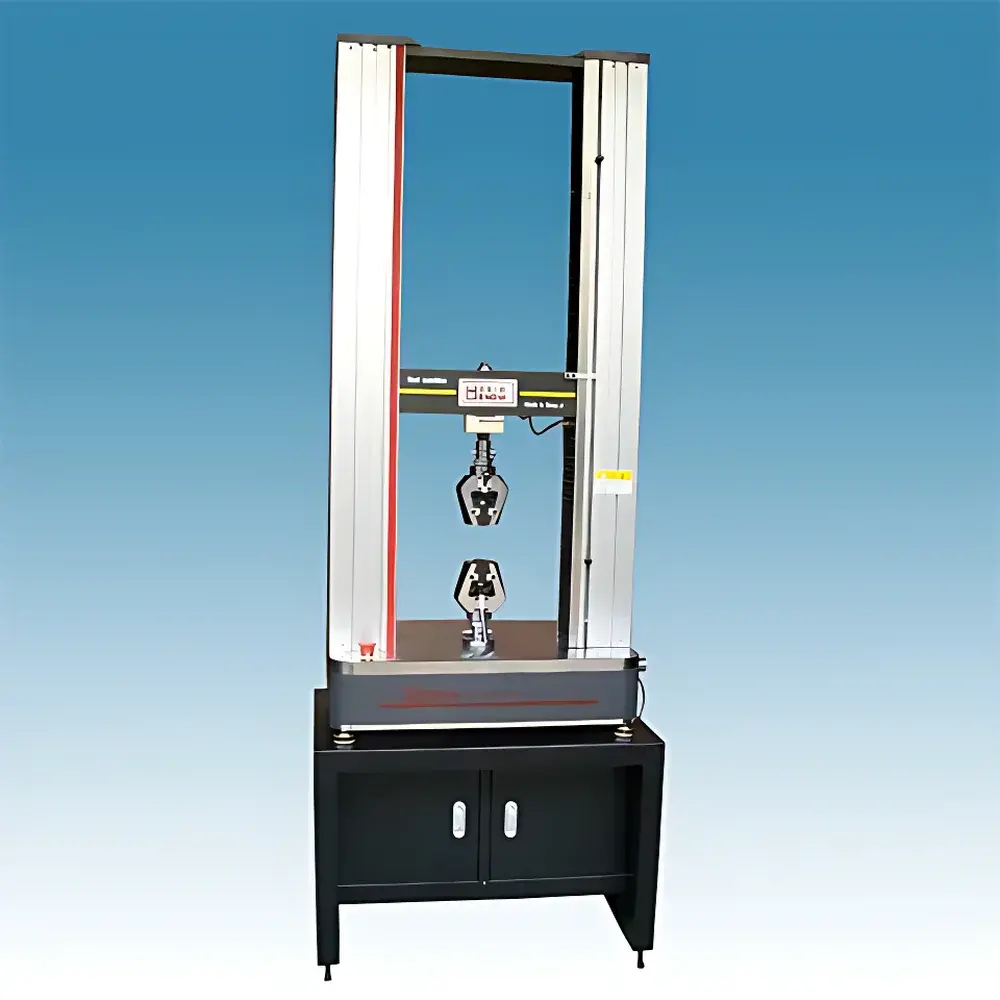
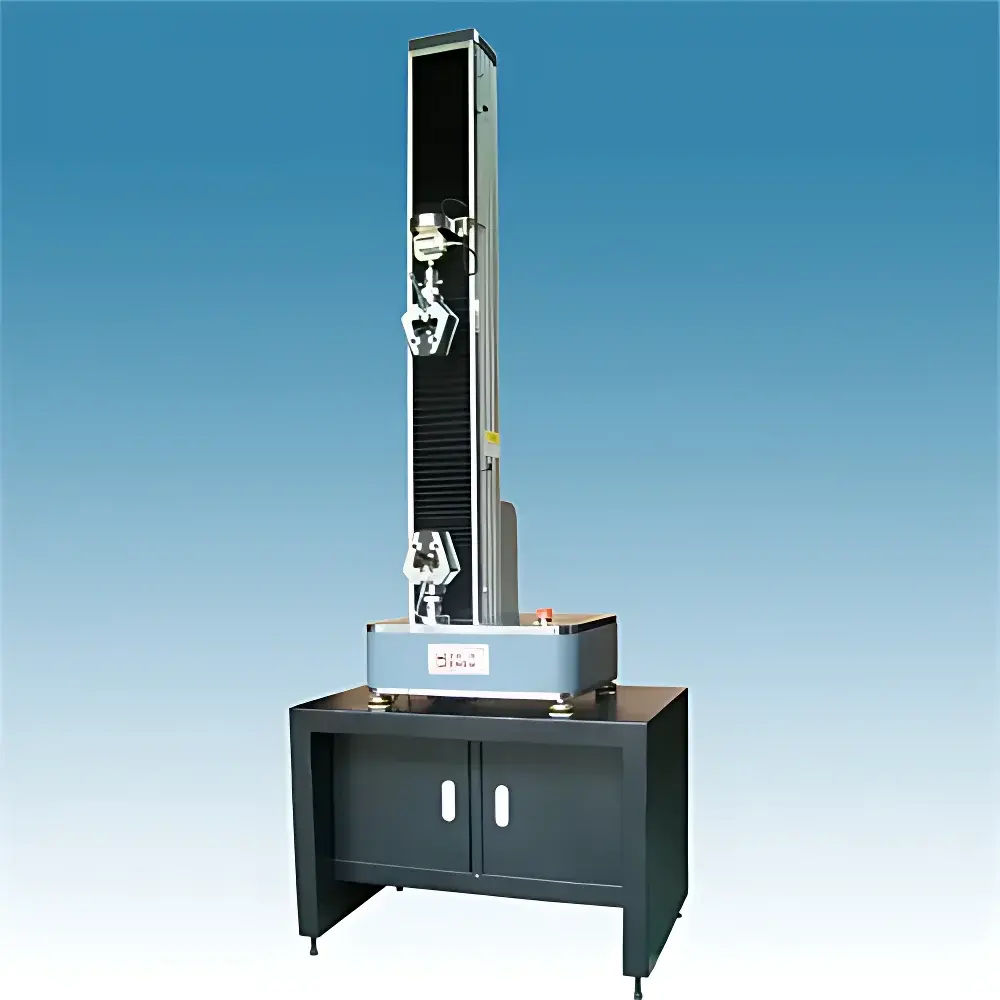
Hengyi HY-1080MUYB Universal Testing Machine for Rabbit Bone Tissue and Orthopedic Biomaterials
| Brand | Hengyi / Hengyitest |
|---|---|
| Origin | Shanghai, China |
| Manufacturer Type | Direct Manufacturer |
| Regional Category | Domestic (China) |
| Model | HY-1080MUYB |
| Instrument Type | Electromechanical Universal Testing Machine |
| Load Capacity | 10 kN (configurable ≤10 kN) |
| Load Cell Accuracy | 0.01% FS |
| Measurement Accuracy | < ±0.5% |
| Test Speed Range | 0.001–500 mm/min |
| Speed Accuracy | ±0.5% |
| Displacement Accuracy | ±0.5% |
| Effective Test Width | ~380 mm |
| Effective Stroke | ~800 mm |
| Safety Features | Electronic limit protection, emergency stop button |
| Power Supply | 220 V AC |
| Host Dimensions | 700 × 420 × 1600 mm |
| Weight | ~210 kg |
| Control Interface | Full PC-based Windows operation with USB 2.0 isolated interface |
| Data Acquisition | 24-bit ADC + ARM9 32-bit CPU (56 MIPS), real-time dynamic display of force, displacement, and strain |
| Compliance Standards | GB, ISO 5833, ASTM F451, ISO 6892, ISO 178, ISO 604, USP <1043>, ISO 14801 (dental/bone cement testing) |
Overview
The Hengyi HY-1080MUYB Universal Testing Machine is an electromechanical, PC-controlled static mechanical tester engineered specifically for biomechanical evaluation of orthopedic biomaterials—including acrylic bone cements, cortical and cancellous rabbit bone specimens, and related implant interfaces. It operates on the principle of controlled uniaxial loading (tension, compression, bending, shear, and indentation) under programmable displacement or load control, delivering high-fidelity force-displacement data essential for regulatory submission and preclinical validation. Designed to meet the stringent reproducibility requirements of ISO 5833 (for bone cement mechanical properties), ASTM F451 (standard specification for acrylic bone cement), and ISO 14801 (for dental implant abutment strength), the system supports standardized test protocols for compressive strength, flexural modulus, three-point bending strength, and yield behavior—critical parameters in ISO/TC 150-certified orthopedic device development.
Key Features
- 10 kN dual-range load frame with ultra-high-resolution load cell (0.01% full-scale accuracy) and integrated thermal drift compensation;
- Real-time synchronized acquisition of force, axial displacement, and optional extensometer-derived strain (via optional clip-on or non-contact digital image correlation modules);
- Wide dynamic speed range (0.001–500 mm/min) with closed-loop servo control and ±0.5% speed fidelity across the entire range;
- Modular fixture system compliant with ISO 6892-1 (metal tensile), ISO 178 (flexural testing), ISO 604 (compression of plastics), and ASTM D695 (rigid plastics compression);
- ARM9-based embedded controller (56 MIPS) with 24-bit analog-to-digital conversion, optically isolated USB 2.0 interface, and hot-plug-safe architecture;
- Full Windows-native software platform supporting GLP-compliant audit trails, electronic signatures (21 CFR Part 11 ready), and automated report generation per ISO/IEC 17025 documentation standards;
- Robust aluminum alloy chassis with anti-aging surface treatment, vibration-damped base, and integrated safety interlocks including stroke-limited end stops and hardware-triggered emergency halt.
Sample Compatibility & Compliance
The HY-1080MUYB accommodates a broad spectrum of specimen geometries—from cylindrical rabbit femoral condyles (6–12 mm diameter) and prismatic bone cement blocks (e.g., 4×4×16 mm per ISO 5833) to metallic pins, polymer scaffolds, and composite grafts. Its 380 mm test width and 800 mm vertical stroke enable multi-specimen batch testing and large-format implant interface evaluations. All mechanical outputs adhere to internationally recognized metrological traceability frameworks: force calibration certified to ISO/IEC 17025-accredited laboratories; displacement verified via laser interferometry; and system-level verification performed per ASTM E4 and ISO 7500-1. The instrument satisfies functional requirements for GMP-aligned QC labs conducting routine release testing of bone cements under USP and EN ISO 12215-3.
Software & Data Management
Hengyi’s proprietary testing software—developed over 30+ years of materials instrumentation experience—provides deterministic real-time curve rendering, automatic event detection (yield onset, fracture point, plastic transition), and customizable parameter extraction (e.g., secant modulus at 0.1% strain, compressive yield offset at 0.2%, flexural strength at peak load). Data storage utilizes SQL Server Compact with encrypted binary logging, ensuring integrity during power interruption. Each test record includes metadata stamping (operator ID, environmental temperature/humidity, calibration certificate ID, fixture configuration), enabling full forensic traceability. Export formats include CSV, XML, PDF/A-2b (archival), and ASTM E1434-compliant .tdms files compatible with MATLAB, Python (SciPy/Pandas), and Minitab for advanced statistical process control.
Applications
- Mechanical characterization of PMMA and alternative bone cements (compressive strength, bending fatigue life, creep compliance);
- Ex vivo biomechanical testing of harvested rabbit tibiae/femora: elastic modulus, ultimate stress, toughness, and failure mode analysis;
- Interface strength evaluation of cement-bone and cement-implant bonds using push-out/pull-out configurations;
- Static and quasi-static tensile/compression testing of biodegradable polymers (PCL, PLGA), hydrogels, and ceramic composites;
- Validation of sterilization-induced embrittlement in orthopedic devices per ISO 11137;
- Supporting ISO 14155-compliant preclinical study reports for Class III orthopedic implants.
FAQ
Is the HY-1080MUYB compliant with FDA 21 CFR Part 11 for electronic records and signatures?
Yes—the software architecture includes role-based access control, time-stamped audit logs, and electronic signature workflows that meet baseline Part 11 requirements for non-clinical laboratory data.
Can the system perform cyclic fatigue testing?
While primarily optimized for static and quasi-static tests, low-cycle fatigue (≤10⁴ cycles) is supported via custom waveform scripting and real-time load/displacement feedback loops.
Does it support third-party extensometers or DIC systems?
Yes—USB- and RS-422-enabled commercial extensometers (e.g., MTS 632 series) and open-API DIC platforms (e.g., LaVision StrainMaster) integrate via Hengyi’s SDK.
What calibration documentation is provided?
Each unit ships with NIST-traceable factory calibration certificates for load, displacement, and speed—valid for 12 months under standard lab conditions (23 ±2°C, 40–60% RH).
Is ISO 17025 accreditation available for on-site verification?
Hengyi partners with CNAS-accredited metrology institutes in Shanghai and Suzhou to deliver on-site verification services aligned with ISO/IEC 17025:2017 clause 6.5.



