
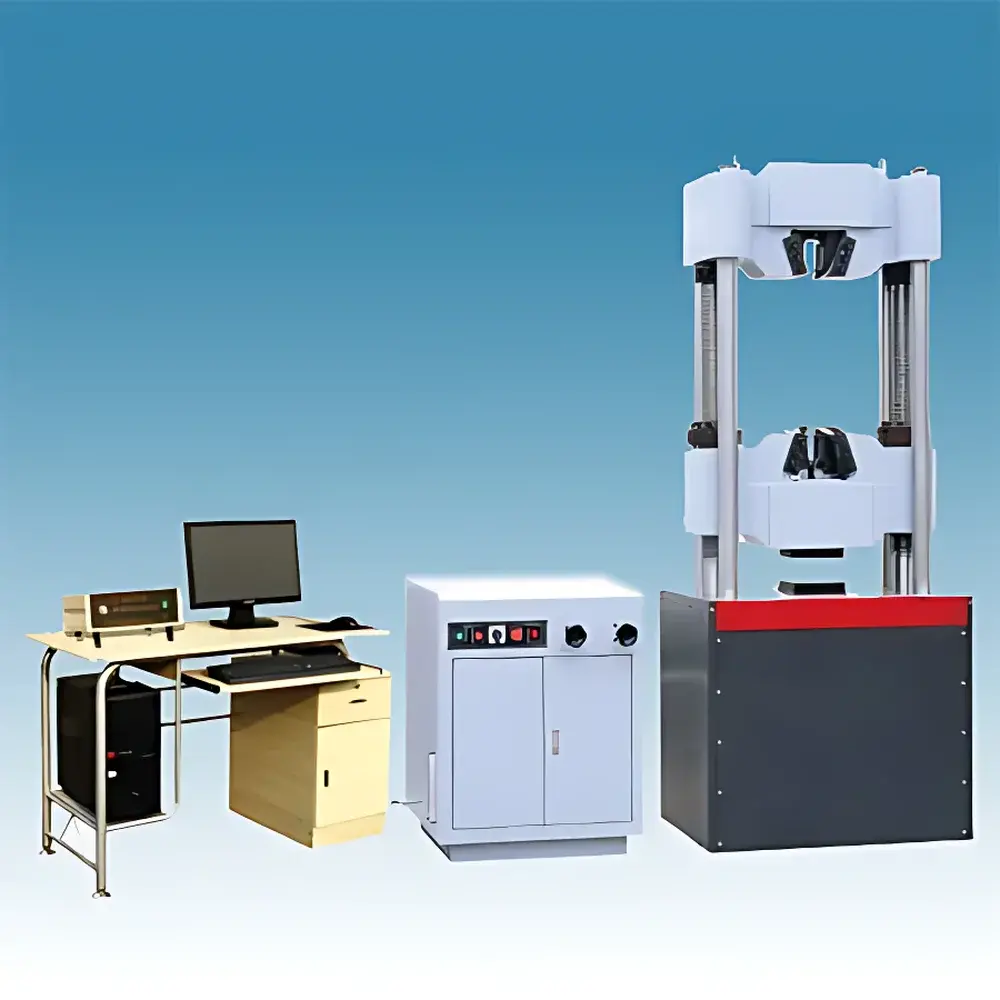
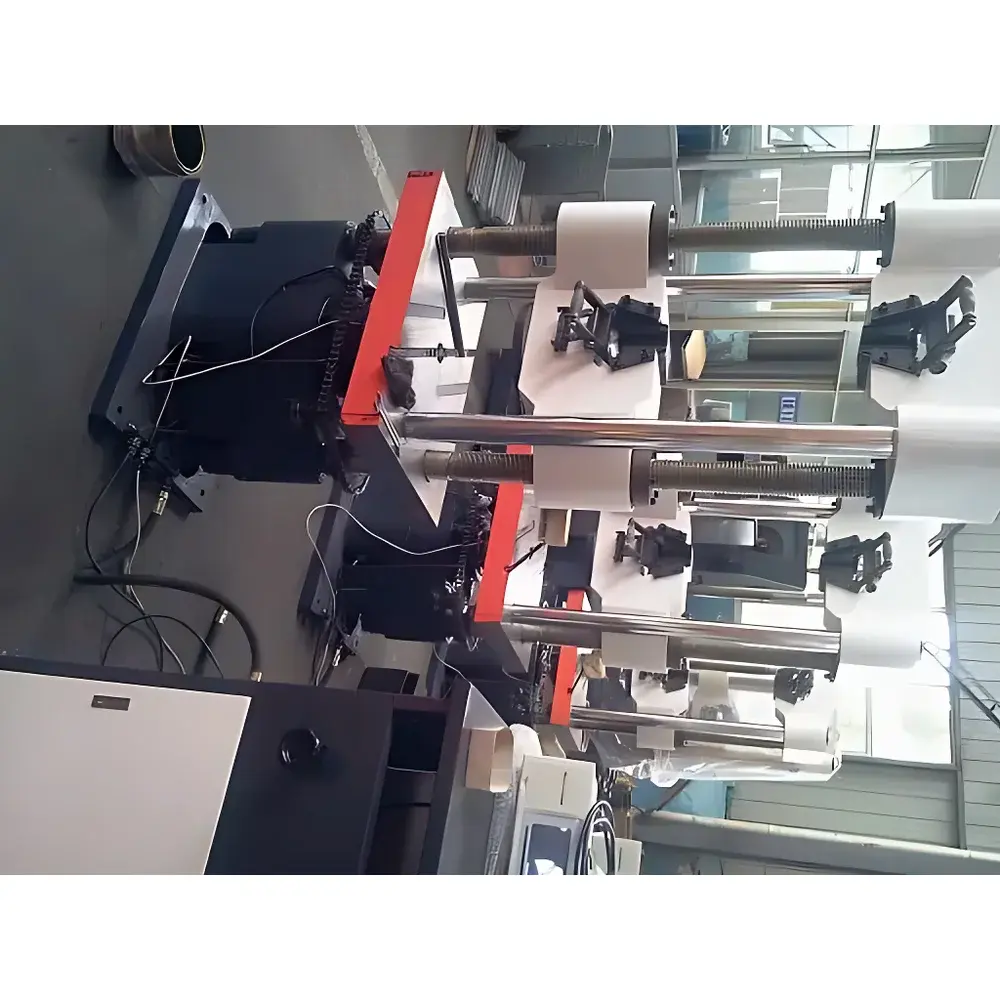
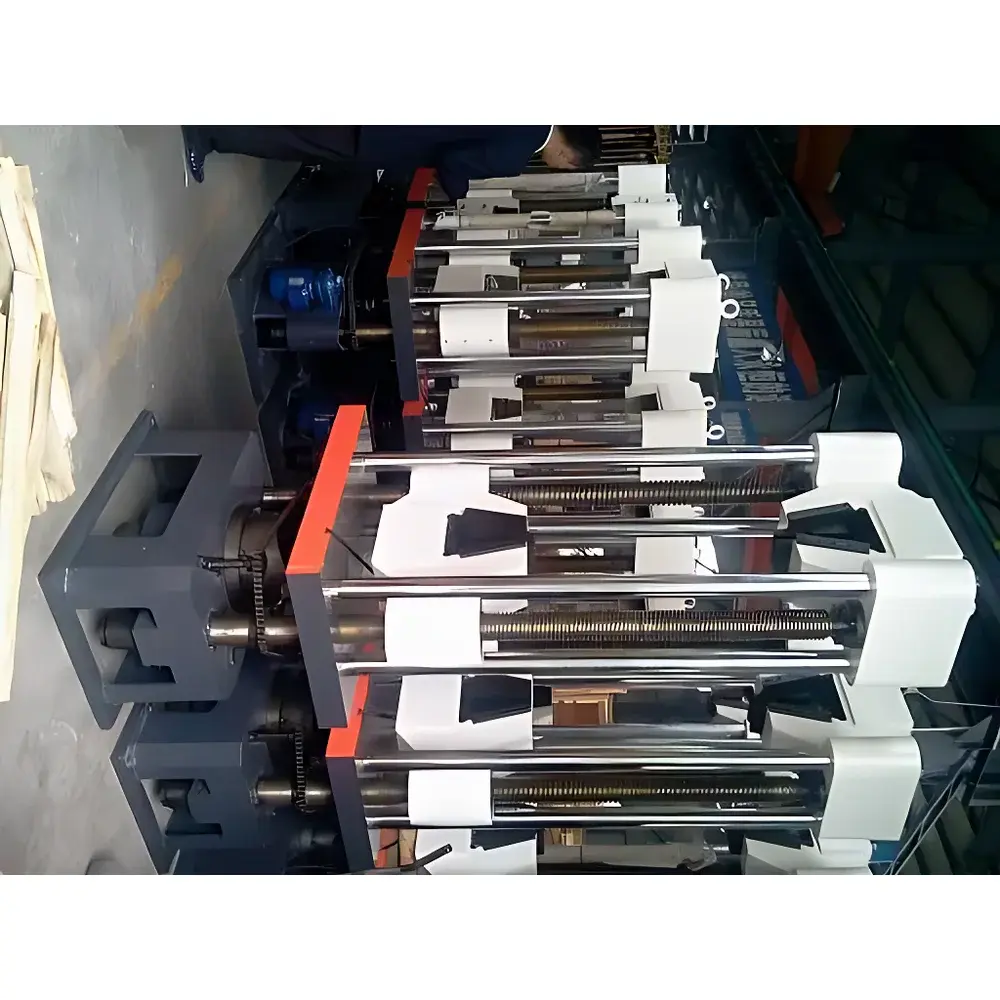
Hengyi HY(WE)600060 Microcomputer-Controlled Electro-Hydraulic Servo Universal Testing Machine
| Brand | Hengyi |
|---|---|
| Origin | Shanghai, China |
| Manufacturer Type | Direct Manufacturer |
| Country of Origin | China |
| Model | HY(WE)600060 |
| Instrument Type | Electro-Hydraulic Servo Universal Testing Machine |
| Max Load Capacity | 600 kN |
| Load Accuracy | ±1% of reading |
| Resolution | ≤0.5% of full scale |
| Compression Space | 600 mm |
| Tensile Space | 600 mm |
| Round Specimen Clamping Range | Φ13–40 mm |
| Flat Specimen Clamping Range | 0–30 mm |
| Piston Stroke | 150 mm |
| Maximum Span for Bending Test | 100–540 mm |
| Shear Specimen Diameter | Φ10 mm |
| Deformation Measurement Accuracy | ±0.5% of reading |
| Displacement Measurement Accuracy | ±0.5% of reading |
| Stress Rate Control Range | 1–60 N/mm²/s |
| Strain Rate Control Range | 0.00025–0.0025 s⁻¹ |
| Closed-Loop Control Accuracy (Constant Load/Deformation/Displacement) | ±1% of set value |
| Dimensions (W×D×H) | 820 × 540 × 2180 mm |
| Motor Power | 1.5 kW, 3-phase |
| Weight | 2500 kg |
Overview
The Hengyi HY(WE)600060 is a microcomputer-controlled electro-hydraulic servo universal testing machine engineered for high-reliability mechanical property evaluation of metallic and non-metallic structural materials. It operates on the principle of closed-loop hydraulic actuation with real-time force, displacement, and strain feedback—enabling precise execution of tensile, compression, bending, and shear tests per internationally recognized standards including ASTM E8/E9/E21, ISO 6892-1, ISO 7500-1, and GB/T 228.1–2021. The machine features a bottom-mounted hydraulic cylinder design with adjustable test space, ensuring optimal alignment and minimal parasitic moments during high-load testing. Its robust dual-column frame architecture supports stable load application up to 600 kN while maintaining structural rigidity under dynamic cycling conditions.
Key Features
- Electro-hydraulic servo system with high-bandwidth proportional servo valve for responsive and repeatable load control
- Imported high-precision load cell (±1% accuracy) and linear variable differential transformer (LVDT)-based displacement sensor (±0.5% FS) for traceable metrology
- Full digital closed-loop control architecture supporting constant stress, constant strain, and constant crosshead speed modes
- Adjustable test space: 600 mm for tension and 600 mm for compression, with piston stroke of 150 mm for extended deformation capability
- Multi-function gripping system: standard wedge-action clamps for round specimens (Φ13–40 mm), flat specimens (0–30 mm), bending fixtures (span adjustable from 100–540 mm), and dedicated shear fixtures (Φ10 mm)
- Integrated safety interlocks including overload protection, emergency stop circuitry, and software-based upper/lower limit enforcement
- Modular hardware platform compatible with future calibration upgrades and third-party transducer integration
Sample Compatibility & Compliance
The HY(WE)600060 accommodates standardized test specimens conforming to ISO 6892-1 (tensile testing of metallic materials), ISO 15630-1 (steel reinforcement), ASTM A370 (mechanical testing of steel products), and GB/T 232 (bend testing). It supports both metallic (structural steel, aluminum alloys, titanium, fasteners) and non-metallic (concrete cylinders, cementitious composites, polymer-reinforced panels) specimen geometries. All measurement subsystems comply with ISO/IEC 17025 requirements for calibration traceability. The system meets essential performance criteria outlined in JJG 139–2014 (Chinese national verification regulation for universal testing machines) and supports audit-ready documentation for GLP and GMP environments.
Software & Data Management
The included Hengyi proprietary test control and analysis software provides full compliance with 21 CFR Part 11 requirements—including electronic signatures, user role management, audit trail logging, and data integrity safeguards. Real-time plotting displays force–displacement, stress–strain, and time-based parameter curves. Test sequences are programmable via graphical workflow editor; raw data export supports CSV, XML, and PDF formats. Automated report generation includes customizable templates aligned with ISO 5893 and ASTM E4 formats. Software supports remote diagnostics, firmware updates, and seamless integration with LIMS platforms via OPC UA or TCP/IP protocols.
Applications
- Mechanical characterization of hot-rolled and cold-drawn steel bars per GB/T 1499.2 and ASTM A615
- Quality assurance testing of welded pipe joints and seamless tubing under axial tension and hydrostatic burst simulation
- Structural validation of reinforced concrete elements per ACI 318 and EN 1992-1-1
- Research-grade fatigue pre-characterization using controlled ramp-and-hold loading profiles
- Verification of yield strength, ultimate tensile strength, elongation at break, reduction of area, modulus of elasticity, and Poisson’s ratio
- Calibration reference for secondary standard machines in metrology laboratories
FAQ
What standards does this machine support for tensile testing?
It fully complies with GB/T 228.1–2021, ASTM E8/E21, ISO 6892-1, and EN ISO 6892-1 for metallic material tensile testing.
Can the system perform cyclic loading or low-cycle fatigue tests?
Yes—the electro-hydraulic servo architecture supports programmed waveforms (sine, triangle, trapezoidal) with frequency ranges up to 5 Hz and full closed-loop control of force or displacement amplitude.
Is the software validated for regulated environments such as pharmaceutical or aerospace QA labs?
Yes—the software includes 21 CFR Part 11-compliant features: audit trails, electronic signatures, role-based access control, and immutable data archiving.
What maintenance intervals are recommended for hydraulic system components?
Oil filtration and replacement every 1,500 operating hours; servo valve recalibration every 2 years or after 50,000 cycles, per ISO 16122 guidelines.
Does the machine support third-party extensometers or environmental chambers?
Yes—it offers analog and digital I/O interfaces (±10 V, RS-485, Ethernet) for synchronization with clip-on extensometers, furnace systems, or cryogenic chambers.



