
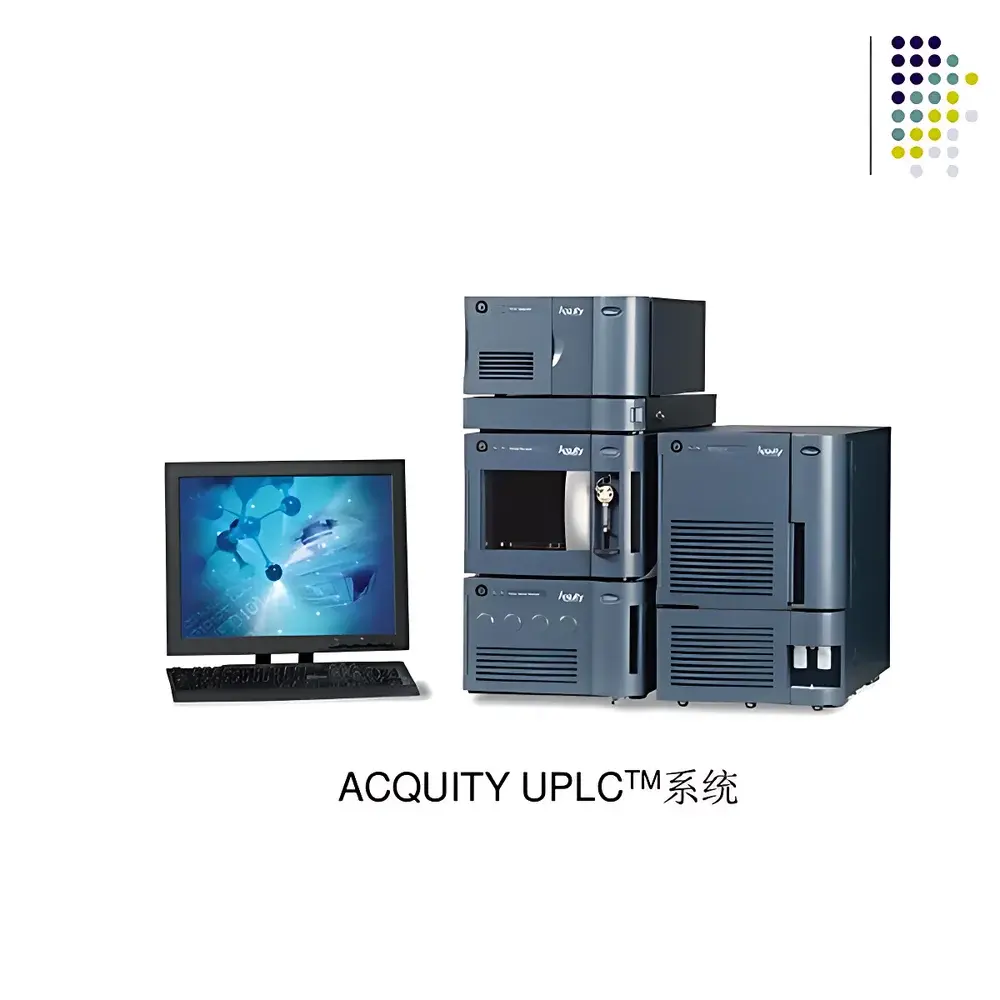
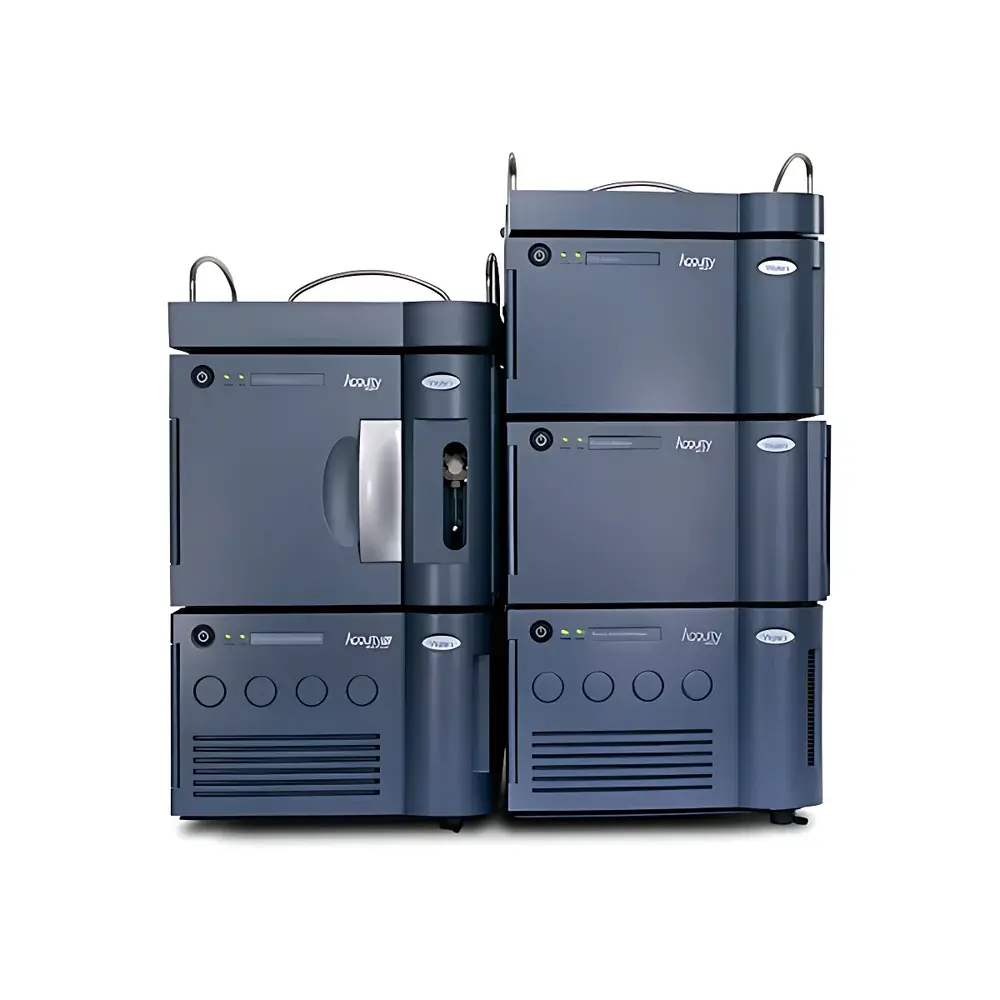
Waters ACQUITY UPLC coupled with XEVO TQD Triple Quadrupole Mass Spectrometer
| Brand | Waters |
|---|---|
| Origin | USA |
| Manufacturer Type | Authorized Distributor |
| Origin Category | Imported |
| Model | UPLC-MS/MS |
| Instrument Type | Ultra-High Performance Liquid Chromatography–Tandem Mass Spectrometry System |
| Flow Rate Range | 0.001–1000 µL/min |
| Maximum Operating Pressure | 40 MPa |
| Sample Tray Capacity | 15-position vial tray |
| Injection Volume Range | 1–50 µL |
| Column Oven Temperature Range | +10 to +60 °C |
| UV-Vis Detection Wavelength Range (if equipped with PDA) | 190–700 nm |
| Data Acquisition Rate | 100 Hz |
Overview
The Waters ACQUITY UPLC system integrated with the XEVO TQD triple quadrupole mass spectrometer constitutes a purpose-built platform for quantitative trace analysis of multiresidue pesticides in complex botanical matrices—particularly dried tea leaves and processed tea products. This configuration leverages ultra-high performance liquid chromatography (UPLC) principles—employing sub-2-µm particle-packed columns, low-system dispersion, and high-pressure gradient delivery—to achieve superior chromatographic resolution, peak capacity, and analysis speed compared to conventional HPLC. Coupled with electrospray ionization (ESI) and tandem mass spectrometry (MS/MS) in multiple reaction monitoring (MRM) mode, the system delivers exceptional selectivity, sensitivity (sub-ppt LODs), and quantitative reproducibility essential for regulatory compliance testing under stringent food safety frameworks.
Key Features
- ACQUITY UPLC architecture engineered for precision at pressures up to 40 MPa, enabling robust separation of co-eluting analytes in highly matrix-loaded extracts.
- XEVO TQD mass spectrometer featuring dual ESI/APCI source compatibility, optimized collision cell geometry, and real-time MRM dwell time allocation for simultaneous quantification of >500 pesticide residues in a single run.
- Integrated column oven maintaining temperature stability within ±0.5 °C across +10 to +60 °C range—critical for retention time reproducibility in multianalyte workflows.
- Autosampler with 15-position tray and precise 1–50 µL injection capability, supporting both full-loop and partial-loop modes with minimal carryover (<0.005%).
- High-speed data acquisition at 100 Hz ensures adequate peak sampling density (>12 points per peak) even for UPLC’s narrow elution profiles (peak widths <5 s).
- UV-Vis photodiode array detection (190–700 nm) available as optional module for orthogonal confirmation and method development support.
Sample Compatibility & Compliance
The system is validated for QuEChERS-based sample preparation workflows compliant with CEN EN 15662:2018 and AOAC Official Method 2007.01. It supports direct injection of dSPE-cleaned extracts and SPE-fractionated fractions without derivatization. Method performance meets requirements of GB/T 23204–2016 for multi-residue pesticide analysis in tea, including organophosphates (e.g., dimethoate), neonicotinoids (e.g., imidacloprid), pyrethroids (e.g., deltamethrin), and fungicides (e.g., procymidone). Matrix effect evaluation across green, black, and oolong tea matrices confirms ion suppression ≤35% (except imidacloprid at 45%) at 100 pg/mL spiking level—within acceptable limits per SANTE/11813/2017 guidelines. Full audit trail, electronic signatures, and 21 CFR Part 11-compliant software modules satisfy GLP/GMP laboratory requirements.
Software & Data Management
UNIFI Scientific Information System provides unified control of UPLC and TQD hardware, method building, automated calibration, and quantitative processing. Built-in QuEChERS workflow templates accelerate method setup; batch processing supports internal standard normalization, matrix-matched calibration, and isotopic dilution where applicable. All raw data, processing parameters, and audit logs are stored in a secure, timestamped relational database. Electronic records comply with FDA 21 CFR Part 11 for signature verification, change tracking, and archival integrity. Export formats include .csv, .pdf, and vendor-neutral .mzML for third-party reprocessing.
Applications
- Quantitative determination of 513 pesticide residues in tea, herbal infusions, and instant tea powders per GB/T 23204–2016 and EU Regulation (EC) No 396/2005.
- Multi-class residue screening in agricultural commodities requiring differentiation between neutral, basic, and acidic analytes—enabling parallel LC-MS/MS and GC-MS workflows from a single QuEChERS extract.
- Method transfer and validation studies supporting ISO/IEC 17025 accreditation in contract testing laboratories.
- Stability-indicating assays for pesticide degradation products in stored tea samples under accelerated aging conditions.
- Support for risk assessment modeling through high-precision measurement of residue decline kinetics during post-harvest processing (e.g., fermentation, roasting, drying).
FAQ
Is this system configured for full regulatory compliance in food testing labs?
Yes—the integrated UPLC-MS/MS platform meets instrumental and software requirements for ISO/IEC 17025, GB/T 23204–2016, and EU SANTE guidance documents when operated with validated QuEChERS protocols.
Can it analyze acidic pesticides requiring alternative cleanup strategies?
Yes—method flexibility allows integration of mixed-mode SPE cartridges (e.g., Oasis WAX) for acidic compounds incompatible with PSA-based dSPE, ensuring recovery >70% across pH-stable and labile analytes.
What level of technical support is provided post-installation?
Waters-certified field service engineers deliver on-site installation qualification (IQ), operational qualification (OQ), preventive maintenance contracts, and application-specific training aligned with CNAS-CL01:2018 competency criteria.
Is UNIFI compatible with LIMS integration?
Yes—UNIFI supports ASTM E1482-compliant LIMS interfaces via HL7 and RESTful APIs, enabling automated result transfer, sample tracking, and QC flag propagation.
Does the system support retrospective data reprocessing?
Yes—raw .raw files retain all acquisition metadata; reprocessing with updated calibration curves, integration algorithms, or MRM transitions is fully supported without data loss.
Related Products





