
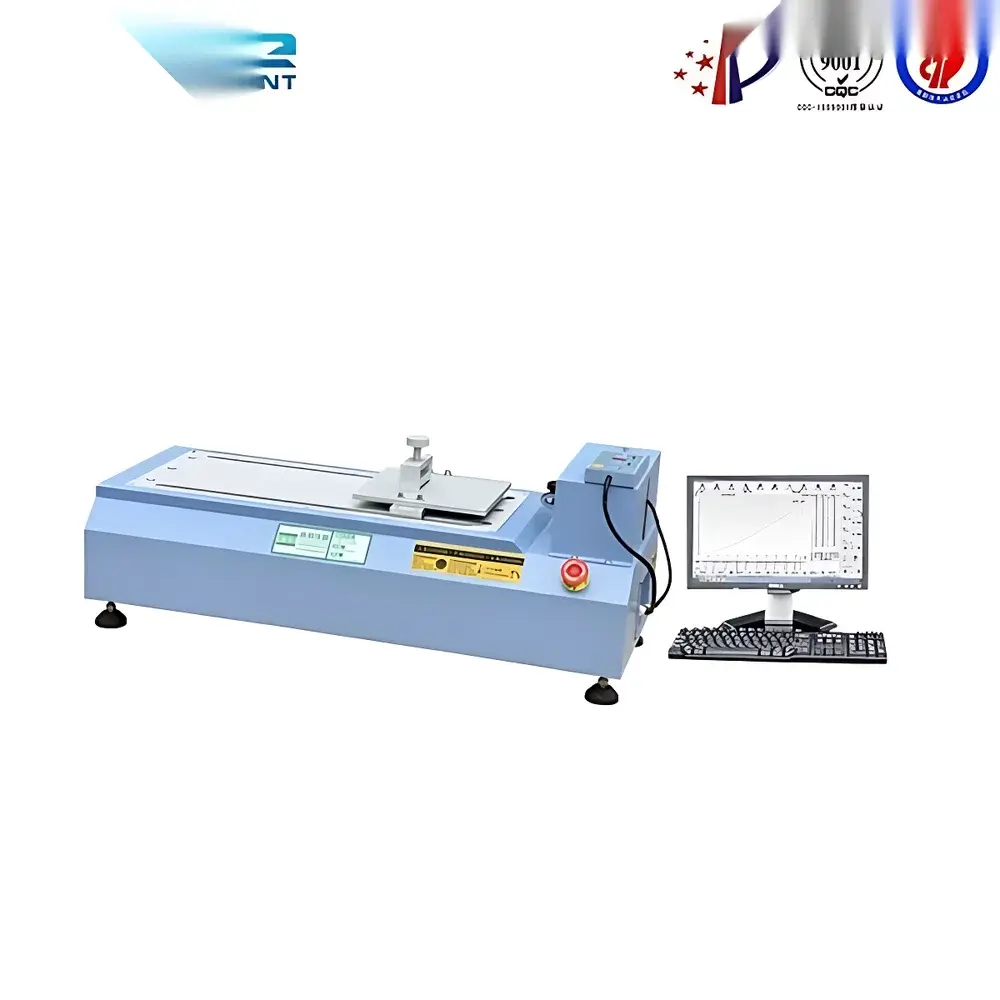
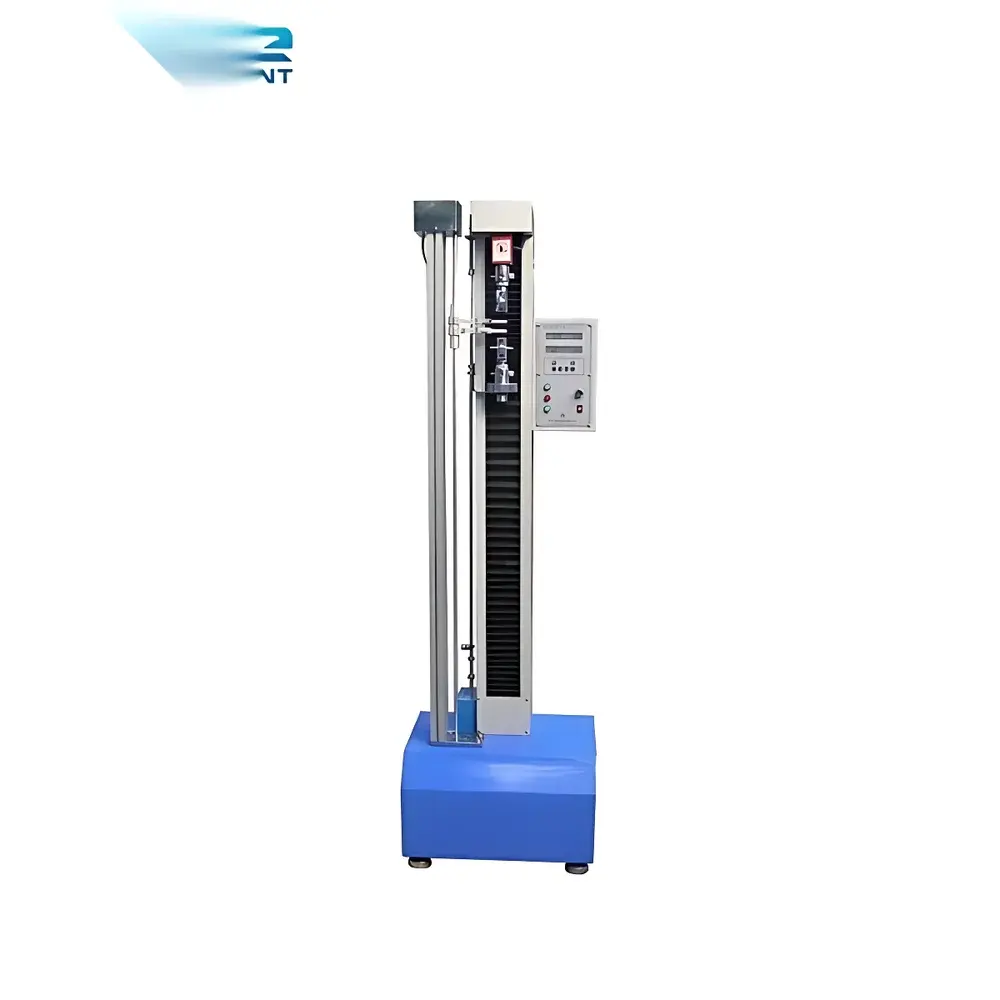
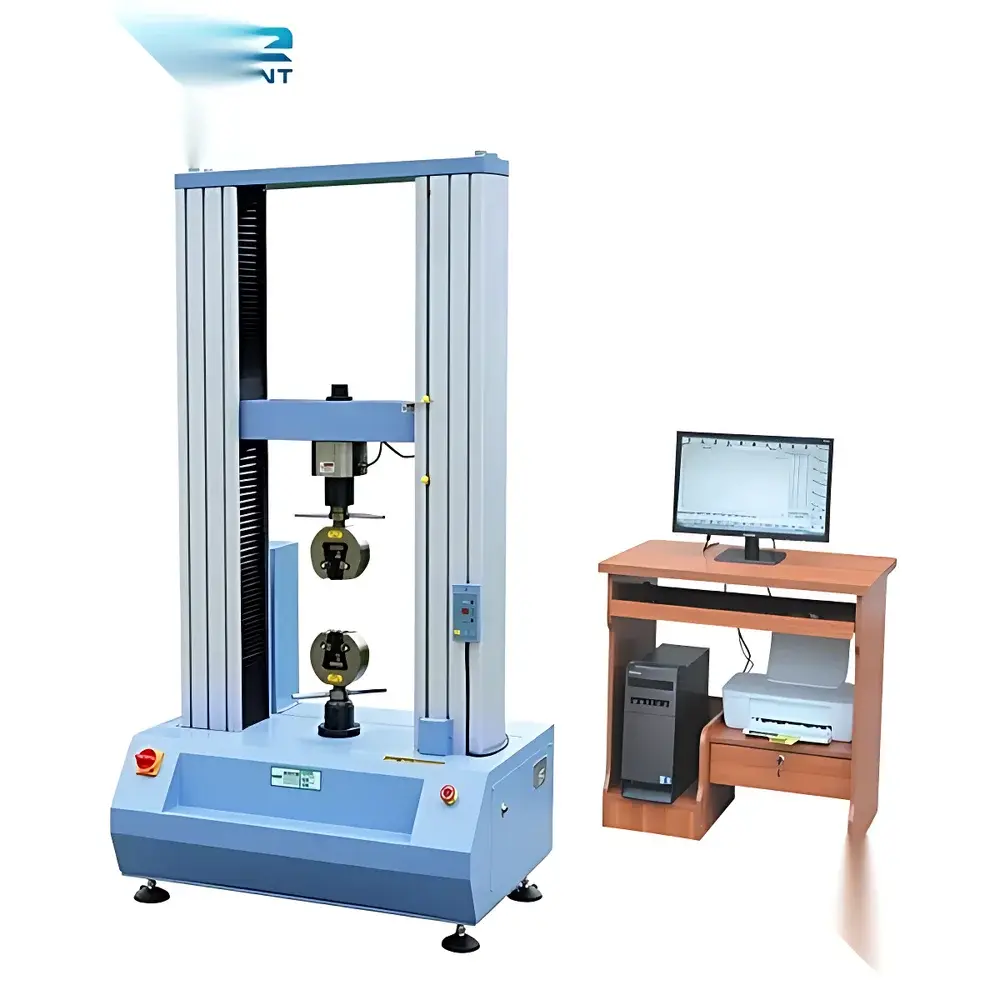
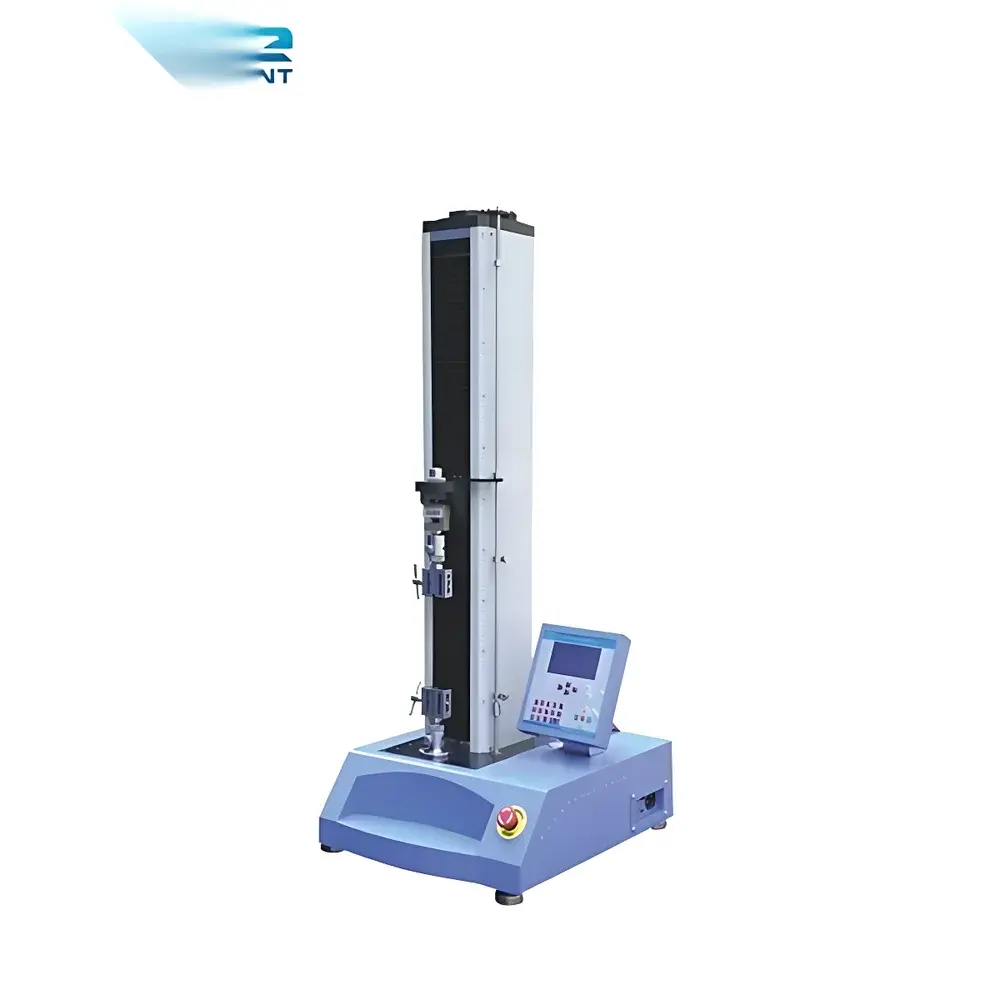
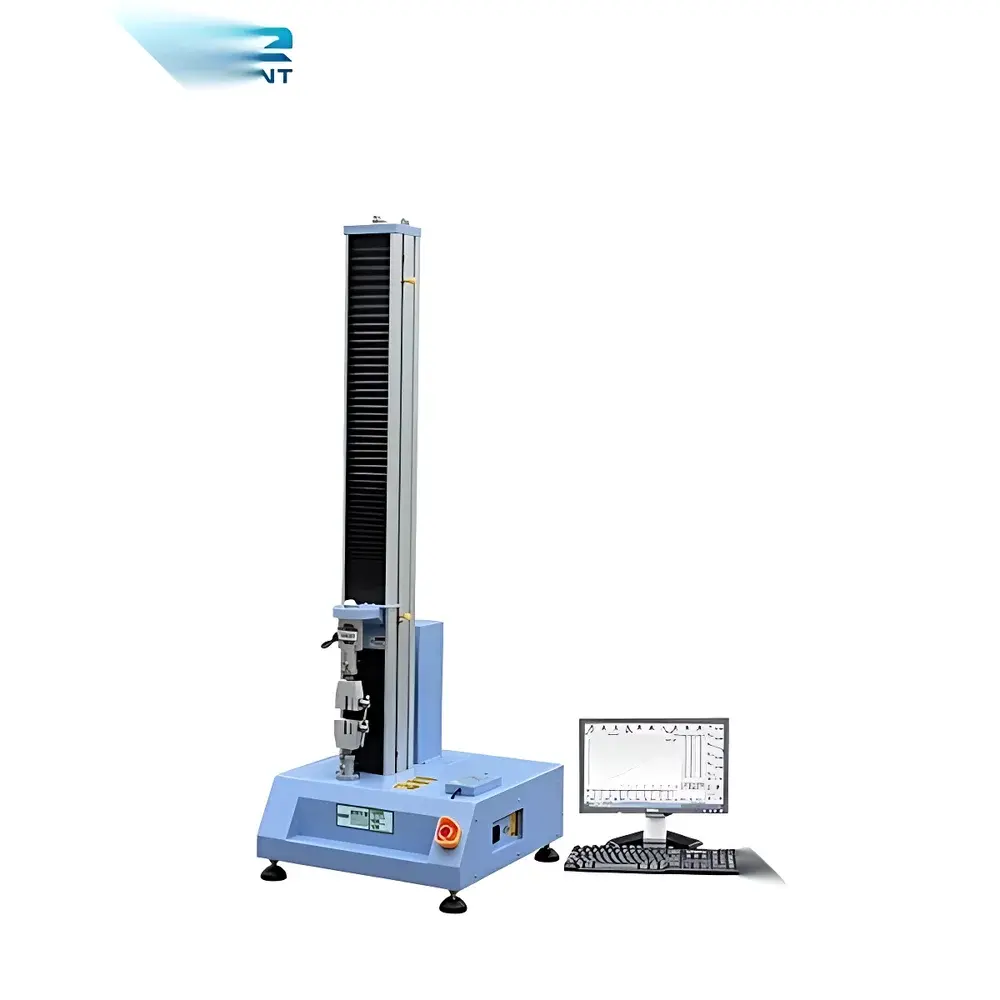
Universal Tensile Testing Machine – Model ETM-5000 Series
| Brand | OEM / Custom-Built |
|---|---|
| Origin | Imported |
| Manufacturer Type | Authorized Distributor |
| Price | USD 3,200 (FOB) |
| Load Capacity | Up to 5 kN (customizable from 100 N to 50 kN) |
| Force Resolution | 1/100,000 full scale |
| Force Accuracy | ±0.5% of reading (ASTM E4-compliant) |
| Crosshead Speed Range | 0.001–500 mm/min (adjustable in 0.001 mm/min increments) |
| Displacement Resolution | 0.001 mm |
| Encoder | 2500 PPR AC servo motor with high-stability pulse feedback |
| Drive System | Precision preloaded ball screw + linear guideways |
| Load Cell | Explosion-proof, temperature-compensated strain-gauge type, zero drift <0.01% F.S./°C, overload capacity 150% F.S., repeatability ±0.03% F.S. |
| Safety Features | Dual mechanical limit switches, software-based overload cutoff, emergency stop circuit per IEC 60204-1 |
| Compliance | ASTM D638, D882, D790, D3763, ISO 527, ISO 178, ISO 1133, GB/T 1040, GB/T 1447, USP <1041>, GLP-ready data audit trail |
Overview
The Universal Tensile Testing Machine – Model ETM-5000 Series is a microprocessor-controlled electromechanical testing system engineered for static mechanical property evaluation of both metallic and non-metallic materials under uniaxial loading conditions. Based on the principle of controlled displacement actuation via servo-driven ball screw transmission, the system applies precisely regulated tensile, compressive, flexural, peel, shear, and tear loads while synchronously capturing force-displacement-time data at sub-millisecond intervals. Designed for compliance with international standard test methods—including ASTM, ISO, and GB series—the ETM-5000 delivers traceable, repeatable measurements essential for R&D validation, quality control release testing, and regulatory submission dossiers. Its modular architecture supports rapid fixture reconfiguration for standardized specimen geometries and custom-designed test configurations, making it suitable for laboratories operating under GLP, GMP, or ISO/IEC 17025-accredited environments.
Key Features
- High-fidelity force measurement using temperature-compensated, explosion-rated load cells with ±0.03% F.S. repeatability and 150% transient overload tolerance.
- Precision motion control via Panasonic AC servo motor coupled to a preloaded ground ball screw and dual-axis linear guideways—ensuring smooth, low-noise operation across the full speed range (0.001–500 mm/min).
- Real-time data acquisition at 10 kHz sampling rate, with 24-bit ADC resolution and effective force resolution of 1/100,000 full scale.
- Integrated hardware safety interlocks: dual mechanical end-stop switches, programmable force/displacement limits, emergency stop circuit compliant with IEC 60204-1, and automatic shutdown upon specimen rupture.
- Embedded digital controller with local LCD interface for standalone operation; fully compatible with PC-based test software for advanced protocol scripting, multi-curve overlay, and statistical post-processing.
- Modular grip and fixture platform supporting wedge-action, pneumatic, hydraulic, and custom-designed holders—including 90°/180° peel fixtures, shear adapters, and environmental chamber interfaces.
Sample Compatibility & Compliance
The ETM-5000 accommodates specimens ranging from ultra-thin polymer films (≥10 µm thickness) to structural metal coupons (up to 50 mm width × 15 mm thickness). It routinely performs tests on elastomers, thermoplastics, composites, textile yarns, biomedical sutures, packaging laminates, wire ropes, and coated substrates. All default test routines are preconfigured to meet ASTM D638 (tensile properties of plastics), ASTM D882 (thin plastic sheeting), ISO 527-2 (tensile testing of plastics), ISO 178 (flexural properties), and ISO 1133 (melt flow rate correlation). Force calibration is traceable to NIST or national metrology institutes via third-party certificate (available upon request). The system supports 21 CFR Part 11-compliant electronic signatures and audit trail generation when operated with validated software modules.
Software & Data Management
The included Windows-based TestSuite Pro software provides ISO/IEC 17025-aligned data integrity controls: user role-based access, encrypted raw data storage (.tdms binary format), automated metadata tagging (operator ID, timestamp, environmental conditions), and tamper-evident audit logs. Test methods can be saved as reusable templates with embedded pass/fail criteria, tolerance bands, and auto-calculated metrics—including Young’s modulus, yield strength, ultimate tensile strength, elongation at break, secant modulus, and energy absorption. Export options include CSV, PDF reports (with embedded stress-strain curves), and XML for LIMS integration. Optional IQ/OQ documentation packages and vendor-supervised installation qualification are available for regulated pharmaceutical and medical device labs.
Applications
- Quality assurance of incoming raw materials (e.g., polymer resins, carbon fiber prepregs, stainless steel wire)
- Mechanical validation of finished goods: automotive gaskets, orthopedic implant coatings, food-grade flexible packaging, aerospace fasteners
- Research into structure-property relationships of nanocomposites, hydrogels, and biodegradable polymers
- Accelerated aging studies correlating mechanical degradation with thermal/UV exposure cycles
- Adhesion strength quantification of pressure-sensitive adhesives, laminated electronics, and dental bonding agents
- Regulatory dossier preparation for FDA 510(k), CE marking, or ISO 13485 certification
FAQ
What standards does this machine support out-of-the-box?
Preloaded test methods include ASTM D638, D882, D790, D3763; ISO 527, 178, 1133; and GB/T 1040, 1447. Custom method development is supported via scriptable test sequences.
Can the system be integrated into an existing LIMS or MES environment?
Yes—via OPC UA or RESTful API interfaces. Raw data export formats include CSV, XML, and TDMS; audit logs comply with ALCOA+ principles.
Is calibration traceability provided with delivery?
A factory calibration certificate traceable to NIST or equivalent NMIs is included. On-site calibration verification and annual recalibration services are available under service agreement.
What environmental conditions are required for optimal performance?
Operating ambient: 10–35°C, RH ≤80% non-condensing. Vibration isolation table recommended for sub-0.1 N force resolution applications.
Does the system support elevated temperature or humidity testing?
Yes—through optional integration with environmental chambers (−70°C to +300°C, 10–95% RH) using standardized mounting interfaces and thermal compensation algorithms.



