
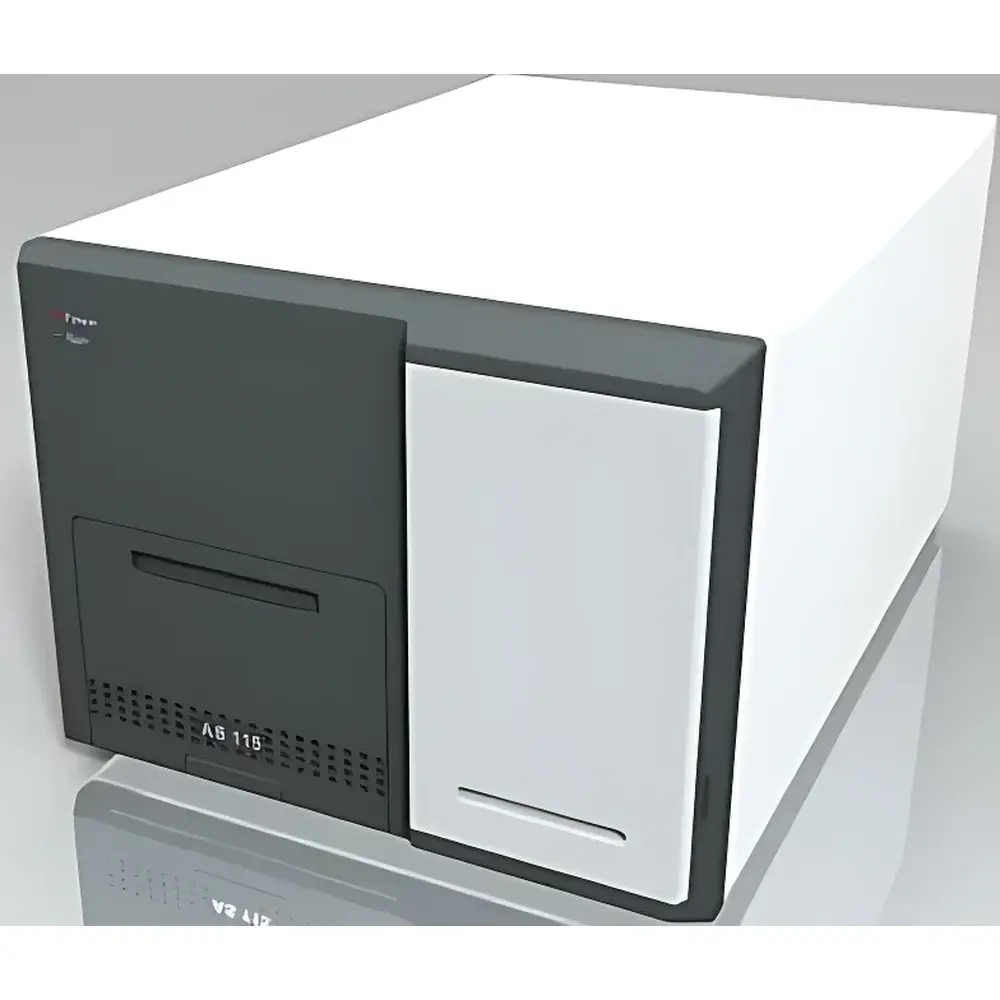
Kyocera AMTK Multifunctional HPLC Autosampler
| Brand | Kyocera |
|---|---|
| Origin | Beijing, China |
| Manufacturer Type | Authorized Distributor |
| Product Category | Domestic |
| Model | AMTK Multifunctional HPLC Autosampler |
| Pricing | Available Upon Request |
| Sample Capacity | 120 × 2 mL vials (2 × 60-position racks) |
| Injection Volume Range | 0.1–1000 µL |
| Precision | RSD < 0.5% (full-loop & partial-loop modes) |
| Carryover | < 0.01% |
| Linearity | R² > 0.999 |
| Injection Modes | Full-loop, Partial-loop, Needle-Over-Loop (NOL), and Zero-Dead-Volume (ZDV) |
| Quantitative Loop Options | 20, 50, 100 (standard), 200, 500 µL |
| Syringe Pump Options | 100, 250 (standard), 1000 µL |
| Valve Switching Time | < 100 ms |
| Positioning Accuracy | < 0.3 mm (XYZ 3-axis stepper motor control) |
| Wash Protocol | Dual-wall (inner + outer needle) wash with unlimited cycles |
| Dimensions | 300 × 230 × 505 mm (L × H × W) |
| Power | AC 220 V, 50 Hz |
| Communication | LAN & RS-232 |
| Software | AMTK Chromatography Workstation |
| pH Compatibility | 1–14 |
| System Integration | Fully compatible with Agilent, Waters, Shimadzu, Thermo Fisher, PerkinElmer, Elite, and other HPLC/UHPLC/IC platforms |
Overview
The Kyocera AMTK Multifunctional HPLC Autosampler is an engineered precision liquid handling module designed for high-throughput, reproducible sample introduction into high-performance liquid chromatography (HPLC), ultra-high-performance liquid chromatography (UHPLC), and ion chromatography (IC) systems. Operating on a robust XYZ three-axis stepping motor architecture, it delivers deterministic positioning and repeatable fluidic actuation under microprocessor-controlled coordination with host chromatography data systems (CDS). Its core function—automated, programmable injection—eliminates manual variability while maintaining compliance with analytical workflows governed by ISO/IEC 17025, USP , and FDA 21 CFR Part 11 requirements when deployed with audit-trail-enabled software configurations. The system supports both standalone operation and networked integration, enabling unattended overnight runs across multi-day method sequences without operator intervention.
Key Features
- High-fidelity sample delivery: Achieves <0.5% RSD across full-loop, partial-loop, and needle-over-loop injection modes—validated per ASTM D7097 and ICH Q2(R2) repeatability guidelines.
- Ultra-low carryover (<0.01%): Enabled by dual-wall needle wash (internal lumen + external surface) with user-definable solvent selection and unlimited rinse cycles per injection.
- Modular volumetric flexibility: Standard 250 µL syringe pump accommodates 0.1 µL minimum injection volume; optional 100 µL and 1000 µL pumps extend dynamic range for trace analysis or preparative-scale applications.
- Configurable loop architecture: Interchangeable quantitative loops (20–500 µL) allow method-specific optimization of sensitivity, dilution factor, and matrix tolerance.
- Industrial-grade motion control: Sub-0.3 mm XYZ positioning accuracy ensures consistent needle tip alignment with vial septa and injection valve ports over extended duty cycles.
- Open-system interoperability: Native driver support for Agilent OpenLab, Waters Empower, Shimadzu LabSolutions, and Thermo Chromeleon—no proprietary interface hardware required.
Sample Compatibility & Compliance
The AMTK autosampler accepts standard 12 × 32 mm (2 mL) screw-thread or crimp-top vials arranged across two independent 60-position racks—totaling 120 samples per run. It accommodates vial caps with silicone/PTFE septa rated for ≥100 punctures and tolerates solvents within pH 1–14, including aggressive mobile phases containing TFA, HFBA, or high-salt buffers. All wetted materials—including the stainless-steel needle, PEEK tubing, and ceramic valve rotor—are chemically inert and compliant with USP Class VI biocompatibility standards. When operated with AMTK Workstation software configured for electronic signatures and audit trails, the system meets GLP/GMP documentation requirements for regulated environments, including raw data integrity (ALCOA+ principles) and instrument qualification (IQ/OQ/PQ).
Software & Data Management
The AMTK Chromatography Workstation provides method-driven sequence definition, real-time status monitoring, and remote diagnostics via secure LAN or RS-232 connectivity. Users define injection parameters—including volume, wash steps, dwell time, and post-injection delay—through a tabular interface aligned with ICH M10 analytical procedure templates. Raw event logs (valve actuation timestamps, syringe pressure feedback, position coordinates) are stored in vendor-neutral CSV format with embedded metadata (operator ID, method name, instrument serial number). Optional integration with LIMS platforms is supported through configurable ODBC drivers and HL7-compliant export modules. Software validation packages—including installation qualification (IQ) protocols and performance verification reports—are available upon request for regulated laboratories.
Applications
This autosampler is routinely deployed in pharmaceutical QC labs for assay and impurity profiling of small-molecule APIs, in environmental testing for EPA Method 531/8330 pesticide residue quantification, and in food safety labs for mycotoxin screening per AOAC 2012.01. Its ability to perform on-deck sample dilution, internal standard spiking, and binary mixing enables automated calibration curve generation and matrix-matched standard preparation—reducing manual pipetting errors and improving inter-laboratory reproducibility. In research settings, its low-volume capability (0.1 µL injections) supports nano-LC coupling and limited-sample analyses such as cerebrospinal fluid metabolomics or single-cell proteomics digests.
FAQ
Is the AMTK autosampler compatible with UHPLC systems operating above 1000 bar?
Yes—the fluidic path is rated to 1300 bar, and the injection valve timing (<100 ms switching) minimizes dwell volume-induced gradient distortion.
Can the system perform internal standard addition during sample aspiration?
Yes—dual-pump configuration (optional) enables simultaneous aspiration of sample and internal standard solution, followed by precise mixing prior to injection.
Does the workstation software support 21 CFR Part 11 compliance out-of-the-box?
Audit trail logging, electronic signatures, and role-based access control are enabled by default; full validation documentation requires site-specific IQ/OQ execution.
What maintenance intervals are recommended for the syringe and injection valve?
Syringe lubrication every 10,000 injections; valve rotor seal replacement every 50,000 injections—both tracked automatically in the maintenance log.
Is third-party CDS integration supported beyond major vendors?
Yes—generic ASCII command protocol documentation is provided for custom integration with LabVIEW, Python-based CDS, or legacy chromatography platforms.






