
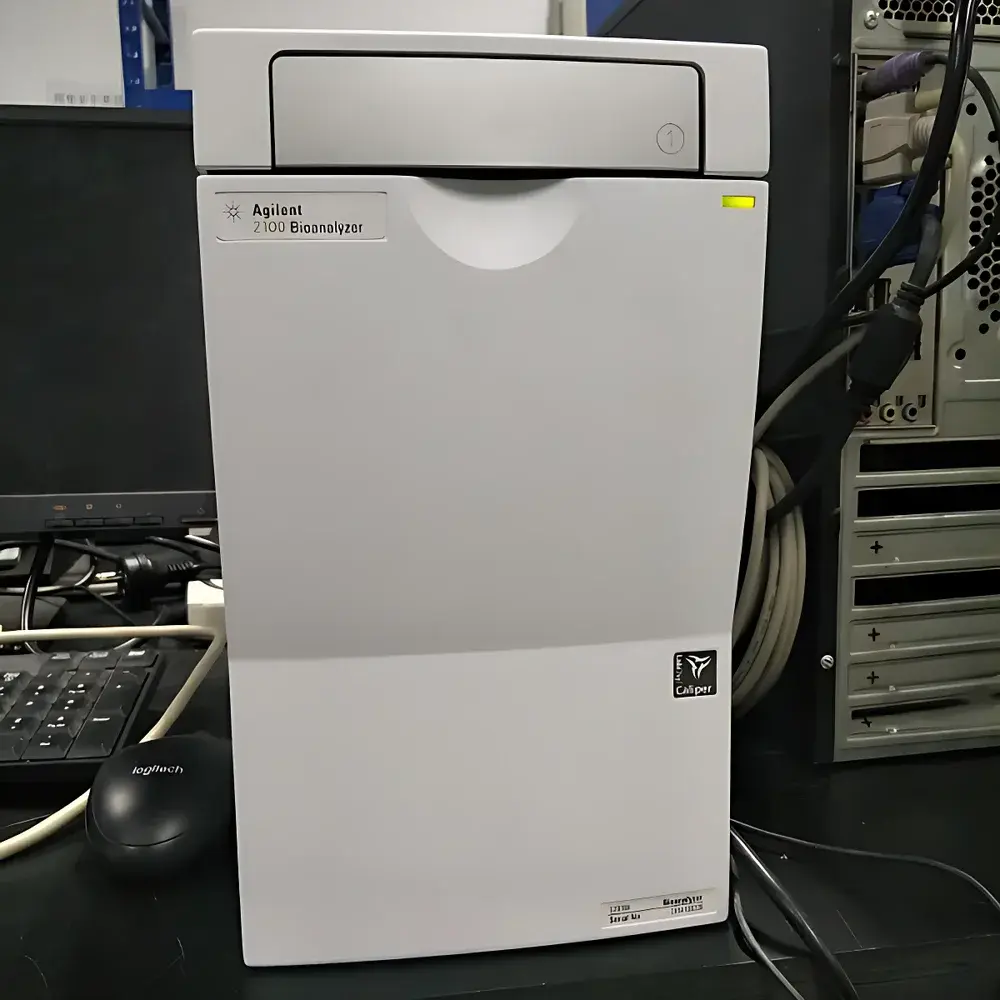
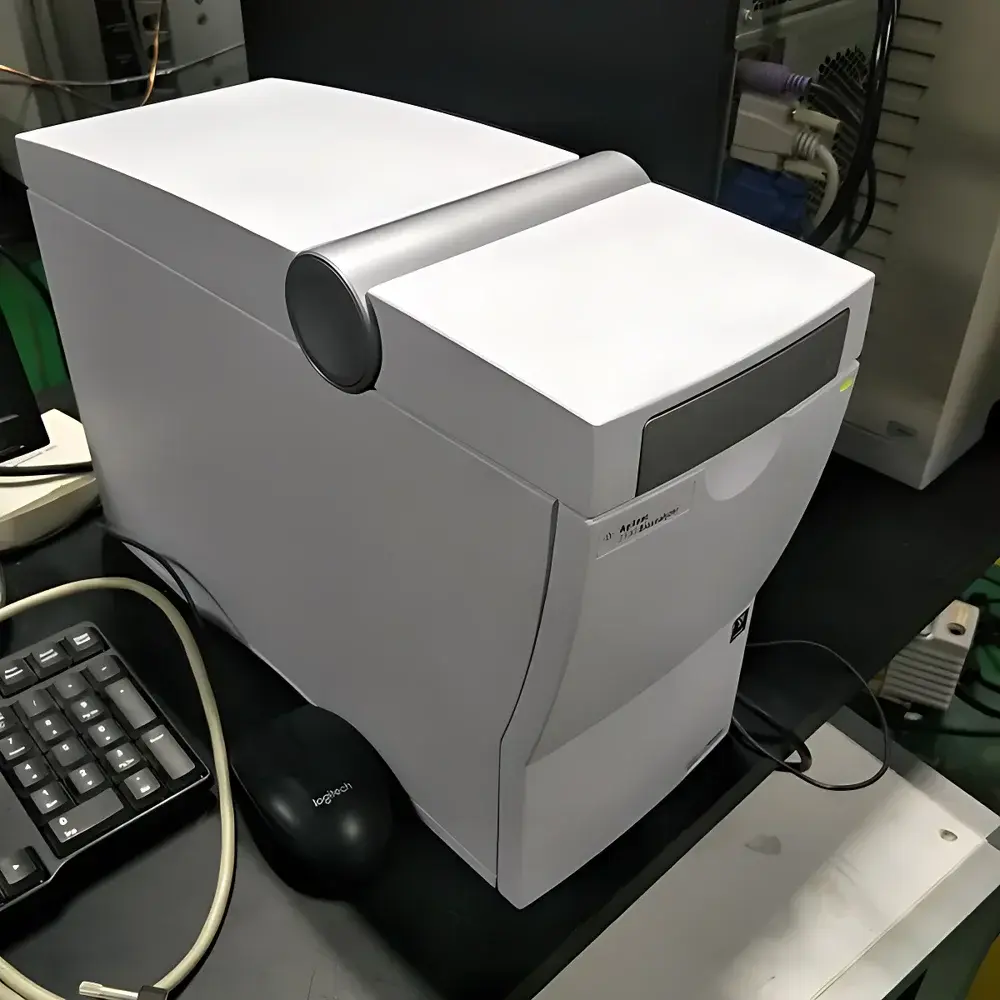
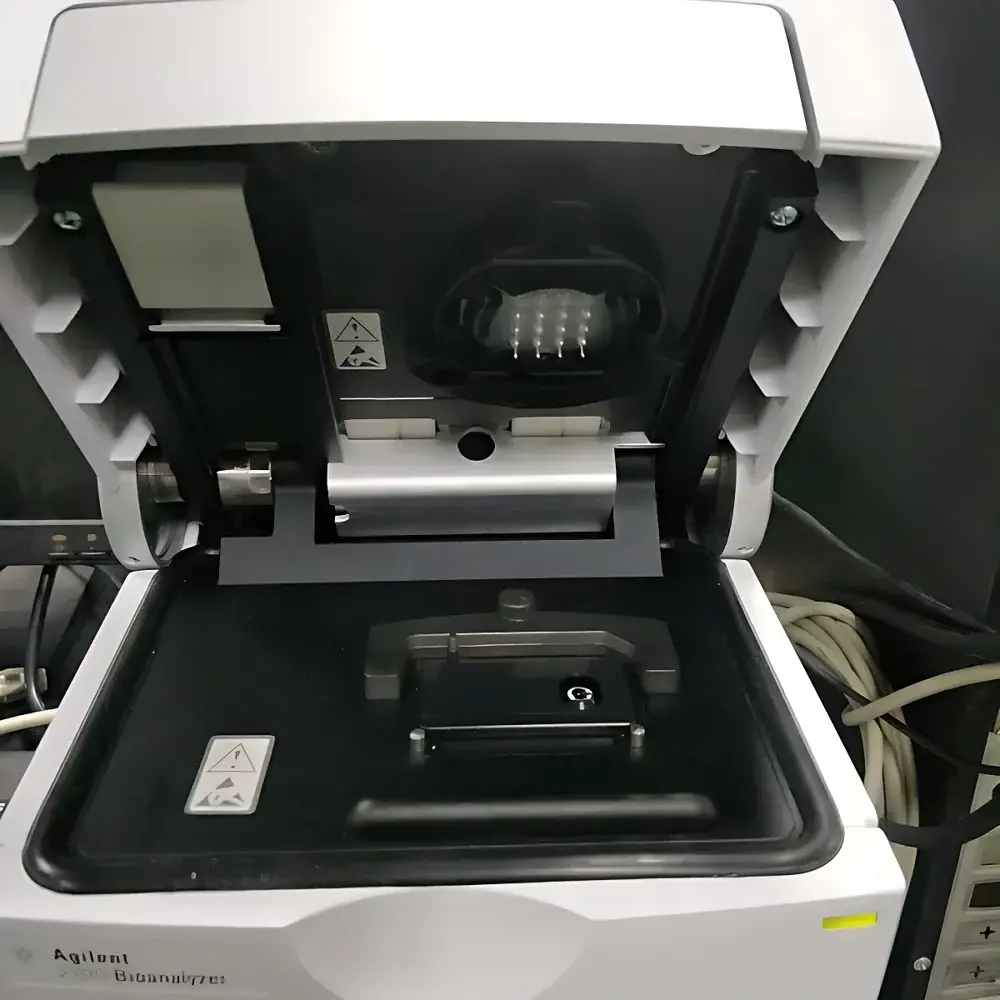
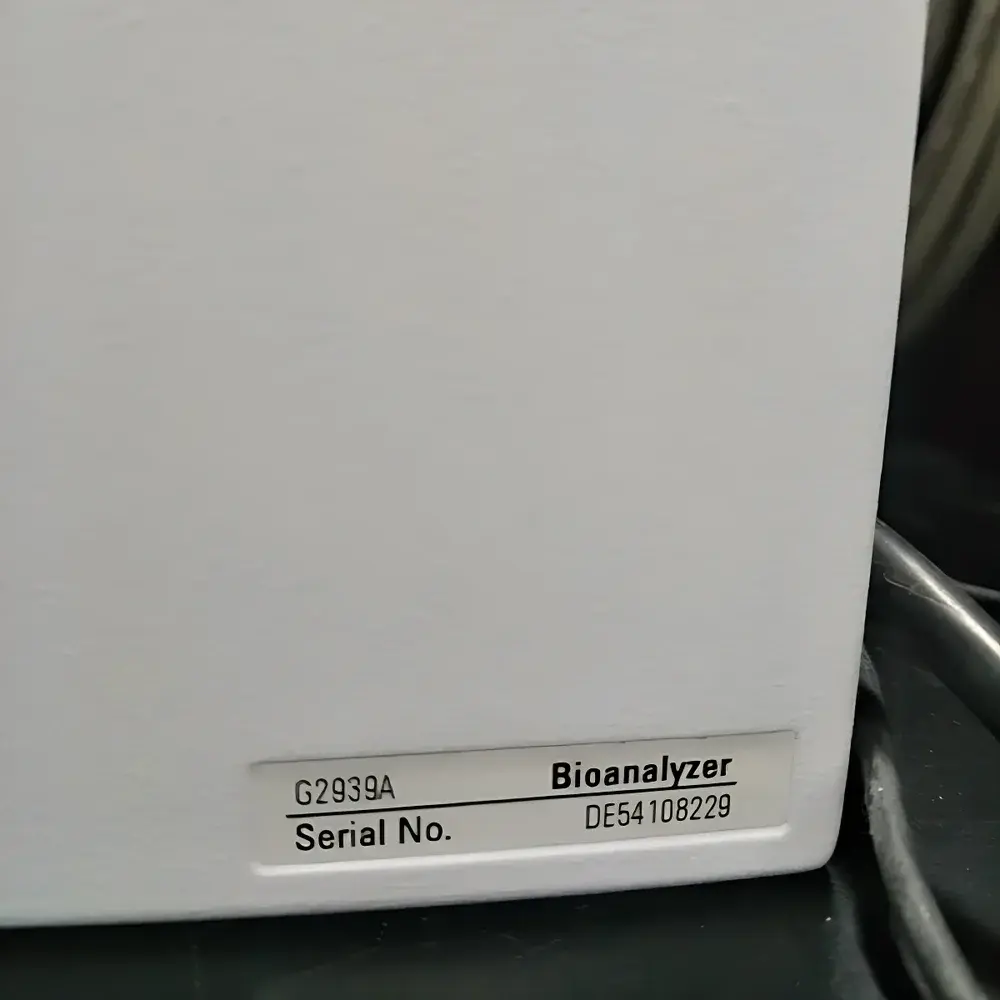
Agilent 2100 Bioanalyzer System
| Brand | Agilent Technologies |
|---|---|
| Origin | USA |
| Model | Agilent 2100 |
| Instrument Type | Microfluidic Electrophoresis-Based Nucleic Acid and Protein Analysis Platform |
| Regulatory Compliance | Designed for research-use-only (RUO) environments |
Overview
The Agilent 2100 Bioanalyzer System is a benchtop microfluidic electrophoresis platform engineered for automated, high-resolution analysis of nucleic acids (DNA, RNA, small RNA), proteins, and cells. It replaces traditional slab-gel electrophoresis with standardized, chip-based assays that deliver quantitative, reproducible data in under 30 minutes per run. At its core, the system employs integrated microchannels, on-chip staining with proprietary fluorescent dyes (e.g., SYBR® Gold for nucleic acids, Deep Purple™ for proteins), and CCD-based laser-induced fluorescence detection. This architecture enables precise sizing (±1–5% relative to ladder standards), concentration quantification (ng/µL), and integrity assessment (e.g., RNA Integrity Number, RIN) without manual gel casting, staining, or imaging. The Agilent 2100 operates exclusively with single-use Bioanalyzer chips—each containing pre-fabricated separation matrices, electrodes, and reagent reservoirs—ensuring assay-to-assay consistency and eliminating cross-contamination risks inherent in reusable gel systems.
Key Features
- Chip-based microfluidic electrophoresis with automated sample loading, separation, and detection
- Pre-validated assay kits for RNA, DNA (genomic, PCR, cDNA), proteins (intact, reduced, glycoproteins), and whole cells (e.g., yeast, bacteria)
- Integrated software (Agilent 2100 Expert Software vB.02.x or later) supporting real-time data acquisition, automated peak calling, and QC metric generation (e.g., RIN, DV200, % Full-Length)
- On-board temperature control (4–25 °C) for chip storage and assay stability
- High sensitivity: detection down to 25 pg/µL for RNA, 0.1 ng/µL for dsDNA, and 0.5 µg/mL for proteins
- Minimal sample consumption: 1 µL per assay, reducing precious sample depletion
- Robust mechanical design with solid-state optics and maintenance-free LED excitation sources
Sample Compatibility & Compliance
The Agilent 2100 supports a broad range of biological samples including total RNA from mammalian tissues, FFPE-derived RNA, bacterial lysates, plasmid preps, PCR amplicons, genomic DNA sheared by sonication or enzymatic fragmentation, purified monoclonal antibodies, and cell lysates. All assays are developed and verified per ISO/IEC 17025 principles for method validation in accredited laboratories. While designated RUO, the platform is routinely deployed in regulated environments—including pharmaceutical process development, biologics QC, and clinical research labs—where traceability, audit trails, and electronic signatures are enforced via integration with LIMS or compliant ELN systems. Data files (.xas, .xml) comply with ASTM E1985-18 (Standard Practice for Electronic Records in Analytical Chemistry) and support FDA 21 CFR Part 11 requirements when paired with appropriate IT infrastructure and procedural controls.
Software & Data Management
The Agilent 2100 Expert Software provides a validated, intuitive interface for method setup, instrument control, and result interpretation. It generates standardized electropherograms, gel-like images, and tabular reports with embedded metadata (chip lot, assay type, user ID, timestamp). Raw data export is supported in ASCII, CSV, and XML formats for downstream statistical analysis (e.g., PCA, clustering) in R, Python, or commercial bioinformatics suites. Audit trail functionality logs all user actions—including parameter edits, report revisions, and chip lot entries—with time stamps and operator IDs. Software upgrades are distributed through Agilent’s official channels and undergo internal verification prior to release, ensuring compatibility with Windows 10/11 (64-bit) and adherence to IEC 62304 Class B medical device software lifecycle standards where applicable.
Applications
- RNA quality control prior to NGS library preparation (RIN ≥ 7 recommended for stranded RNA-Seq)
- Verification of CRISPR editing efficiency via fragment analysis of T7E1 or Surveyor nuclease digests
- QC of oligonucleotide synthesis products (e.g., siRNA, ASO purity and length distribution)
- Characterization of protein aggregation states in formulation development (monomer/dimer/aggregate ratios)
- Monitoring of cell lysis efficiency and cytoplasmic vs. nuclear fractionation completeness
- Validation of shearing protocols for ChIP-seq and ATAC-seq workflows
- Batch release testing of in vitro transcribed mRNA for vaccine development
FAQ
Is the Agilent 2100 Bioanalyzer suitable for GMP-regulated environments?
Yes—when operated within a documented quality management system, with validated methods, trained personnel, and appropriate change control procedures, it meets the technical expectations for use in GMP process support and stability studies.
Can third-party chips be used with the Agilent 2100?
No. Only Agilent-certified Bioanalyzer chips are electromechanically and chemically compatible; use of non-OEM chips voids calibration integrity and compromises data reliability.
What is the typical lifetime of the instrument’s optical components?
The solid-state LED excitation source and CCD detector are rated for >10,000 hours of operation under standard lab conditions (22 °C, 40–60% RH), with no routine alignment or lamp replacement required.
How is calibration maintained across chips and runs?
Each chip contains integrated reference markers and internal standards; calibration is performed automatically per run using chip-specific calibration curves stored in the chip’s RFID tag.
Does the system support remote monitoring or networked operation?
Yes—the instrument connects via Ethernet to local networks and supports remote status checks, job queuing, and secure data transfer using TLS 1.2 encryption when integrated with enterprise IT policies.




