
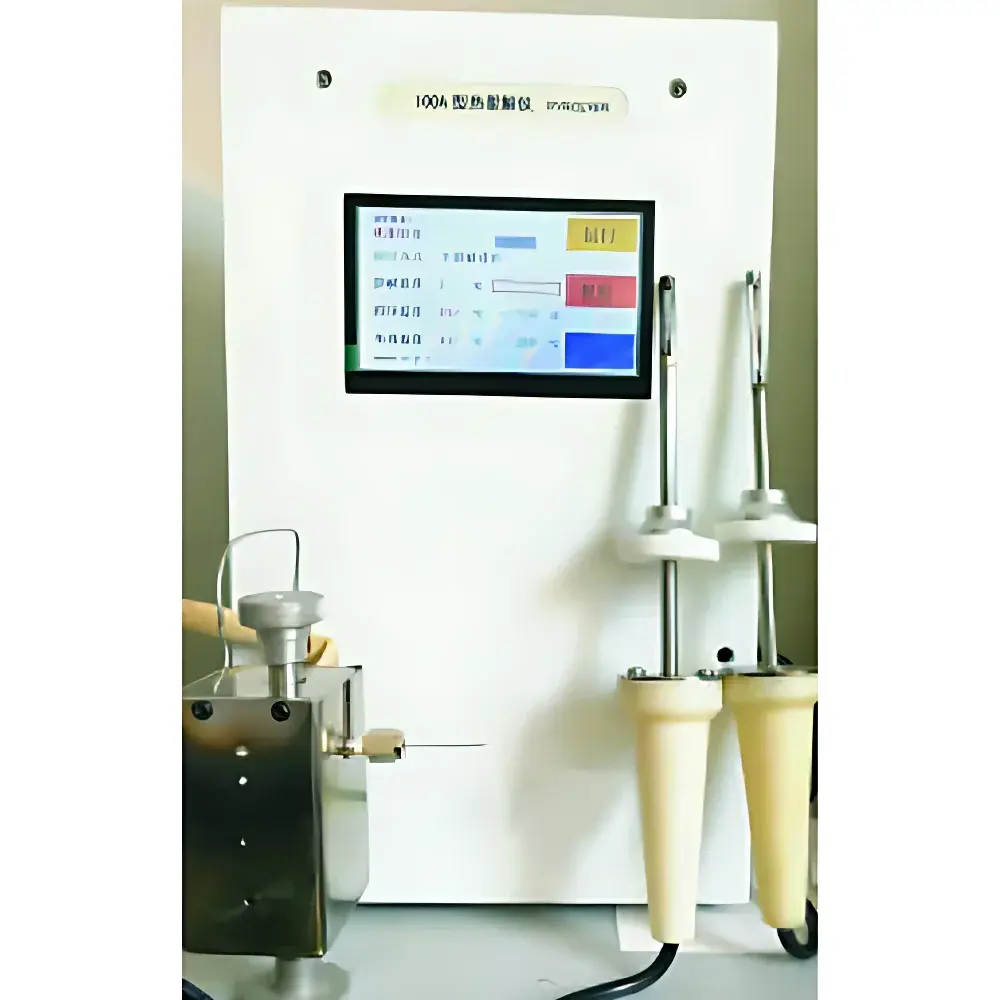
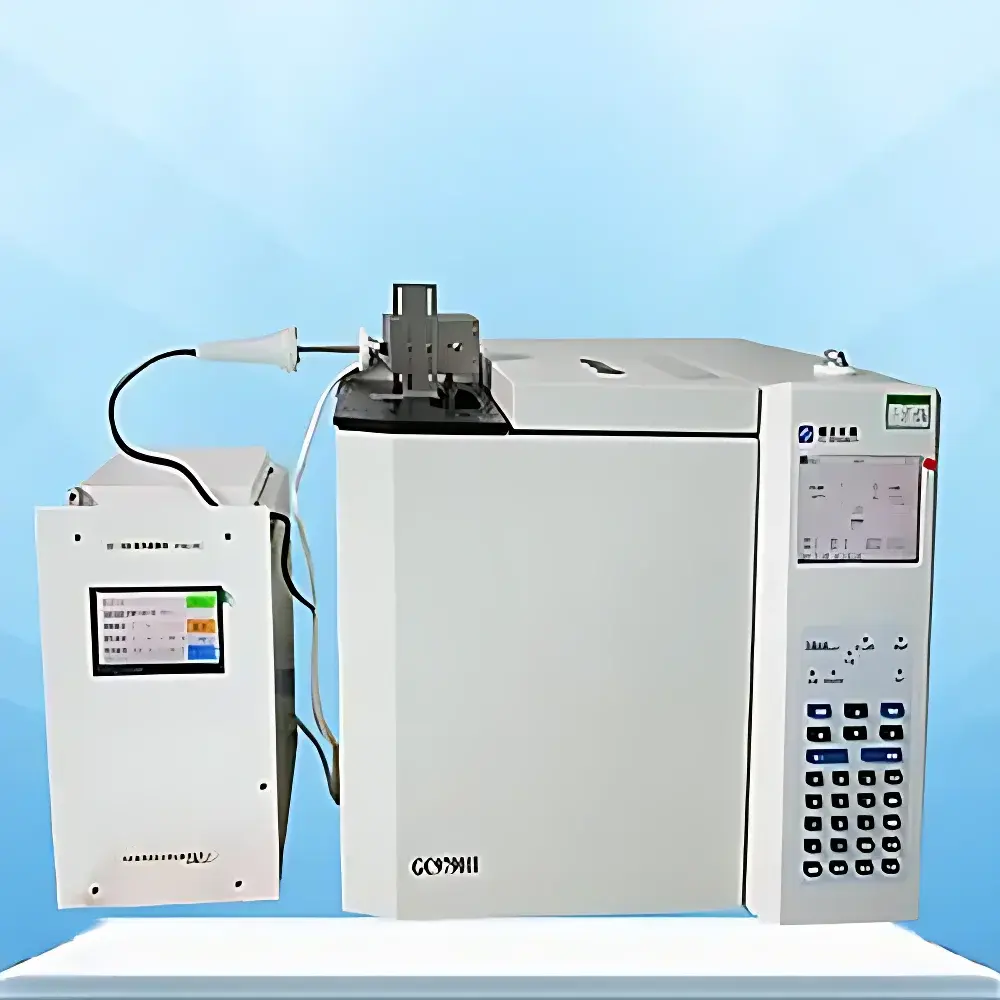
Kyocera CZ-100A Platinum-Filament Pyrolyzer
| Brand | Kyocera |
|---|---|
| Origin | Beijing, China |
| Model | CZ-100A |
| Pyrolyzer Type | Resistive Filament (Platinum Wire or Ribbon) |
| Maximum Filament Temperature | 1400 °C |
| Temperature Ramp Stages | Up to 10-step programmable heating |
| Display | Color Touchscreen with Parameter Input & Storage (12 methods) |
| Power Loss Protection | Yes |
| Integrated Gas Path | Yes, compatible with external GC/MS without modification |
| Sample Introduction | Quartz tube (wire type) or coated probe (ribbon type) |
| Onboard Probe Cleaning Mode | High-temperature bake-out at 1400 °C |
| Mounting | Direct installation onto GC inlet via dedicated bracket |
| Interface | Synchronized trigger output for real-time GC/MS control |
| Compliance | Designed for ASTM D7213, ISO 11348, and USP <621> pyrolysis-GC applications |
Overview
The Kyocera CZ-100A Platinum-Filament Pyrolyzer is a benchtop thermal desorption instrument engineered for controlled, reproducible flash pyrolysis of polymeric and macromolecular samples prior to gas chromatographic separation. It operates on the principle of resistive heating—utilizing high-purity platinum wire or ribbon as the active heating element—to achieve rapid, precise thermal decomposition under inert atmosphere. Unlike furnace-based systems, the filament design delivers sub-second heating rates (>20 °C/ms), enabling true microsecond-scale thermal history control critical for distinguishing thermally labile degradation products from secondary reactions. The CZ-100A is not a standalone analytical device but an interface module: it couples directly to the injection port of any gas chromatograph (GC) or gas chromatography–mass spectrometer (GC-MS), introducing pyrolyzates as sharp, narrow-band vapor pulses into the GC column. Its architecture supports both single-shot pyrolysis and multi-stage thermal programs, making it suitable for structural elucidation of synthetic polymers, elastomers, fibers, coatings, and environmental microplastics.
Key Features
- High-fidelity platinum filament heating element (wire or ribbon configuration) with calibrated temperature feedback and ±1 °C stability across 100–1400 °C range
- 10-step programmable temperature ramping—enabling sequential cleavage of polymer blocks, additive volatilization, and char residue analysis
- Integrated color touchscreen interface with non-volatile memory for storage of up to 12 user-defined method files, including ramp profiles, hold times, and purge parameters
- Automatic power-loss recovery: system retains last-saved configuration and resumes operation upon power restoration
- Dedicated high-temperature cleaning mode (1400 °C, 5 min) for in situ regeneration of platinum probes and quartz sample tubes—minimizing carryover between runs
- Modular mechanical design: includes precision-machined mounting bracket for direct, leak-tight integration with Agilent, Thermo Fisher, Shimadzu, and PerkinElmer GC inlets
- Independent carrier gas path with adjustable flow control (0–50 mL/min He/N2), eliminating need for external gas line reconfiguration
- Hardware-level synchronization: TTL-compatible start trigger output ensures precise timing alignment with GC oven ramp initiation and MS acquisition windows
Sample Compatibility & Compliance
The CZ-100A accepts solid, semi-solid, and thin-film samples weighing 10–500 µg—including thermoplastics (e.g., PE, PP, PET), thermosets (epoxy, phenolic resins), natural rubber, synthetic elastomers (SBR, NBR), acrylic fibers, and carbon-black-filled composites. Sample introduction is performed either via quartz microtube (wire-type configuration) or direct coating onto the platinum ribbon (ribbon-type). The system meets functional requirements for ASTM D7213 (standard test method for pyrolysis-GC analysis of polymers), ISO 11348 (water quality—determination of inhibition of luminescent bacteria), and USP (chromatography) when operated under validated laboratory conditions. While not certified to IEC 61000-4 electromagnetic compatibility standards out-of-box, its analog signal isolation and grounded chassis support GLP-compliant deployment in regulated QC environments.
Software & Data Management
The CZ-100A operates autonomously via its embedded firmware and requires no proprietary PC software for basic operation. All method parameters—including temperature setpoints, ramp rates, hold durations, and purge delays—are configured and executed locally on the touchscreen. For traceability in regulated settings, users may log method files manually or integrate the unit into existing LIMS via timestamped CSV export of run metadata (start time, filament temp profile, trigger status). The instrument supports 21 CFR Part 11 compliance when deployed alongside validated chromatography data systems (CDS) that manage electronic signatures, audit trails, and user access controls. No remote firmware updates are provided; all calibration and diagnostic routines are accessible through service menus protected by administrator password.
Applications
- Identification and quantification of polymer types in recycled plastic streams using fingerprint pyrograms
- Characterization of copolymer composition and sequence distribution via evolved gas analysis (EGA)
- Detection of flame retardants (e.g., brominated compounds) and plasticizers (e.g., phthalates) in PVC and PU matrices
- Forensic analysis of automotive paint layers, adhesives, and composite failure debris
- Quality control of synthetic fibers in textile manufacturing—verifying monomer ratios and thermal stability
- Environmental monitoring of microplastic particles isolated from wastewater sludge or marine sediments
- Stability assessment of pharmaceutical excipients during accelerated aging studies
FAQ
Can the CZ-100A be used with quadrupole GC-MS systems from non-Japanese manufacturers?
Yes—the instrument provides universal TTL triggering and standard 1/8″ Swagelok gas fittings compatible with Agilent 7890/8890, Thermo ISQ, and Shimadzu QP2020 platforms.
Is calibration traceable to NIST standards?
Filament temperature calibration is performed using dual-point verification against certified thermocouples; full NIST-traceable calibration certificates are available as optional add-on service.
What maintenance is required beyond routine probe cleaning?
Annual verification of gas flow accuracy and thermal response time is recommended; quartz tube replacement is advised after ~200 runs or visible etching.
Does the system support evolving gas analysis (EGA) mode?
Yes—by coupling the 10-stage ramp capability with real-time MS total ion current (TIC) monitoring, users can construct derivative EGA curves for thermal event deconvolution.
Is method transfer possible between different GC-MS platforms?
Method files are instrument-agnostic; however, retention time shifts require re-optimization of GC temperature program due to column-specific kinetics.





