
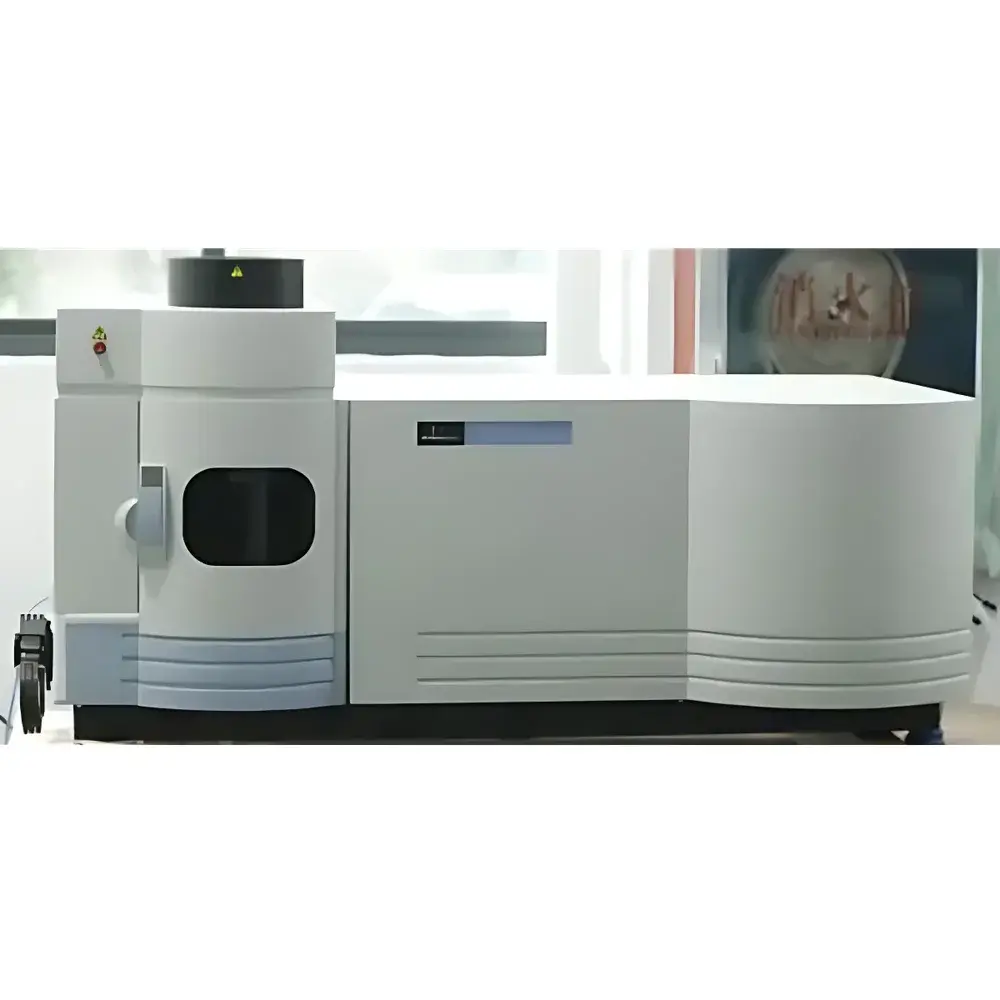
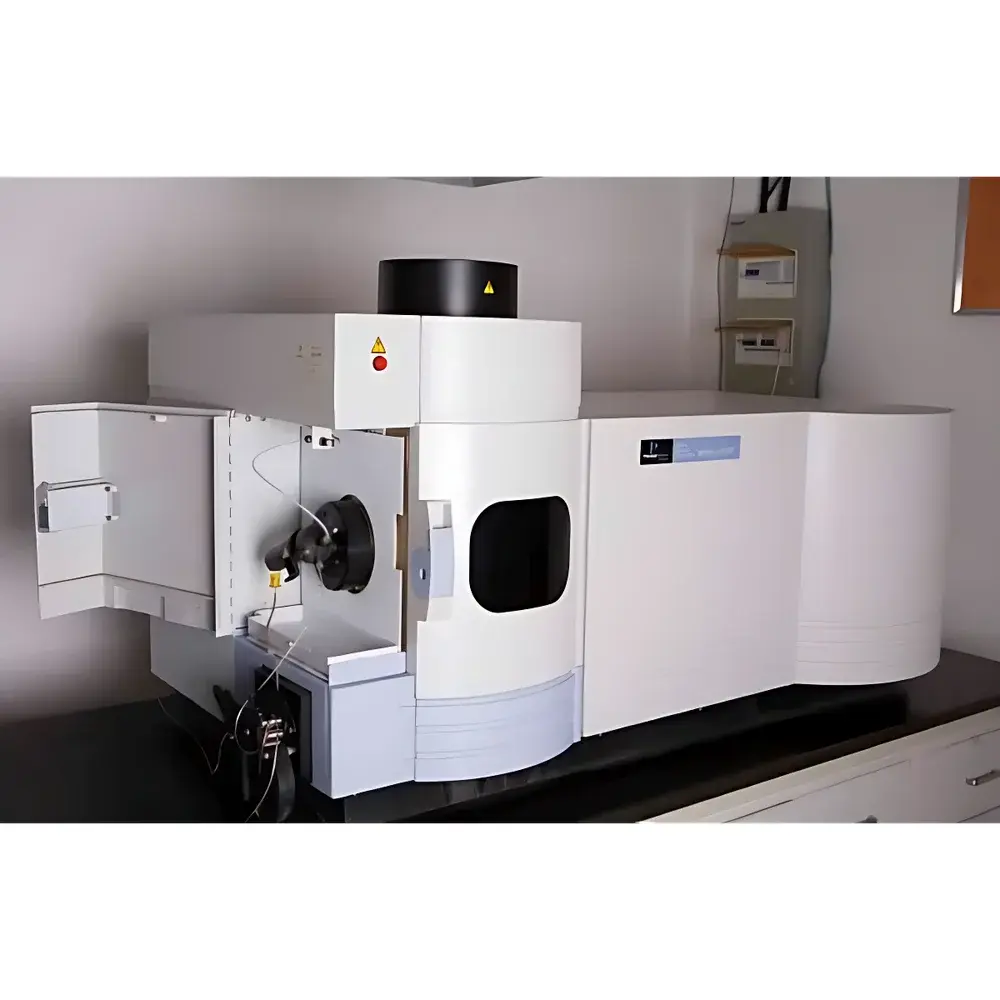
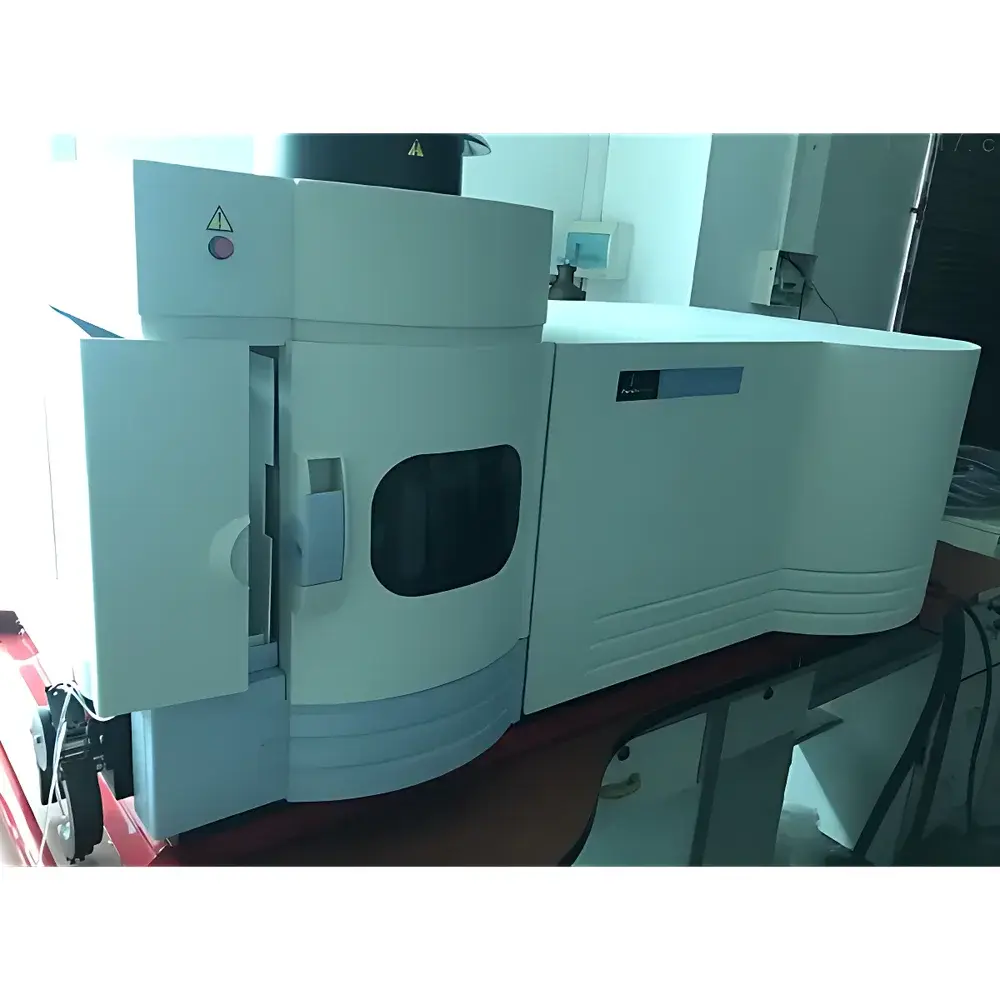
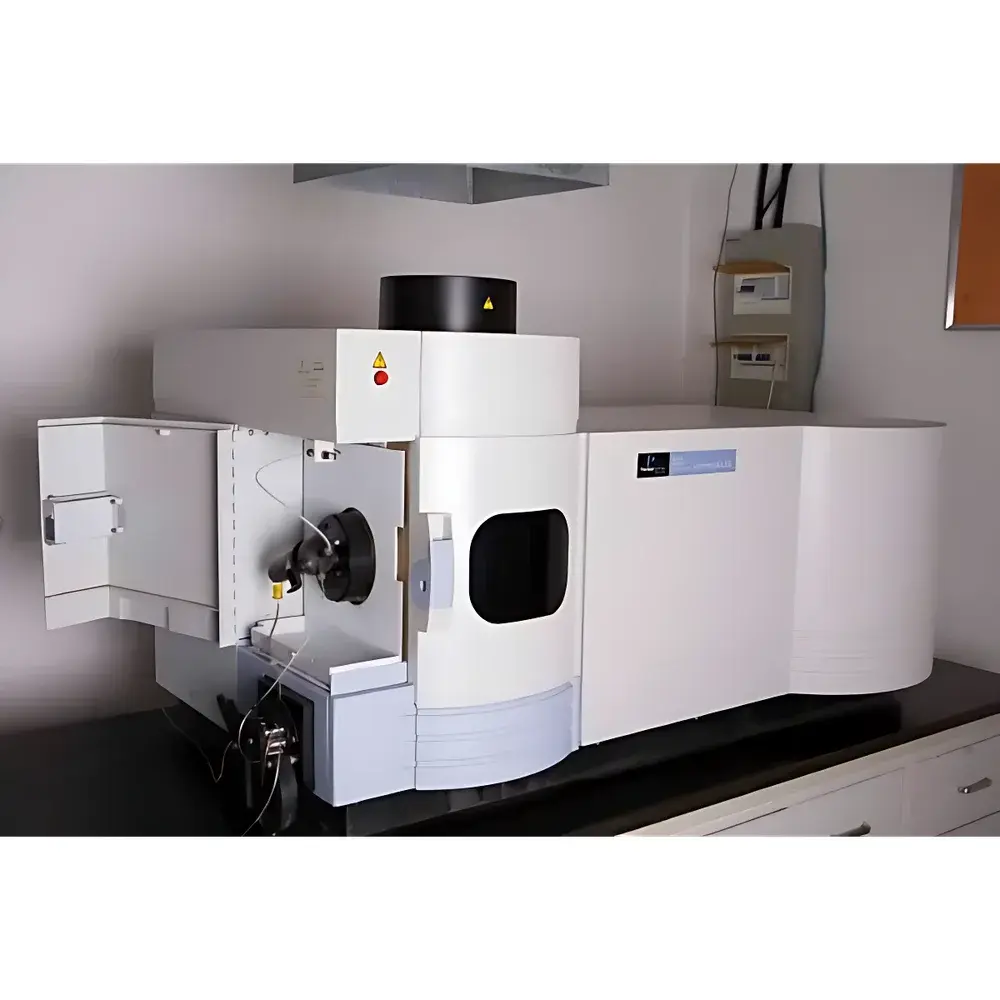
PerkinElmer Optima 5300DV Used ICP-OES Spectrometer
| Brand | PerkinElmer |
|---|---|
| Origin | USA |
| Model | Optima 5300DV |
| Configuration | Complete System with RF Generator, Nebulizer, Peristaltic Pump, Chiller, Air Compressor, PC with GBIP Interface and ICP-OES Software |
| Compliance | Designed to meet ASTM D1976, ISO 11885, USP <231>, and EPA Methods 200.7 & 6010D requirements for trace metal analysis |
Overview
The PerkinElmer Optima 5300DV is a high-performance, used inductively coupled plasma optical emission spectrometer (ICP-OES) engineered for precision multi-element trace metal analysis in environmental, clinical, geological, and industrial laboratories. It employs a robust dual-view plasma configuration—simultaneous axial and radial observation—with online-adjustable torch height to optimize sensitivity or matrix tolerance based on sample type. Its core optical architecture features a unique UV-optimized echelle grating spectrometer with crossed dispersion, large-aperture optics, and aberration-corrected design, delivering superior resolution (≤0.009 nm at 200 nm) and enhanced photon throughput specifically in the critical ultraviolet spectral region (167–200 nm), where key analyte lines—including As 193.696 nm, Se 196.026 nm, and P 178.222 nm—are located.
Key Features
- Dual-view plasma observation system with motorized, software-controlled vertical torch positioning for real-time optimization of detection limits (axial mode) or interferences mitigation (radial mode)
- Second-generation 40.68 MHz self-oscillating solid-state RF generator with integrated impedance matching network, ensuring stable plasma ignition and long-term power regulation (±0.1% over 8 h)
- Thermally stabilized echelle optical bench housed in a rigid, temperature-controlled enclosure (±0.1 °C), eliminating thermal drift-induced peak shift and enabling reproducible wavelength calibration
- High quantum efficiency, low-noise solid-state charge-coupled device (CCD) detector with 1024 × 1024 pixel format and deep-depletion architecture for extended UV response and reduced dark current
- Real-time background correction using adjacent pixel interpolation and multi-point continuum fitting, improving accuracy for complex matrices such as wastewater digests and biological fluids
- Integrated FIAs (Flow Injection Analysis) control module supporting automated standard addition, dilution, and online preconcentration protocols
Sample Compatibility & Compliance
The Optima 5300DV accommodates liquid samples across wide concentration ranges—from sub-pptr (pg/mL) to high-percentage (%) levels—via programmable dilution and internal standardization (e.g., Y, Sc, or In). It supports acid-digested environmental solids (EPA SW-846 Method 3050B/3052), filtered natural waters (EPA 200.7), pharmaceutical excipients (USP ), and petrochemical distillates (ASTM D5185). The system architecture complies with GLP/GMP data integrity expectations: full audit trail logging, electronic signature support (21 CFR Part 11 ready when deployed with validated software configuration), and method version control. All hardware components—including the peristaltic pump, concentric nebulizer, chiller, air compressor, and GBIP-equipped PC—have been verified for functional interoperability and calibrated against NIST-traceable standards.
Software & Data Management
Operation is managed via Syngistix™ for ICP-OES software (v4.x or later), offering a fully localized Chinese-language interface with bilingual report generation (English/Chinese PDF export). Key capabilities include automated spectral deconvolution using least-squares fitting algorithms, interference correction libraries for polyatomic overlaps (e.g., ArO⁺ on Fe 207.881 nm), QC charting (Levey-Jennings, Shewhart), and customizable SOP-driven workflows. Raw spectral data are stored in vendor-neutral .csv and .spc formats; instrument logs retain full metadata (lamp status, RF forward/reflected power, coolant temperature, integration time) for retrospective troubleshooting and regulatory review.
Applications
This system is routinely deployed for regulatory compliance testing—including drinking water metals (EPA 200.7), soil leachates (TCLP), catalyst residue screening in API synthesis, and alloy composition verification per ASTM E1086. Its dual-view flexibility enables method harmonization across labs: axial viewing for ultra-trace detection in clean matrices (e.g., semiconductor rinse water), radial viewing for high-TDS brines or seawater. The echelle-based spectral coverage (167–900 nm) allows simultaneous quantification of >70 elements without reconfiguration, supporting high-throughput QA/QC in contract testing laboratories and university core facilities.
FAQ
Is this Optima 5300DV unit factory-refurbished or field-used only?
This unit is a pre-owned, laboratory-sourced instrument that has undergone comprehensive functional validation—including plasma stability assessment, wavelength calibration verification, and detector dark current profiling—prior to resale.
Does the system include original PerkinElmer service documentation and calibration certificates?
Yes. Full maintenance history, factory calibration reports (including photometric linearity and resolution verification), and original installation manuals are provided in digital archive format.
Can the system be upgraded to support newer Syngistix versions or add hydride generation accessories?
Hardware compatibility with Syngistix v5.x is confirmed; optional HG-300 hydride generation module integration is supported with minor firmware update and additional gas manifold configuration.
What is the typical warm-up time required before routine analysis?
Optical thermal stabilization requires ≤45 minutes; RF generator and plasma stabilization reach operational readiness within 20 minutes after ignition.
Are consumables such as torches, nebulizers, and injector tubes included in the sale?
One complete set of OEM PerkinElmer consumables—including Al₂O₃ torch, Meinhard® K-type nebulizer, and quartz injector—is supplied with the system.



