
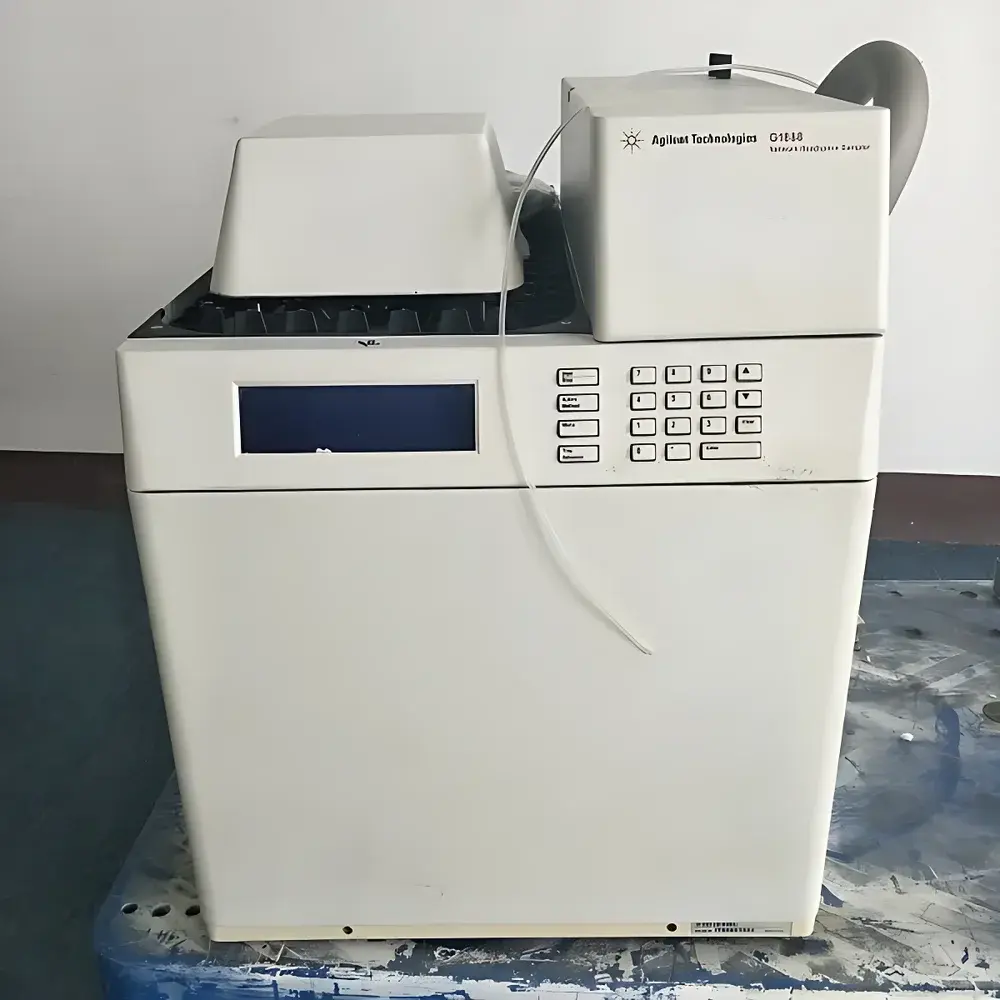
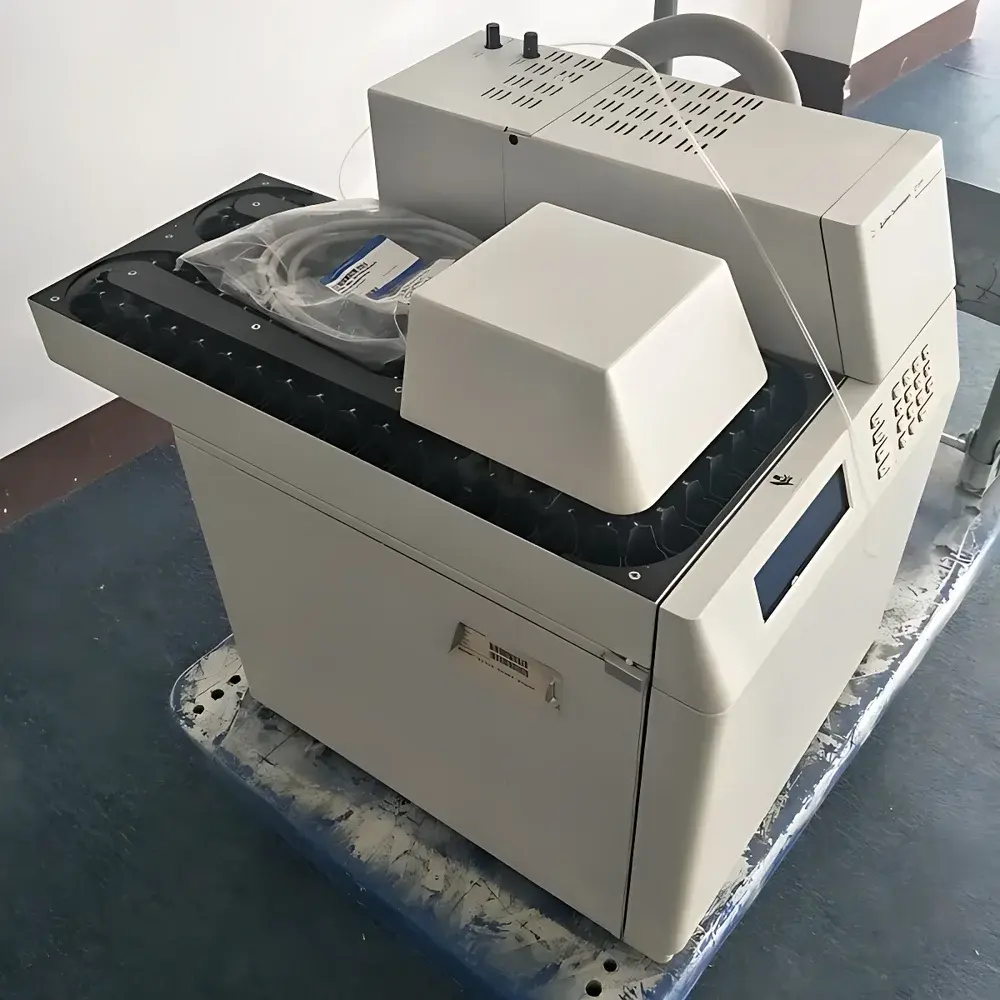
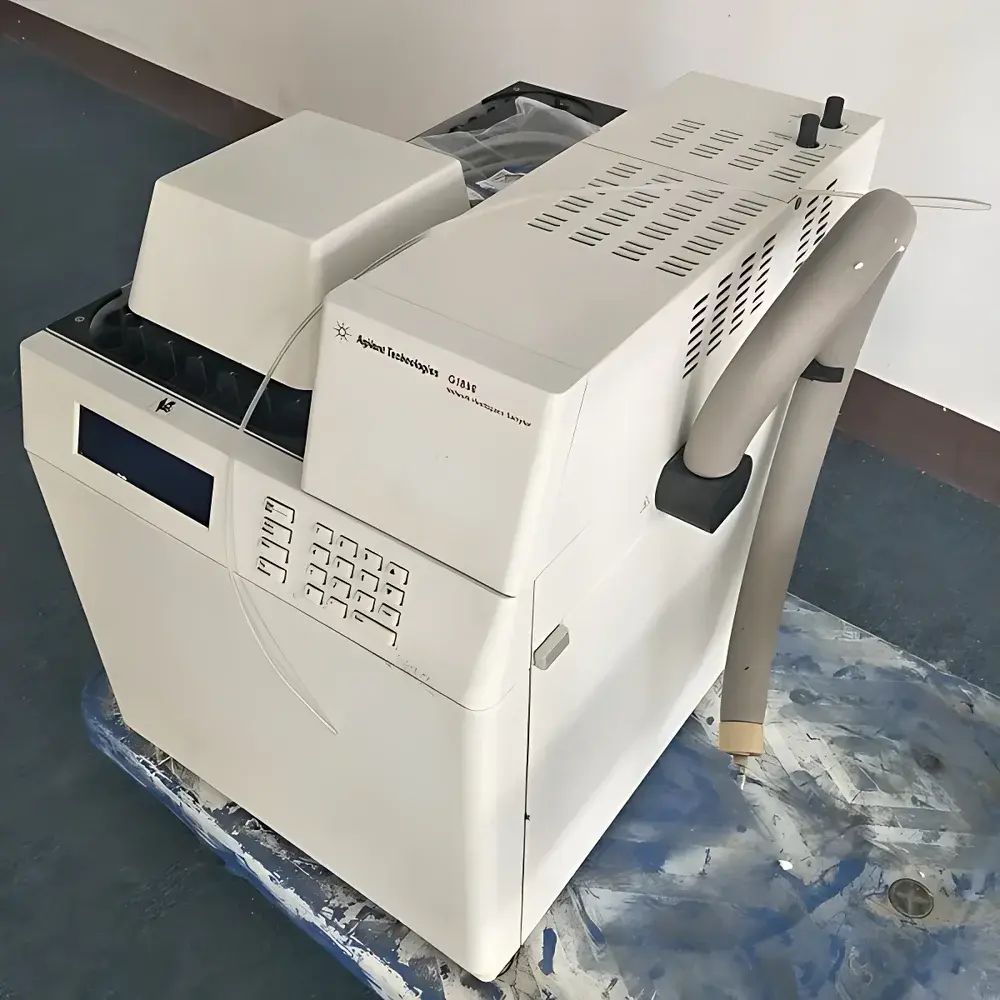
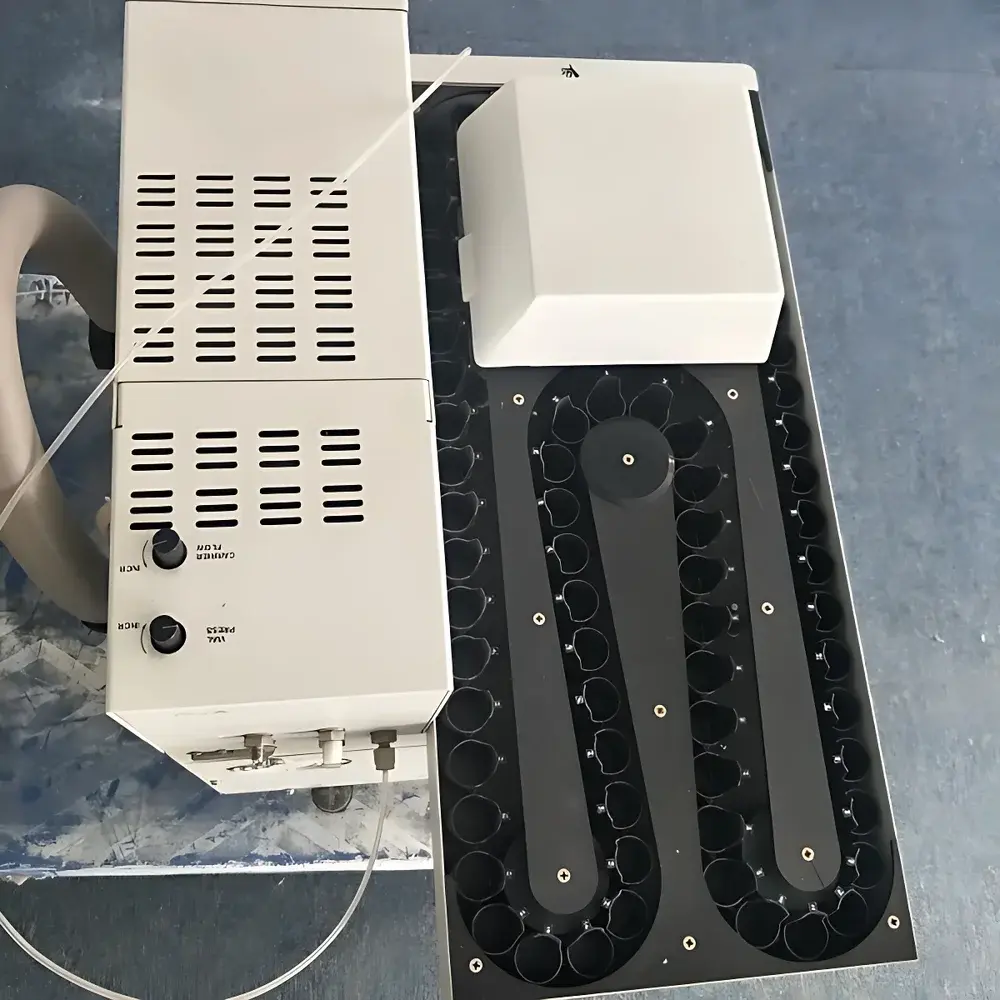
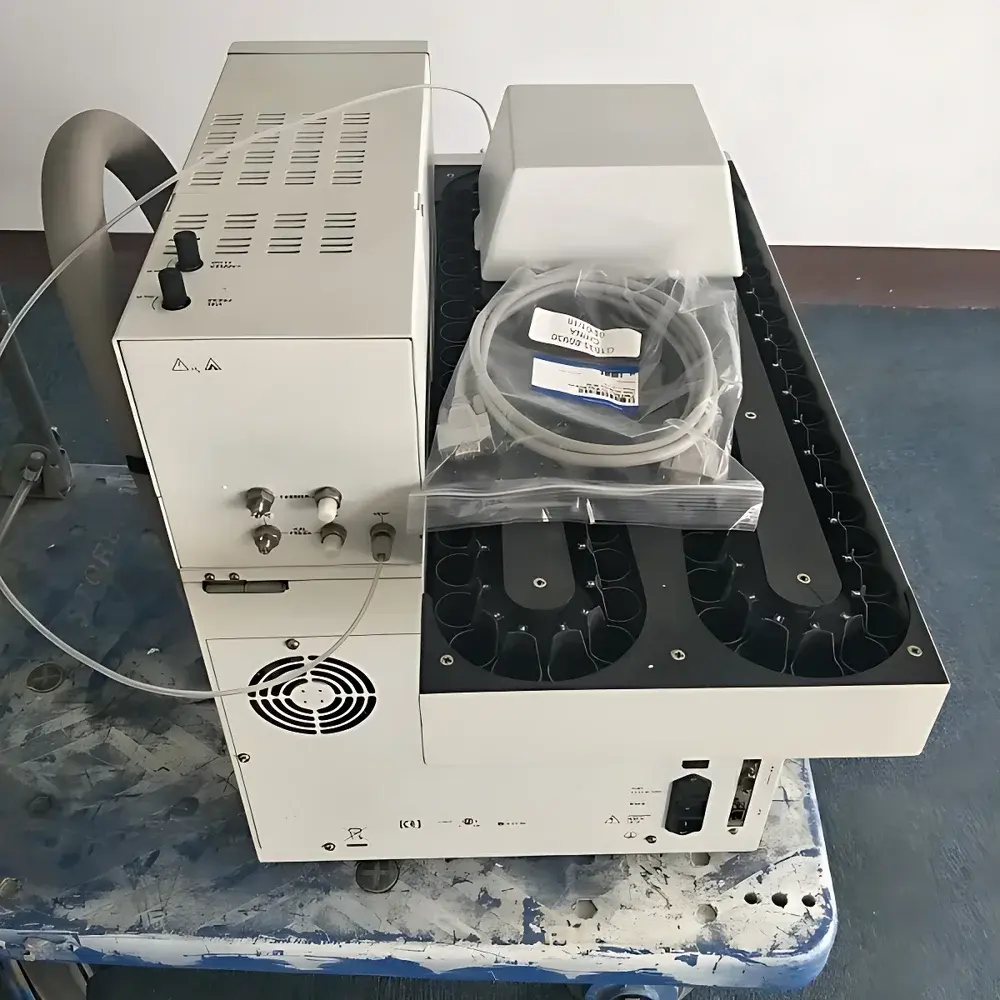
Agilent G1888 Used Automated Static Headspace Sampler
| Brand | Agilent Technologies |
|---|---|
| Origin | USA |
| Model | G1888 |
| Instrument Type | Static Headspace Sampler |
| Automation Level | Fully Automatic |
| Sample Tray Capacity | 40 vials |
| Vial Size | 10 mL |
| Vial Heating Range | 35–210 °C (1 °C increments) |
| Valve & Transfer Line Temperature Control | Ambient to 210 °C |
| Loop Volume | 1 mL |
| Compliance | FDA 21 CFR Part 11, GLP/GMP-ready |
Overview
The Agilent G1888 Automated Static Headspace Sampler is a field-proven, high-reliability benchtop accessory engineered for precise, reproducible headspace analysis in conjunction with Agilent and third-party gas chromatographs (GCs). Operating on the principle of equilibrium static headspace sampling, the G1888 thermally equilibrates liquid or solid samples sealed in crimp-top vials, then injects the vapor-phase headspace into the GC column via pressure-balanced transfer. This method eliminates matrix interference from non-volatile components while delivering sharp, symmetrical peaks—critical for quantitation of volatile organic compounds (VOCs), residual solvents, ethanol in beverages, environmental contaminants (e.g., benzene in water at ≤1 ppb), and pharmaceutical impurities. Designed and manufactured in the USA, the G1888 features a robust stainless-steel architecture, inert flow path from needle tip through heated transfer line to GC interface, and compatibility with Agilent 7890A, 6890N, and other GC platforms equipped with standard split/splitless inlets.
Key Features
- Fully automated operation with programmable 40-position sample carousel—supports unattended overnight runs without manual intervention
- Precise temperature control across three independently heated zones: vial oven (35–210 °C, ±0.1 °C stability), valve oven, and transfer line—all adjustable in 1 °C increments
- Pressure-balanced injection mechanism ensures consistent volume delivery and minimizes carryover; eliminates need for carrier gas flow modulation during injection
- Integrated cold trap option enables analyte enrichment for sub-ppb detection limits—validated for benzene in aqueous matrices down to 1 ppb with RSD ≤1.5% (e.g., 0.4% ethanol in water)
- Dual-mode sampling capability: standard single-extraction and Multi-HeadSpace Extraction (MHE) with up to 100 sequential punctures per vial for challenging heterogeneous or adsorptive matrices
- Onboard diagnostics including power-on self-test (POST), automated leak check, and four preloaded chemical validation methods for routine system verification
Sample Compatibility & Compliance
The G1888 accommodates standard 10 mL crimp-cap headspace vials and supports both aqueous and organic solvent-based matrices—including biological fluids, polymers, soils, and pharmaceutical formulations. Its wide thermal operating range (35–210 °C) enables analysis of low-boiling compounds (e.g., chloromethanes, acetone) as well as semi-volatiles such as styrene or naphthalene derivatives. When operated at ambient temperature (heating zones disabled), it preserves thermolabile analytes—ideal for clinical or biopharmaceutical applications. The system meets critical regulatory requirements: full audit trail via event logging (time-stamped temperature/pressure deviations), electronic signature support, and data integrity controls aligned with FDA 21 CFR Part 11, ISO/IEC 17025, and ICH Q2(R2) guidelines. It is routinely deployed in GLP-compliant environmental labs and GMP-regulated pharmaceutical QC environments.
Software & Data Management
Control is available via Agilent’s ChemStation (GC and MSD variants), MassHunter MSD Productivity Software, MSD Security Edition, and Cerity Pharmaceutical CDS. All interfaces provide intuitive dropdown-driven method setup, sequence table management for optimized overlapping runs, and real-time monitoring of vial status, temperature profiles, and pressure events. The embedded event log records every operational action—including method changes, temperature excursions, valve actuations, and error codes—with immutable timestamps. Data export complies with ASTM E1792 and LIMS-integration standards (ODBC, CSV, XML). Optional network connectivity enables centralized instrument management across multi-GC laboratories.
Applications
- Residual solvent analysis in APIs and excipients per USP and ICH Q3C(R8)
- Alcohol content determination in food, beverages, and forensic toxicology samples
- VOC profiling in drinking water, wastewater, and soil extracts (EPA Methods 502.2, 524.4, 8260D)
- Flavor and fragrance compound screening in consumer products
- Stability-indicating assays for oxidation-prone drug substances under accelerated conditions
- Quality control of packaging materials for leachable volatiles (e.g., ethylene oxide residuals)
FAQ
Is the G1888 compatible with non-Agilent gas chromatographs?
Yes—the G1888 uses industry-standard TTL and analog I/O signals and can be integrated with most GC systems via external trigger cables or optional relay modules.
Does the unit include a cold trap, or is it optional?
The cold trap is an optional hardware module; its installation enables trace-level enrichment and is required for achieving sub-ppb detection limits in regulated water testing.
Can the G1888 perform dynamic headspace or purge-and-trap analysis?
No—it is designed exclusively for static headspace sampling and Multi-HeadSpace Extraction (MHE); dynamic techniques require dedicated purge-and-trap instrumentation.
What maintenance is recommended for long-term reliability?
Routine tasks include septum replacement every 100 injections, vial cap inspection, transfer line bake-out at 250 °C weekly, and annual calibration verification using certified reference standards.
Is firmware upgrade support available for used units?
Agilent provides legacy firmware updates and technical documentation for G1888 through authorized service partners; version history and patch notes are accessible via Agilent’s Support Portal (login required).





