
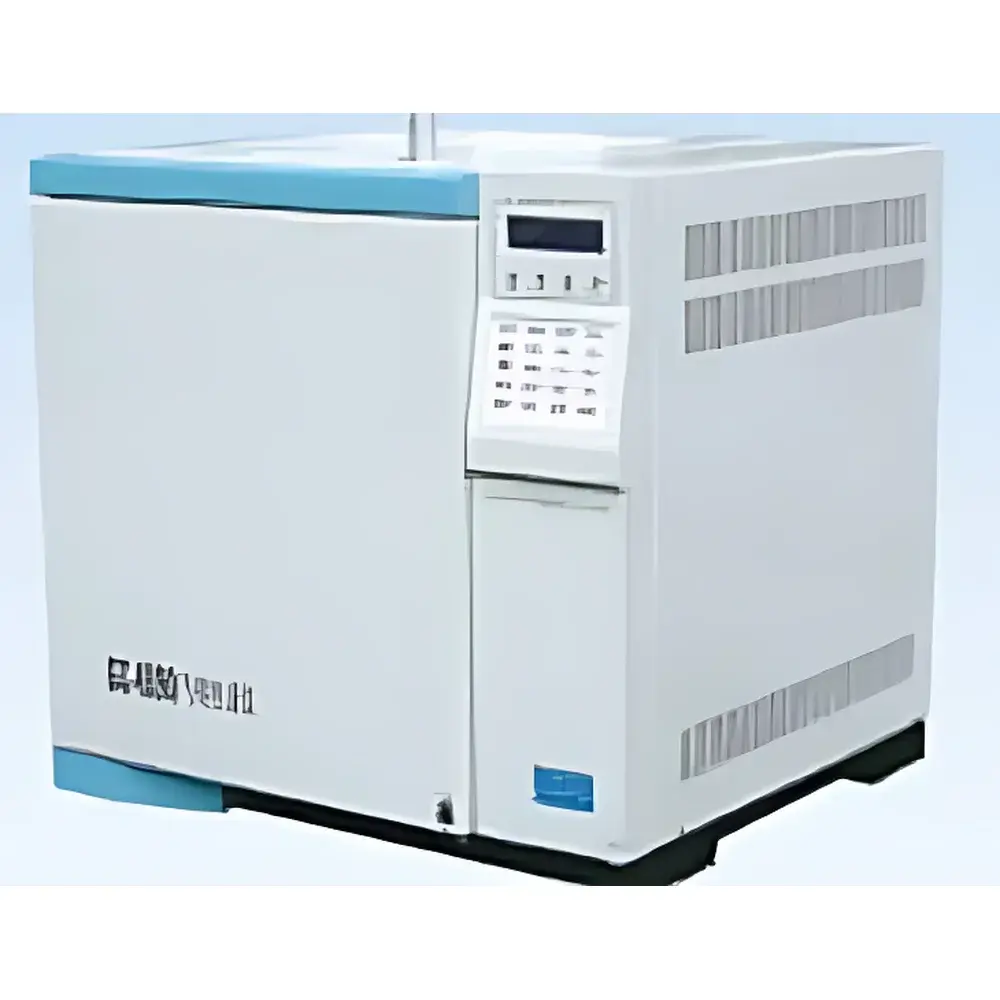
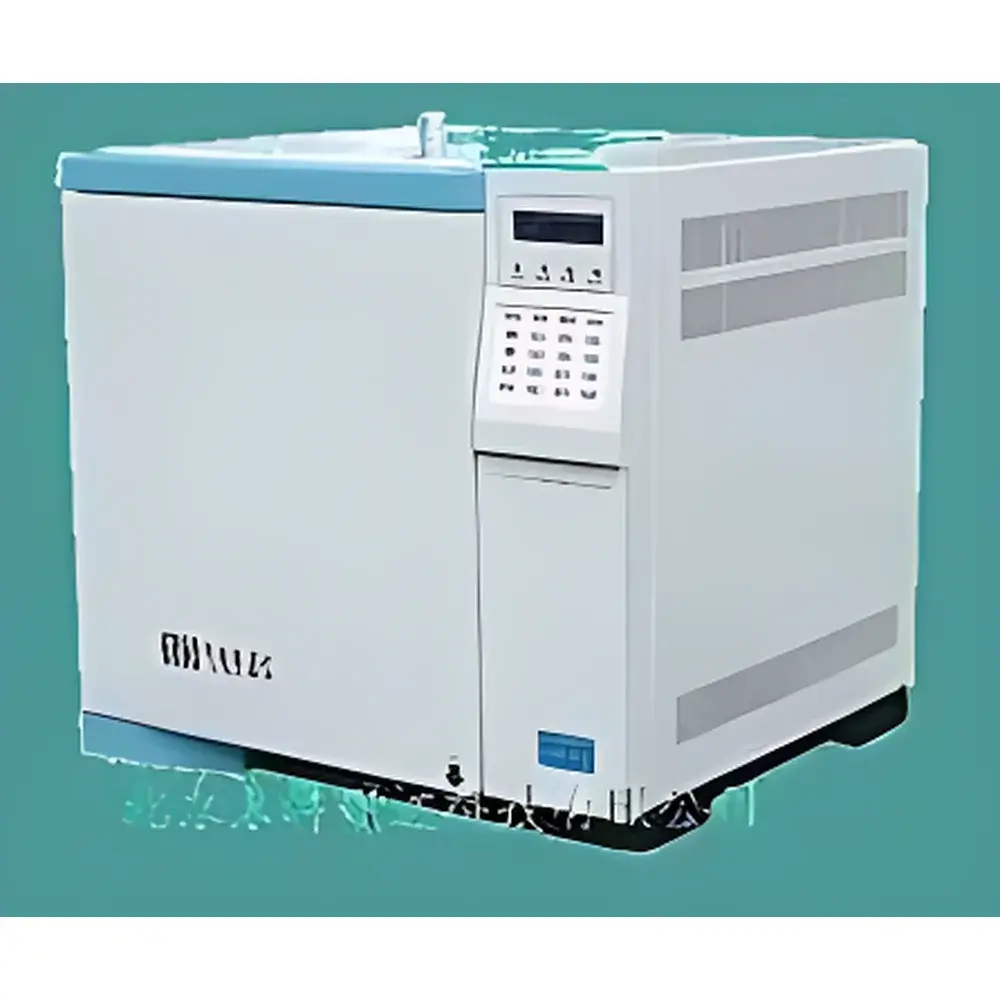
Kyocera SP6890 Laboratory Gas Chromatograph
| Brand | Kyocera |
|---|---|
| Origin | Beijing, China |
| Model | SP6890 |
| Instrument Type | Laboratory Gas Chromatograph |
| Application Scope | General-purpose |
| Oven Temperature Range | Ambient + 4 °C to 450 °C |
| Oven Ramp Rate | 0.1–40 °C/min |
| Oven Cool-down Rate | 450 °C to 50 °C |
| Carrier Gas Flow Range & Control | 0–1200 mL/min |
| Carrier Gas Pressure Range & Control | 0–970 kPa |
| Injector Maximum Operating Temperature | 450 °C |
| Injector Pressure Setting Range | 0–970 kPa |
| Injector Total Flow Setting Range | 0–1200 mL/min |
| Temperature Control Channels | 4 independent zones |
| Temperature Stability | ±0.1 °C |
| FID Detection Limit | ≤5.0×10⁻¹¹ g/s (benzene/CS₂) |
| TCD Sensitivity | ≥2500 mV·mL/mg (benzene) |
| Dimensions | 470 × 430 × 455 mm |
| Weight | ~45 kg |
Overview
The Kyocera SP6890 is a microprocessor-controlled laboratory gas chromatograph engineered for precision separation and quantitative analysis of volatile and semi-volatile organic compounds. Based on the fundamental principle of differential partitioning between a mobile phase (inert carrier gas) and a stationary phase (capillary or packed column), the SP6890 delivers reliable retention time reproducibility and peak resolution across diverse sample matrices. Its modular thermal architecture supports four independently controlled temperature zones—column oven, injector(s), detector(s), and auxiliary ports—enabling method flexibility for both routine QC testing and method development in academic, environmental, petrochemical, and pharmaceutical laboratories. Designed for robust daily operation, the system integrates fail-safe thermal management, real-time pressure/flow monitoring, and hardware-level fault detection aligned with GLP-compliant operational expectations.
Key Features
- Four-zone independent temperature control with stability better than ±0.1 °C—optimized for isothermal and programmable ramp methods
- Wide operating range: column oven from ambient + 4 °C to 450 °C; injector and detector up to 450 °C
- Precise carrier gas delivery system with digital pressure and flow control (0–970 kPa, 0–1200 mL/min), supporting helium, hydrogen, nitrogen, and argon
- Multi-inlet compatibility: packed-column headspace injection, glass-liner rapid injection, and septum-purge-capable split/splitless capillary inlet
- Modular detector support—including FID (detection limit ≤5.0×10⁻¹¹ g/s benzene), dual-channel TCD (≥2500 mV·mL/mg benzene), and ECD—each with dedicated power and signal conditioning circuits
- Integrated safety logic: automatic power cutoff during overtemperature events, carrier gas loss, or electrical fault; low-pressure and zero-flow protection for TCD operation
- Pre-wired auxiliary temperature port for future expansion (e.g., valve oven, PTV inlet, or additional detector)
- Onboard LCD interface with Chinese character display, 10-user method storage, keyboard-driven parameter entry, and built-in stopwatch for manual timing validation
Sample Compatibility & Compliance
The SP6890 accommodates liquid, gaseous, and solid (via thermal desorption or purge-and-trap interfaces) samples through appropriate inlet configurations. It supports standard USP Chromatography, ASTM D3606/D5501, ISO 10301, and EPA Method 8021B/8260 workflows when paired with validated columns and calibration standards. While the base configuration meets general laboratory requirements, full regulatory compliance—including 21 CFR Part 11 audit trails, electronic signatures, and secure data archiving—requires integration with validated third-party chromatography data systems (CDS). The instrument’s mechanical design, thermal shielding, and grounding meet IEC 61010-1 safety standards for laboratory electrical equipment.
Software & Data Management
The SP6890 operates via embedded firmware without proprietary PC software dependency. All acquisition parameters—including oven program, detector settings, and gas flows—are configured locally using the front-panel keypad and stored in non-volatile memory. Raw analog detector signals are digitized at 10 Hz and output as voltage traces via RS-232 or optional USB interface for external acquisition. For traceability and documentation, users may export method files and run logs in plain-text CSV format. When integrated into regulated environments, the system is compatible with industry-standard CDS platforms (e.g., OpenLab CDS, Chromeleon, Empower) via analog output or optional Ethernet-enabled data acquisition modules—enabling full audit trail generation, user access controls, and electronic record retention per ALCOA+ principles.
Applications
- Residual solvent analysis in pharmaceutical APIs and excipients (ICH Q3C)
- Hydrocarbon profiling in gasoline, diesel, and lubricants (ASTM D5292, D6730)
- VOC screening in indoor air, soil headspace, and water (EPA TO-17, TO-14A)
- Fatty acid methyl ester (FAME) quantification in biodiesel (EN 14103)
- Pesticide residue screening in food extracts (AOAC 2007.01)
- Monomer purity assessment in polymer manufacturing (e.g., vinyl chloride, styrene)
- Quality control of essential oils and flavor compounds (ISO 9231)
FAQ
Does the SP6890 support method transfer from other GC platforms?
Yes—retention time alignment is achievable via column dimension matching, consistent carrier gas linear velocity calculation, and equivalent temperature programming. Method translation tools (e.g., Kovats index referencing) are recommended for cross-platform validation.
Can the instrument operate under GMP/GLP conditions?
The hardware supports critical GxP functions (audit-ready event logging, parameter locking, and electronic signature readiness), but full compliance requires validated CDS integration and documented IQ/OQ/PQ protocols.
What maintenance intervals are recommended for FID and TCD detectors?
FID jet cleaning every 200 injections; TCD filament inspection and cell purging every 500 hours of operation or after high-matrix samples.
Is remote monitoring or network connectivity available?
Standard configuration includes RS-232; optional Ethernet or Wi-Fi modules enable remote status polling and alarm notification via Modbus TCP or custom SCADA integration.
What column types are supported?
Both packed columns (2–4 mm ID, stainless steel or glass) and fused-silica capillaries (0.1–0.53 mm ID, up to 60 m length) with standard 1/4″ or 1/8″ fittings.




