
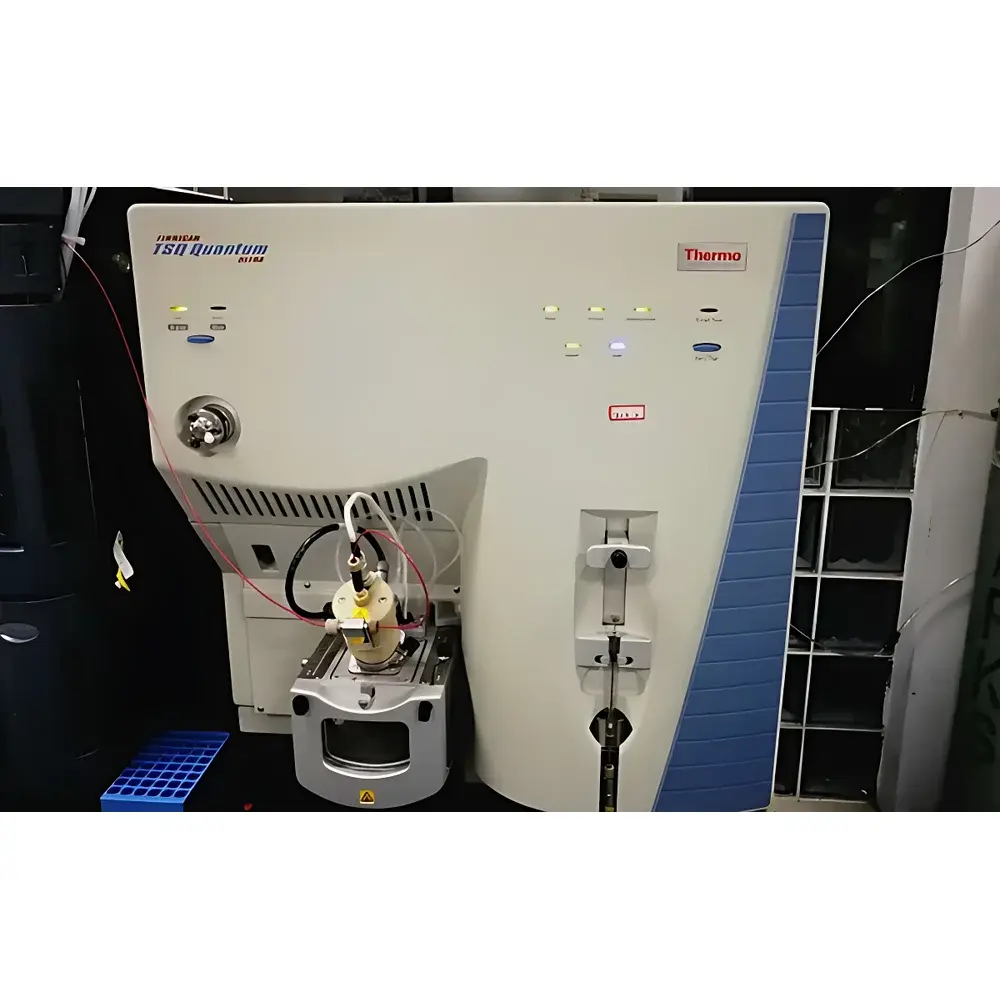
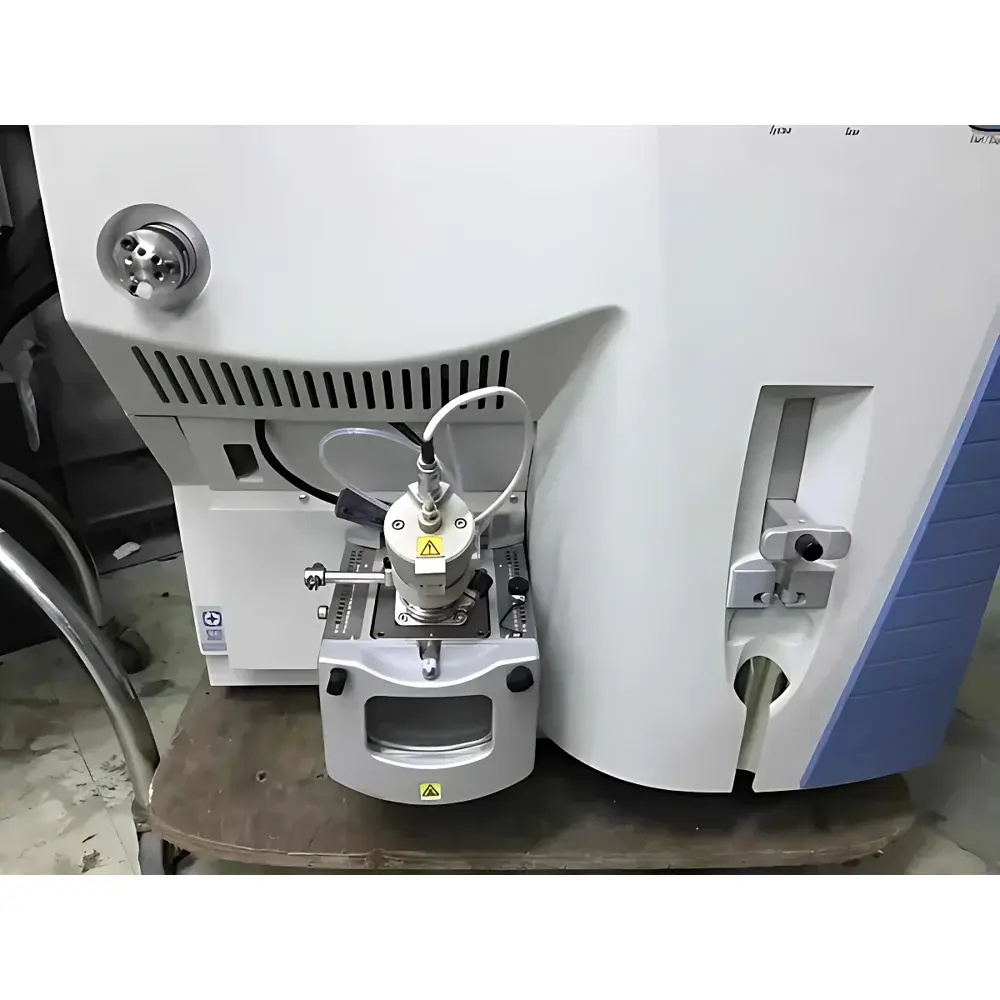
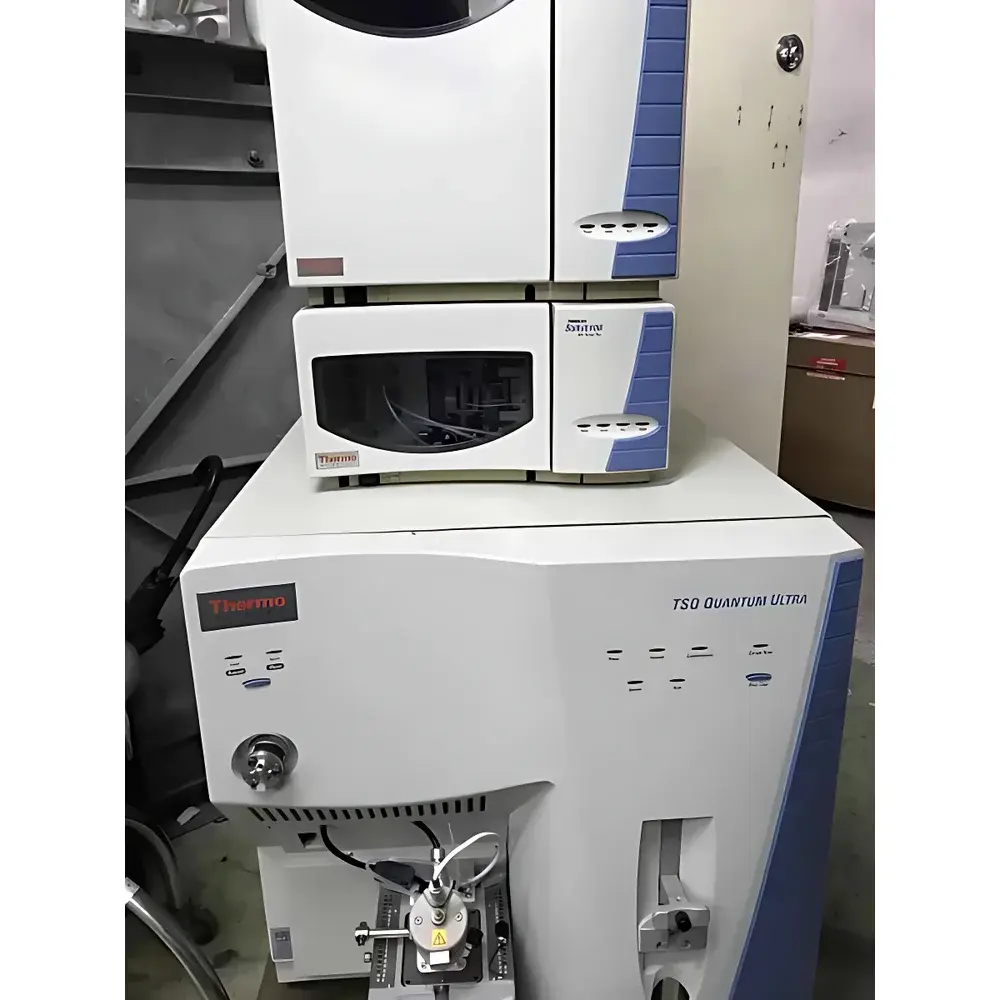
Thermo Fisher TSQ Quantum Ultra Triple Quadrupole Liquid Chromatography Mass Spectrometer (Refurbished)
| Brand | Thermo Fisher |
|---|---|
| Origin | USA |
| Instrument Type | Triple Quadrupole LC-MS/MS |
| Model | TSQ Quantum Ultra |
| Mass Range | 10–3000 m/z |
| Sensitivity | S/N ≥ 100:1 (1 pg reserpine, SRM mode) |
| Resolution | 0.5–0.7 m/z (FWHM) |
| Mass Accuracy | ±0.1 Da (typical under calibrated conditions) |
| Configuration | Refurbished, fully validated, factory-reconditioned system with dual ESI/APCI source |
Overview
The Thermo Fisher TSQ Quantum Ultra is a high-performance, triple quadrupole liquid chromatography mass spectrometer engineered for quantitative and qualitative analysis in regulated and research-intensive laboratories. Utilizing tandem mass spectrometry (MS/MS) in multiple reaction monitoring (MRM) mode, the instrument delivers exceptional selectivity, sensitivity, and dynamic range for trace-level analyte detection in complex matrices. Its core architecture features three independently operated quadrupole mass filters—Q1 for precursor ion selection, Q2 as a collision cell for controlled fragmentation, and Q3 for product ion filtering—enabling robust, reproducible quantitation across diverse application domains including pharmaceutical bioanalysis, environmental contaminant screening, food safety testing, and clinical toxicology.
Key Features
- Triple quadrupole design optimized for high-duty-cycle MRM acquisition, supporting >1,000 transitions per run with sub-millisecond dwell times
- Dual electrospray ionization (ESI) and atmospheric pressure chemical ionization (APCI) source included, enabling seamless polarity switching and broad compound coverage
- Advanced ion optics with enhanced transmission efficiency and reduced chemical noise, contributing to sustained signal stability over extended runtime
- High-vacuum system with turbomolecular pumps and backing pump, maintaining optimal pressure in both ion source and mass analyzer regions
- Integrated front-end HPLC compatibility with standard 0.1–2.1 mm ID column configurations and low-dead-volume fluidic pathways
- Factory-refurbished unit with full functional validation, including mass calibration, resolution verification, sensitivity confirmation (per 1 pg reserpine protocol), and vacuum integrity testing
Sample Compatibility & Compliance
The TSQ Quantum Ultra accommodates liquid samples introduced via reversed-phase, hydrophilic interaction (HILIC), or ion-pairing chromatography, with compatibility for aqueous, organic, and buffered mobile phases. It supports direct infusion, microflow, and nano-LC configurations when interfaced with appropriate pumping and nanospray sources. From a regulatory standpoint, the system meets foundational requirements for GLP and GMP environments: raw data files are time-stamped and immutable; audit trails for method parameters, calibration records, and sequence logs are retained per FDA 21 CFR Part 11 guidelines when used with compliant Thermo Xcalibur software versions (e.g., 2.0.7 SR2 or later). The instrument’s performance aligns with key ASTM methods (e.g., ASTM D7622 for pesticide residue analysis) and ISO/IEC 17025–recommended validation protocols for quantitative MS workflows.
Software & Data Management
Controlled by Thermo Xcalibur software (v2.x or higher), the TSQ Quantum Ultra enables comprehensive method development, acquisition scheduling, peak integration, and report generation. Quantitation is performed using internal standard calibration curves with linear or quadratic regression models. Data files (.raw) are structured for long-term archival and interoperability with third-party processing tools (e.g., Skyline, MultiQuant, or OpenMS). System suitability checks—including retention time stability, peak area RSD (<15% over 10 injections), and carryover assessment (<0.1%)—are programmable within sequence methods. All instrument settings, calibration reports, and QC results are stored with metadata tags for full traceability during internal audits or regulatory inspections.
Applications
- Pharmaceutical: PK/PD studies, metabolite identification, impurity profiling, and stability-indicating assays per ICH Q2(R2)
- Environmental: Detection of PFAS, pharmaceutical residues, pesticides, and endocrine disruptors in water, soil, and biota at sub-ppt levels
- Food Safety: Multi-residue screening of veterinary drugs, mycotoxins, and adulterants in milk, meat, cereals, and infant formula
- Clinical Research: Targeted biomarker quantification (e.g., steroids, vitamins, neurotransmitters) in plasma, urine, and dried blood spots
- Academic & Government Labs: Method development for emerging contaminants, isotopic labeling studies, and reference material certification
FAQ
Is this a factory-refurbished unit or dealer-refurbished?
This TSQ Quantum Ultra undergoes Thermo Fisher’s authorized refurbishment process at certified service centers, including replacement of wear-prone components (ion lenses, detector, RF rods), recalibration against NIST-traceable standards, and full system validation per original OEM specifications.
What documentation accompanies the instrument?
A complete set is provided: Certificate of Reconditioning, Factory Validation Report (including sensitivity, resolution, mass accuracy, and vacuum test results), updated service history log, and electronic copies of user manuals and safety documentation.
Can the system be configured for compliance with 21 CFR Part 11?
Yes—when deployed with Xcalibur v2.8 or later on a Windows Server environment with domain authentication, role-based access control, electronic signatures, and enabled audit trail functionality, the system satisfies technical controls required for Part 11 compliance.
What is the expected operational lifetime post-refurbishment?
Based on component replacement history and usage logs, refurbished TSQ Quantum Ultra systems typically deliver 5–7 years of reliable operation under routine QC/QA laboratory conditions (≤8 h/day, ≤5 days/week), assuming adherence to scheduled maintenance and proper environmental controls (temperature, humidity, power conditioning).





