
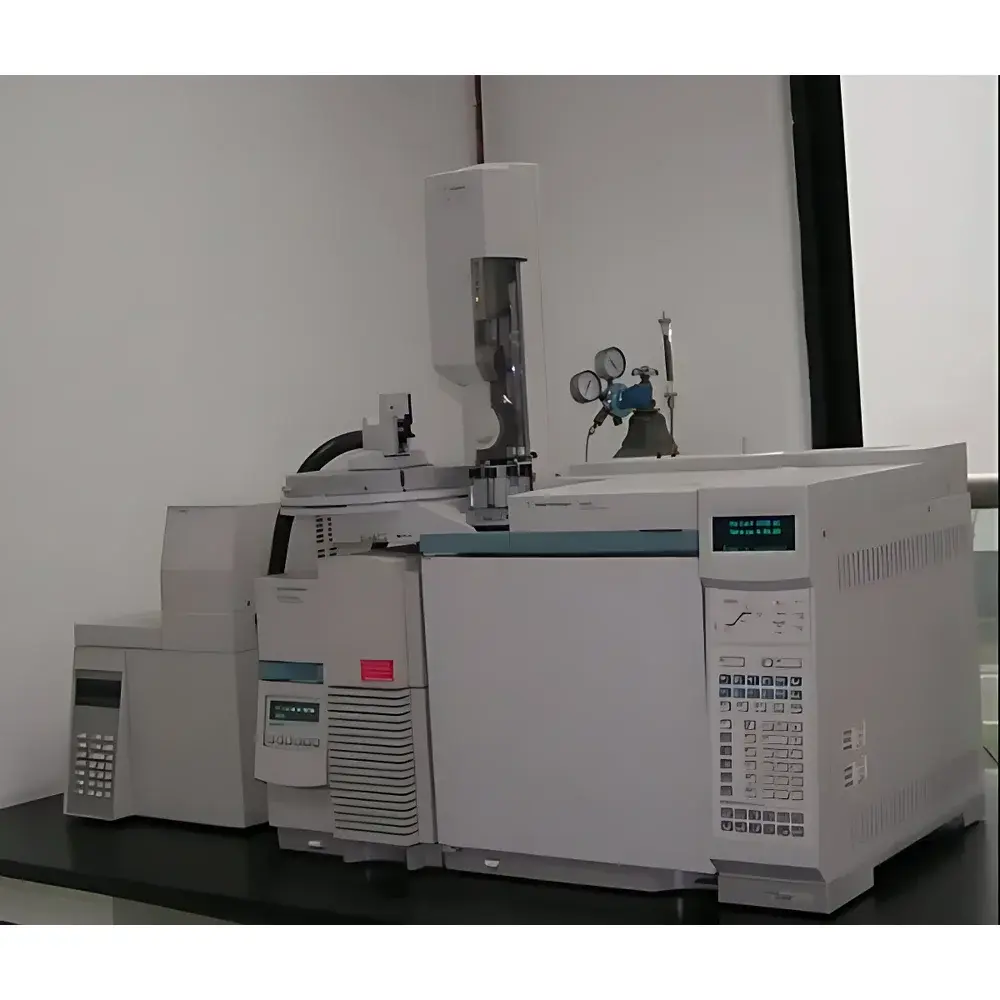
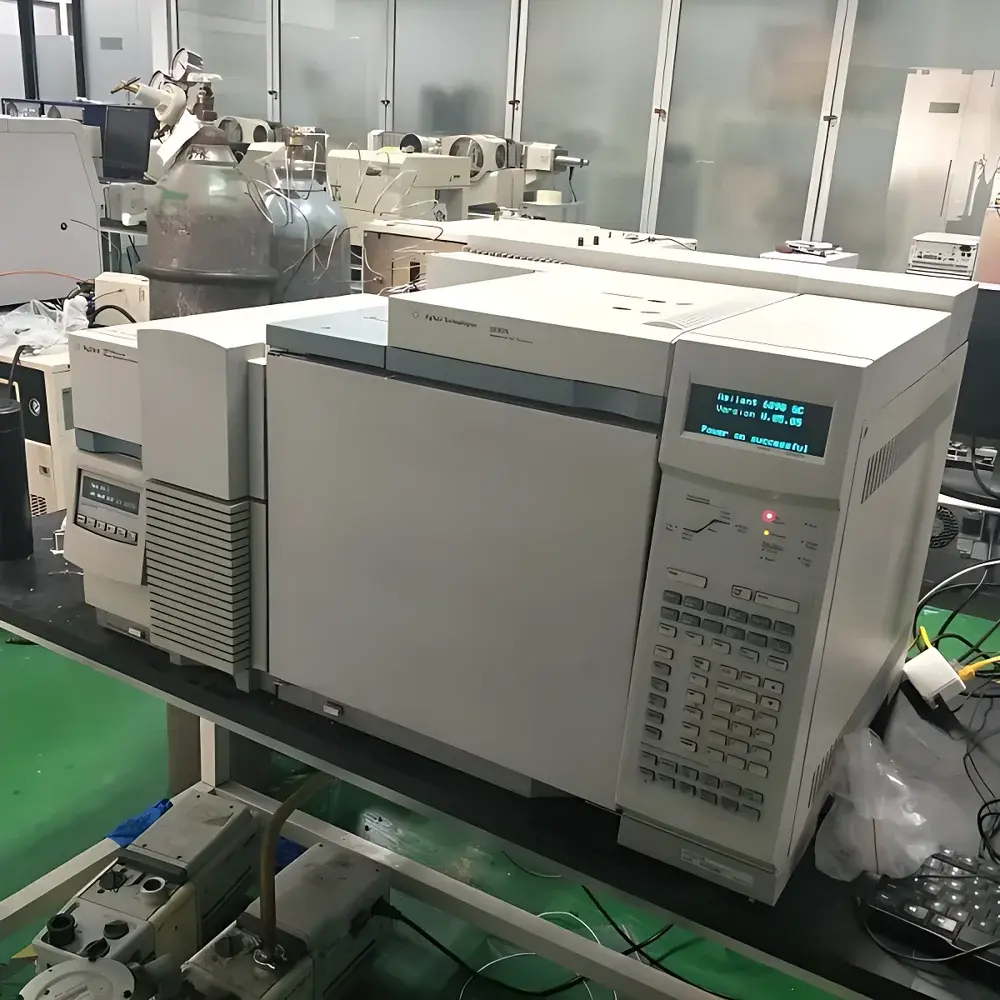
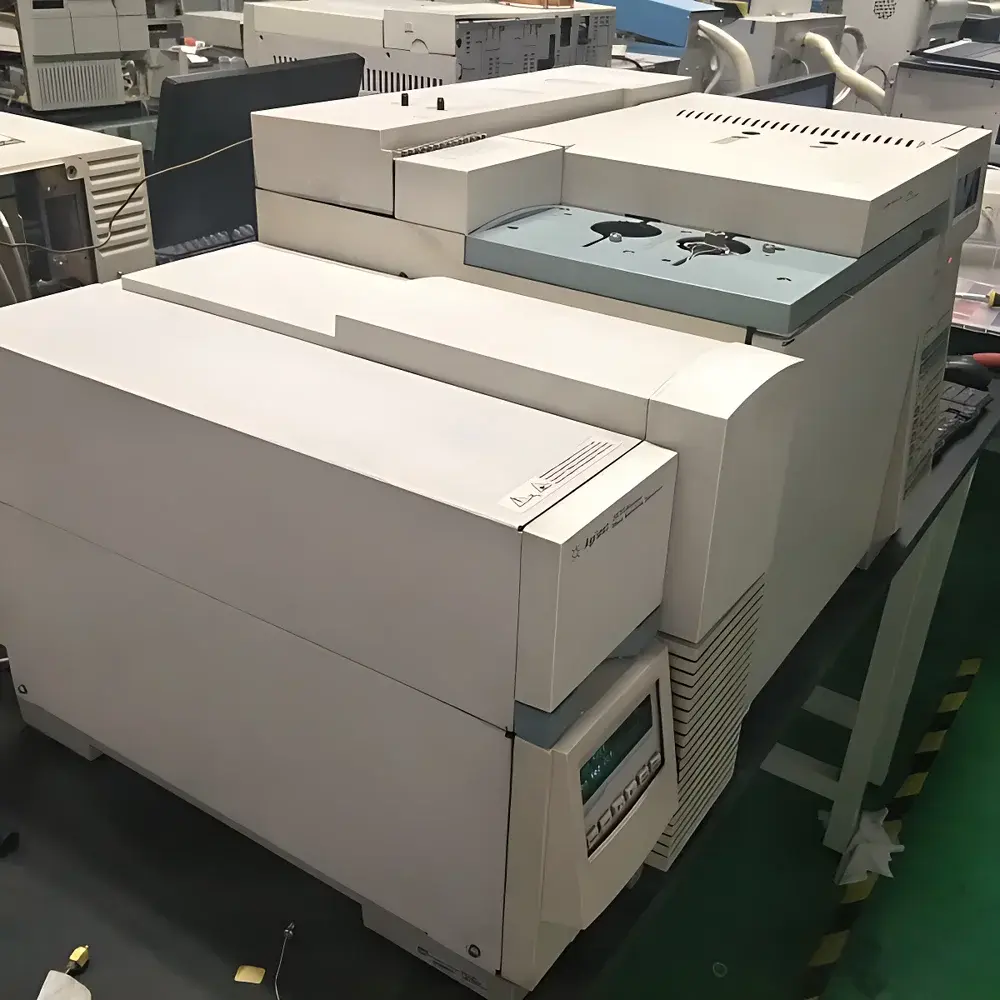
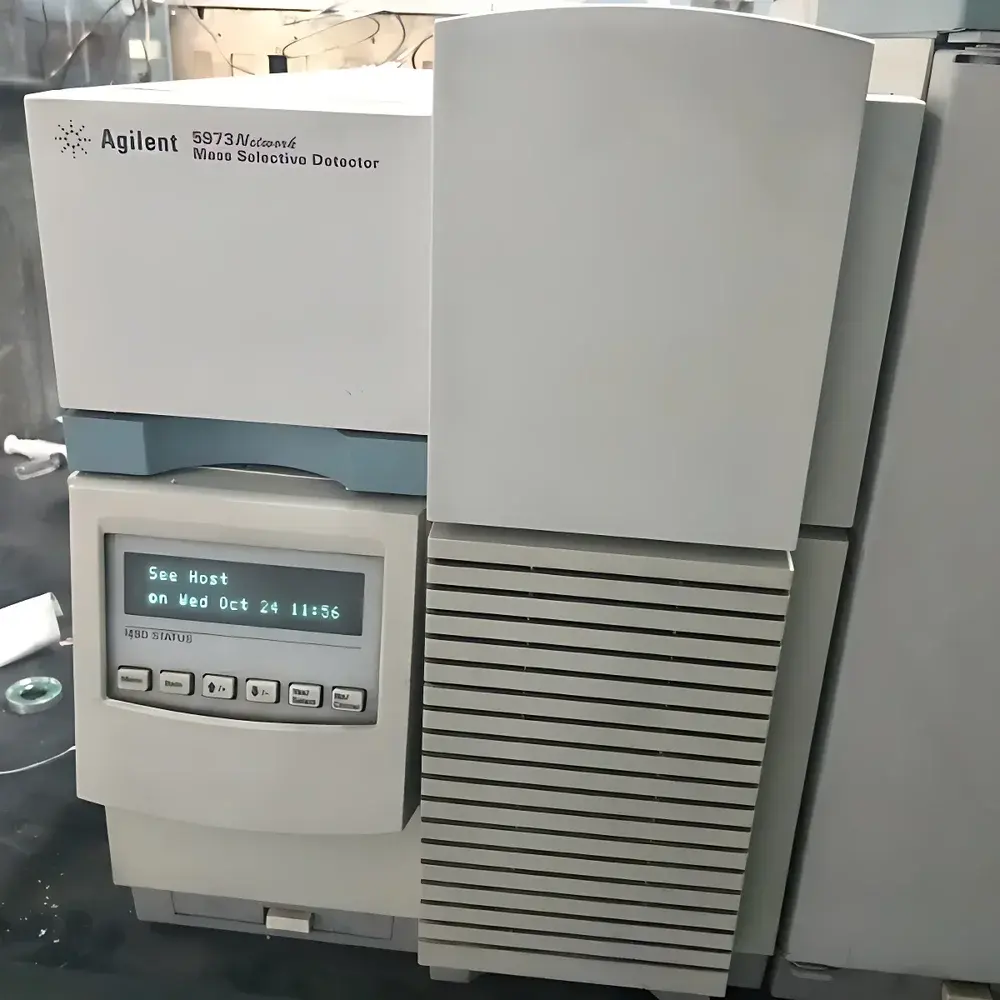
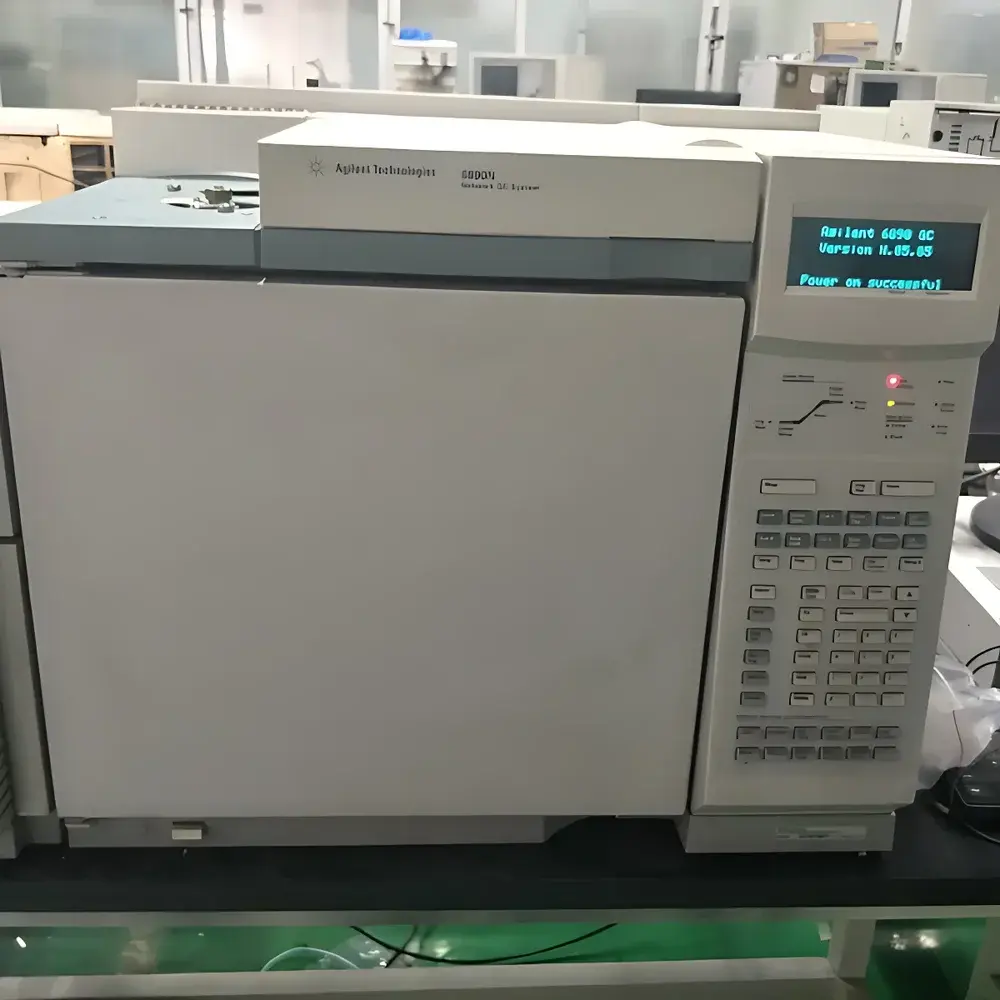
Agilent 6890N GC coupled with 5973N Single Quadrupole Mass Selective Detector (Used)
| Brand | Agilent Technologies |
|---|---|
| Origin | USA |
| Model | 6890N-5973N |
| Instrument Type | Single Quadrupole GC-MS System |
| GC Configuration | Conventional Capillary Gas Chromatograph |
| MS Analyzer Type | Quadrupole Mass Filter |
| Mass Range | 1.5–650 u (nominal mass scale) |
| Resolution | Unit mass resolution (typical, 10% valley definition) |
| Sensitivity | <10 fg OFN (octafluoronaphthalene) in full-scan mode (m/z 272, S/N ≥ 10:1) |
| Scan Speed | Up to 6,400 Da/sec (full-scan, 0.1 sec/decade) |
Overview
The Agilent 6890N Gas Chromatograph coupled with the 5973N Mass Selective Detector (MSD) is a robust, high-performance single quadrupole gas chromatography–mass spectrometry (GC-MS) system engineered for routine qualitative and quantitative analysis in regulated and research laboratories. This configuration operates on the principle of electron ionization (EI) coupled with quadrupole mass filtering—where analytes eluting from the GC column are ionized in the source, separated by mass-to-charge ratio (m/z) in the quadrupole mass analyzer under RF/DC voltage scanning, and detected via an electron multiplier. Designed for stability and reproducibility, the 6890N GC features precision pneumatic control, oven temperature uniformity ±0.01 °C, and compatibility with split/splitless, on-column, and PTV injectors. The 5973N MSD delivers unit mass resolution across its nominal mass range of 1.5–650 u, supporting full-scan, selected ion monitoring (SIM), and tune-based autotuning protocols compliant with standard operating procedures in environmental, pharmaceutical, and food safety testing.
Key Features
- Agilent 6890N GC platform with dual independent temperature zones, programmable oven ramp rates up to 120 °C/min, and integrated electronic pressure control (EPC) for carrier gas flow accuracy within ±0.01 psi.
- 5973N MSD featuring a high-efficiency EI source, curved-plate quadrupole for improved ion transmission, and a triple-axis detector offering enhanced signal-to-noise ratio and extended dynamic range.
- Auto-tune capability per ASTM E2272–22 standards, enabling automated mass calibration, resolution verification, and sensitivity optimization using perfluorotributylamine (PFTBA).
- Robust architecture designed for long-term operational stability—validated for >5,000 hours of continuous operation under GLP-compliant conditions when maintained per Agilent’s service bulletins.
- Backward-compatible with ChemStation software (G1701DA/E/F versions), supporting method development, data acquisition, spectral library searching (NIST/EPA/NIH), and report generation with audit-trail-ready metadata logging.
Sample Compatibility & Compliance
This GC-MS system accommodates volatile and semi-volatile organic compounds (VOCs/SVOCs) with boiling points up to ~350 °C and molecular weights below 650 Da—including pesticides, PAHs, phthalates, residual solvents, and environmental contaminants. It supports direct injection, thermal desorption (with optional TD unit), and purge-and-trap interfaces. The system meets essential regulatory alignment requirements: methods developed on this platform are routinely validated per USP , EPA Methods 8270D/8260C, and ISO 17025:2017 clause 7.2.2 for method suitability. While not natively 21 CFR Part 11 compliant in legacy ChemStation configurations, it supports electronic signatures and audit trails when deployed with validated networked server environments and documented change control procedures.
Software & Data Management
Data acquisition and processing are performed using Agilent ChemStation (G1701DA/E/F), which provides real-time chromatogram display, peak integration with customizable baselines, spectral deconvolution (AMDIS), and compound identification via NIST MS Search. Raw data files (.D directories) retain full instrument parameter metadata, including tune reports, acquisition timestamps, and hardware configuration logs—enabling traceability during internal audits or regulatory inspections. All processed results export to CSV, PDF, or XML formats compatible with LIMS integration. Software licensing is transferable upon formal Agilent re-registration; no dongle or activation lock restricts post-purchase deployment.
Applications
- Environmental testing: Quantification of chlorinated hydrocarbons, organophosphates, and brominated flame retardants in soil, water, and air matrices per EPA SW-846 protocols.
- Pharmaceutical QC: Residual solvent analysis in drug substances and products (ICH Q3C guidelines), extractables/leachables profiling in packaging materials.
- Food safety: Screening for mycotoxins (e.g., aflatoxin B1), pesticide residues, and adulterants in raw agricultural commodities and processed foods.
- Forensic toxicology: Confirmation of controlled substances and metabolites in biological fluids using SIM-mode quantitation with internal standard calibration.
- Academic research: Reaction monitoring, natural product isolation characterization, and degradation pathway elucidation via retention index correlation and spectral matching.
FAQ
Is this system certified for GMP/GLP compliance?
No standalone certification is issued; however, the hardware and ChemStation software are widely deployed in GLP-regulated labs. Full compliance requires documented IQ/OQ/PQ validation, SOP-controlled operation, and periodic performance verification per Agilent Application Note 5989-4319EN.
What maintenance history is available for this used unit?
Each unit undergoes pre-delivery inspection including source cleaning, quadrupole bake-out, vacuum integrity test (<5×10⁻⁶ Torr base pressure), and full-system tune verification. A detailed service log (where available) is provided with shipment.
Can I upgrade the 5973N to support PCI or NICI modes?
The 5973N supports both electron ionization (EI) and chemical ionization (CI) with optional CI source kits (G1099A/B); negative ion CI (NICI) is achievable but requires dedicated tuning and calibration for each analyte class.
Does the system include a computer and software license?
Yes—configured with a Windows 7/10-compatible PC preloaded with licensed ChemStation software and NIST 2017 spectral library; all drivers and firmware patches current as of last refurbishment date.
What consumables and spare parts are recommended for initial operation?
Standard kit includes GC inlet septa, gold-plated ferrules, 30 m × 0.25 mm × 0.25 µm DB-5ms column, PFTBA tuning standard, and MSD source cleaning tools—sufficient for first 6 months of routine use.
Related Products



