
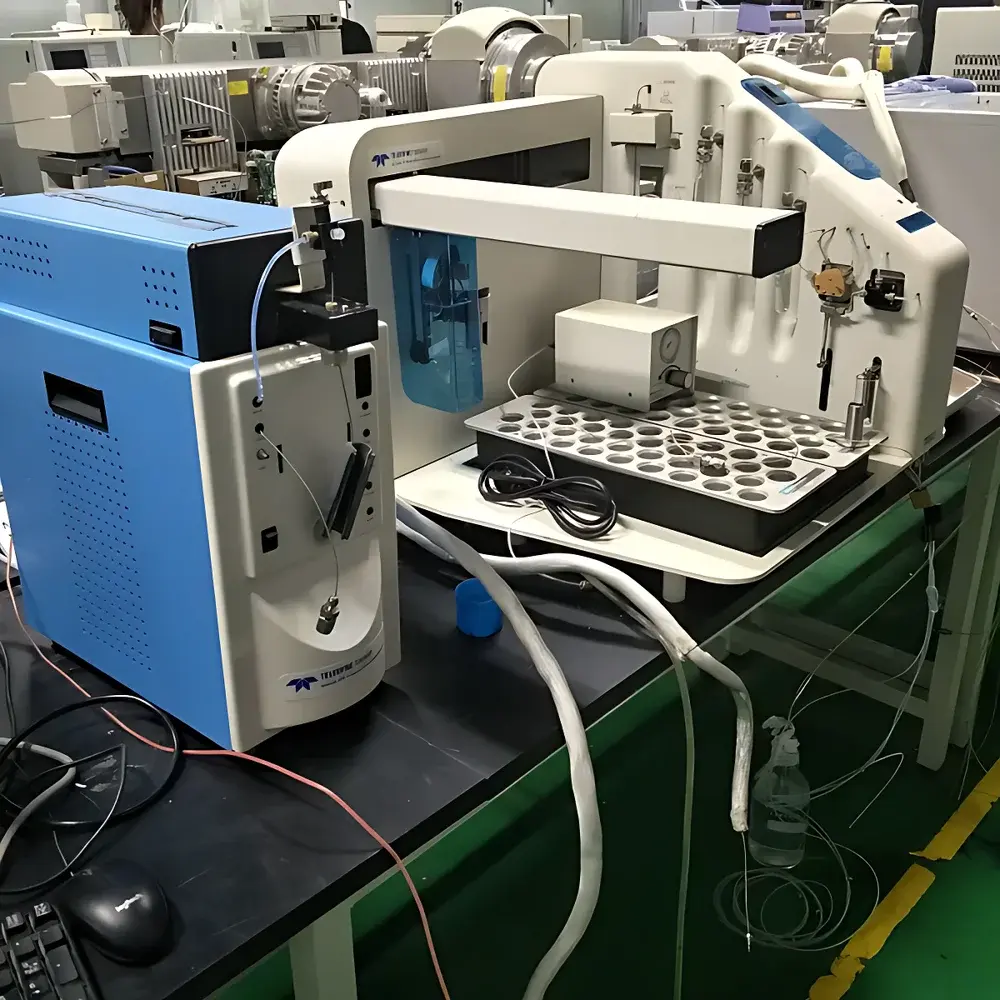
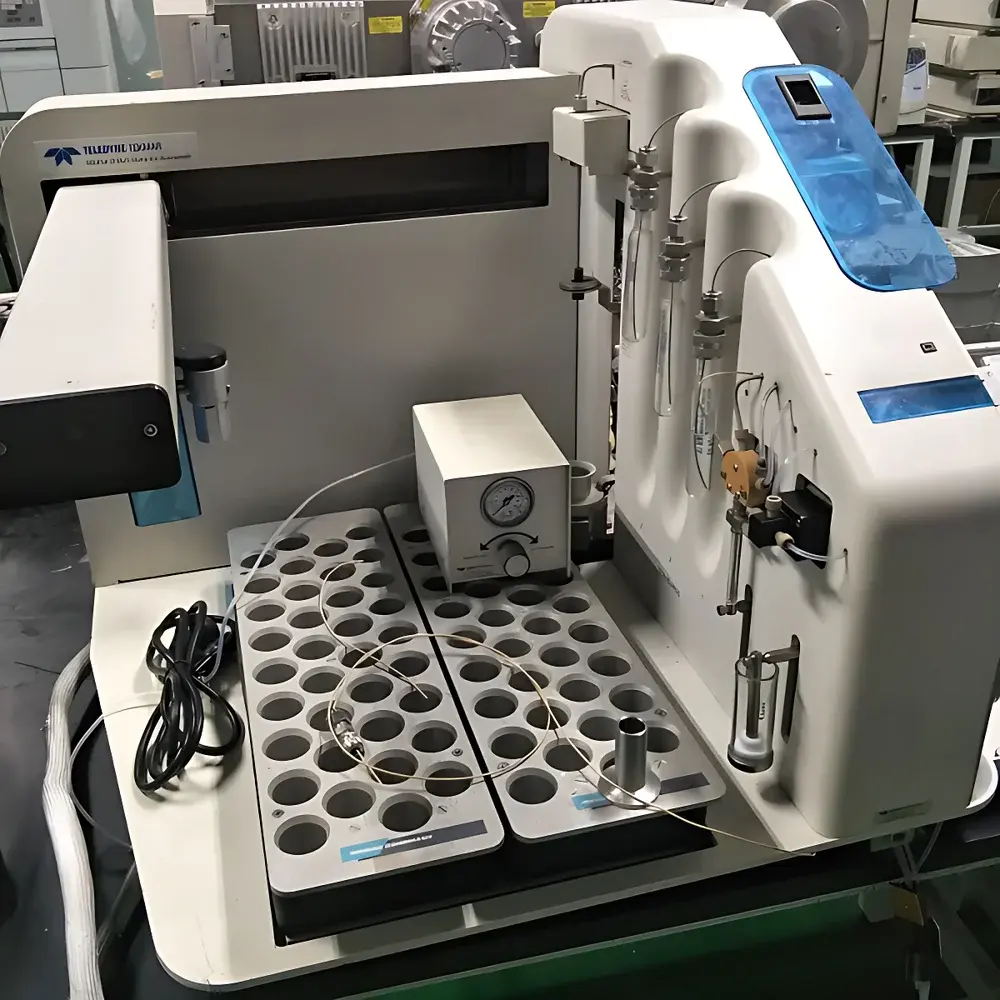
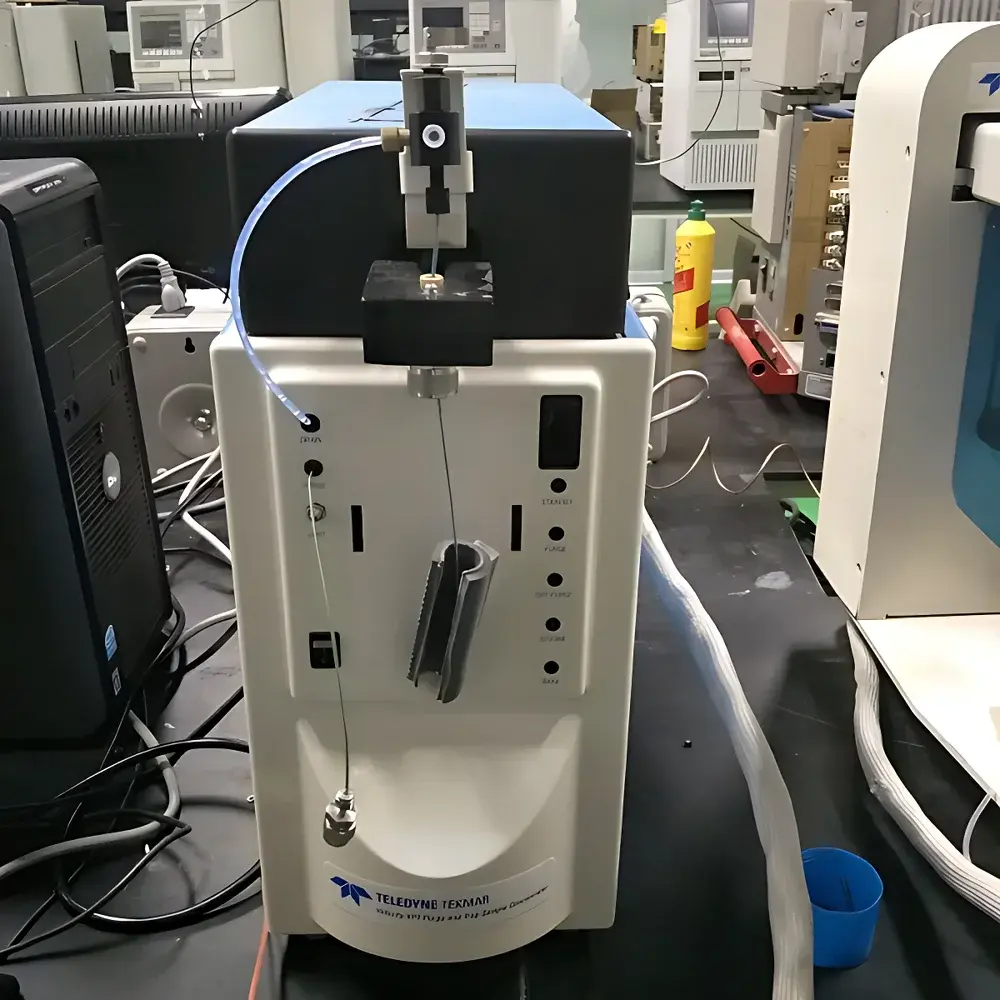
Tekmar Velocity XPT Purge and Trap System for Flavor Compound Analysis in Edible Oils (Refurbished)
| Origin | USA |
|---|---|
| Supplier Type | Authorized Distributor |
| Import Status | Imported |
| Model | Velocity XPT |
| Instrument Category | Water & Soil Integrated Purge and Trap System |
| Sample Tray Capacity | 72 positions |
| Injection Precision | RSD < 3% (typical, per ASTM D6059) |
| Trap Temperature Range | 180–300 °C |
| Sample Heating Temperature Range | –90 to 100 °C (cryogenic to ambient heating) |
| Vial Cooling Temperature Range | 4–10 °C |
Overview
The Tekmar Velocity XPT is a high-throughput, water- and soil-compatible purge and trap (P&T) system engineered for trace-level volatile organic compound (VOC) and semi-volatile flavor compound analysis—particularly in complex, high-fat matrices such as edible oils. It operates on the principle of dynamic headspace extraction: an inert carrier gas (typically helium or nitrogen) continuously purges the vapor phase above a temperature-controlled sample, transferring analytes onto a multi-bed sorbent trap. Following desorption via rapid resistive heating, trapped compounds are transferred quantitatively to a gas chromatograph (GC) or GC–MS for separation and detection. Unlike static headspace, this technique enables near-complete recovery of low-volatility and polar volatiles—including aldehydes, ketones, lactones, furans, and sulfur-containing aroma compounds—without thermal degradation or matrix interference. Its cryogenic sample cooling (4–10 °C) and sub-ambient heating capability (down to –90 °C) support precise control over partitioning equilibria, minimizing artifact formation and maximizing reproducibility across diverse food matrices.
Key Features
- 72-position autosampler with programmable vial cooling (4–10 °C), ensuring thermal stability for heat-labile aroma compounds during extended batch runs.
- Independent flow control across purge, dry purge, and bake steps—enabling optimization of analyte transfer efficiency and minimizing carryover.
- Trap temperature range of 180–300 °C supports robust desorption of high-boiling-point flavorants (e.g., γ-decalactone, sotolon) while maintaining sorbent integrity.
- Integrated cryogenic sample heating module (–90 °C to 100 °C) allows controlled volatilization of highly polar or thermally labile species without solvent addition or derivatization.
- 25% reduction in trap cool-down time post-bake versus prior-generation systems, improving cycle time and laboratory throughput.
- Modular architecture compliant with ASTM D6059, EPA Method 502.2/524.4, and ISO 17943 for VOC analysis in aqueous and solid-phase samples.
Sample Compatibility & Compliance
The Velocity XPT accommodates direct analysis of liquid oils (e.g., olive, soybean, coconut), emulsified dairy products, fermented condiments (soy sauce, vinegar), roasted coffee extracts, and solid foods (cheese, garlic, truffle) following minimal preparation (e.g., dilution in aqueous buffer or saline). Its hydrophobic sorbent configuration (e.g., Tenax TA/Carboxen 1000/Carbopack B) effectively excludes water and methanol during trapping—preventing column contamination and extending GC liner and detector lifetime. The system meets requirements for GLP-compliant laboratories and supports audit-ready data handling under FDA 21 CFR Part 11 when paired with validated LIMS or Chromatography Data Systems (CDS). All method parameters—including purge time, trap desorption ramp, and GC transfer line temperature—are fully scriptable and logged with electronic signatures.
Software & Data Management
Controlled via TekLink™ software (v5.2+), the Velocity XPT provides method-driven automation, real-time status monitoring, and full audit trail generation—including user login, parameter changes, sequence execution logs, and instrument error codes. Data export conforms to AIA (.cdf) format for seamless integration with major CDS platforms (Thermo Chromeleon, Agilent OpenLab, Waters Empower). Calibration verification reports include retention time stability, peak area RSD (<3%), and internal standard recovery (85–115%)—all auto-calculated per run. Software validation packages (IQ/OQ/PQ documentation) are available upon request for regulated environments.
Applications
This refurbished Velocity XPT system is routinely deployed in food authenticity labs, QC/QA departments of edible oil producers, and academic flavor chemistry research groups. Documented use cases include: profiling oxidation-derived off-flavors (hexanal, 2,4-decadienal) in refined vegetable oils; differentiating cold-pressed vs. solvent-extracted olive oil based on volatile terpene and phenylpropanoid signatures; quantifying Maillard reaction markers (furfural, 5-HMF) in roasted sesame oil; and screening for adulteration via characteristic VOC fingerprints. It also supports environmental compliance testing (EPA 524.4), pharmaceutical residual solvent analysis (ICH Q3C), and consumer product safety screening (e.g., VOCs in infant formula packaging leachates).
FAQ
Is this a factory-refurbished unit with full performance certification?
Yes—each Velocity XPT undergoes comprehensive functional testing, leak verification, trap efficiency validation (using chlorobenzene and naphthalene standards), and calibration against NIST-traceable reference materials prior to shipment.
Can it be integrated with my existing Agilent 8890 GC and MassHunter software?
Yes—the system includes native drivers for Agilent ChemStation and MassHunter, supporting triggered acquisition, retention time locking, and automated report generation.
What maintenance is required between sample batches?
Standard protocol includes automatic trap bake-out (280 °C for 5 min), blank run verification, and quarterly sorbent trap replacement—documented in the included Preventive Maintenance Logbook.
Does the system support unattended overnight operation?
Yes—72-position capacity, scheduled start/stop, and hardware-based fault detection (e.g., pressure loss, temperature deviation) enable fully autonomous overnight sequences.
Is method transfer support available from the supplier?
Yes—application notes, SOP templates, and remote method optimization assistance are provided at no additional cost for qualified laboratories.
Related Products




