
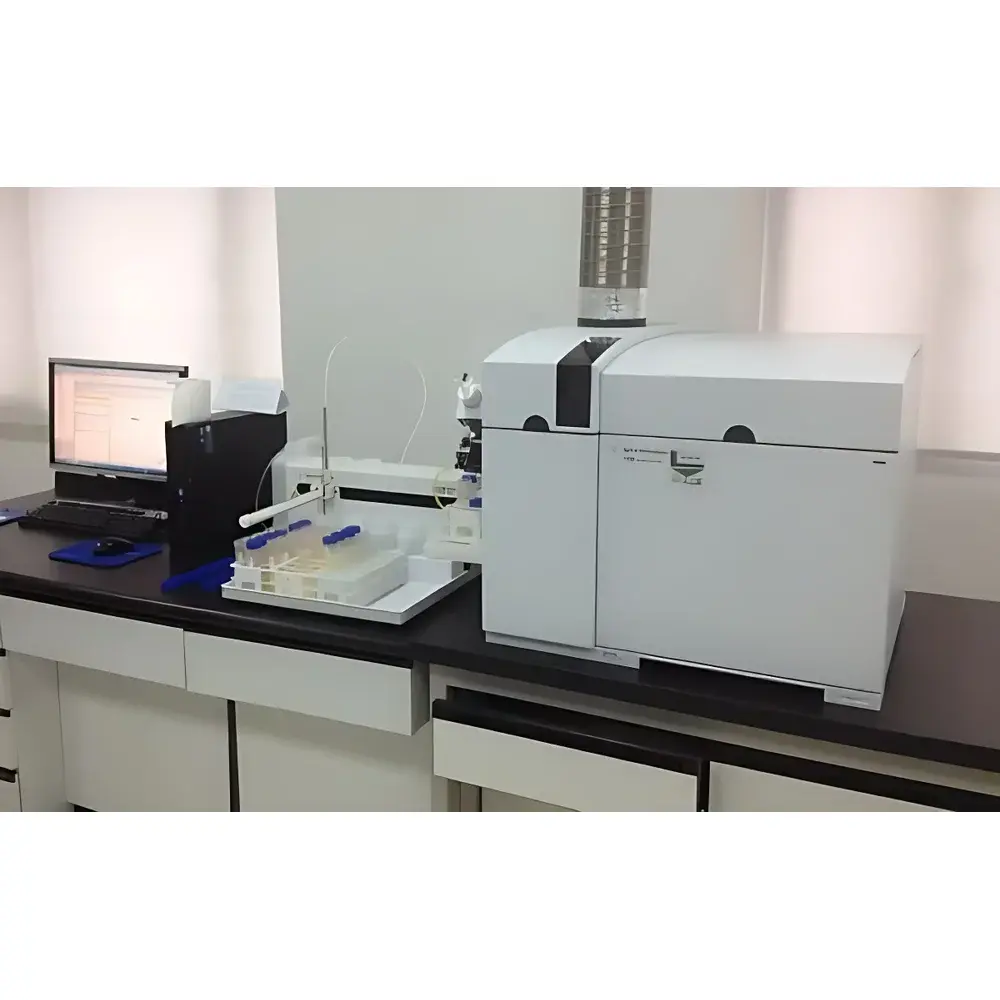
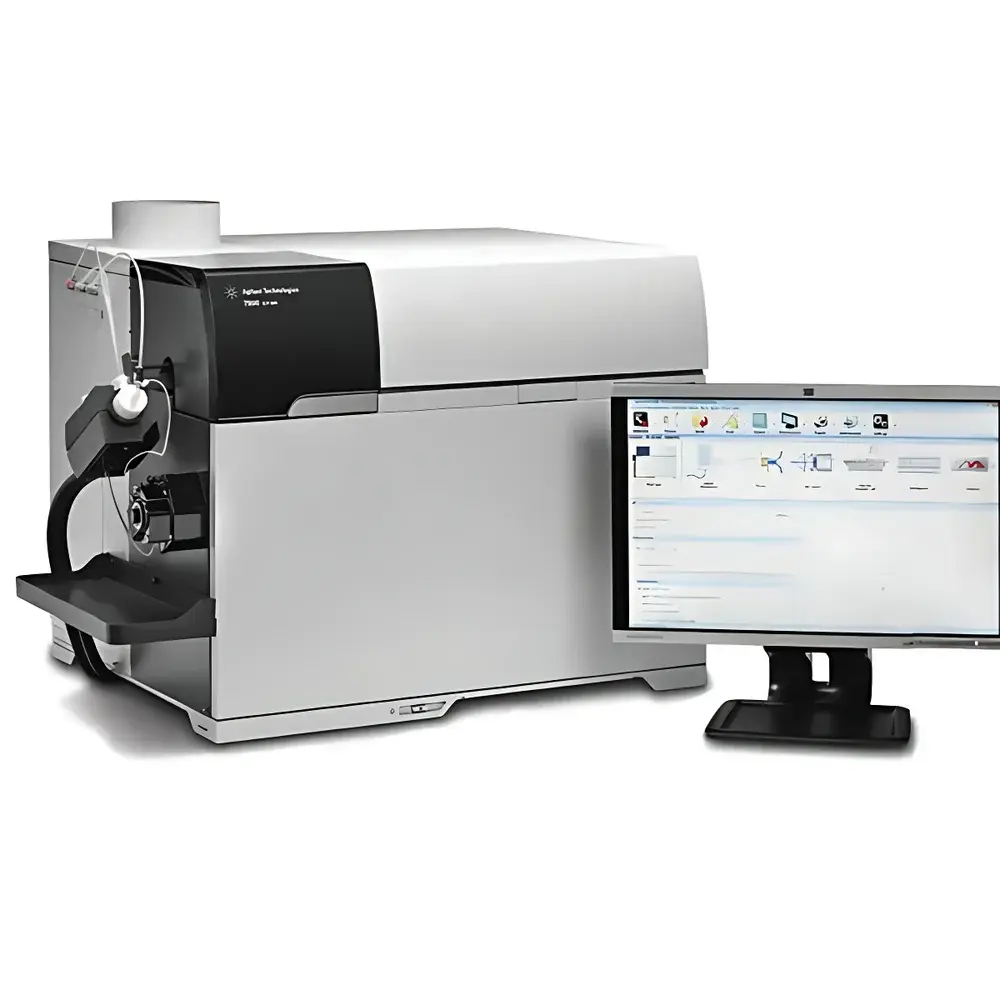
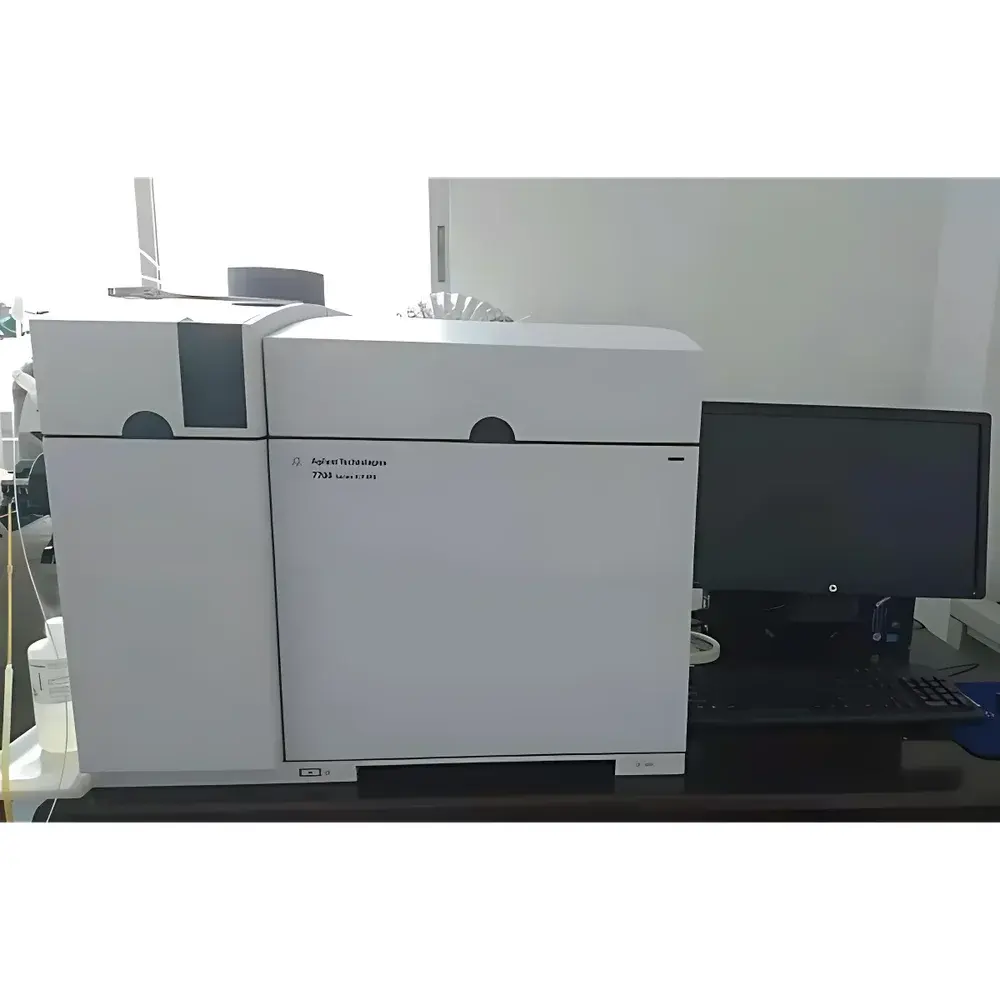
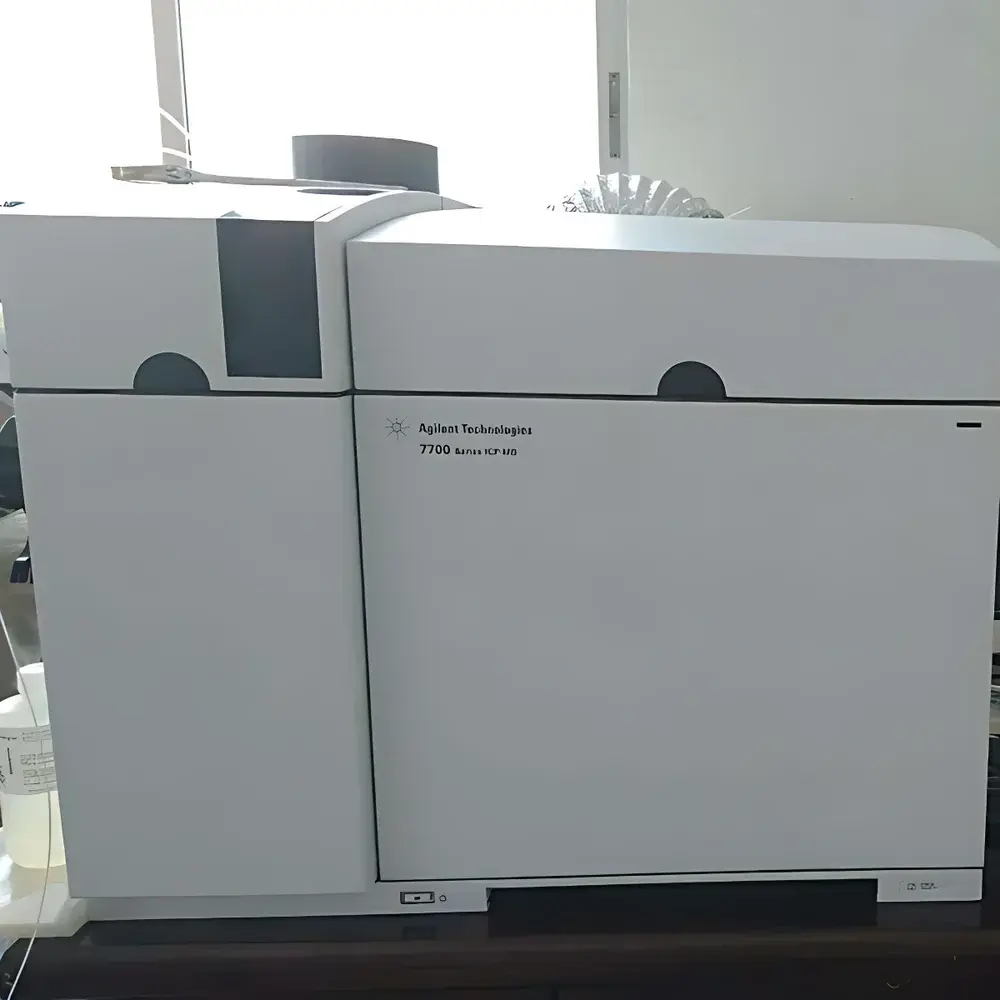
Agilent 7700 ICP-MS (Inductively Coupled Plasma Mass Spectrometer) – Refurbished System
| Brand | Agilent Technologies |
|---|---|
| Origin | USA |
| Model | Agilent 7700 |
| Instrument Type | Quadrupole Mass Spectrometer |
| Mass Resolution (Unit Mass Resolution, amu) | ≤ 0.8 |
| Detection Limit | sub-ppq ng·L⁻¹ |
| Sensitivity (Mcps / mg·L⁻¹) | Be ≥ 5, In ≥ 30, Bi ≥ 20 |
Overview
The Agilent 7700 ICP-MS is a high-performance, quadrupole-based inductively coupled plasma mass spectrometer engineered for ultra-trace elemental analysis in complex matrices. Utilizing robust RF-driven plasma ionization at ~1 kW, the system generates stable, high-temperature argon plasma (>6,000 K), enabling near-complete atomization and ionization of analytes across the periodic table (Li to U). Coupled with a high-transmission ion optics path, energy-filtering collision/reaction cell (CRC), and low-noise electron multiplier detection, the Agilent 7700 delivers exceptional signal-to-background ratios and long-term stability—critical for regulatory-compliant quantification in environmental monitoring, clinical research, semiconductor materials testing, and geochemical profiling.
Key Features
- Quadrupole mass analyzer with ≤ 0.8 amu unit mass resolution, optimized for routine high-throughput screening and isotopic ratio measurements.
- Octopole reaction cell (ORS3™) with dynamic reaction cell (DRC) capability, enabling on-the-fly interference removal via controlled gas reactions (e.g., He, H₂, NH₃) without hardware reconfiguration.
- Integrated autosampler compatibility with standard 48- or 144-position racks; supports programmable wash cycles, internal standard addition, and multi-isotope dilution protocols.
- Robust RF generator with automatic impedance matching and plasma ignition feedback control—ensuring stable operation under variable matrix loads (e.g., seawater, digested tissue, high-TDS wastewater).
- Low-background vacuum architecture featuring dual-stage turbomolecular pumping (≥ 300 L/s on MS stage), minimizing oxide and doubly charged ion formation (<1.5% CeO⁺/Ce⁺).
- Factory-refurbished configuration includes full recalibration, detector replacement (if warranted), and comprehensive performance verification per Agilent’s ICP-MS System Suitability Test (SST) protocol.
Sample Compatibility & Compliance
The Agilent 7700 accommodates liquid samples introduced via concentric nebulizer and cyclonic spray chamber (standard PFA or quartz configurations), with optional laser ablation (LA-ICP-MS) and hydride generation (HG-ICP-MS) interfaces available. It meets ASTM D5673 (trace metals in water), ISO 17294-2 (water quality — ICP-MS methods), and USP / (elemental impurities in pharmaceuticals). Data integrity complies with FDA 21 CFR Part 11 requirements when operated with Agilent MassHunter Software v10.1 or later, supporting audit trails, electronic signatures, and role-based access control. All refurbished units undergo GLP-aligned validation documentation, including instrument qualification (IQ/OQ/PQ) summary reports and calibration certificate traceable to NIST SRMs.
Software & Data Management
Controlled exclusively by Agilent MassHunter Workstation Software (Data Acquisition and Quantitative Analysis modules), the system supports method development with real-time tuning optimization, isotope dilution mass spectrometry (IDMS), and multi-element calibration curves (linear, quadratic, or weighted regression). Raw data files (.d format) are stored in vendor-neutral, open-accessible structures compliant with ASTM E2524. Batch processing, QC flagging (e.g., drift correction, internal standard recovery thresholds), and automated report generation (PDF/Excel) are fully scriptable. Data archival adheres to ISO/IEC 17025:2017 clause 7.5.2—ensuring retrievability, version control, and metadata completeness for regulatory audits.
Applications
- Environmental laboratories: Quantification of As, Cd, Pb, U, and rare earth elements (REEs) in drinking water, soil extracts, and airborne particulates at sub-pg/g levels.
- Pharmaceutical QA/QC: Elemental impurity testing per ICH Q3D guidelines—especially for catalyst residues (Pd, Pt, Rh) in active pharmaceutical ingredients (APIs).
- Geochemistry & nuclear forensics: Isotopic fingerprinting of Sr, Nd, Hf, and Pb in rock digests and uranium ore concentrates.
- Food safety: Screening for toxic elements (e.g., inorganic As in rice, Tl in seafood) and nutrient profiling (Se, Zn, I) with certified reference material (CRM) traceability.
- High-purity materials: Detection of metallic contaminants (Fe, Ni, Cr) in semiconductor-grade silicon wafers and battery cathode precursors at ≤10¹⁰ atoms/cm² sensitivity.
FAQ
Is this a factory-refurbished unit or third-party refurbished?
All Agilent 7700 systems are refurbished by Agilent-certified service centers following original equipment manufacturer (OEM) procedures—including full disassembly, component-level inspection, replacement of wear-prone parts (pumps, detectors, torches), and end-to-end performance validation against factory specifications.
What documentation accompanies the instrument?
Each unit ships with a complete refurbishment report, SST results, calibration certificate (NIST-traceable), IQ/OQ summary, MassHunter software license (perpetual, with 12-month support), and Agilent’s 12-month limited warranty covering parts and labor.
Can the system be configured for single-collector or multi-collector operation?
The Agilent 7700 is a single-collector quadrupole platform. For multi-collector applications (e.g., high-precision isotope ratio analysis), Agilent’s Neptune Plus MC-ICP-MS is recommended.
Does the system support hyphenated techniques such as LC-ICP-MS?
Yes—the Agilent 7700 features standardized analog/digital I/O ports and time-resolved acquisition modes compatible with HPLC, IC, and CE interfaces for speciation analysis (e.g., As(III)/As(V), Cr(III)/Cr(VI)).
What maintenance contracts are available post-purchase?
Extended service agreements (ESA) include priority remote diagnostics, annual preventive maintenance visits, spare parts kits, and unlimited technical support—available in 1-, 2-, or 3-year increments with flexible start dates.




