
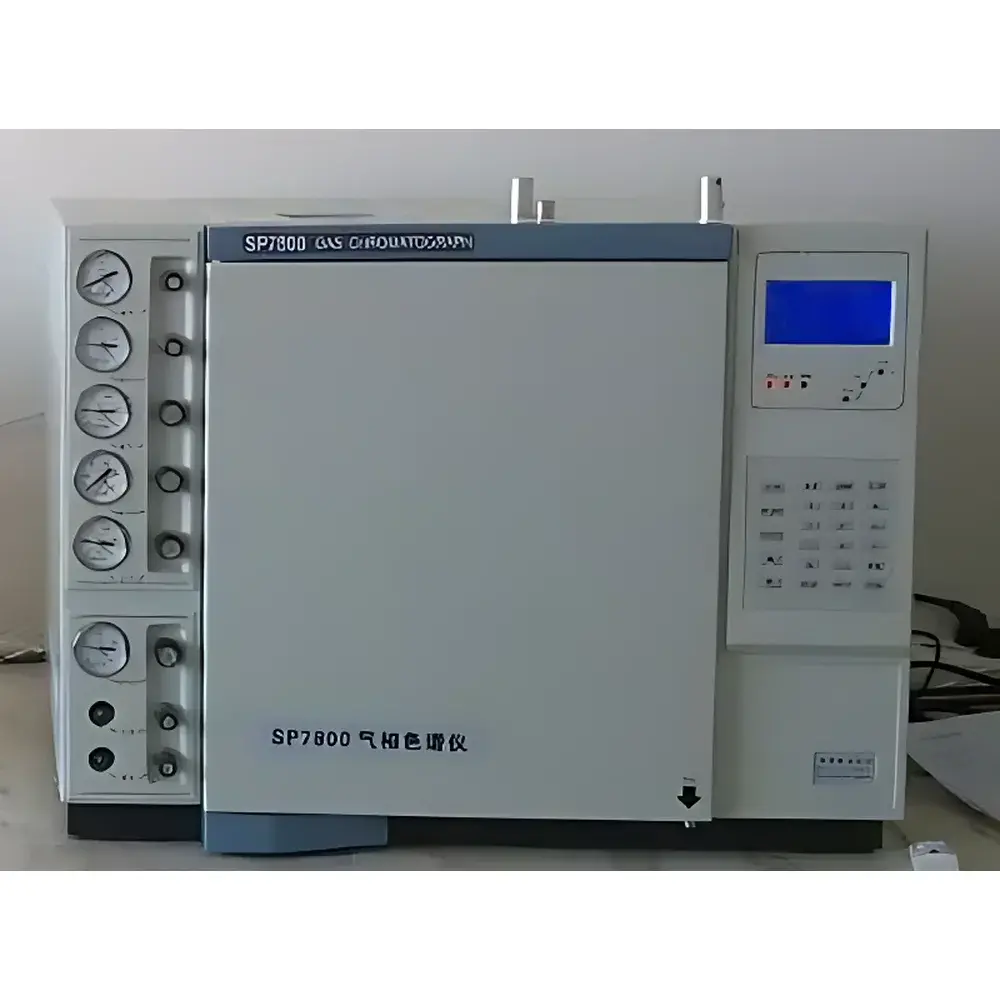
Liquefied Petroleum Gas (LPG) Analysis Gas Chromatograph
| Origin | Beijing, China |
|---|---|
| Manufacturer Type | Authorized Distributor |
| Model | LPG-Analyzer GC Series |
| Price | Available Upon Request |
Overview
The LPG-Analyzer GC Series is a dedicated gas chromatograph engineered for precise compositional analysis of liquefied petroleum gas (LPG) streams in quality control, regulatory compliance, and production monitoring environments. It operates on the fundamental principle of gas–solid or gas–liquid partition chromatography, where volatile components in vaporized LPG samples are separated based on differential affinity toward a stationary phase within a capillary or packed column under controlled carrier gas flow (typically helium, nitrogen, or hydrogen). Detection is performed using a high-stability thermal conductivity detector (TCD), optimized for universal response to permanent gases and hydrocarbons without requiring ionization—making it ideal for routine quantification of propane, butane, isobutane, propylene, butylenes, and critically, dimethyl ether (DME), a common adulterant in commercial LPG.
Key Features
- Five independent temperature-controlled zones—including oven, injector, detector, and two auxiliary modules—enabling simultaneous optimization of separation efficiency, injection integrity, and detector stability.
- Five-step programmable temperature ramping with precision control from ambient +15 °C to 399 °C; temperature stability maintained at ±0.1 °C or better across the full operating range.
- Heated six-port rotary valve sampling system with precise dwell time control, ensuring reproducible introduction of pressurized LPG vapor without condensation or fractionation artifacts.
- Integrated TCD with minimum sensitivity ≥3500 mV·mL/mg (measured with benzene standard), baseline noise ≤0.02 mV, and drift <0.1 mV/h—supporting reliable detection limits below 0.05 vol% for major hydrocarbon components.
- Dedicated LPG analysis software module running on Windows-based acquisition workstation, delivering real-time chromatogram visualization, automatic peak integration, purity calculation (e.g., total C3/C4 hydrocarbons), and quantitative reporting per component (including DME % v/v).
- Robust mechanical architecture (approx. 60 kg net weight) with reinforced thermal insulation and vibration-damped chassis, suitable for industrial laboratory or QC lab deployment without external environmental conditioning.
Sample Compatibility & Compliance
This system is validated for direct analysis of commercial LPG samples—both cylinder-sourced and pipeline-received—without derivatization or pre-concentration. The six-port valve interface accommodates both liquid-phase and vapor-phase injection protocols, with optional pressure regulation and flash vaporization accessories available for high-boiling or multi-phase feedstocks. Method development aligns with ASTM D2163 (Standard Test Method for Hydrocarbons in Liquefied Petroleum (LP) Gases by Gas Chromatography) and GB/T 13291.1–2022 (Chinese national standard for LPG composition analysis). Data handling supports audit-ready reporting compliant with GLP and basic GMP documentation requirements; raw chromatographic data files are stored in vendor-neutral formats (e.g., .cdf or .dx) compatible with third-party review tools.
Software & Data Management
The embedded acquisition and analysis software provides intuitive workflow navigation via fully localized Chinese GUI (with optional English language pack), enabling rapid method setup, calibration curve generation (linear or quadratic), and automated report export (PDF/Excel). All instrument parameters—including temperature ramps, valve timing, detector settings, and integration algorithms—are version-controlled and timestamped. Audit trail functionality records user logins, method modifications, and result approvals, satisfying traceability needs for internal QA reviews. Raw data and processed results are stored with SHA-256 hash integrity verification; optional configuration supports networked deployment with role-based access control for multi-user labs.
Applications
- Quantitative determination of DME adulteration in LPG—critical for fuel safety, combustion performance, and regulatory enforcement (e.g., China’s GB 11174–2011).
- Batch release testing of refinery-grade LPG for C3/C4 ratio, olefin content, and sulfur compound screening (when coupled with sulfur-selective detectors).
- In-process monitoring at bottling plants to verify composition consistency prior to cylinder filling.
- Forensic analysis of substandard LPG samples during quality dispute resolution or regulatory investigation.
- Method transfer support for laboratories transitioning from older packed-column GC systems to modern capillary-based LPG profiling.
FAQ
Does this system require helium as the carrier gas?
No—while helium offers optimal resolution and speed, the instrument is fully configurable for nitrogen or hydrogen carrier gases, with appropriate column selection and detector tuning.
Can it analyze liquefied natural gas (LNG) or compressed natural gas (CNG)?
Not natively—this model is calibrated and validated specifically for LPG-range hydrocarbons (C1–C5); LNG/CNG analysis requires different column chemistry and low-temperature oven capability.
Is 21 CFR Part 11 compliance supported?
The base software does not include electronic signature or full Part 11 functionality; however, an optional validated software package with audit trail, e-signature, and secure user management is available upon request.
What maintenance intervals are recommended for the TCD?
Routine filament inspection and cleaning every 6 months is advised; column reconditioning and detector bake-out should follow standard GC maintenance schedules based on sample load and matrix complexity.
Is remote diagnostics or service support available?
Yes—via secure VPN-enabled remote access, authorized service engineers can perform firmware updates, parameter diagnostics, and basic troubleshooting with customer consent and IT policy alignment.





