
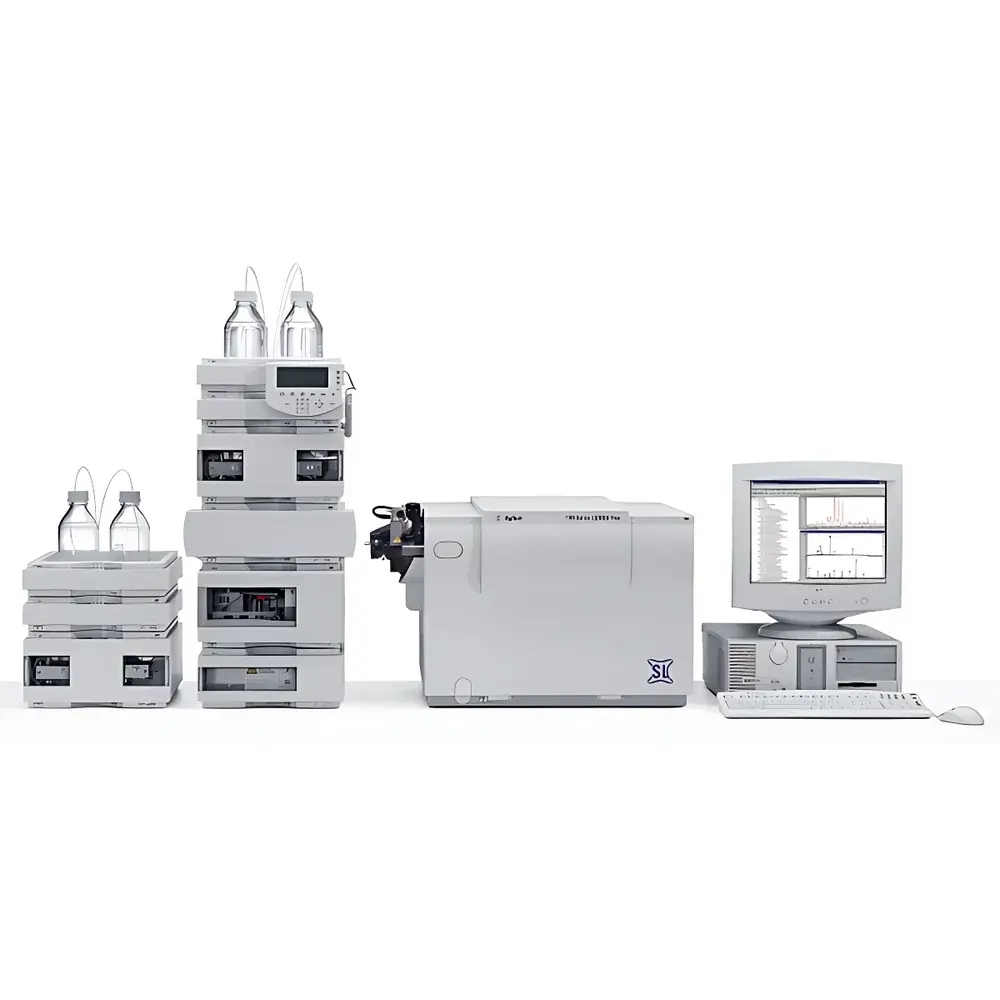
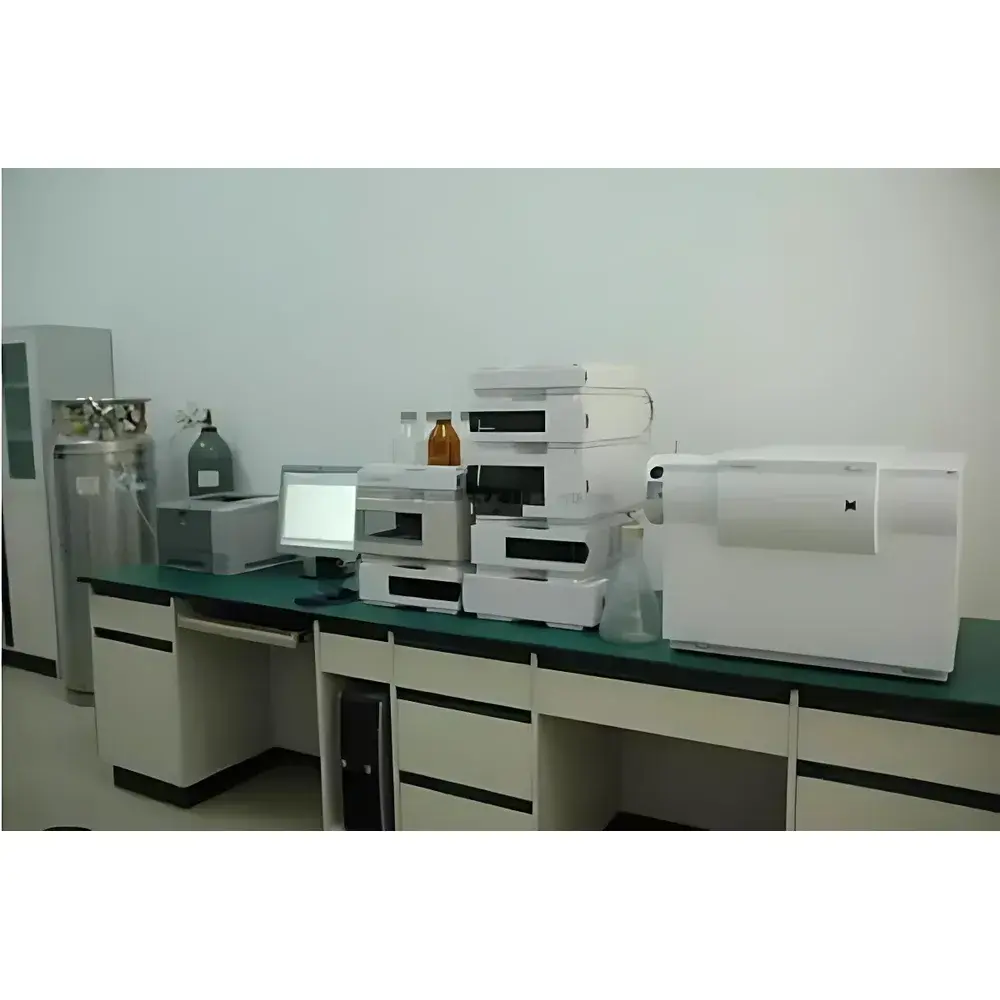
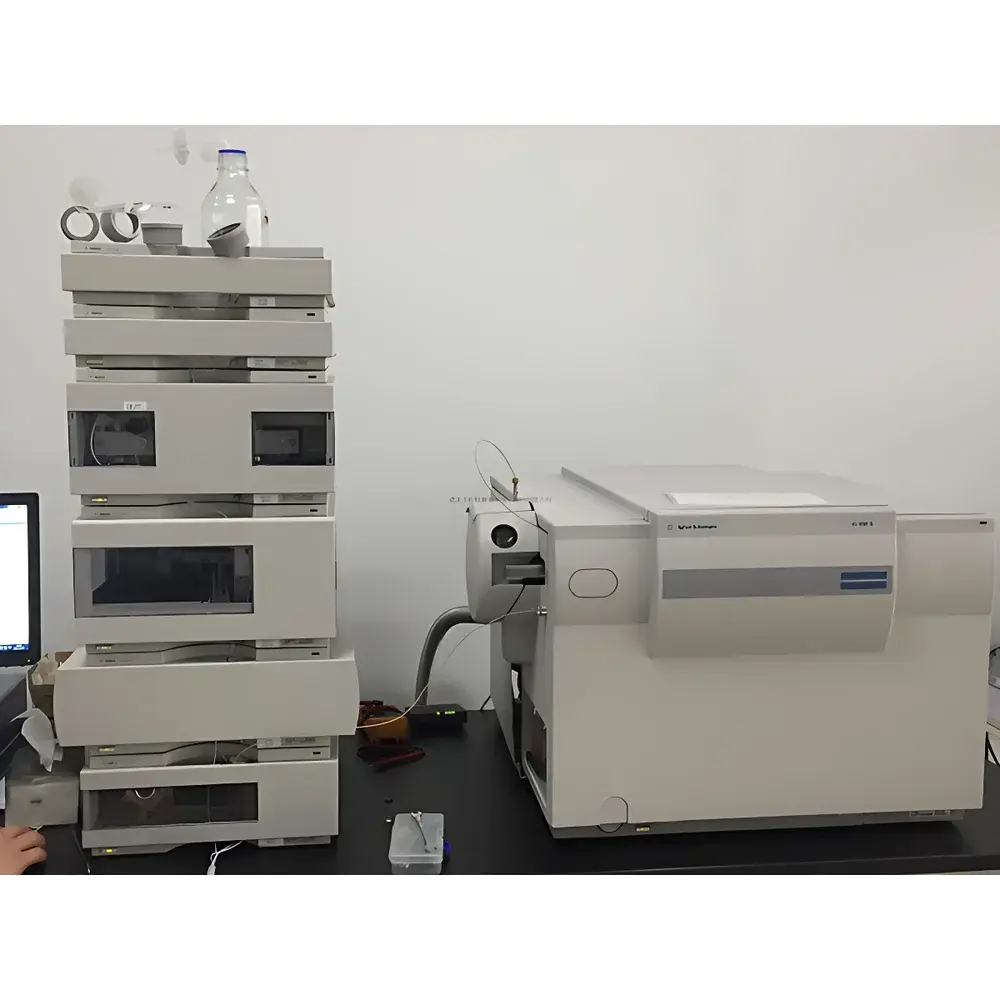
Agilent 1100-1956 Single Quadrupole Liquid Chromatography Mass Spectrometry System
| Brand | Agilent Technologies |
|---|---|
| Origin | USA |
| Manufacturer Type | Authorized Distributor |
| Origin Category | Imported |
| Model | 1100-1956 |
| Instrument Type | Single Quadrupole |
| Mass Range | 10–3000 amu |
| Sensitivity | S/N ≥ 100:1 (1 pg reserpine, ESI+) |
| Resolution | 0.5–0.7 m/z (FWHM) |
| Mass Accuracy | ±0.1 Da (typical, calibrated) |
Overview
The Agilent 1100-1956 LC/MSD is a robust, GLP-compliant single quadrupole liquid chromatography mass spectrometry system engineered for routine quantitative and qualitative analysis in regulated and research laboratories. Based on atmospheric pressure ionization (API) — specifically electrospray ionization (ESI) and atmospheric pressure chemical ionization (APCI) — this instrument couples Agilent’s 1100 Series HPLC platform with a mass-selective detector optimized for high sensitivity, reproducible calibration stability, and seamless integration into automated workflows. Its orthogonal spray interface minimizes matrix-induced signal suppression and source contamination, while the fixed-position ion source ensures consistent ion transmission across variable flow rates (100–1000 µL/min) and mobile phase compositions. Designed for compliance with analytical quality frameworks including FDA 21 CFR Part 11 (when configured with compliant software), ISO/IEC 17025, and USP , the system supports trace-level detection of small molecules, pharmaceuticals, metabolites, and moderately sized peptides in complex biological, environmental, and industrial matrices.
Key Features
- Orthogonal 90° electrospray ion source with integrated nebulizer gas control — enables stable ion generation without manual re-alignment during flow rate or solvent gradient changes
- Single quadrupole mass analyzer with mass range 10–3000 amu and resolution configurable between 0.5–0.7 m/z (FWHM) at unit mass peak width
- Automatic tuning and mass calibration using built-in infusion pump and pre-formulated tuning solution — eliminates manual syringe loading and external calibration standards
- Real-time total ion current control (ICC) to prevent space-charge distortion and maintain resolution during high-abundance ion accumulation
- Fast polarity switching (<200 ms) and simultaneous scanning modes: full-scan, SIM, and alternating positive/negative ion acquisition within a single run
- Integrated hardware interlock with Agilent 1100 Series LC modules — single fluidic connection point reduces leak risk and simplifies installation
- Self-diagnostic firmware with EMF-based event logging — monitors vacuum integrity, detector gain, filament life, and calibration drift; triggers maintenance alerts prior to performance degradation
Sample Compatibility & Compliance
The Agilent 1100-1956 LC/MSD accommodates diverse sample types via dual API ionization modes: ESI for polar, thermally labile, and high-molecular-weight analytes (e.g., drugs, glycosides, oligonucleotides); APCI for less polar, volatile, and low-to-medium MW compounds (e.g., steroids, lipids, pesticides). It interfaces natively with capillary, analytical, and microbore LC systems — including Agilent’s 1100 NanoLC and preparative HPLC modules — without hardware modification. All operational parameters, method files, and audit trails are stored in a secure, timestamped database supporting GLP/GMP data integrity requirements. When operated with ChemStation Rev. A.09.03 or later (configured for 21 CFR Part 11 compliance), the system provides electronic signatures, user access controls, and immutable audit logs for regulatory submissions.
Software & Data Management
Control and data acquisition are managed through Agilent ChemStation software, which provides unified control of LC gradients, MS acquisition parameters, and detector timing. The software supports real-time co-display of UV-DAD and TIC chromatograms with synchronized spectral overlays, enabling peak purity assessment and compound identification without full chromatographic separation. Quantitative workflows include internal standard calibration, multi-level calibration curves, and batch processing with automatic integration and outlier rejection. Raw data (.D directories) are stored in vendor-neutral formats compatible with third-party processing tools (e.g., MassHunter Qualitative Analysis, OpenMS). Audit trail functionality records all parameter modifications, calibration events, and user logins — essential for laboratory accreditation and inspection readiness.
Applications
This system is routinely deployed in pharmaceutical QC/QA labs for assay validation, impurity profiling, and stability-indicating assays per ICH Q2(R2). Environmental testing laboratories use it for pesticide residue screening (EPA Method 1694), PFAS quantification, and wastewater contaminant monitoring. Clinical research facilities apply it to targeted metabolomics (e.g., acylcarnitines, bile acids) and therapeutic drug monitoring (TDM) where robustness and regulatory traceability are mandatory. Its compatibility with nano-LC and capillary electrophoresis extends utility to proteomics core facilities conducting bottom-up peptide mapping and post-translational modification analysis.
FAQ
Is this a refurbished or used instrument? What documentation accompanies it?
This is a pre-owned Agilent 1100-1956 LC/MSD system, fully inspected, functionally tested, and delivered with complete service history, original calibration certificates, and Agilent-certified refurbishment report.
Does the system include a validated method package or IQ/OQ documentation?
Yes — a comprehensive Installation Qualification (IQ) and Operational Qualification (OQ) protocol is provided, aligned with ASTM E2500 and Agilent’s own system verification standards. Custom PQ protocols can be developed upon request.
What level of technical support is available post-purchase?
We offer 12 months of remote diagnostics, firmware updates, and application support via certified Agilent-trained engineers. Extended service contracts include on-site preventive maintenance and priority response.
Can this system be upgraded to support modern data systems such as MassHunter?
While native MassHunter integration requires hardware revision (e.g., MSD B.04.x controller), ChemStation data files are fully importable into MassHunter Qualitative and Quantitative Analysis modules for retrospective reprocessing and reporting.
Is the ESI and APCI source included, and are spare consumables available?
Both ESI and APCI sources are included, along with one set of emitter tips, capillaries, and tuning solution. OEM and qualified third-party consumables (e.g., stainless steel capillaries, ceramic sprayers) are stocked and shipped globally within 48 hours.





