
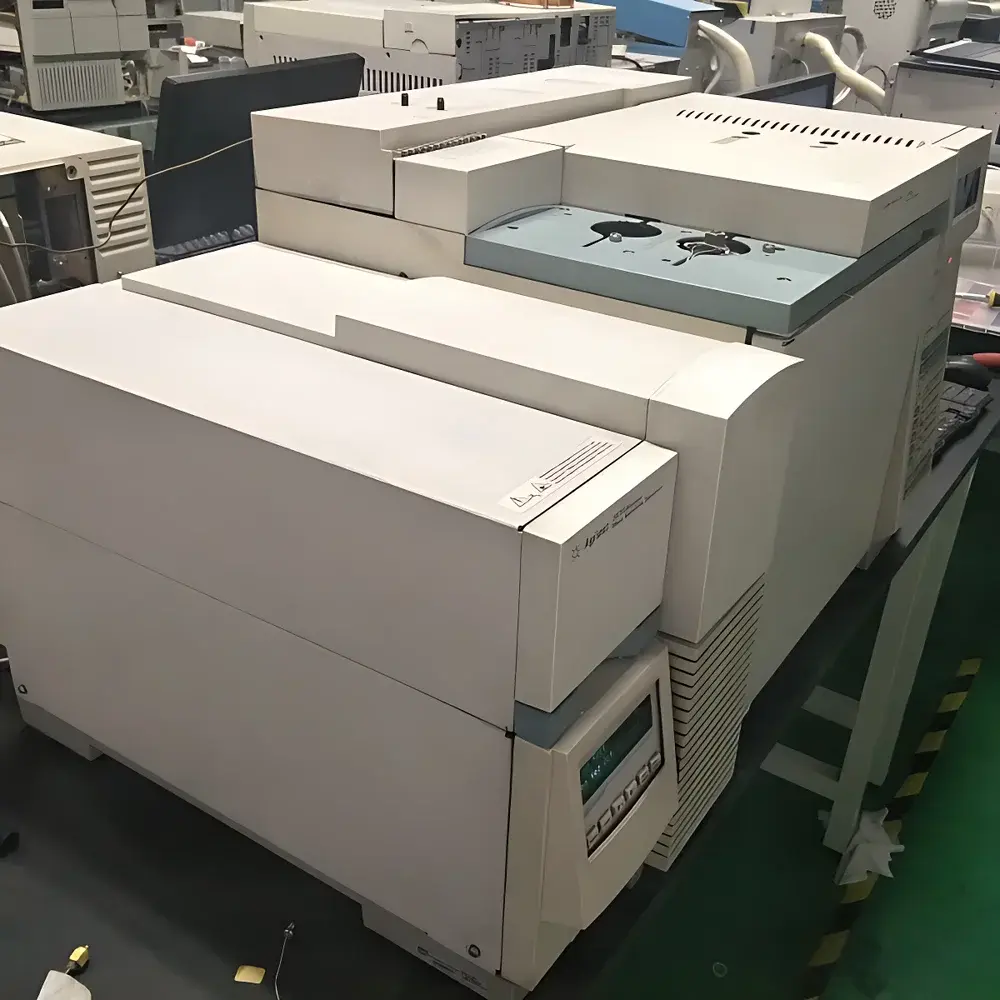
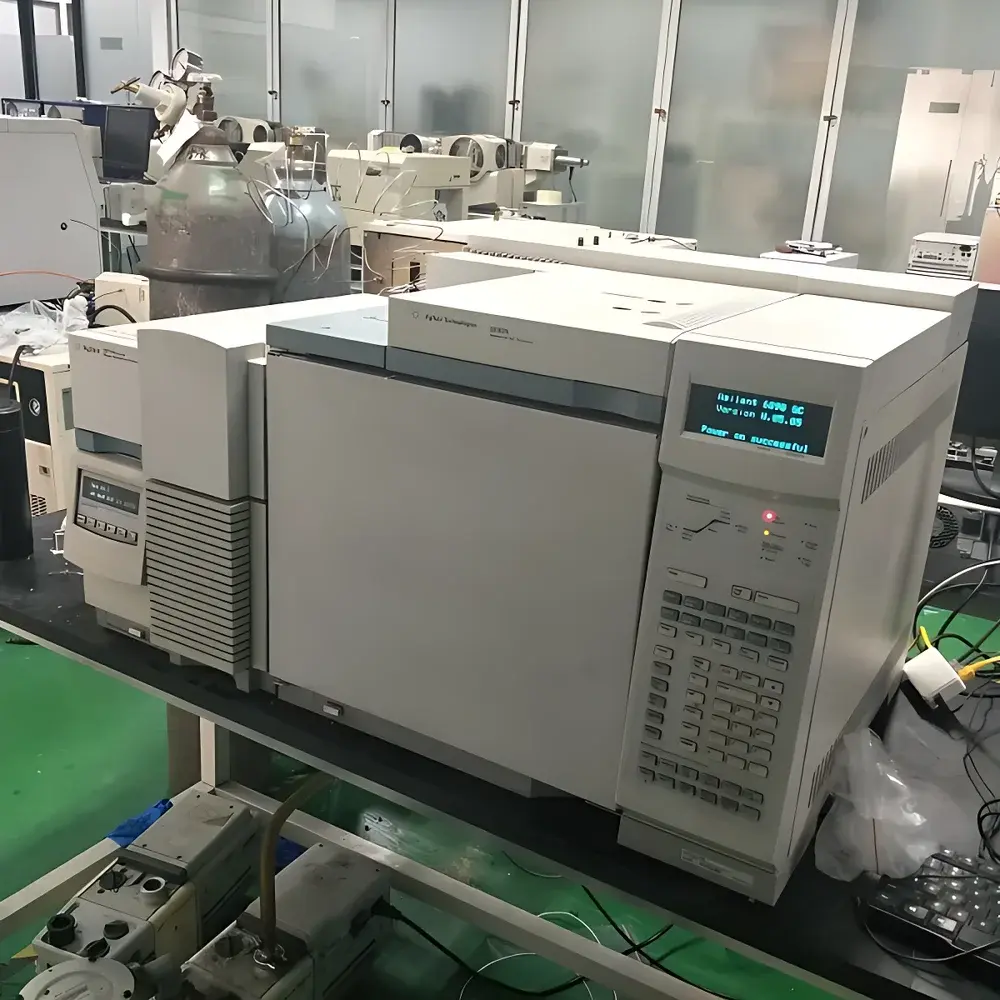
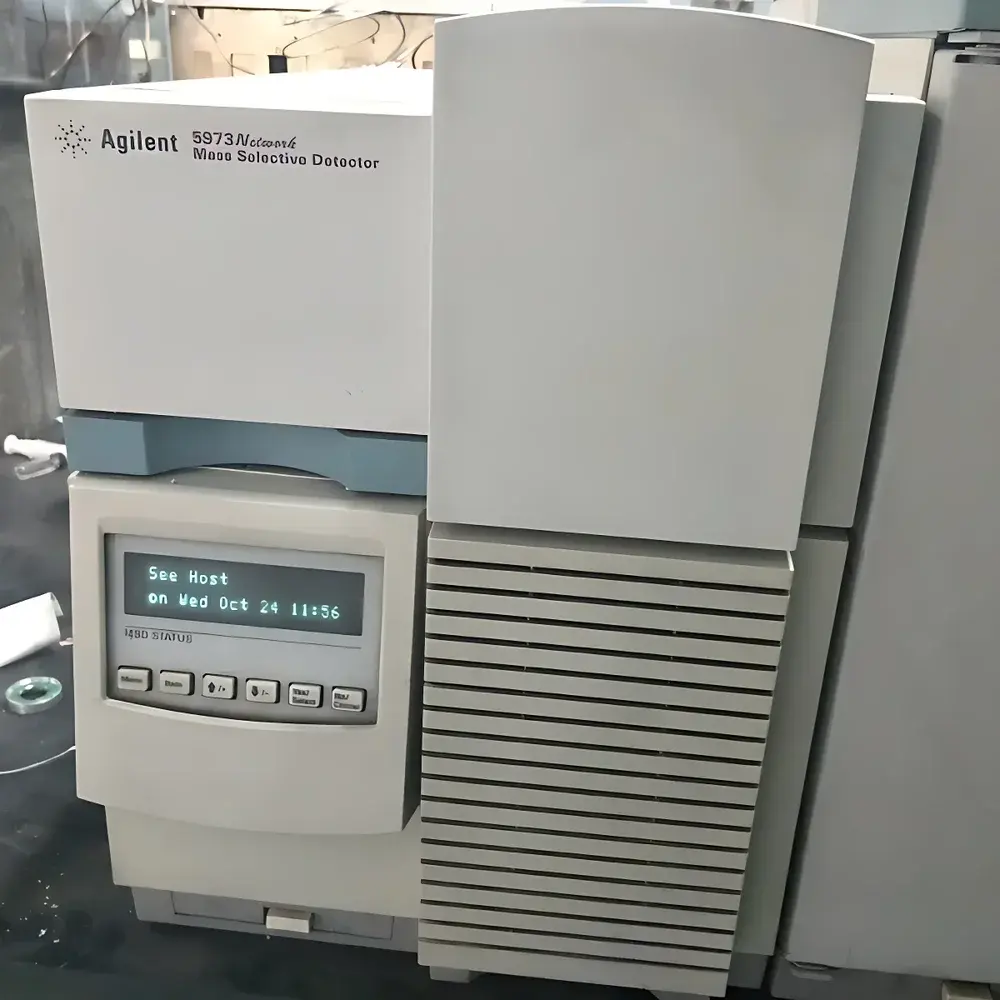
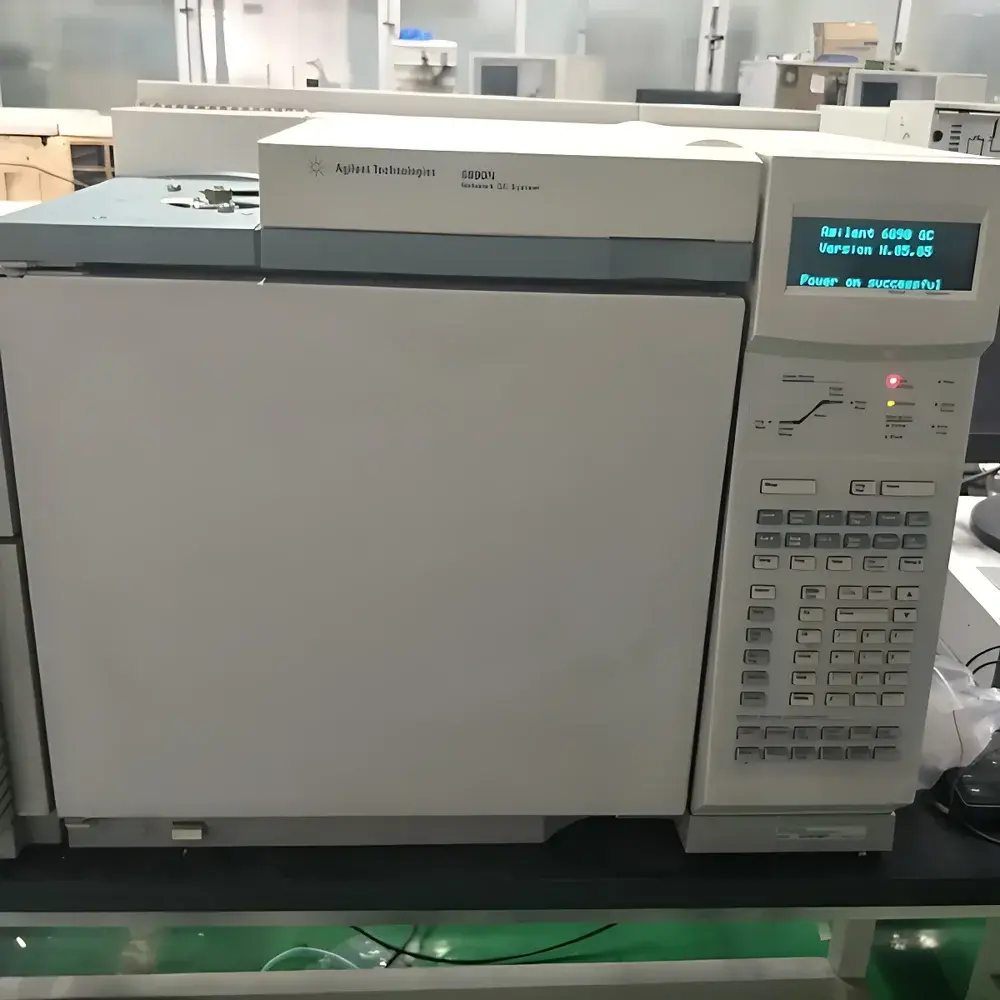
Agilent 6890-5973 Used Gas Chromatography-Mass Spectrometry (GC-MS) System
| Brand | Agilent Technologies |
|---|---|
| Origin | USA |
| Instrument Type | Single Quadrupole Mass Spectrometer |
| GC Configuration | Conventional Capillary GC-MS |
| Mass Range | 1.6–800 u (amu) |
| Mass Accuracy | ±0.1 u |
| EI Sensitivity | ≥20:1 S/N for 1 pg OFN at m/z 272 (Full Scan) |
| SIM Sensitivity | ≥10:1 S/N for 20 fg OFN at m/z 272 |
| PCI Sensitivity | ≥75:1 S/N for 100 pg Benzophenone at m/z 183.1 |
| NCI Sensitivity | ≥500:1 S/N for 1 pg OFN at m/z 272 |
| Ion Source | Electron Ionization (EI), Chemical Ionization (CI), and Negative Chemical Ionization (NCI) capable |
| Ion Source Material | Molybdenum alloy, temperature-controlled |
| Quadrupole | Gold-coated quartz, hyperbolic rod set, heated and independently temperature-regulated |
| GC Oven Temperature Range | Ambient to 400 °C |
| Injector Types | Programmable Temperature Vaporizer (PTV) and Split/Splitless Capillary Injector |
| Mass Scan Modes | Full Scan, Selected Ion Monitoring (SIM), and Tuning |
Overview
The Agilent 6890-5973 is a rigorously validated, pre-owned gas chromatography-mass spectrometry (GC-MS) system engineered for high-fidelity qualitative and quantitative analysis of volatile and semi-volatile organic compounds. This integrated platform couples the Agilent 6890 Gas Chromatograph — featuring precise oven temperature control (ambient to 400 °C), dual injector capability (PTV and split/splitless), and robust capillary column compatibility — with the Agilent 5973 Mass Selective Detector (MSD), a single quadrupole mass spectrometer optimized for reproducible ion transmission and spectral fidelity. The system operates on electron ionization (EI) as the primary ionization mode, delivering library-searchable spectra compliant with NIST/EPA/NIH spectral databases. Optional CI and NCI sources enable soft ionization for molecular weight confirmation and enhanced sensitivity toward electronegative analytes. Its fundamental architecture adheres to the principles of orthogonal separation (chromatographic resolution) followed by mass-analytical detection (mass-to-charge discrimination), making it suitable for regulated and research-grade applications in food safety, environmental monitoring, and forensic chemistry.
Key Features
- Temperature-stabilized transfer line interface with minimal dead volume, ensuring rapid, non-degrading transport of eluting analytes from GC column to ion source.
- Electron ionization source constructed from molybdenum alloy, offering superior chemical inertness and reduced surface adsorption—critical for trace-level analysis of polar or labile compounds.
- Heated, monolithic gold-coated quartz quadrupole with true hyperbolic geometry, enabling high mass accuracy (±0.1 u), stable isotope ratio reproducibility, and extended operational lifetime under routine use.
- Dual ion source configuration supporting EI, PCI, and NCI modes—allowing method flexibility across compound classes without hardware reconfiguration.
- Programmable temperature vaporizer (PTV) injector for large-volume injection, cold trapping, and solvent venting—enhancing sensitivity for trace contaminants in complex matrices.
- Integrated tuning and calibration routines compliant with ASTM D5845 and ISO 17025 method validation prerequisites.
Sample Compatibility & Compliance
The 6890-5973 accommodates a broad range of sample types following appropriate extraction and cleanup (e.g., QuEChERS, SPE, LLE). It supports all standard capillary columns (polar, mid-polarity, non-polar) up to 30 m length and 0.53 mm ID. The system meets foundational requirements for GLP-compliant laboratories when operated with audit-trail-enabled data acquisition software (e.g., ChemStation Rev. A.03.04 or later). While not natively 21 CFR Part 11–certified, its raw data structure (D folders, .MS files) and metadata logging support retrospective validation under FDA, EU Annex 11, and ISO/IEC 17025 frameworks when deployed with documented SOPs and instrument qualification protocols (IQ/OQ/PQ).
Software & Data Management
Data acquisition and processing are performed using Agilent ChemStation software (G1701DA or compatible revision), providing full control over GC parameters (oven ramp, injector temp, carrier flow), MS acquisition settings (scan range, dwell time, threshold), and post-run quantitation (internal/external standard calibration, peak integration, library search). Raw data files retain complete acquisition metadata—including tune parameters, detector voltages, and retention indices—ensuring traceability. Export formats include CSV, TXT, and mzXML, facilitating interoperability with third-party processing tools (e.g., AMDIS, OpenChrom, MassHunter Quantitative Analysis). Backup and archiving follow hierarchical storage conventions aligned with laboratory data integrity policies.
Applications
This system is routinely applied in accredited testing laboratories for pesticide residue analysis (EU MRLs, USDA PDP), veterinary drug screening (β-agonists, sulfonamides, macrolides), food additive profiling (antioxidants, preservatives, flavor compounds), and environmental contaminant quantification (PCBs, PAHs, phthalates, brominated flame retardants). Its proven performance in multi-residue methods (e.g., SANTE/11813/2017) and regulatory workflows (AOAC 2007.01, EPA Method 8270D) underscores its continued relevance in compliance-driven environments. Structural elucidation of unknowns is supported via high-S/N full-scan spectra and retention index matching.
FAQ
Is this instrument supplied with valid calibration and performance verification records?
Yes—each unit undergoes comprehensive functional testing prior to resale, including mass axis calibration, sensitivity verification (OFN), and resolution assessment per Agilent specification documents. A Certificate of Inspection is provided.
Can the system be upgraded to support modern data systems like MassHunter?
While native MassHunter support requires hardware-compatible MSD firmware (e.g., 5975+ series), the 5973 can interface with MassHunter via .D file import for retrospective data reprocessing; however, real-time acquisition requires ChemStation.
What maintenance history documentation is included?
All available service logs, source cleaning records, quadrupole bake-out reports, and vacuum system performance summaries are transferred with the instrument.
Is installation and basic operational training included?
Standard delivery includes site preparation guidance, mechanical installation, leak-check verification, and an 8-hour hands-on orientation covering startup, tuning, calibration, and basic quantitation workflows.
Does the system meet current ISO/IEC 17025 method validation requirements?
Yes—the 6890-5973 satisfies instrumental performance criteria outlined in ISO/IEC 17025:2017 Clause 6.4.1 when operated within specified environmental conditions and maintained per Agilent’s preventive maintenance schedule.




