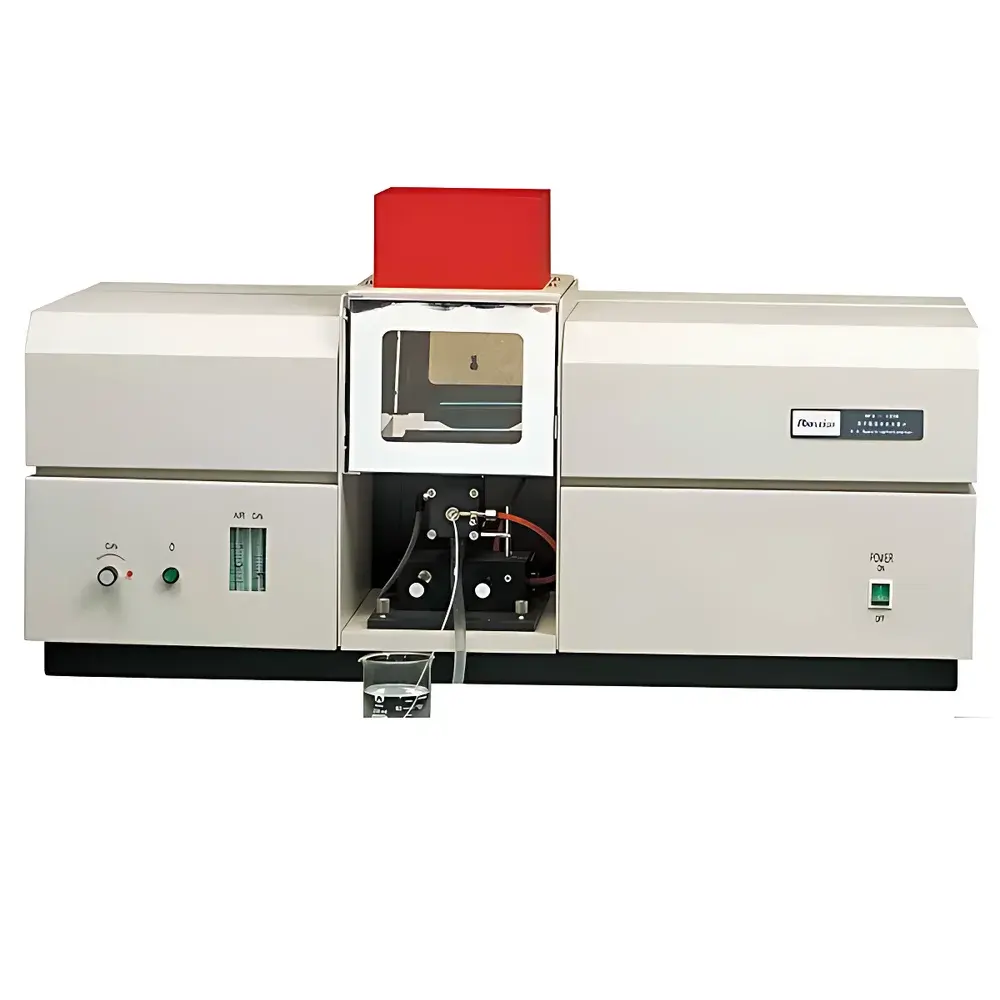
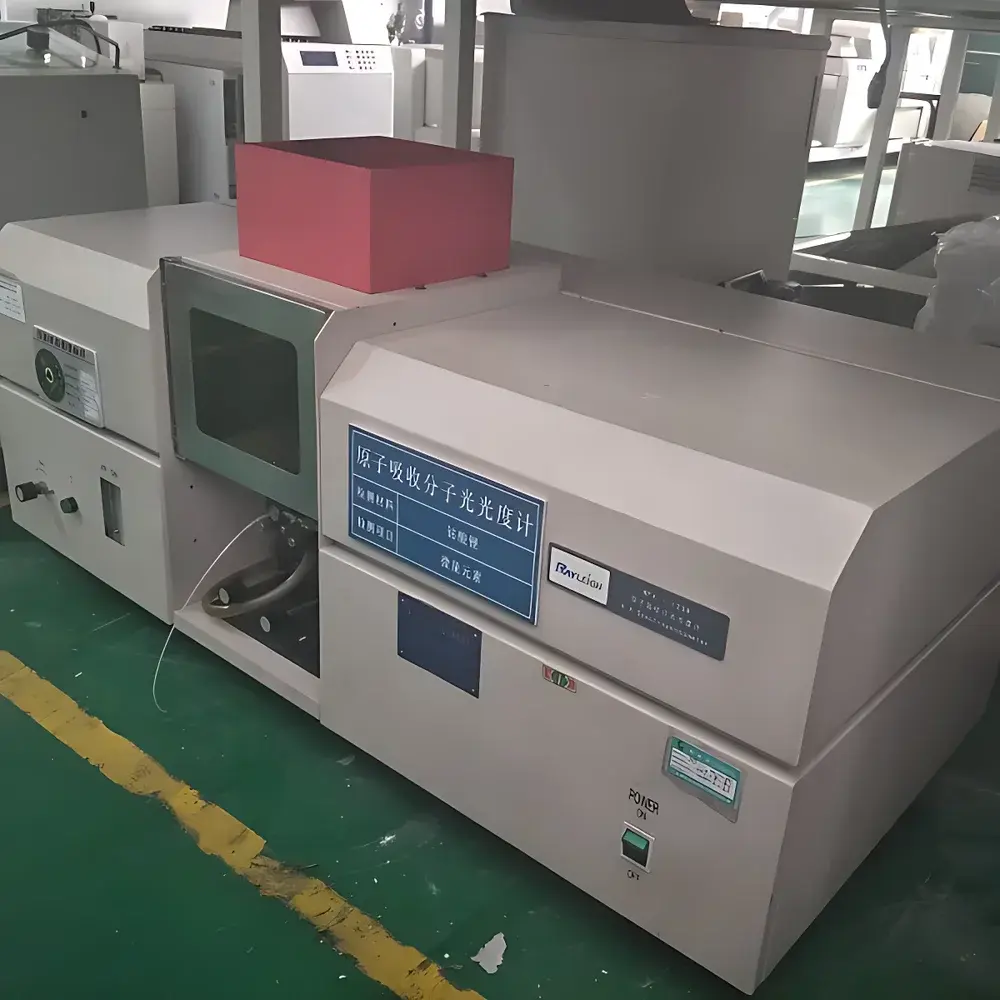
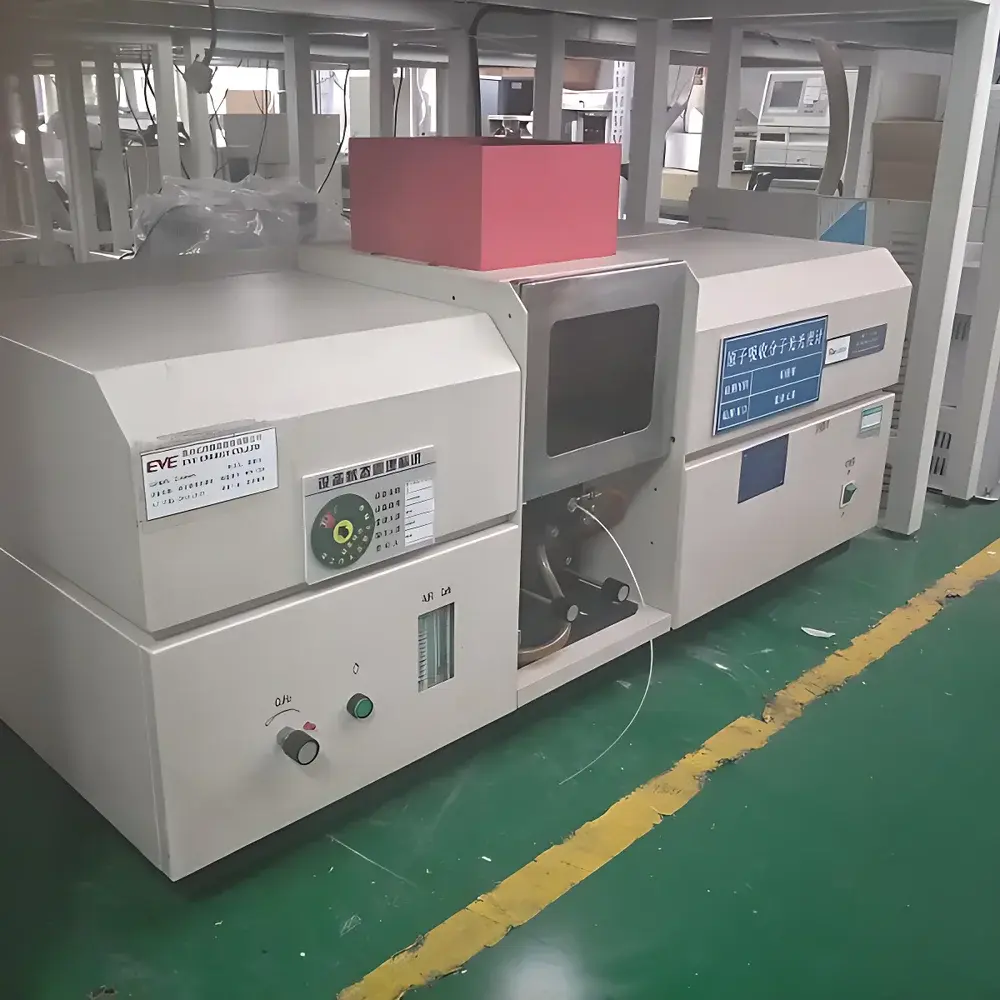
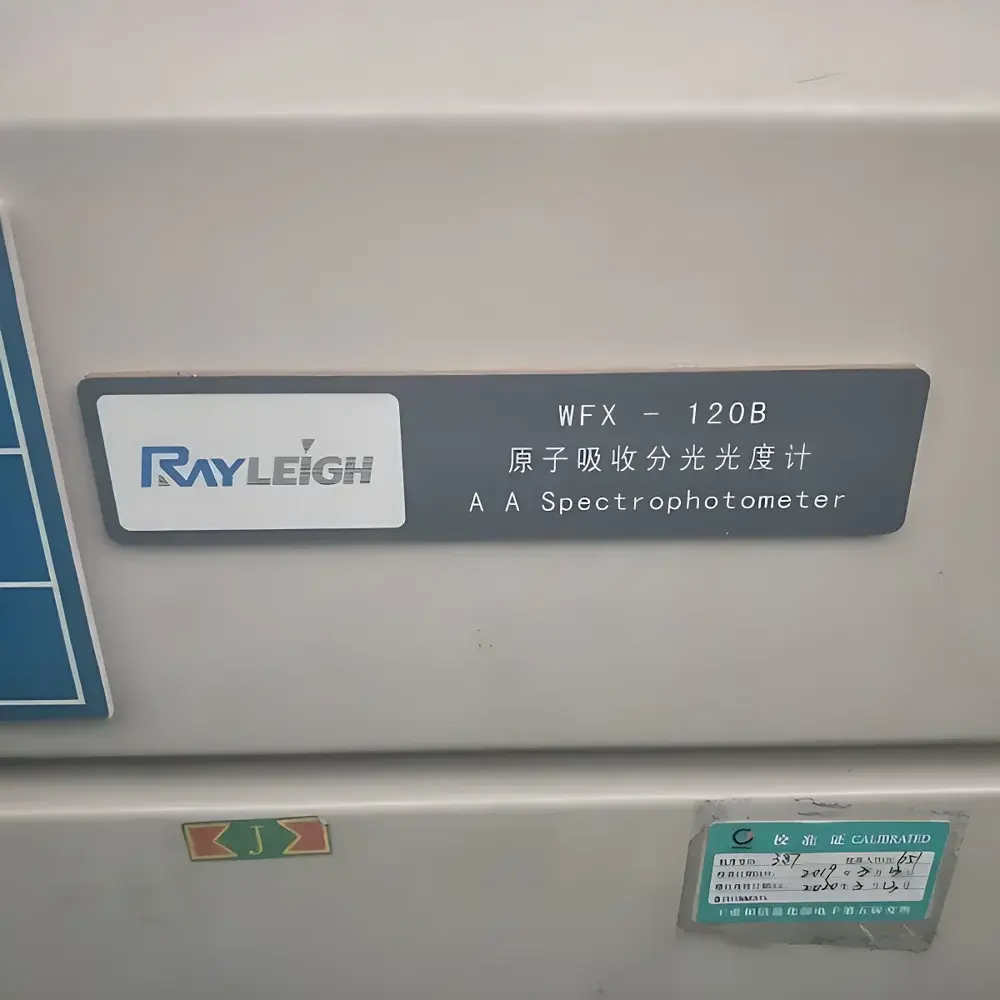
Beifen Ruili WFX-120B Flame Atomic Absorption Spectrophotometer
| Origin | Beijing, China |
|---|---|
| Manufacturer Type | Authorized Distributor |
| Origin Category | Domestic (PRC) |
| Model | WFX-120B |
| Price | USD 4,200 (FOB Beijing) |
| Product Category | Optical Spectroscopy |
| Operational Age | 6–8 years |
| Warranty | 6 months limited parts & labor |
| Instrument Type | Flame AAS |
| Flame Temperature Range | 2300–2950 °C (adjustable) |
| Wavelength Range | 190–900 nm |
| Grating Density | 1800 lines/mm |
| Focal Length | 277 mm |
| Blazed Wavelength | 250 nm |
| Spectral Bandwidth | Multi-step automatic switching |
| Atomizer | 10 cm single-slit titanium burner |
| Nebulizer | Metal-sheathed high-efficiency glass nebulizer |
| Sample Uptake Rate | 6–7 mL/min |
| Background Correction | D₂-lamp (≥30× at 1 Abs) and Self-Reversal (≥30× at 1.8 Abs) |
| Detector | Wide-spectral-range photomultiplier tube (PMT) |
| Lamp System | 6-position auto-switching turret (2 positions compatible with high-performance hollow cathode lamps) |
| Lamp Current Drive | 400 Hz square-wave pulse |
| Software Platform | Windows 98/Me/XP native BRAIC application suite |
| Data Output | RS-232 interface |
| Dimensions (W×D×H) | 1020 × 490 × 540 mm |
| Weight | 80 kg |
Overview
The Beifen Ruili WFX-120B Flame Atomic Absorption Spectrophotometer is a robust, benchtop analytical instrument engineered for quantitative elemental analysis in the low- to mid-ppm range using flame atomic absorption spectroscopy (FAAS). Based on the Beer–Lambert law, the system atomizes liquid samples in a high-temperature air–acetylene or air–propane flame, generating ground-state free atoms that absorb characteristic radiation from element-specific hollow cathode lamps. Unlike conventional N₂O–C₂H₂ flame systems, the WFX-120B implements patented oxygen-enriched combustion technology (Patent No. ZL9210560.7), enabling stable flame temperatures between 2300 °C and 2950 °C—sufficient for refractory elements including Ca, Al, Ba, W, Mo, Ti, and V. This eliminates reliance on hazardous nitrous oxide while maintaining analytical sensitivity and precision across extended operational lifetimes.
Key Features
- Oxygen-enhanced flame system: Replaces N₂O–C₂H₂ with safer, cleaner air–acetylene/propane combustion; certified non-toxic, odorless, and environmentally compliant.
- 6-lamp auto-switching turret: Supports simultaneous lamp alignment and power optimization; two positions accommodate high-intensity hollow cathode lamps for low-abundance elements.
- Dual-mode lamp current control: 400 Hz square-wave pulsing for standard operation; combined 100/400 Hz mode for enhanced signal-to-noise ratio in trace analysis.
- Czerny–Turner monochromator: 277 mm focal length, 1800 lines/mm holographic grating blazed at 250 nm, delivering high optical resolution and stray-light rejection.
- Multi-bandwidth spectral selection: Automatic switching among discrete slit widths (e.g., 0.2, 0.4, 1.0, 2.0 nm) to balance resolution and radiant throughput per analyte.
- Integrated flame emission capability: Interchangeable burner head enables direct K, Na, and Li quantification via flame photometry without hardware modification.
- Comprehensive safety architecture: Real-time monitoring of fuel gas leakage, air pressure drop, flame-out events, and abnormal flow conditions—with automatic shutdown and visual/audible alerts.
- Industrial-grade electronics: Programmable logic array (PLA) controller, chip-to-chip bus interconnect, and UL/IEC-compliant AMP connectors ensure long-term signal integrity and EMC resilience.
Sample Compatibility & Compliance
The WFX-120B accepts aqueous and dilute acid-digested samples (e.g., HNO₃, HCl ≤5% v/v) delivered via continuous-flow pneumatic nebulization. Its titanium burner and corrosion-resistant plastic nebulizer chamber tolerate moderate chloride and sulfate matrices. While not validated for GMP-regulated environments out-of-the-box, the system supports audit-ready data handling when operated under documented SOPs aligned with ISO/IEC 17025:2017 clause 7.7 (results reporting) and ASTM E1995–21 (standard practice for FAAS calibration). Background correction performance meets or exceeds USP requirements for spectral interference mitigation in pharmaceutical excipient testing. The 6-month warranty covers functional verification against factory baseline specifications, including wavelength accuracy (±0.2 nm), photometric linearity (R² ≥0.999 over 0–2.0 Abs), and repeatability (RSD ≤1.5% at 1 µg/mL Cu).
Software & Data Management
The native BRAIC software suite operates natively on Windows 98/Me/XP platforms and provides full instrument control, method development, and quantitative reporting. It supports multi-point calibration (linear and quadratic), standard addition, automatic sensitivity normalization, and iterative RSD calculation across 1–20 replicate readings. All acquisition parameters—including lamp ID, wavelength, bandwidth, burner height, and integration time—are stored with each dataset. Raw absorbance values, peak-area integrals, and final concentration outputs are exportable to CSV or directly into Microsoft Excel via OLE automation. The software maintains an immutable local log of instrument status events (e.g., ignition attempts, lamp swaps, error codes), satisfying basic GLP documentation needs. RS-232 serial communication enables integration with LIMS environments where legacy serial protocols remain in use.
Applications
- Environmental monitoring: Quantification of heavy metals (Pb, Cd, Cr, Ni) in wastewater per EPA Method 7000B.
- Geological sample analysis: Determination of alkali earths (Ca, Mg, Sr) and transition metals (Fe, Mn, Zn) in acid-digested rock powders.
- Food and feed safety: Screening of toxic elements (As, Se, Cu) in fortified cereals and animal feedstuffs per AOAC 984.27.
- Pharmaceutical raw material testing: Verification of catalyst residues (Pd, Pt, Rh) in active pharmaceutical ingredients (APIs).
- Metallurgical process control: Rapid assay of alloying elements (Al, Cr, Ni) in stainless steel digests.
- Academic teaching labs: FAAS fundamentals instruction with hands-on flame optimization, background correction comparison, and method validation exercises.
FAQ
Is the WFX-120B compliant with FDA 21 CFR Part 11?
No—this instrument lacks electronic signature capability, audit trail logging, and user access controls required for Part 11 compliance. It may be used in non-GxP settings or as part of a manually verified workflow.
Can the system be upgraded to graphite furnace operation?
No—the WFX-120B is exclusively configured for flame atomization. Graphite furnace compatibility requires dedicated hardware (e.g., WFX-210 or WFX-320 series) with integrated temperature programming and Zeeman background correction.
What maintenance is recommended before commissioning a used unit?
We recommend full optical alignment verification, burner head cleaning and inspection, nebulizer capillary replacement, PMT dark-current characterization, and gas-line leak testing per manufacturer service manual SM-WFX120B Rev.3.
Does the 6-month warranty cover software support?
Yes—technical assistance for BRAIC software installation, calibration file loading, and basic troubleshooting is included. Custom method development or Windows OS migration support is not covered.
Are original spare parts still available?
Yes—Beifen Ruili continues to supply critical consumables (titanium burners, glass nebulizers, hollow cathode lamps) and field-replaceable modules (lamp power supplies, PMT housings) through authorized distribution channels in Asia and Europe.
Related Products