
Pneumatic Impact and Collision Test System
| Key | Brand: Other Brands |
|---|---|
| Origin | Imported |
| Manufacturer Type | General Distributor |
| Price | USD 16,500 (approx.) |
| Compliance Standards | MIL-STD-810, GJB 150.18, GJB 360, IEC 60068-2-29, GB/T 2423.5–2012, GB/T 2423.6–2012 |
| Waveform Options | Half-sine, Trapezoidal, Post-peak Sawtooth |
| Control Mode | Closed-loop Acceleration Control for Collision Testing |
| Operating Pressure | 7–8 kgf/cm² (≈0.7–0.8 MPa) |
| Power Supply | AC 220 V ±5%, 50 Hz ±0.5 Hz, Single-phase Three-wire |
Overview
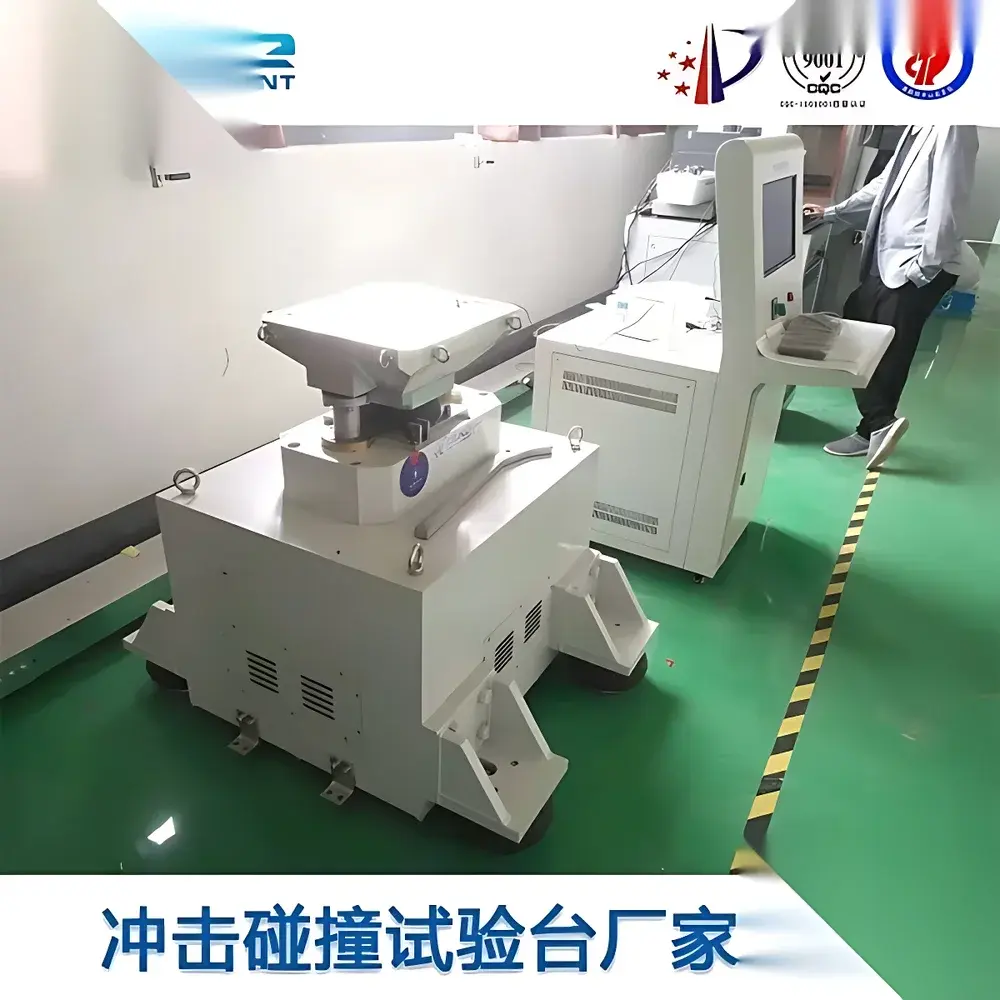
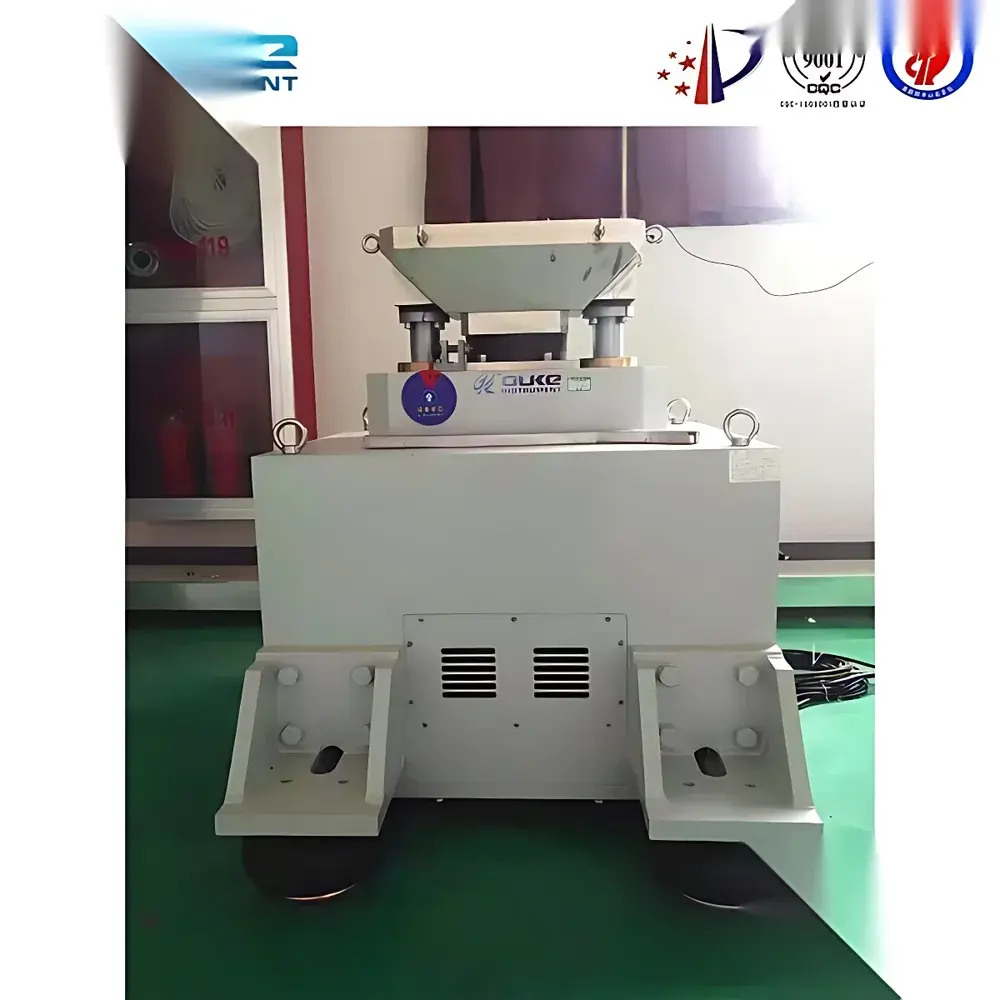
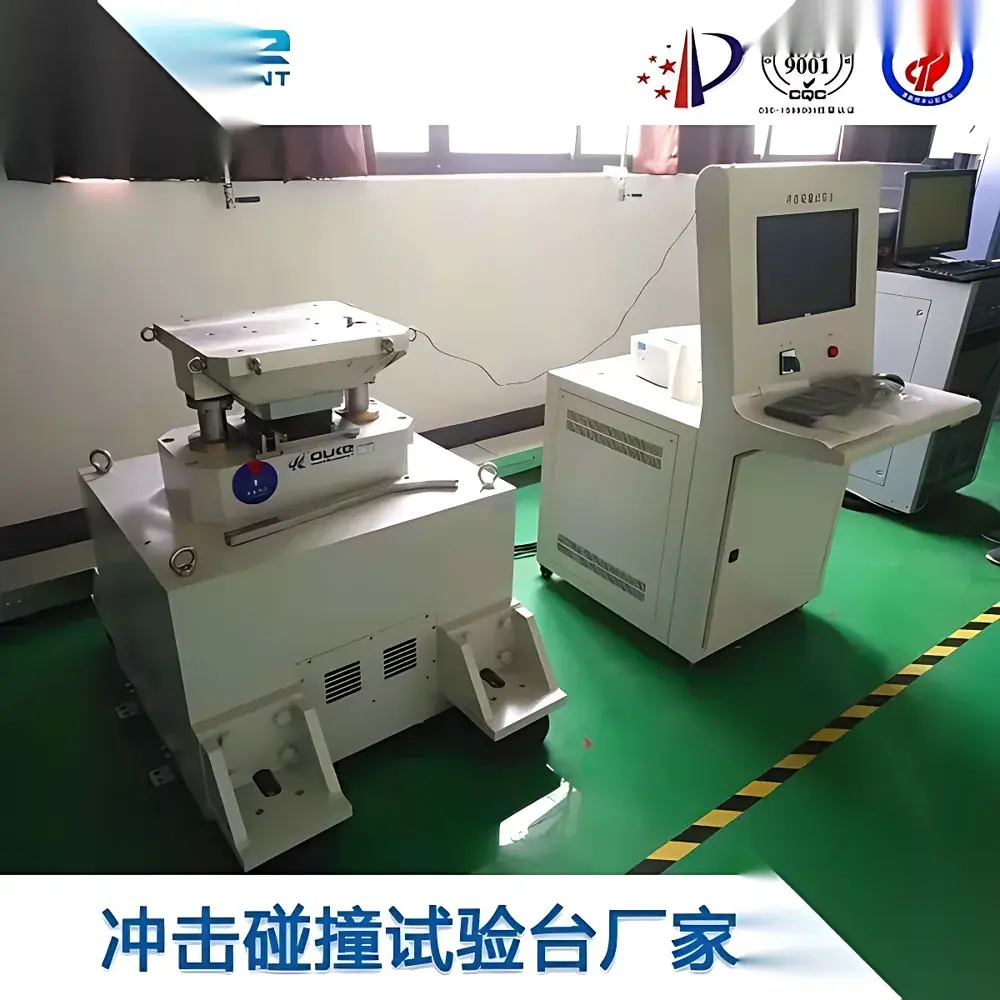
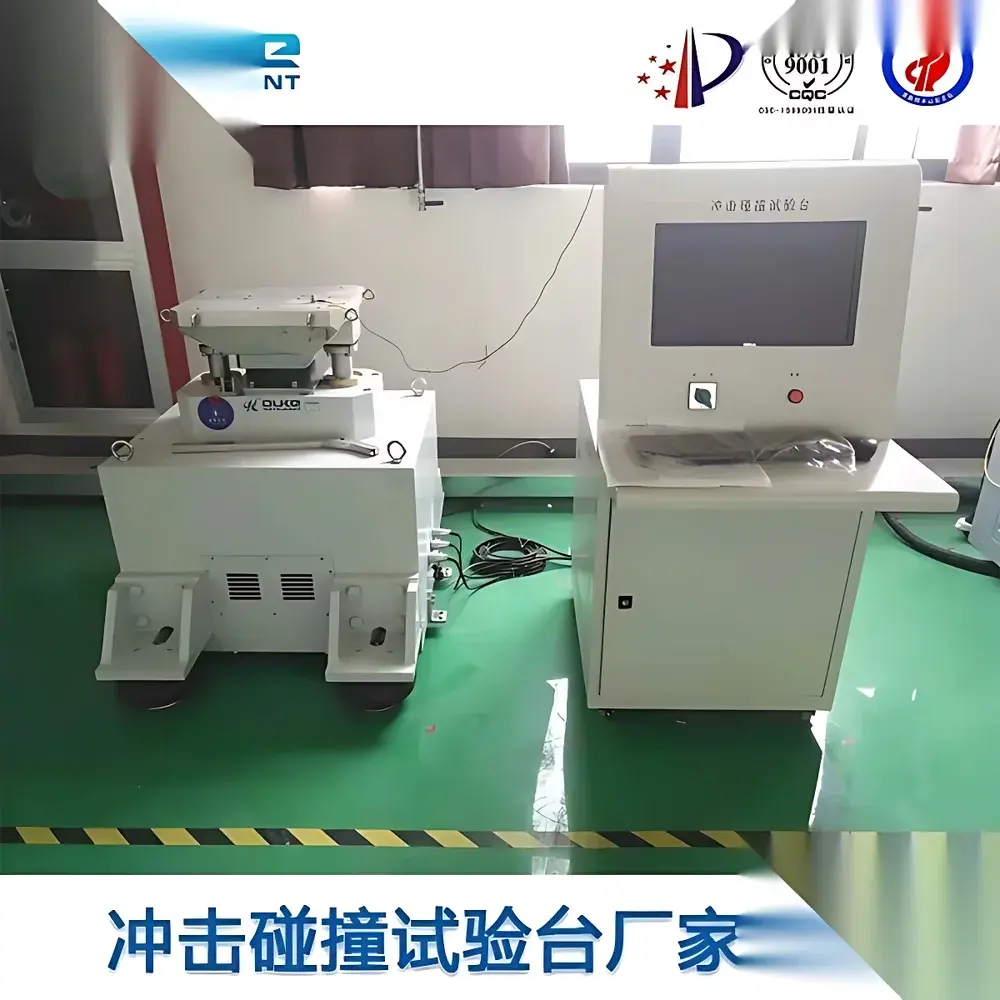
The Pneumatic Impact and Collision Test System is a precision-engineered mechanical shock simulation platform designed to replicate repetitive impact and collision environments encountered during transportation, handling, and operational deployment of electronic components, avionics assemblies, military equipment, and industrial control systems. Unlike electrodynamic shakers or drop towers, this system employs a pneumatically assisted, motor-driven lifting mechanism combined with controlled free-fall dynamics to generate highly reproducible half-sine, trapezoidal, and post-peak sawtooth shock pulses—each conforming to internationally recognized test profiles defined in MIL-STD-810 Method 516.8, IEC 60068-2-29, and GB/T 2423.5–2012. The core principle relies on deterministic energy transfer: a DC motor drives a reduction gearbox and roller carriage to elevate the test table to a precise height; upon release, gravitational acceleration delivers a calibrated impact onto a tunable elastomeric cushion, generating a shock pulse whose peak acceleration (25–1200 m/s²), duration (1.5–25 ms), and repetition rate (1–120 impacts/min) are independently adjustable via mechanical and pneumatic parameters.
Key Features
- High-rigidity test table with uniform acceleration distribution across the entire surface—critical for multi-point mounting of complex assemblies and ensuring compliance with MIL-STD-810G Annex D requirements for spatial acceleration uniformity.
- Closed-loop acceleration control during collision testing, enabling real-time feedback adjustment of drop height and cushion compression to maintain target g-levels within ±5% tolerance over extended test cycles.
- Modular waveform generation capability: configurable mechanical stoppers, spring preloads, and replaceable buffer pads allow seamless transition between half-sine (standard for transport simulation), trapezoidal (for high-frequency structural resonance excitation), and post-peak sawtooth (for evaluating latch integrity and inertial switch response).
- Robust architecture rated for continuous operation under full-load conditions—structural frames are fabricated from stress-relieved welded steel with reinforced base plates to minimize resonant coupling and ensure long-term metrological stability.
- Integrated safety interlocks including pressure-loss detection, over-height limit switches, emergency stop circuitry compliant with ISO 13850, and dual-channel redundant braking for fail-safe table arrest.
Sample Compatibility & Compliance
The system accommodates test specimens ranging from small PCB modules (mounted on fixture plates) to large enclosures up to 500 kg and 1000 mm × 1000 mm footprint. Fixture interface conforms to ISO 5344 standard mounting hole patterns. All models meet electromagnetic compatibility (EMC) Class B per CISPR 11 and operate within ambient temperature ranges of 10–35°C and relative humidity ≤80% non-condensing. Calibration traceability follows ISO/IEC 17025 guidelines, with optional factory certification against NIST-traceable accelerometers. The system supports audit-ready documentation for GLP/GMP and defense contract compliance, including test log export with timestamped acceleration waveforms, operator ID, and environmental metadata.
Software & Data Management
A dedicated Windows-based control application provides intuitive parameter setup, real-time oscilloscope-style waveform visualization, and automated test sequencing. Each impact event is timestamped and archived with raw accelerometer data (sampled at ≥100 kS/s), pulse statistics (peak g, duration, velocity change Δv), and system status flags. Export formats include CSV, MATLAB (.mat), and universal HDF5 for integration into enterprise quality management systems (QMS). Audit trail functionality complies with FDA 21 CFR Part 11 requirements—including electronic signatures, user role-based access control, and immutable record retention—making it suitable for regulated industries such as aerospace, medical device manufacturing, and defense electronics qualification.
Applications
- Qualification testing of automotive ECUs, ADAS sensors, and infotainment units per ISO 16750-3 and SAE J1211.
- Environmental stress screening (ESS) of satellite subsystems prior to vibration and thermal vacuum testing.
- Evaluation of solder joint fatigue resistance in high-reliability printed circuit boards subjected to rail transport shocks.
- Verification of mechanical latch retention force in ruggedized handheld terminals and field-deployable radios.
- Development and validation of shock isolation mounts for naval radar pedestals and shipboard communication cabinets.
FAQ
What standards does this system fully support for shock and collision testing?
It meets the technical requirements of MIL-STD-810 Method 516.8 (Shock), GJB 150.18A (China MIL), IEC 60068-2-29, GB/T 2423.5–2012, and GB/T 2423.6–2012—with waveform fidelity validated using certified reference accelerometers and digital storage oscilloscopes.
Can the system be integrated into an existing environmental test laboratory network?
Yes—it features Ethernet (TCP/IP) and RS-232 interfaces for SCPI command set compatibility, enabling remote control and data aggregation via LabVIEW, Python, or custom MES platforms.
Is calibration and maintenance support available globally?
Factory-certified calibration services and preventive maintenance contracts are offered through authorized regional service centers, with documented calibration intervals aligned to ISO/IEC 17025 recommendations.
Does the system require compressed air with oil-free filtration?
Yes—continuous supply of clean, dry, oil-free compressed air at 7–8 kgf/cm² (0.7–0.8 MPa) is mandatory; an inline coalescing filter (≤0.01 µm) and desiccant dryer are recommended upstream of the inlet regulator.
How is pulse repeatability verified during qualification runs?
Each test sequence includes automatic pre-test verification shots; peak acceleration and pulse width are measured in real time using a calibrated triaxial MEMS accelerometer mounted directly on the table surface, with deviation logs automatically flagged if thresholds exceed ±5% of setpoint.



