
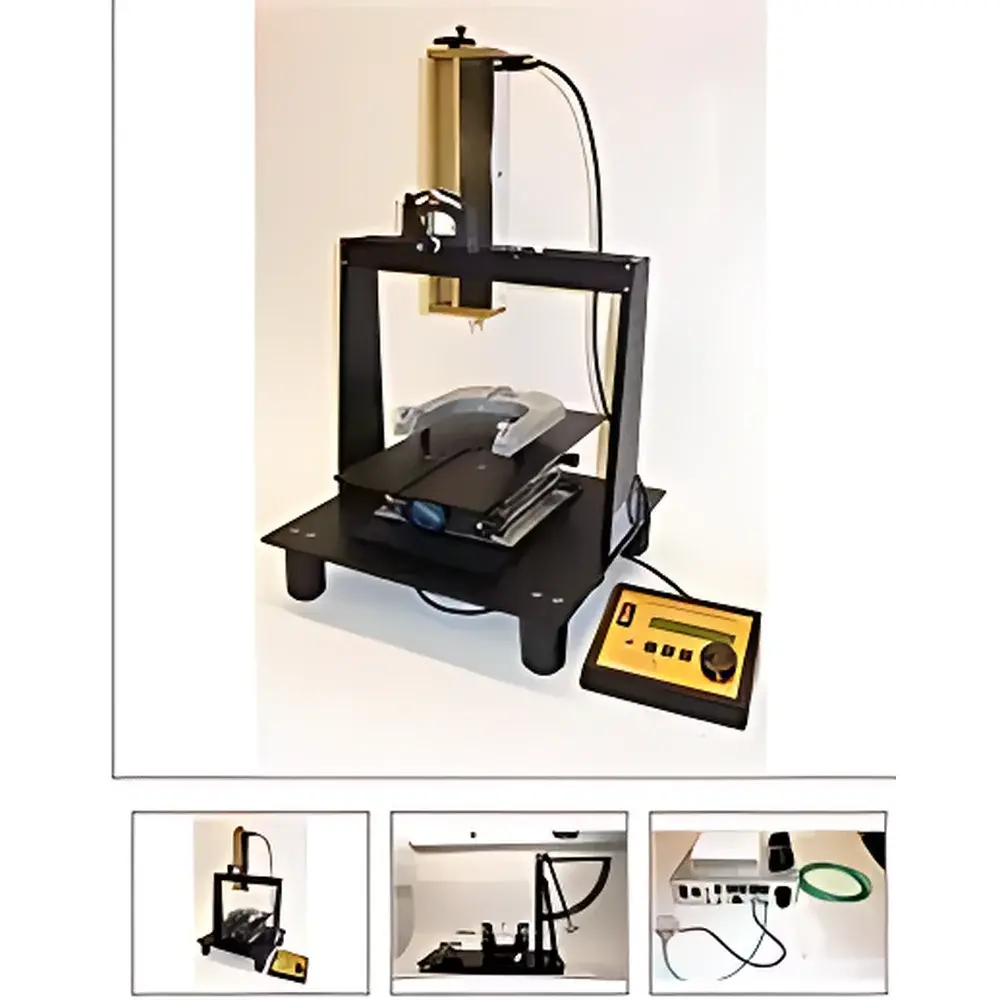
VCU Animal Traumatic Brain Injury Instrumentation System (FPI, eCCI, and CIC Models)
| Origin | USA |
|---|---|
| Manufacturer Type | Authorized Distributor |
| Origin Category | Imported |
| Model | VCU FPI / VCU eCCI / VCU CIC II |
| Pricing | Available Upon Request |
Overview
The VCU Animal Traumatic Brain Injury Instrumentation System comprises three rigorously validated, research-grade platforms—Fluid Percussion Injury (FPI), electric Cortical Contusion Impactor (eCCI), and Cell Injury Controller (CIC II)—engineered for reproducible, quantifiable induction of neural and cellular trauma in preclinical models. Each instrument implements a distinct biomechanical principle: FPI delivers calibrated hydraulic pressure pulses to the dura via craniotomy, simulating diffuse axonal injury and focal contusion; eCCI employs a high-precision linear motor–driven impactor to produce controlled cortical contusions with real-time velocity, depth, and dwell monitoring; CIC II applies regulated pneumatic pressure to Flexcell® culture wells, inducing radial stretch injury in monolayers or 3D tissue constructs grown on gas-permeable Silastic® membranes. Collectively, these systems support mechanistic studies of neuroinflammation, blood–brain barrier disruption, neuronal apoptosis, glial reactivity, and pharmacologic neuroprotection under GLP-aligned experimental conditions.
Key Features
- FPI System: Integrated pressure transducer with traceable calibration output; bubble-free fluid circuit design; adjustable angular scale for precise impact orientation; consistent pulse waveform generation (rise time < 10 ms, peak pressure 1–4 atm, duration 15–30 ms).
- eCCI System: Anodized aluminum frame and base for dimensional stability; photo-optic sensor–equipped impactor head delivering real-time feedback on impact velocity (0.5–6.0 m/s), displacement (0.1–3.0 mm), and dwell time (1–100 ms); compatibility with standard stereotactic frames (e.g., Kopf, Stoelting) via modular aluminum animal platform.
- CIC II System: Dual-tray compatibility with Flex I® (29.45 cm²) and BioFlex® (57.75 cm²) culture plates; programmable pressure ramping (0–20 psi, ±0.1 psi resolution); sealed well actuation enabling repeatable radial strain (0–25% elongation); integrated peak pressure capture for retrospective injury severity correlation.
Sample Compatibility & Compliance
The VCU instrumentation suite supports rodent (mouse, rat), porcine, and non-human primate models across neurotrauma, ophthalmology (FPI in optic nerve injury), and translational cell biology applications. All systems comply with ASTM F2984–15 (Standard Practice for Preclinical Testing of Neuroprotective Agents) and ISO 10993–5 (biocompatibility of medical device materials). The eCCI and FPI platforms are routinely cited in NIH-funded TBI studies adhering to the STAIR (Stroke Therapy Academic Industry Roundtable) and TRACK-TBI preclinical guidelines. CIC II operation aligns with FDA-recommended in vitro injury model standards for drug screening (21 CFR Part 11–compliant data logging optional via third-party acquisition software).
Software & Data Management
While hardware-driven for minimal latency and maximal reproducibility, all three systems interface with industry-standard DAQ platforms (e.g., National Instruments USB-6211, LabVIEW 2020+) for synchronized analog signal acquisition (pressure, velocity, position). eCCI includes an embedded microcontroller with RS-232/USB output for timestamped impact parameter export (CSV/TXT). CIC II integrates with Flexcell’s proprietary WinControl™ software for protocol scheduling and pressure profile visualization. Raw sensor outputs support post-hoc analysis in MATLAB, Python (NumPy/Pandas), or GraphPad Prism. Audit trails, user authentication, and electronic signatures may be implemented via validated third-party LIMS or ELN solutions meeting 21 CFR Part 11 requirements.
Applications
- Development and validation of neuroprotective compounds targeting secondary injury cascades (e.g., calpain inhibition, mitochondrial permeability transition blockade).
- Investigation of blood–brain barrier integrity using quantitative tracer leakage assays (e.g., Evans Blue, sodium fluorescein) post-FPI or eCCI.
- In vitro modeling of traumatic axonal injury in organotypic brain slices subjected to controlled stretch via CIC II.
- High-content phenotyping of astrocyte reactivity, microglial polarization, and synaptic loss following standardized cortical impact.
- Pharmacokinetic–pharmacodynamic correlation studies assessing blood–CSF penetration kinetics of candidate therapeutics in TBI models.
FAQ
What distinguishes the VCU eCCI from legacy Feeney-type impactors?
The eCCI replaces gravitational acceleration with closed-loop linear motor control, enabling precise, operator-independent regulation of impact velocity, depth, and dwell—parameters inaccessible in free-fall systems. This eliminates inter-lab variability linked to weight-drop inconsistencies and improves statistical power in longitudinal studies.
Can the CIC II be used with non-Flexcell culture plates?
No. CIC II is mechanically and pneumatically engineered exclusively for Flexcell’s patented well geometry and Silastic® membrane specifications. Use of non-certified plates compromises pressure sealing, strain uniformity, and injury reproducibility.
Is calibration documentation provided with each system?
Yes. Each FPI and eCCI unit ships with NIST-traceable calibration certificates for pressure transducers and position sensors. CIC II includes factory-verified pressure linearity reports per tray type. Annual recalibration services are available through VCU-authorized service centers.
Do these instruments meet IACUC reporting requirements for animal study protocols?
All systems include detailed SOP templates compliant with NIH OLAW and AAALAC International guidelines, covering anesthesia integration, post-operative monitoring, endpoint criteria, and humane euthanasia alignment—facilitating rapid IACUC protocol review and approval.





